


Features
◆ A square form, upright and uncommon
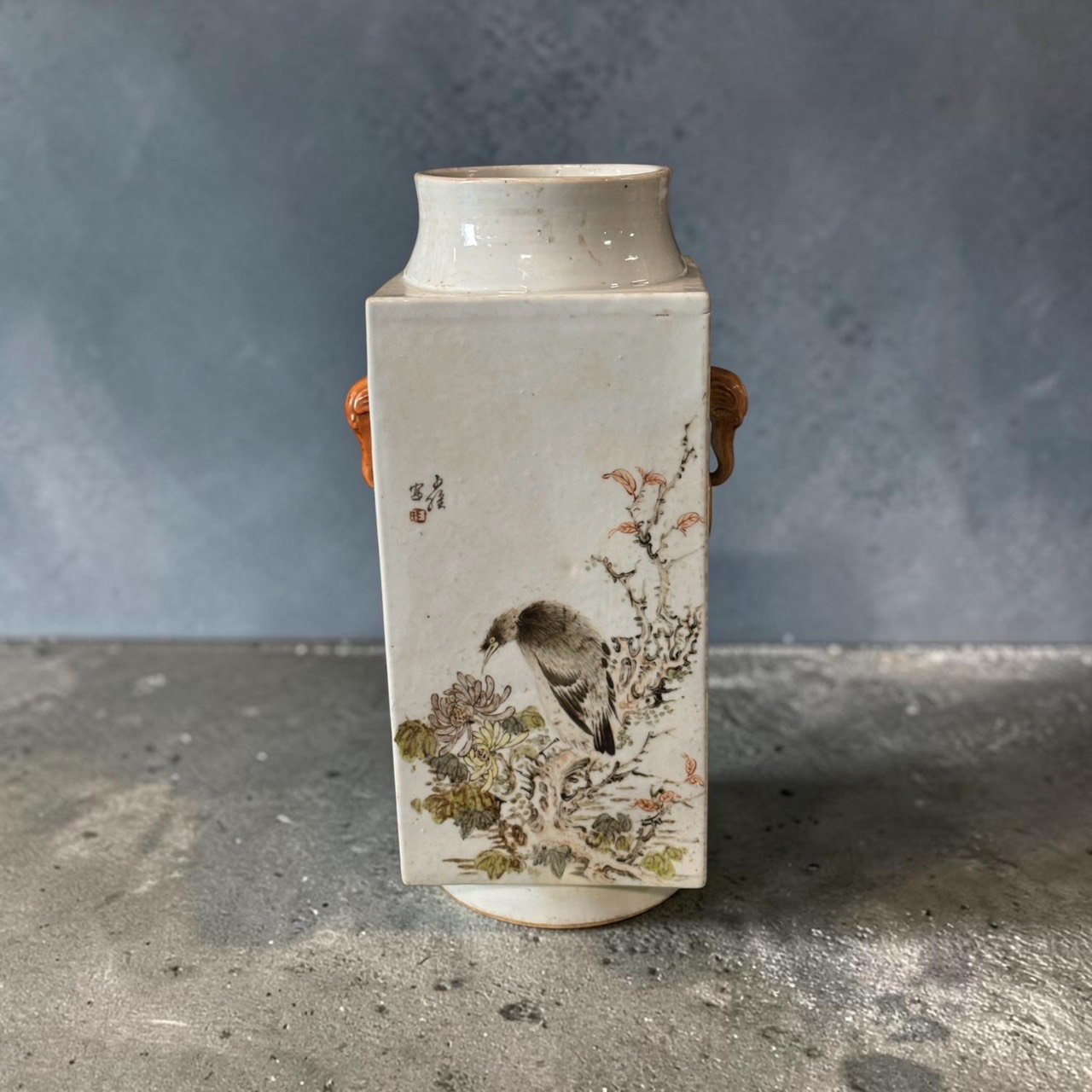
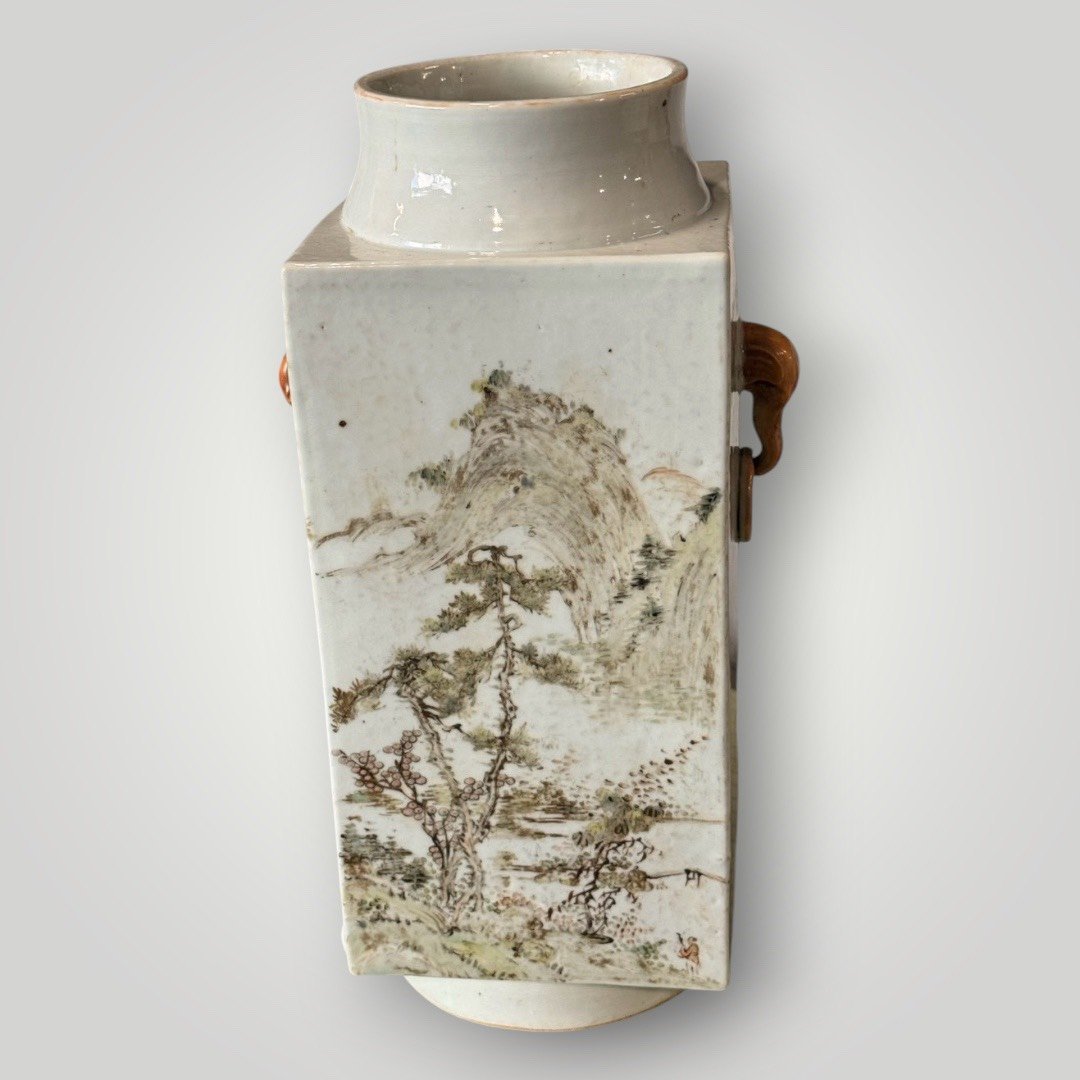
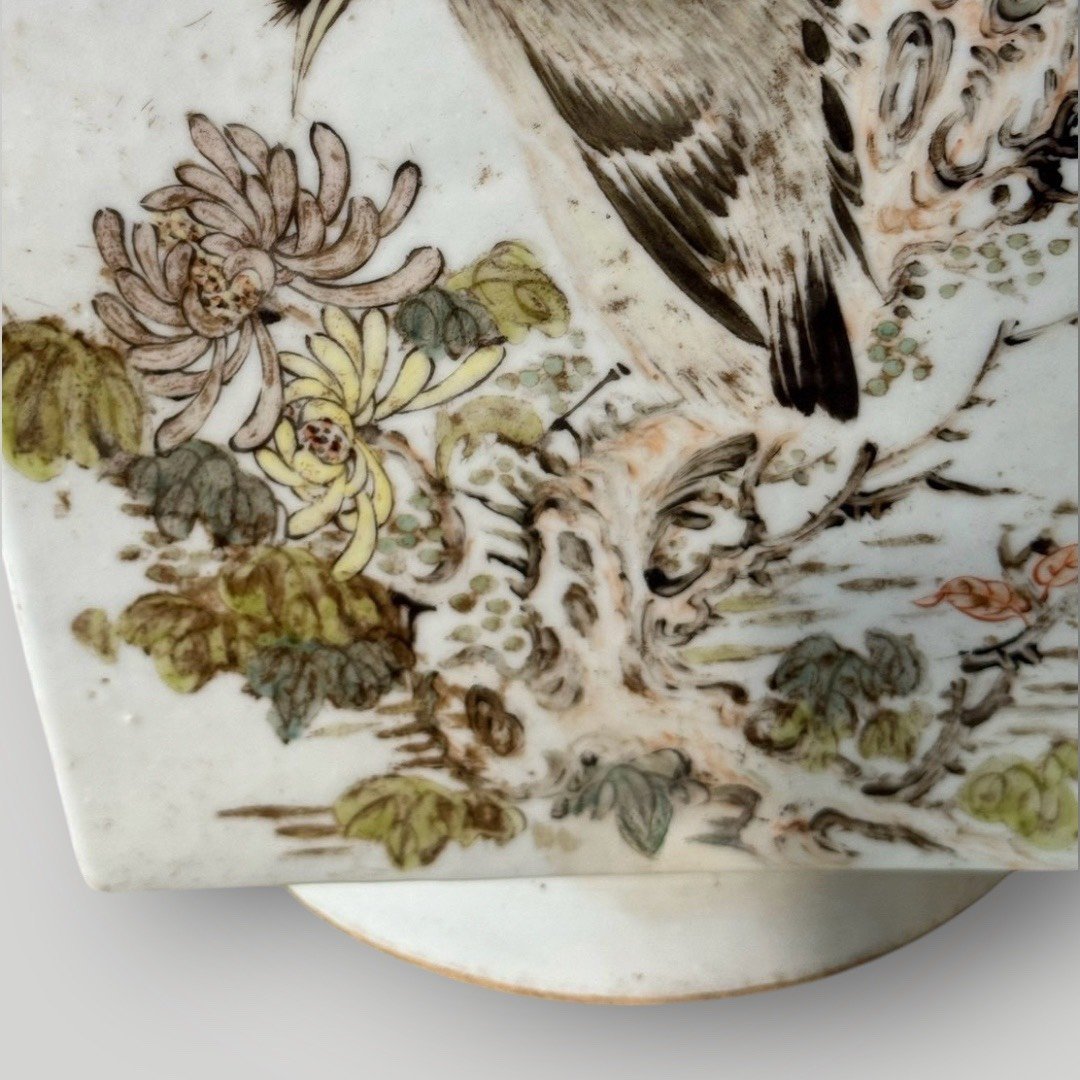
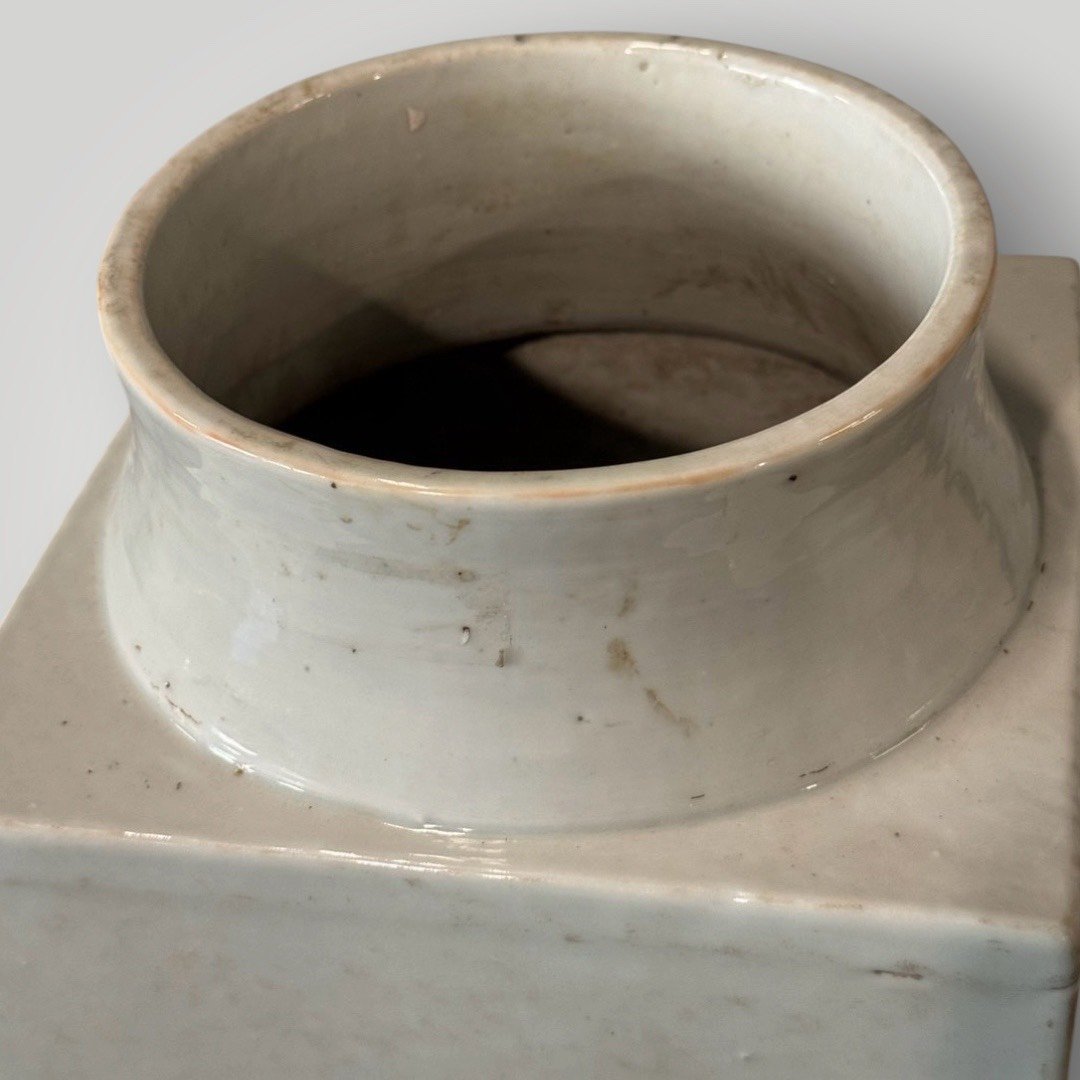
Compared with the usual round-bellied, meiping or gallipot forms, this piece takes the less common square, straight-sided shape. Each of the four faces forms a complete composition, so every side can be enjoyed on its own. The front shows a bird-and-flower painting; turn it to the side and there are poetry and an inscription. It is therefore not a piece with only "one front", but a collector's object to be viewed from all four sides.
◆ A bird-and-flower painting in the literati manner
The front is composed of birds, chrysanthemums, branches and rocks. The composition does not fill the surface but leaves much blank space, so that branches, birds and flowers are distributed naturally, with the balance of solid and void, blank space and density that Chinese literati painting values. The birds in particular are not brightly realistic but have their feathers rendered in ink-brown and grey-black tones, closer to the brushwork of bird-and-flower painting on paper.
◆ The chrysanthemum subject, suggesting purity and long life
Chrysanthemums appear in the lower part of the composition. In traditional Chinese culture the chrysanthemum is deeply symbolic and often stands for:
Integrity
Long life
Seclusion
Literati integrity
The refined pleasures of autumn
Because of its long association with the poet Tao Yuanming and chrysanthemum culture, the flower carries a particularly scholarly air in literati art. This is therefore not just an ordinary "bird-and-flower vase"; its subject makes it well suited to a study, a tea room or a scholarly interior.
◆ Elephant-head ring handles, a very distinctive feature
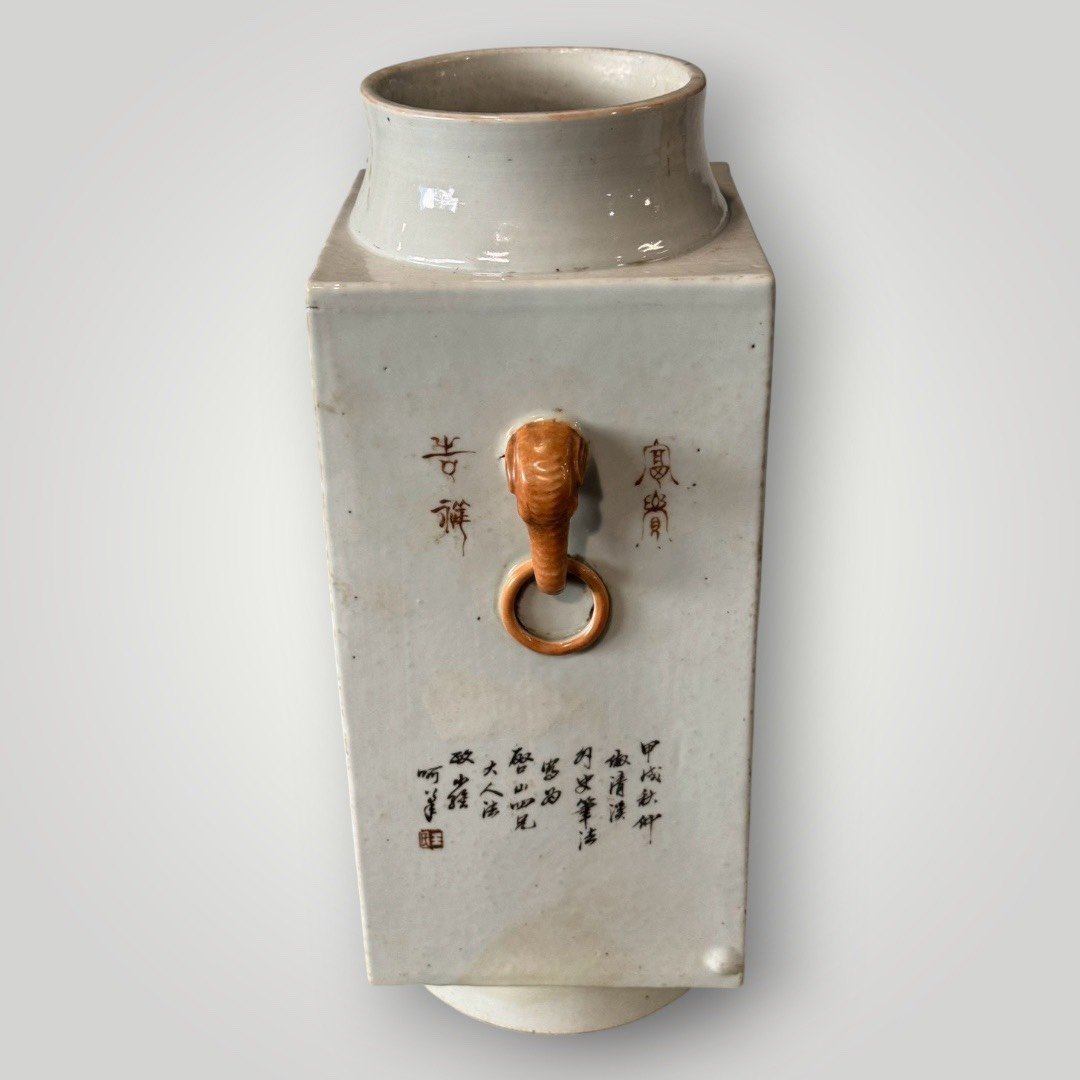
A modelled beast-head handle is set on either side of the body, clearly designed as an elephant or beast head holding a ring. In Chinese auspicious culture the elephant is often linked with:
Peace, good fortune, steadiness and dignity
The modelled elephant heads with their rings not only add visual depth but also set this piece apart from an ordinary painted porcelain vase.
◆ Orange-brown beast heads contrasting handsomely with the white porcelain
The elephant heads and rings are glazed in an orange-brown, ochre tone while the body keeps a greyish-white cast. This pairing of a warm accent with a large plain area is very assured: it lets the elephant heads stand out without disturbing the scholarly feel of the whole.
◆ Painting and calligraphy on all four faces
The other two photographs show that the sides of the vessel are not blank but carry full inscriptions in ink. Some of the writing is in a freer hand and is accompanied by red seals, giving the piece the classic form of:
poetry, calligraphy, painting and seal united in one work. This is one of the features most worth emphasising. Compared with a vase painted on one side only, a piece with content on all four faces rewards longer looking when displayed.
◆ Inscribed poem and signature add to the story
Several passages of writing and a date-style inscription can be seen on the sides. The piece is not simply a decorative vase but deliberately follows the traditional literati porcelain format of adding a poem after the painting.