



Features
◆ A tiger biting bamboo: an uncommon and striking subject
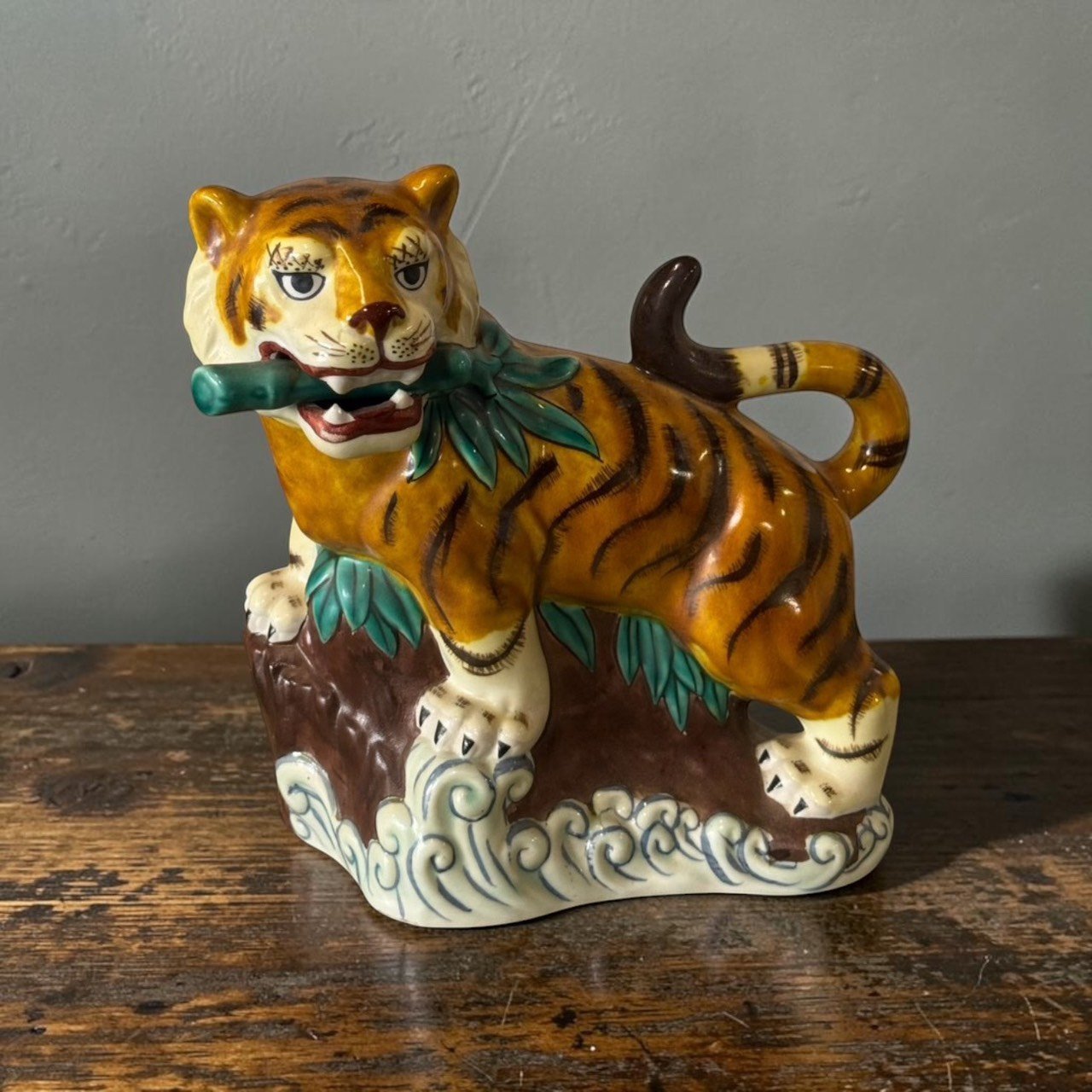
Most tiger ornaments show the animal standing, crouching, or set in a mountain landscape; here the biting of the bamboo is the heart of the design, which gives the form more narrative.
In East Asian culture bamboo often stands for endurance, steady advancement and uprightness; combined with a tiger, the piece takes on a sense of vigour, enterprise and protection.
◆ A lively tiger with a strong folk-art feel
The tiger's face does not aim at realism but is handled in a bold, exaggerated folk-art manner. The sharp gaze, open mouth and bared teeth, together with the bamboo spray in its jaws, make it fierce yet touched with the humour particular to Japanese folk art.
◆ A yellow-brown ground glaze with black stripes
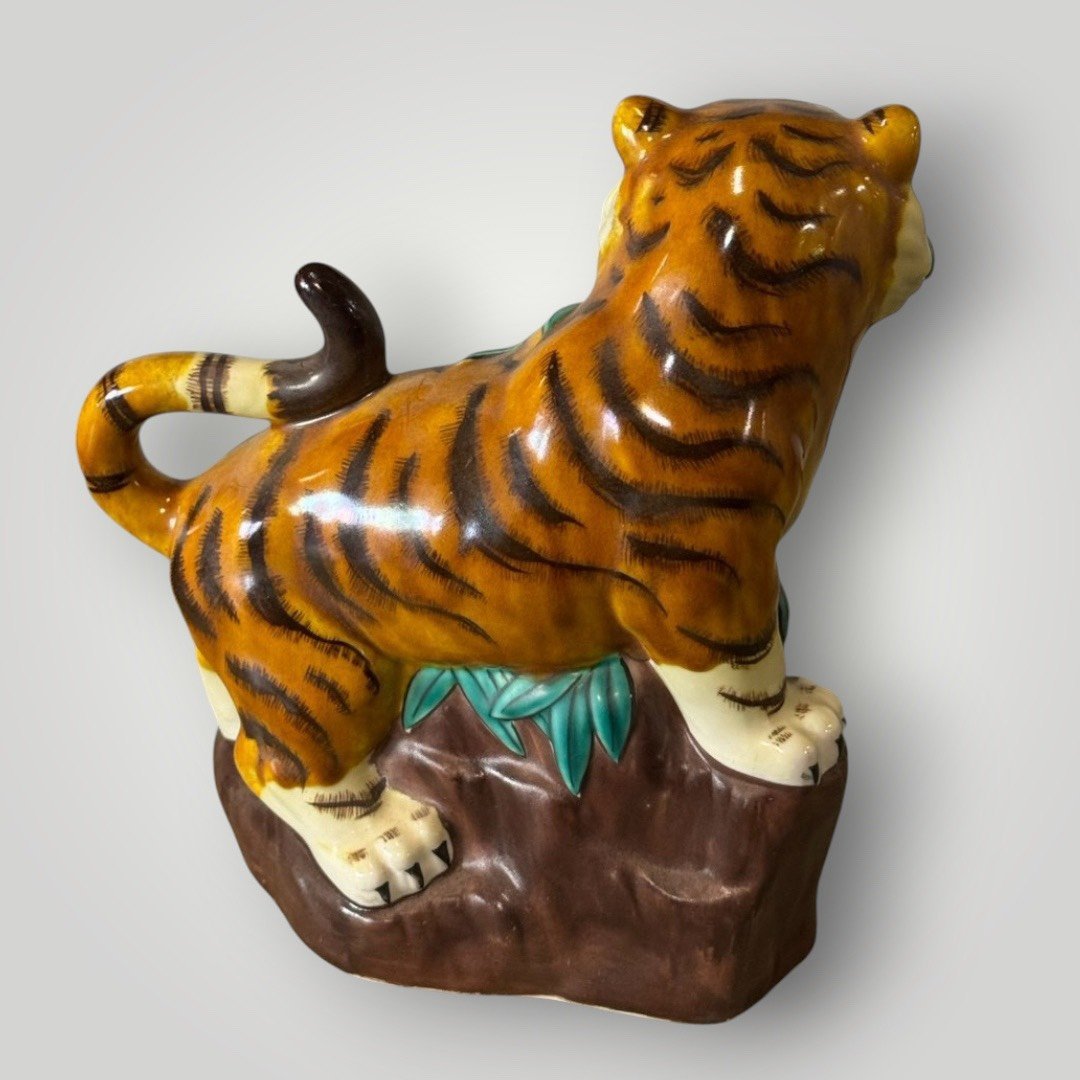
The tiger's body is mainly a warm yellow-brown, over which black stripes are painted for a clear contrast. This colouring suits dark wooden furniture, a washitsu, a tea room and traditional Japanese interiors, and also makes a strong focal point in a modern space.
◆ Green bamboo adding depth of colour
The bamboo in the mouth is a blue-green, which contrasts handsomely with the yellow-brown of the body. The green also echoes bamboo leaves and the feeling of nature, so the piece is not only warm and dark tones but gains a note of freshness.
◆ A wave-and-rock base adding depth
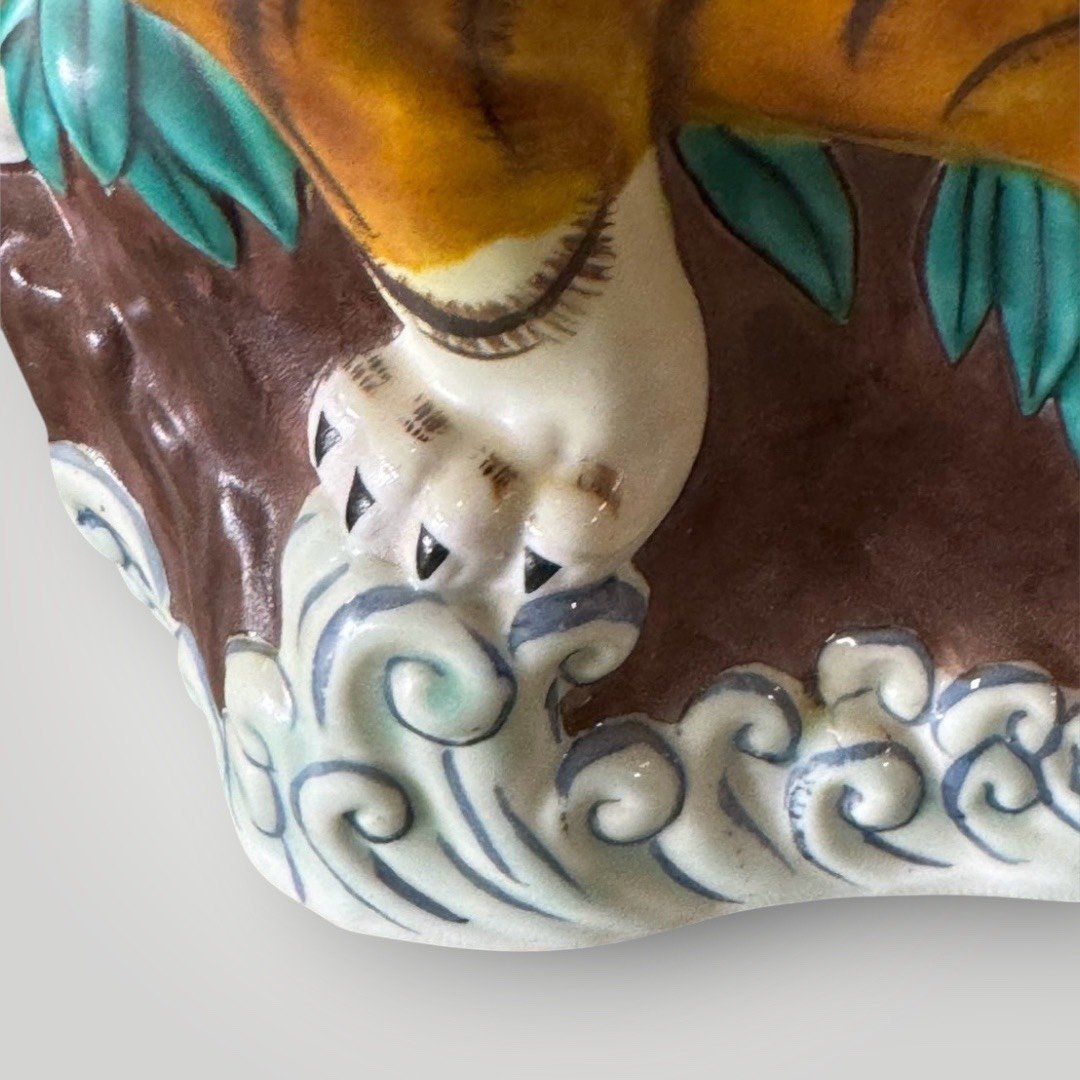
The base is not a plain flat plinth but combines rocks with a wave pattern. The waves are painted in white and blue, clearly layered against the colour of the tiger, so the composition is complete from bottom to top.
◆ A clear Kutani-style enamelled character
The vivid enamel painting, animal subject and modelled ceramic form all show the ornate folk-art character common in Kutani-style ceramics.