


Features
◆ Of the Kyōto Fushimi ningyō tradition
Fushimi ningyō is one of the long-established clay-doll traditions of Kyōto, known for mould-formed, hand-painted figures and animals.
Common subjects include good-fortune figures, deities and buddhas, animals, festivals and scenes of daily life, so the tradition is strongly rooted in popular culture.
According to the markings in the photographs this piece is a "Kyōto Fushimi ningyō, kazari-uma (ornamental horse)", and both subject and form fit this folk-art idiom closely.
◆ The auspicious subject of the kazari-uma
The horse carries strongly positive associations in traditional Japanese culture.
It is often associated with:
Vitality
Drive
Moving forward
Success
Martial fortune
Advancement in life
Good omens
Since the kazari-uma also carries festive and congratulatory associations, it suits an opening, a promotion, a new home, or a Year-of-the-Horse collection.
◆ A white horse
In East Asian culture and in Japanese shrine belief the white horse often suggests purity, sanctity and good fortune.
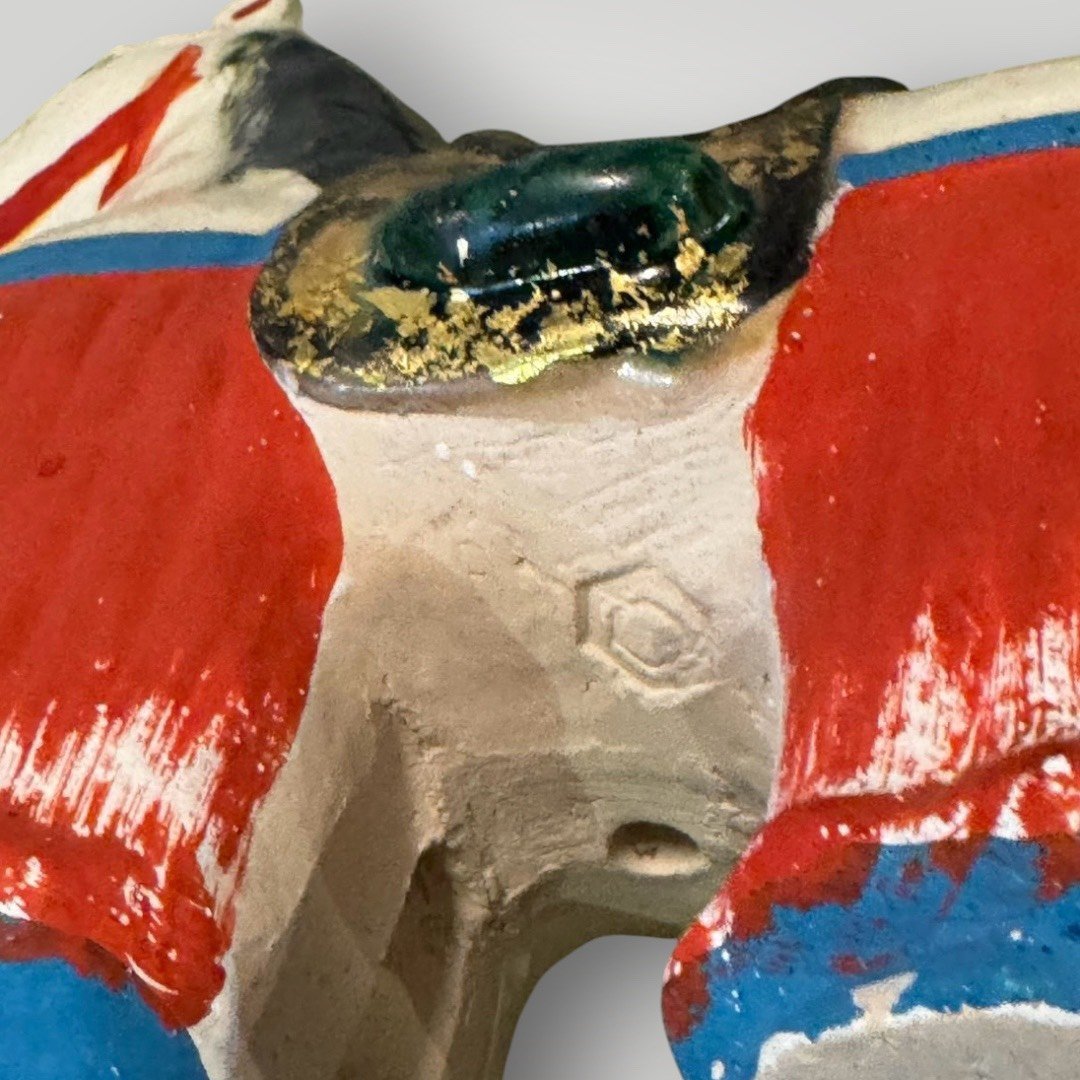
This piece is mainly white, picked out with red, blue, black and gold, which makes it decidedly eye-catching.
◆ A vermilion horse cloth
The legs and belly are decorated in vermilion, which is visually very striking.
Vermilion is common in traditional Japanese objects and festival culture and carries associations of celebration, warding off evil and blessing.
◆ Gilded saddlery
The saddle on the back carries a great deal of gold decoration and is the most ornate part of the piece.
The gilding is now naturally worn, but this in fact gives the piece more of the character of an old object, without the over-new look of a modern reproduction.