



Features
◆ A classic Japanese folk-art tanuki
The tanuki is one of the most representative folk mascots of Japan.
Its round belly, solid build and good-natured expression suggest friendliness, plenty and good fortune, so an ornament of this kind is not only collectable but a genuine pleasure to live with.
◆ Holding a sake bottle
This tanuki holds a sake bottle in its arms, a thoroughly classic Japanese folk-art composition.
The sake bottle also calls to mind izakaya, sake and Japanese food culture, so it is particularly well suited to restaurants and Japanese-themed shop interiors.
◆ Large in size, with clear presence
About 37 cm high, this is not a small tabletop ornament but a decorative ceramic of real substance.
Even standing alone it makes a complete statement and needs little else around it.
◆ A two-tone scheme of blackish brown and cream
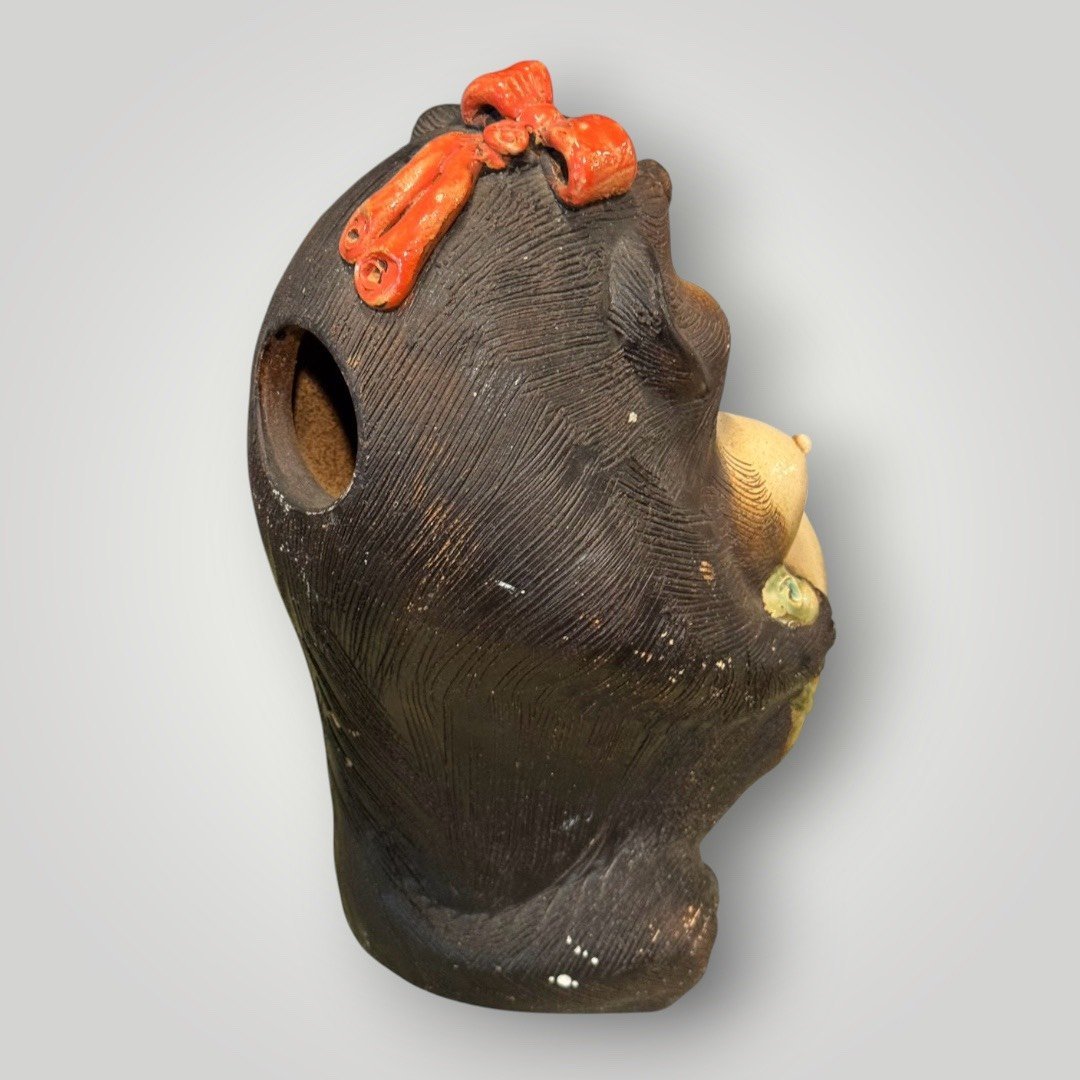
The body is mainly dark brownish black and cream, a calm scheme that wears well, with the red ornament on the head providing the visual focus.
This colouring goes easily with wooden furniture, basketry, tatami, old wooden cabinets and other elements of a Japanese interior.
◆ The sense of age of a Japanese old piece
The photographs show natural marks of use and storage on the surface; this sense of age gives the piece more character than a modern mass-produced good-luck ornament.
For anyone who likes Japanese antiques, Shōwa pieces or Japanese folk art, a ceramic tanuki bearing the marks of time is the more collectable choice.
The auspicious meaning of the tanuki
In Japanese commercial culture the tanuki is credited with several good omens, for example:
Inviting good fortune
Inviting wealth
Thriving business
A steady flow of customers
Good relations with others
Plenty and stability