

Features
◆ In the style of a traditional Japanese nō mask
The nō mask is one of the most important visual elements of Japanese nō theatre.
The mask itself needs no large change of expression; different emotions arise from the slightest angle of the actor's head, the stage lighting and the audience's viewpoint, which makes it a very particular form of artistic expression.
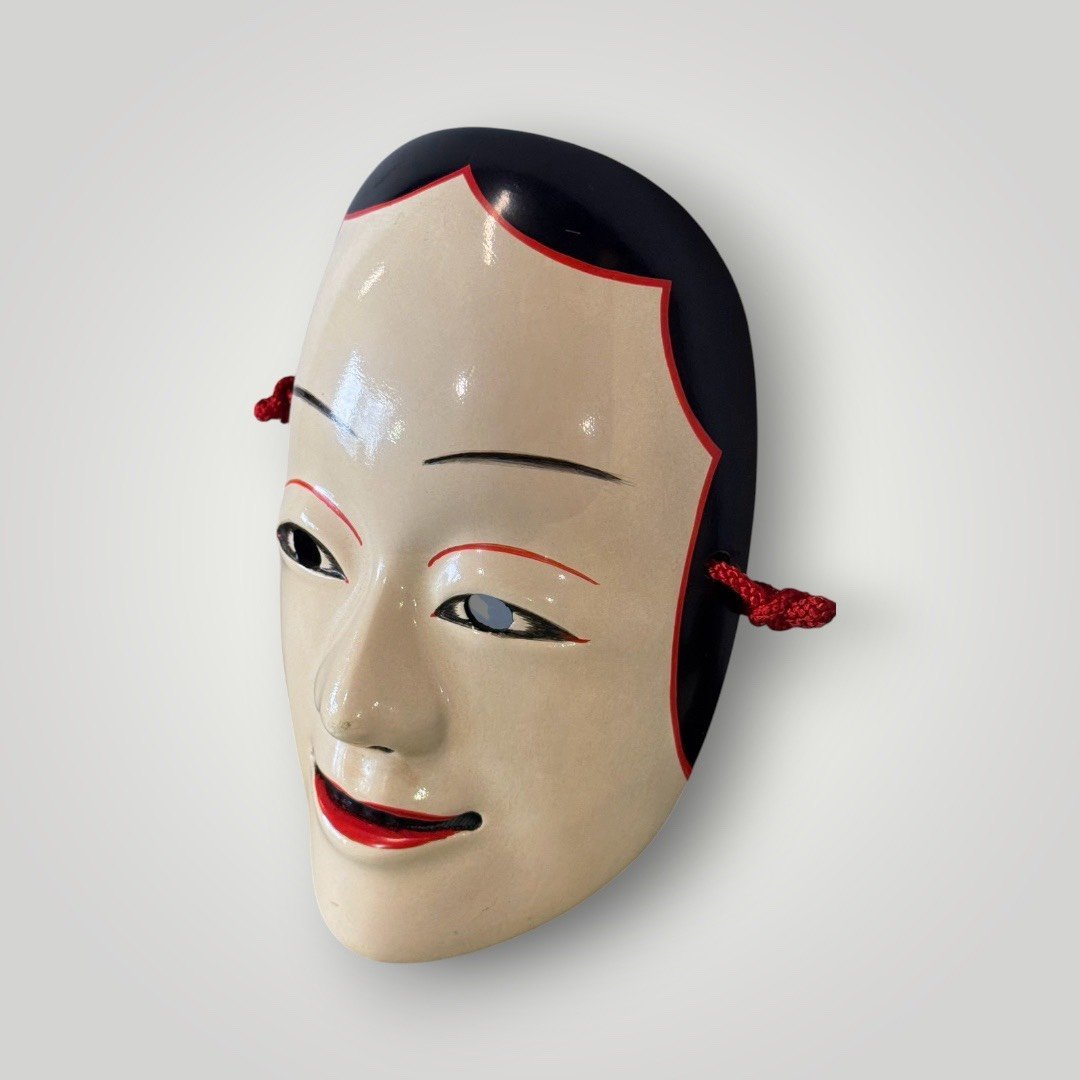
This female mask has a gentle expression and fine features, showing the classic aesthetic of a Japanese woman's nō mask.
◆ Carved in wood
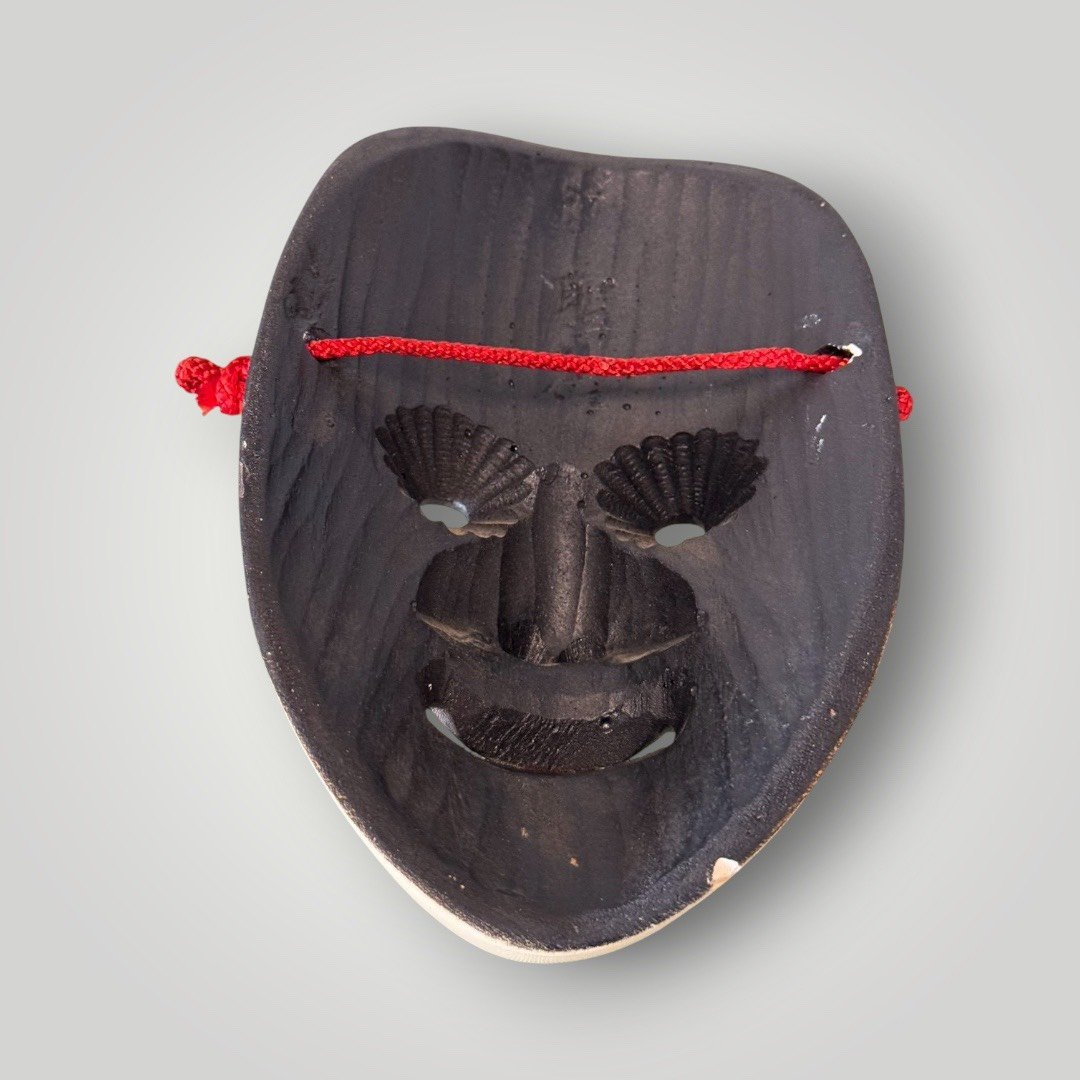
According to the product description this piece is carved in wood.
Compared with resin or mass-moulded modern decorative masks, a carved work usually keeps a more natural hand-shaped quality in the bridge of the nose, the eye sockets, the corners of the mouth and the curve of the cheeks.
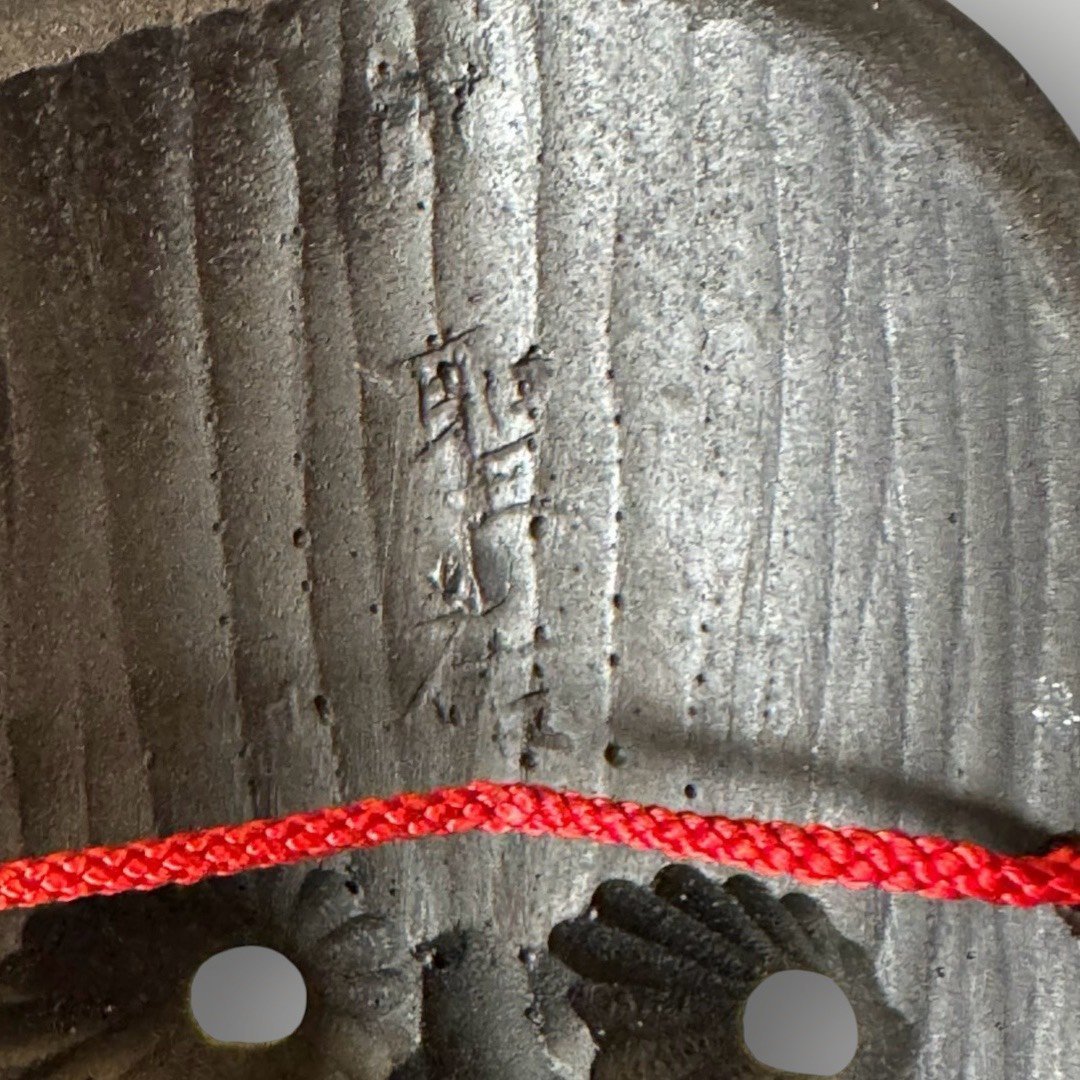
The wood itself also changes in colour and texture over time, so every old mask has its own character.
◆ A lacquered surface
The face has a clear sheen and a finely applied finish, giving the complexion a soft ivory-white quality.
Traditional Japanese masks often use lacquer, gofun (shell white) or coloured pigments to work the face finely, producing very subtle differences of colour in the skin, the eyes and brows, and the lips.
The three main colours of this piece — a white face, black hair and red lips — make a simple contrast of considerable elegance.
◆ The gentle expression of a female nō mask
What draws one most is the expression.
The eyes are slightly narrowed and the corners of the mouth carry the faintest hint of a smile — not the obvious smile of an ordinary doll but something reserved and quiet.
This quality of "smiling and not smiling" is one of the most captivating features of the Japanese nō mask.
◆ Red cord detail
Red cords are knotted at either ear, adding a note of bright colour to the white and black of the mask.
Red is highly distinctive in traditional Japanese objects and festival culture and also gives the mask a stronger focal point when hung on a wall.