


Features
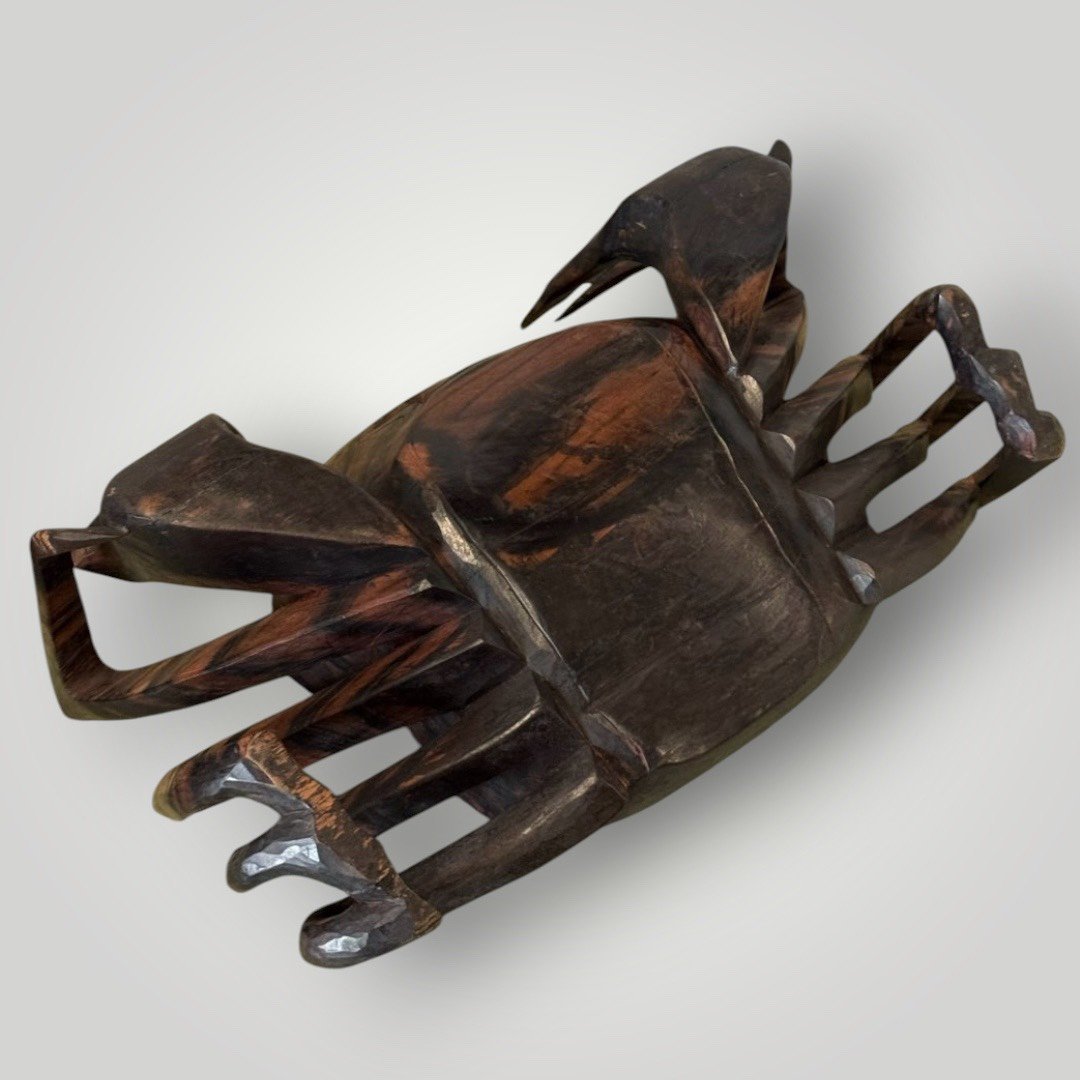
◆ A large crab carved in wood
A whole crab forms the subject, which makes the piece instantly recognisable.
The shell, the two claws and the legs all have clear three-dimensional depth; this is not flat ornament but close to a small sculpture.
◆ Wood carving combined with a usable vessel
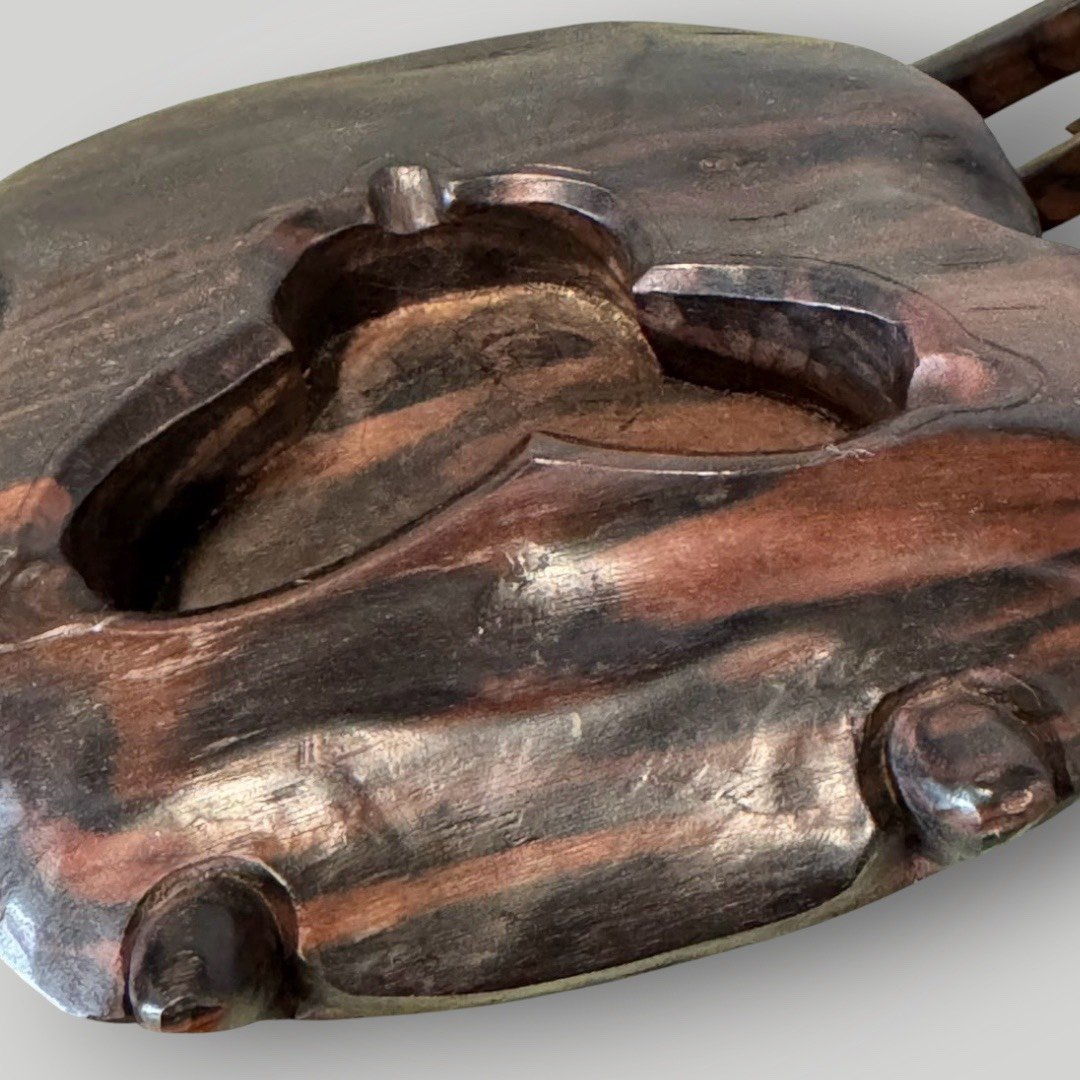
A recess is set at the centre, which can serve, according to need, as:
An ashtray
A dish for small objects
A key tray
A small vessel for the tea table
Desk tidy for a study
A decorative dish
This is what makes the piece interesting: it is not only for display but can genuinely become part of daily life.
◆ Natural grain and a dark patina
The surface shows a grain of interwoven dark brown, red-brown and blackish brown, with the settled quality common to old wooden pieces.
Under different light the grain shifts in depth, which looks more natural than a stained carving.
◆ Strongly hand-carved
The photographs show clear traces of hand carving in the legs, claws and the curves of the body; there is nothing of mass production about it.
Work of this kind, not perfectly symmetrical and full of handmade detail, in fact has more character and fits the aesthetic of Japanese antique and folk-art collecting.
◆ The crab subject: auspicious and full of humour
In East Asian culture the crab, through the association of its shell with the character for "first rank", is often given the meanings of coming top, good fortune and vitality.
A crab-shaped vessel also suits seasonal display, and is especially congenial with autumn, seafood dishes, sake vessels or a tea gathering.