


Features
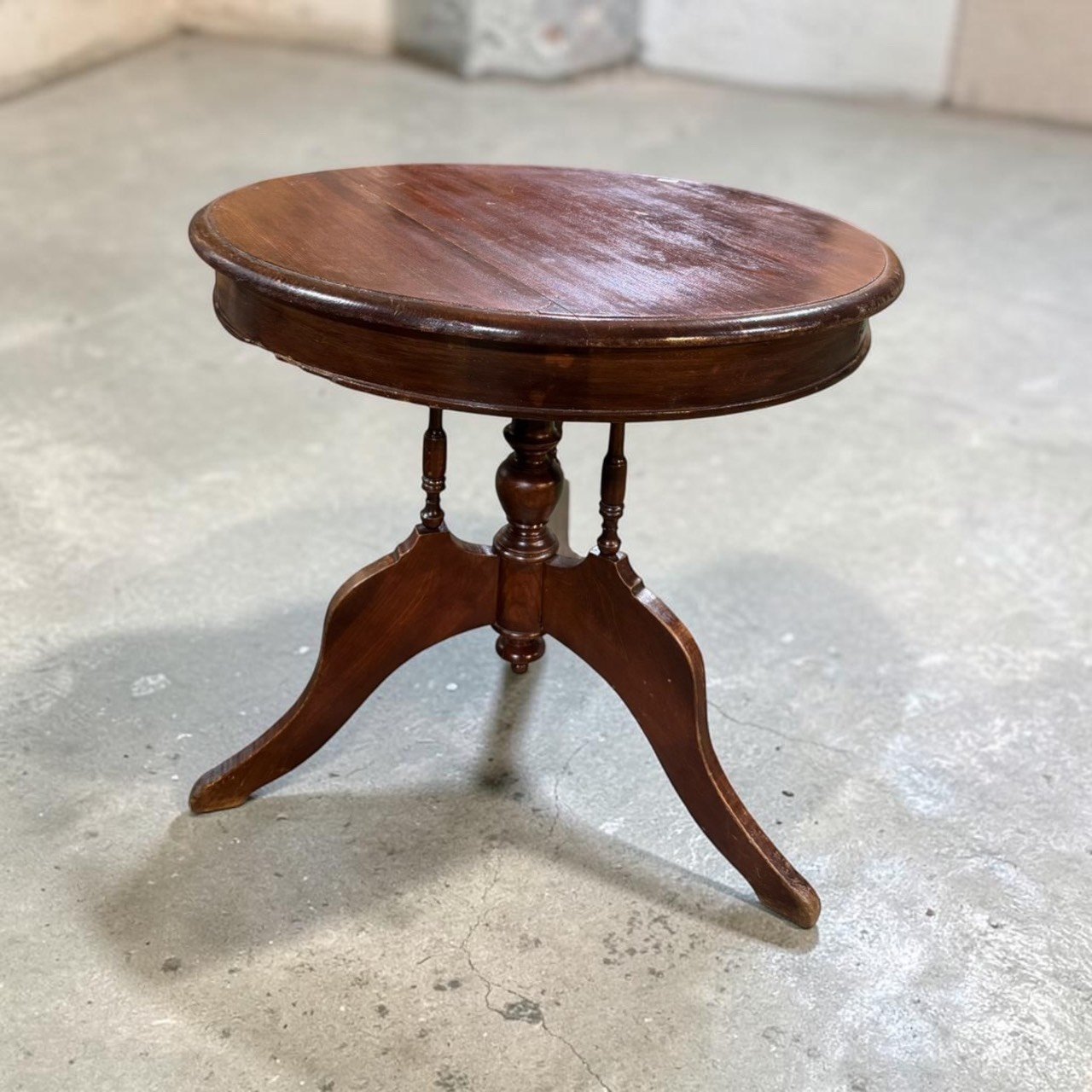
◆ The classic central-pillar tripod structure
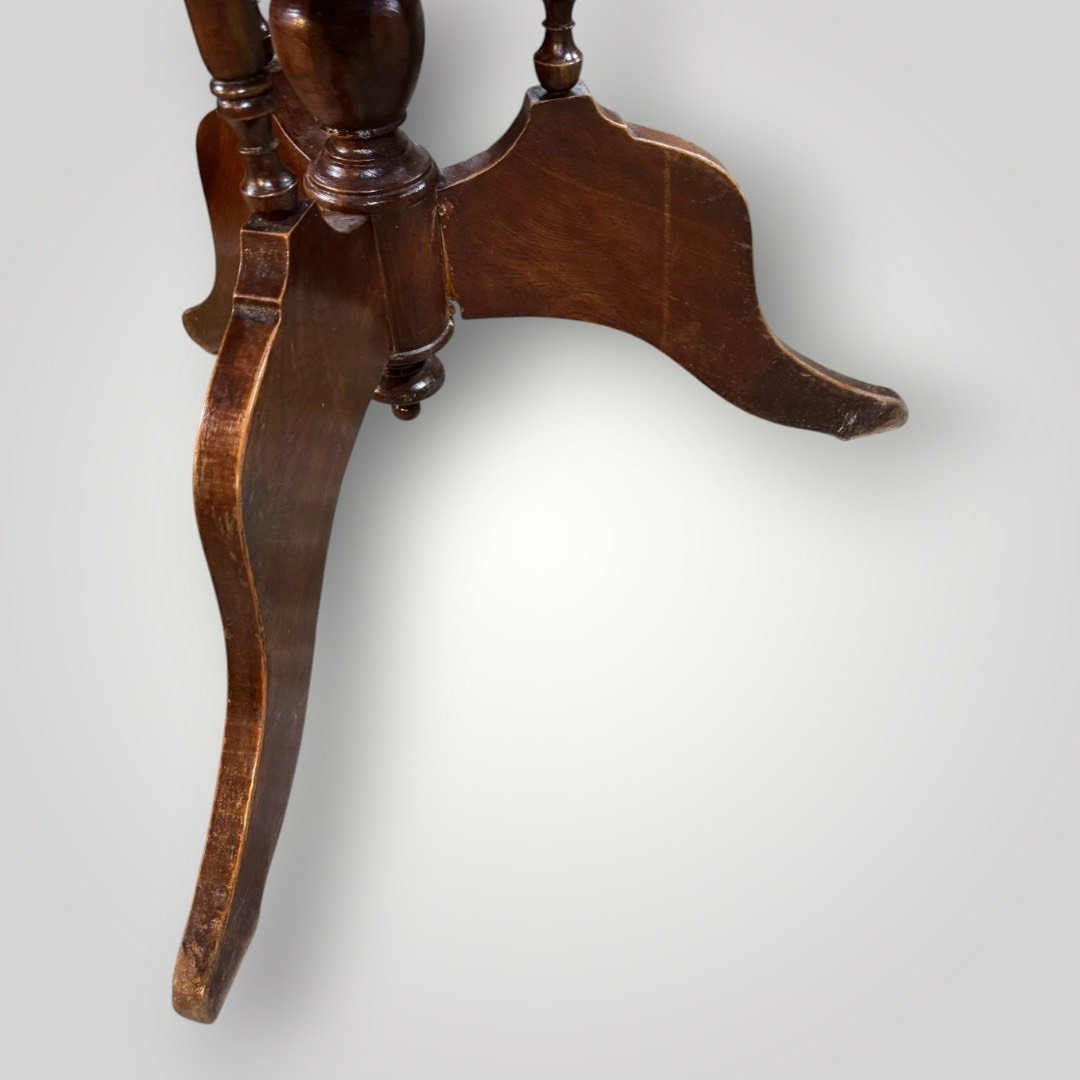
The great feature of this table is the central pillar, which extends downwards and then divides into three legs.
Compared with a four-legged table, a tripod design looks lighter and has more of the elegance of classical furniture.
The tripod also leaves the space beneath more open, so the legs do not get in the way when the table is used with a chair, an armchair or a sofa.
◆ A round top, gentle in a room
The great advantage of a round table is that it has no sharp corners and so looks softer.
In a living room, entrance hall, bedroom or café alike it never makes a space feel hard.
At about 74.2 cm in diameter it also serves well as:
A tea table for two
A coffee table
A hall display table
A stand for a vase
A side table
A small dining table
◆ A deep brown that wears well
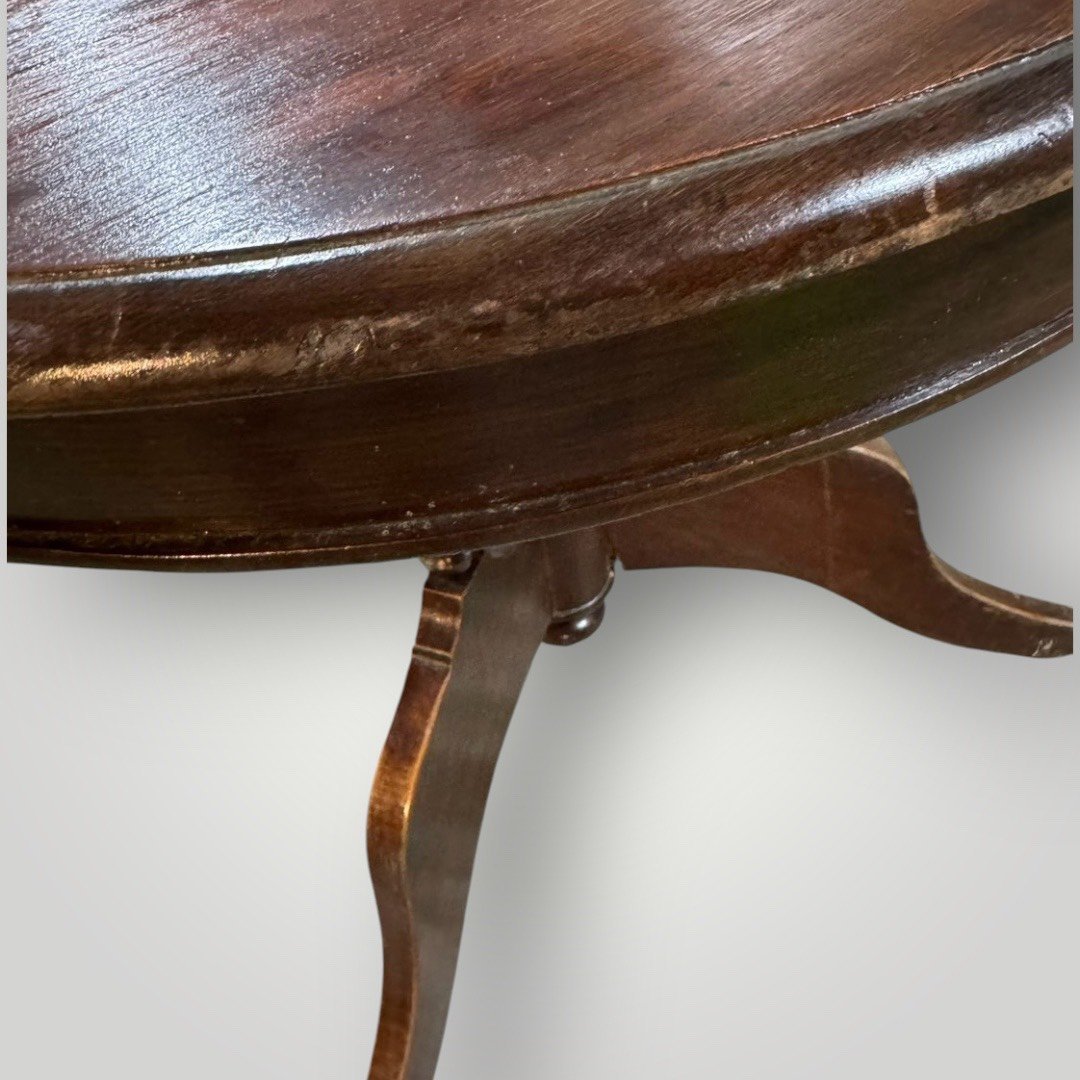
The wood is a darker brown with a natural sheen and a sense of age.
This tone goes very easily with:
Cream walls
Grey-white walls
Dark wood furniture
Brass lamps
Classical rugs
Japanese antique furniture
It therefore fits naturally into classical, Shōwa or European retro interiors alike.
◆ The turned central pillar
The central pillar is not a plain shaft but has several bands of moulding and a ball turning — a decorative vocabulary common in traditional European furniture.
It gives the piece more visual depth and adds to the craftsmanship of an old piece of furniture.
◆ Curved tripod legs
The legs sweep outwards in an elegant curve, a more dynamic profile than straight-legged furniture.
With the round top, the proportions look very handsome seen from the side.