




Features
By Ototake Sōichi, an artist shown at the Nitten: according to the accompanying biography, this work is by a noted artist. He was selected many times for the Teiten, Bunten and Nitten exhibitions, received the Medal with Dark Blue Ribbon (konju hōshō), and served as emeritus professor at Nagoya University of the Arts. Work with such academic and official recognition holds its value well and stands high artistically.
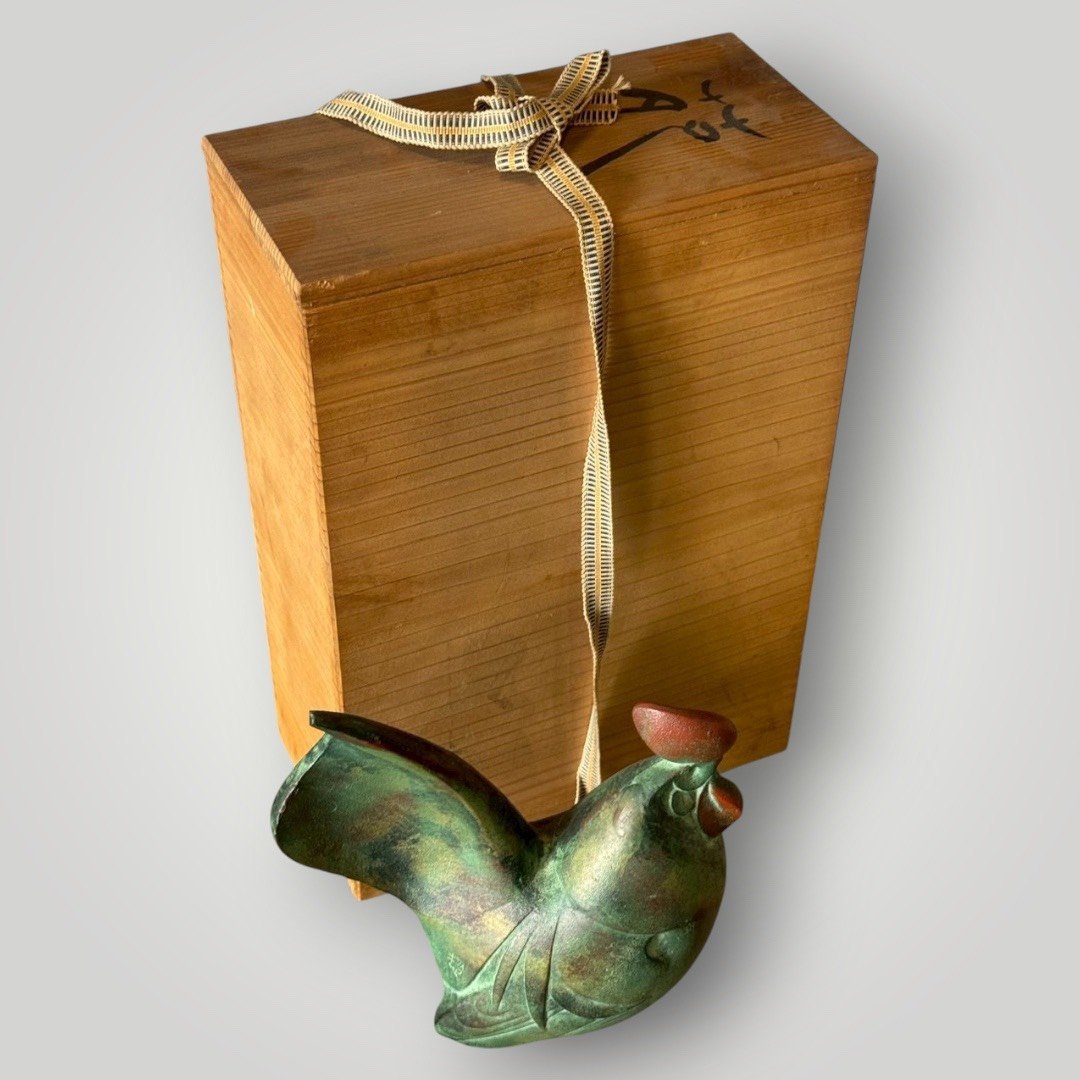
Spare, abstract modern aesthetic: the piece dispenses with fussy detail and uses flowing curves to outline the cockerel's proud stance. The high tail and upright breast form a balanced geometry, giving a generous, modern and lively sense of movement — a typical Shōwa modern sculptural style.
Solid, settled iron texture: the granular quality peculiar to cast iron gives the body a deep sheen like old bronze. Patches of green bronze oxidation contrast strongly with the dark red of the comb, lending the piece the weight of history and the mystery of an excavated find.
The meanings of the auspicious crow and of building a household: in Japanese culture the cockerel stands for the light of dawn and for warding off evil. Its call drives away darkness, giving it positive associations with good fortune, diligence and success in work; it is much liked by collectors as a charm for the fortunes of a household.