


Features
1. The plump, innocent look of a Shōwa face
This child figure shows the typical taste of the Shōwa period: full cheeks, the corners of the mouth slightly raised, and clear eyes. In Japanese culture such a rounded form stands for health, freedom from worry and abundant blessing, and it brings a calm, joyful, healing atmosphere to wherever it is placed.
2. Traditional craft and colour vocabulary
Gofun texture: the face and hands are finished with traditional gofun, a white powder of ground shell laid on as a coating, giving a mellow, non-reflecting matte quality like a baby's skin.
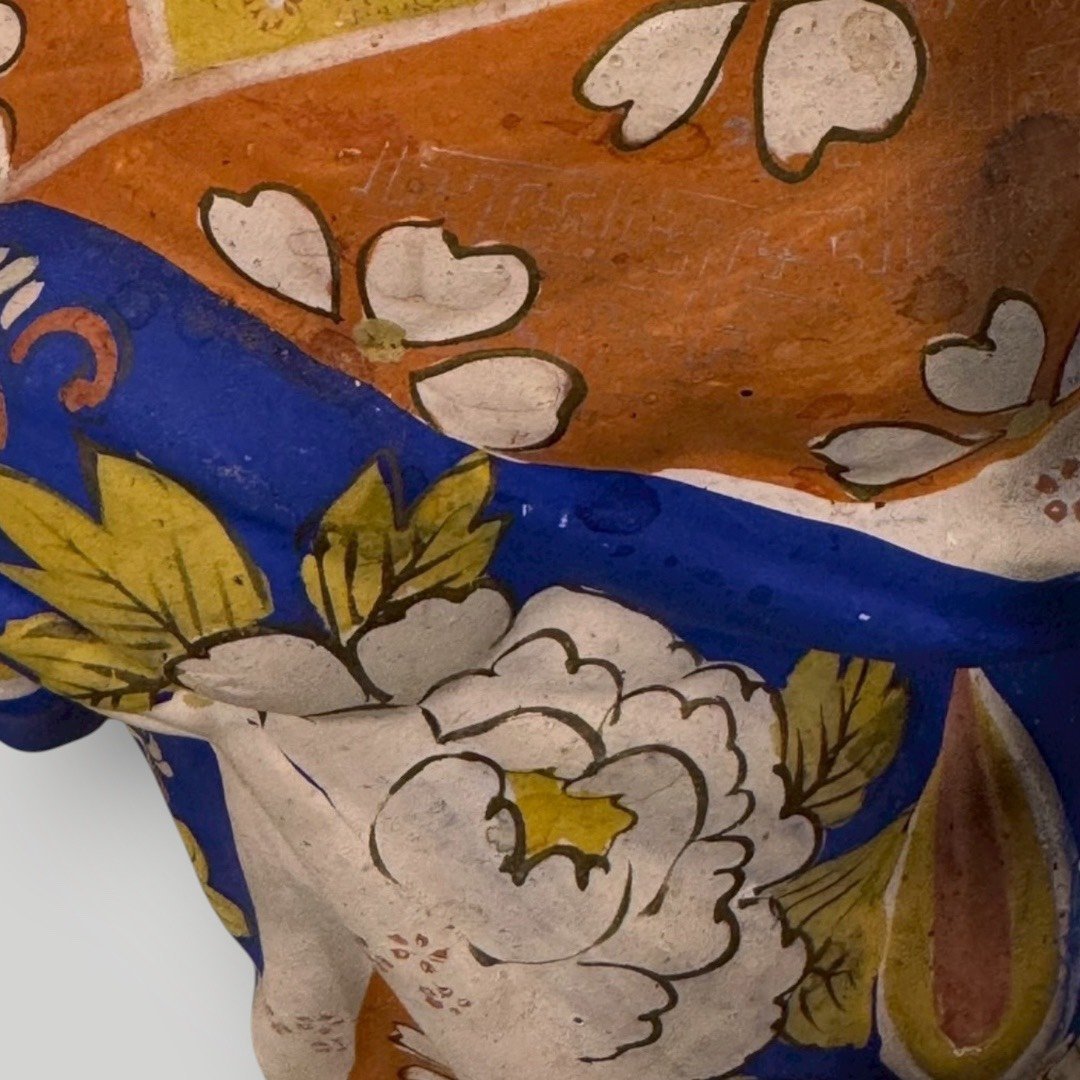
Brilliantly painted kimono: the child wears a kimono in which sapphire blue is interwoven with vermilion orange, dotted with the characteristically Japanese motifs of cherry blossom and peony. The blocks of colour are distinct and the lines generous, showing a strong Shōwa popular-art style.
3. A warmth of history that is one of a kind
The appeal of an antique lies in what time has refined. The small damage on the back of this figure and the marks of age on its surface are proof that it once accompanied a family as it grew. Set beside a mechanically produced modern figurine, it has a composed air and a historical soul that cannot be copied.