


Features
Shōwa-period keyaki wood, grounded and solid
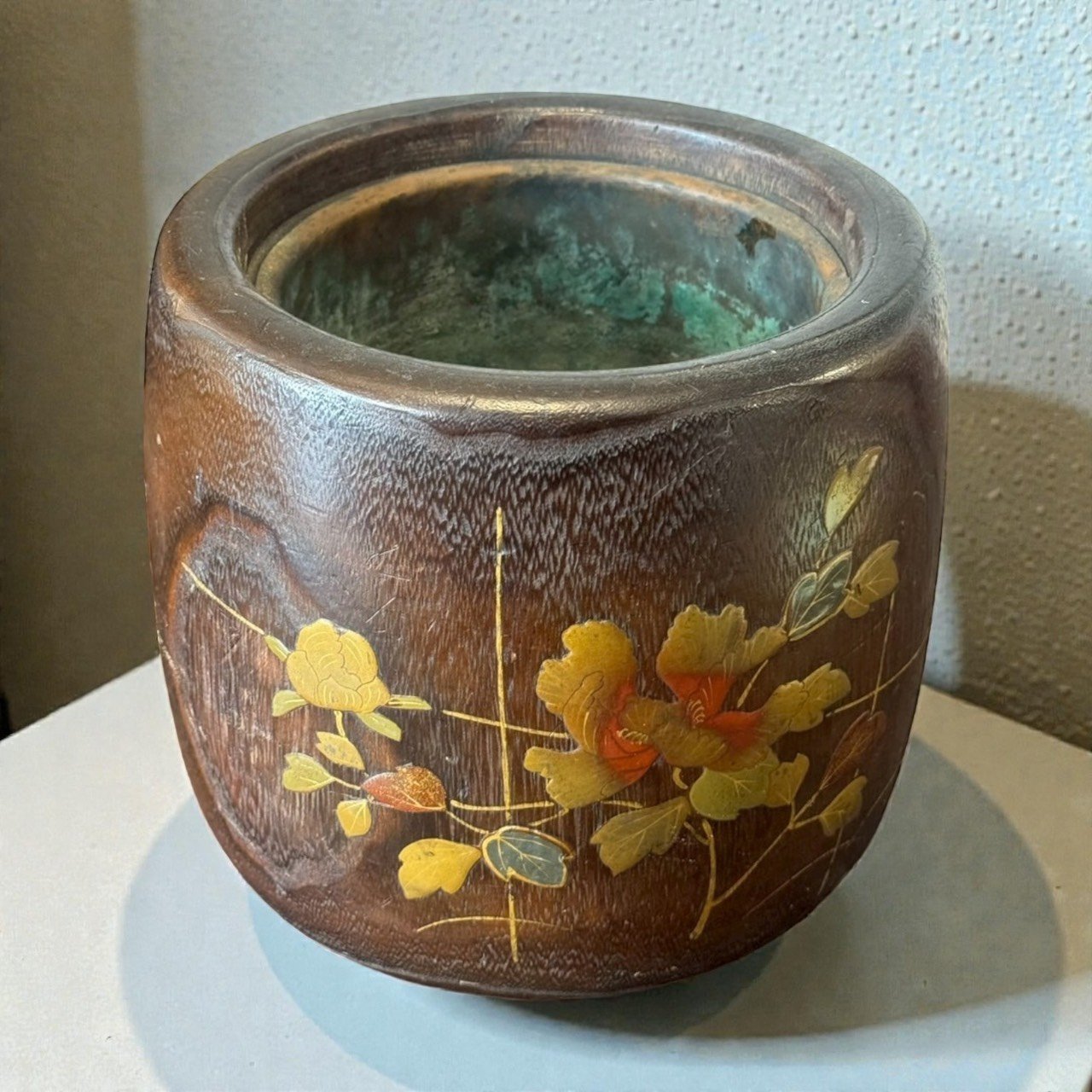
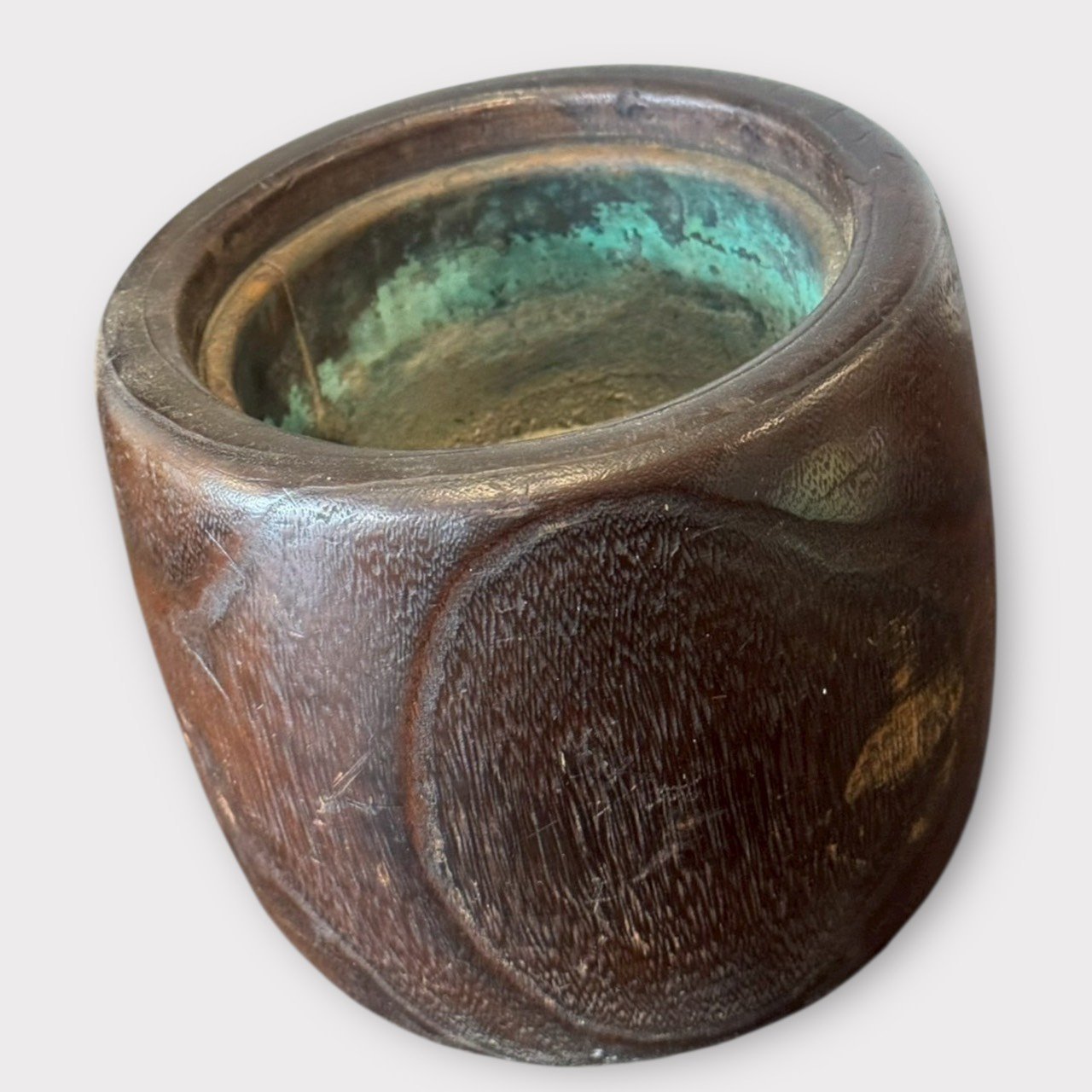
Keyaki (Japanese zelkova) is a fine timber widely used in Japan for furniture and household objects, with clear grain, good hardness and high durability. The wooden body of this hibachi is intact and free of cracks; the surface shows natural traces of use yet still keeps a soft, warm sheen.
Hand-painted gilt floral decoration
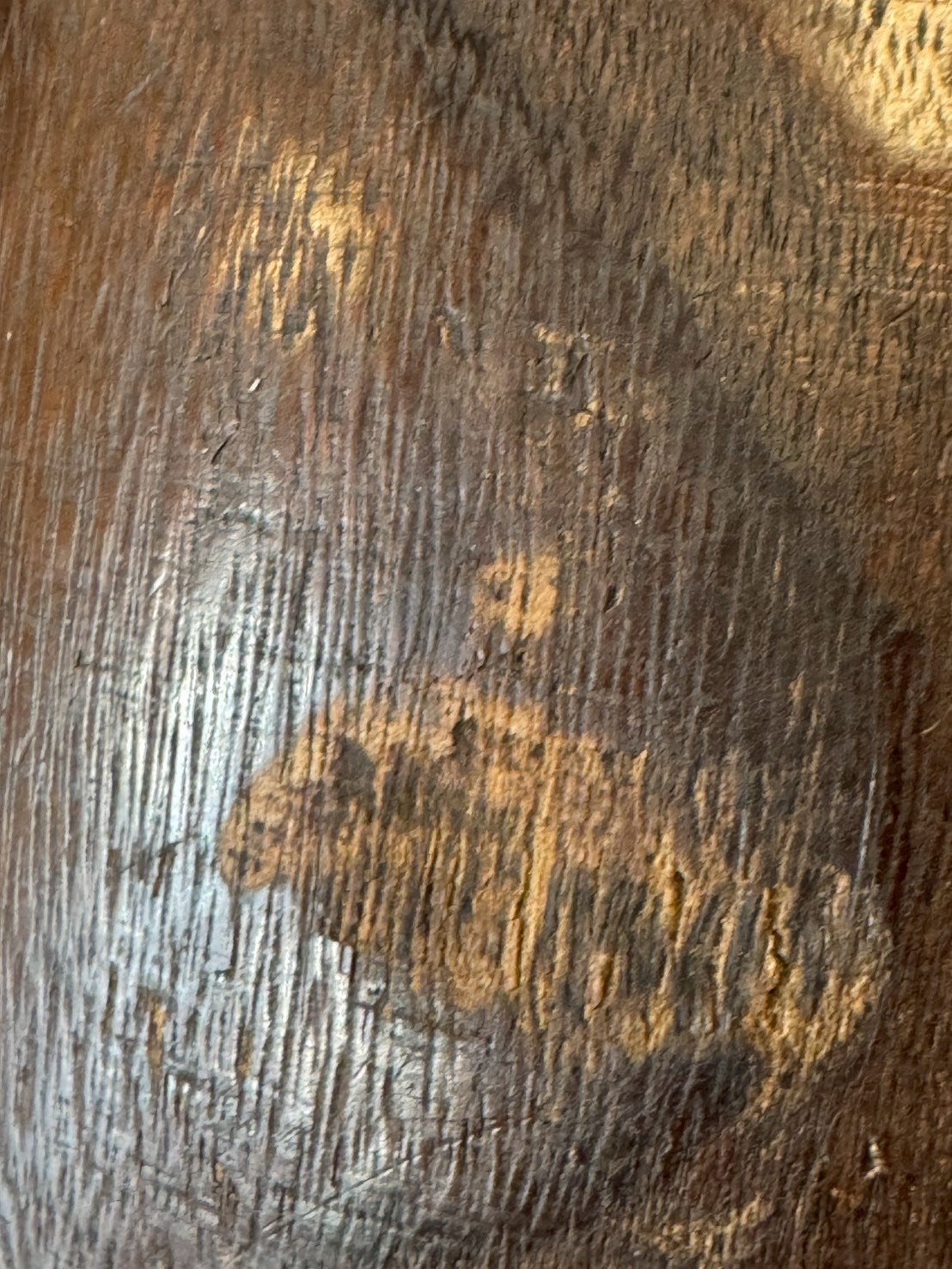
The gilt floral pattern on the outer wall is hand-painted rather than printed or transfer-applied, so the craftsman's brushwork can be felt in the lines, the varying thickness and the colour. Against the dark wood ground the gold stands out clearly without being showy.
Original metal liner, keeping its sense of history
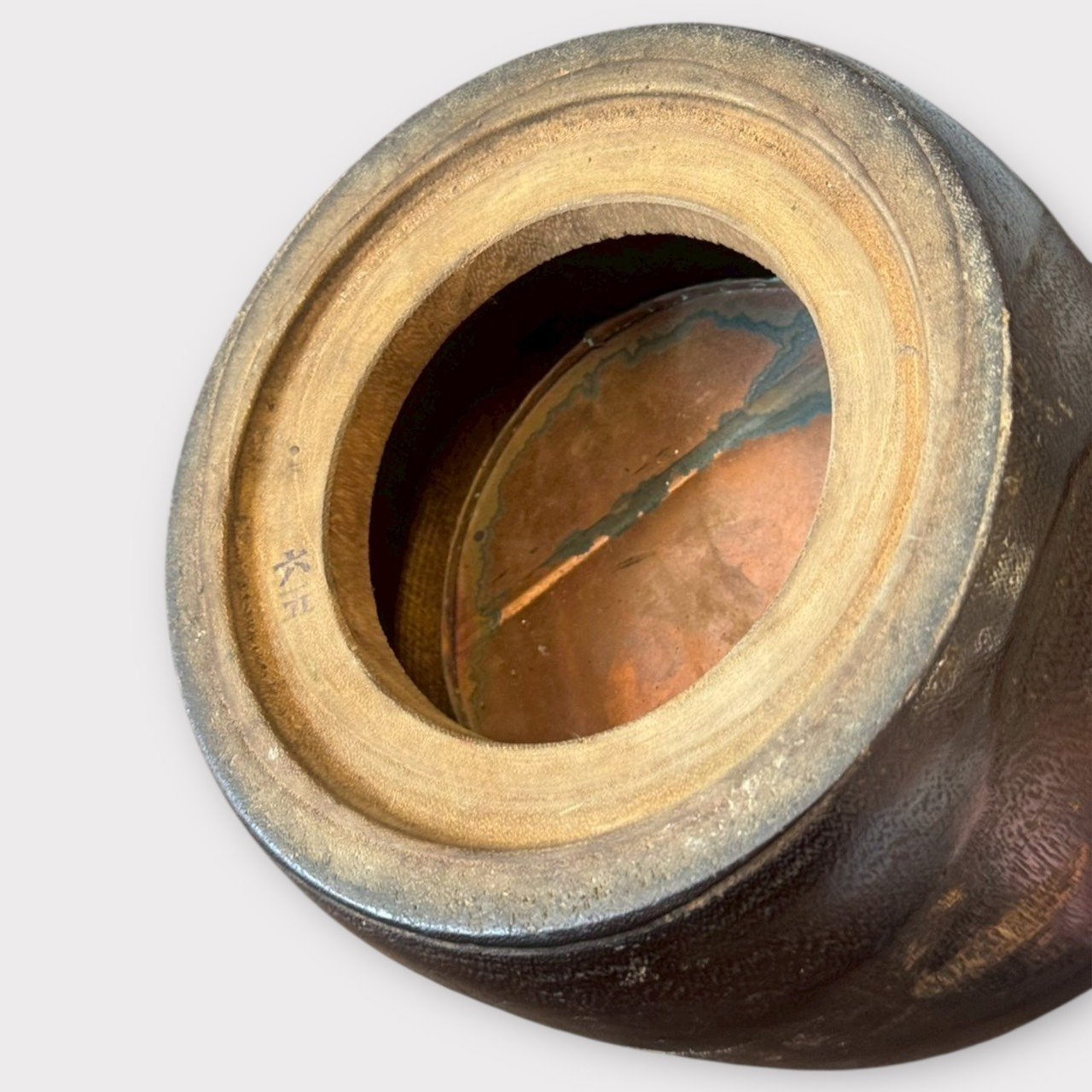
The liner retains green patina and smoke marks, one of the most appealing features of an old hibachi and clear evidence that it was genuinely used. If kept purely for display it can be left as it is; if it is to be repurposed, another container may be placed inside for protection.
A practical size with flexible display options
A medium size that sits naturally on a tea table, in a tatami room, on a desk or on a low cabinet in the entrance hall, blending easily into Japanese, minimalist or mixed antique interiors.
Many uses, open to reinterpretation
Besides its original use as a hibachi, it can also serve as:
An outer vessel for fresh or dried flowers (with a vase or glass set inside)
A small display base for a tea setting or incense arrangement
A container for small items (tea utensils, incense, matcha tools and the like)
A cachepot for a potted plant, creating the feel of a Japanese garden