


Features
◆ 2. A representative example of the kinrande technique of late Meiji to early Taishō Kutani
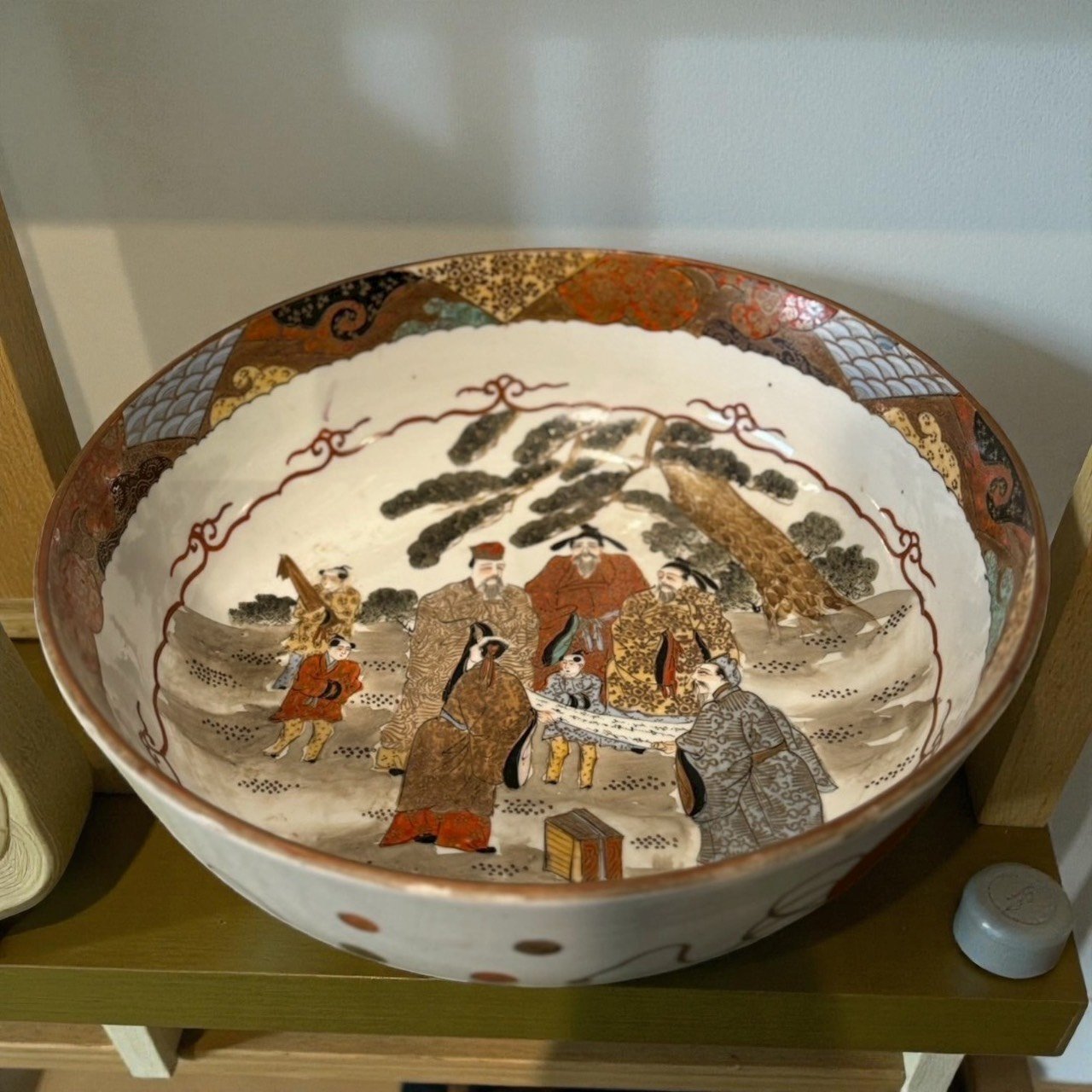
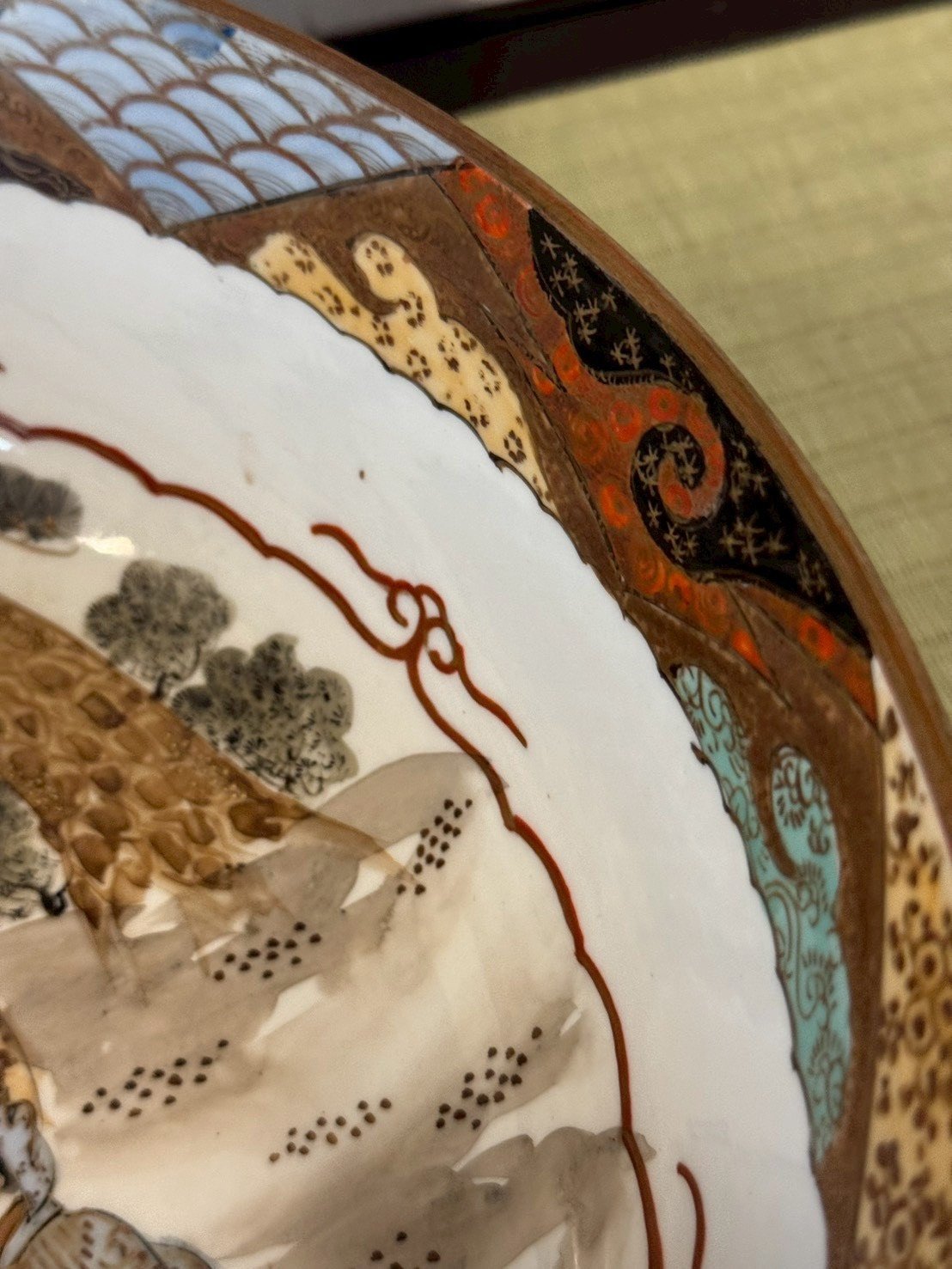
Kinrande is the hallmark of the opulent school of Kutani ware; on this piece the gilding on the base and the inner wall still retains good brightness, which shows it has been well kept.
Its features include:
Extensive use of gilding as a ground
Overglaze enamels built up in layers
Several patterns joined together (seigaiha waves, lozenges, floral scrolls and gauze grounds)
A colour scheme that is rich without being vulgar
It clearly embodies the aesthetic and the craftsman's spirit of the flourishing period of Meiji craft.
◆ 3. A finely painted genre scene — the whole story is legible at a glance
The image in the well of the bowl is a full gathering of figures:
An elder, a scholar, a figure in official robes and a young attendant
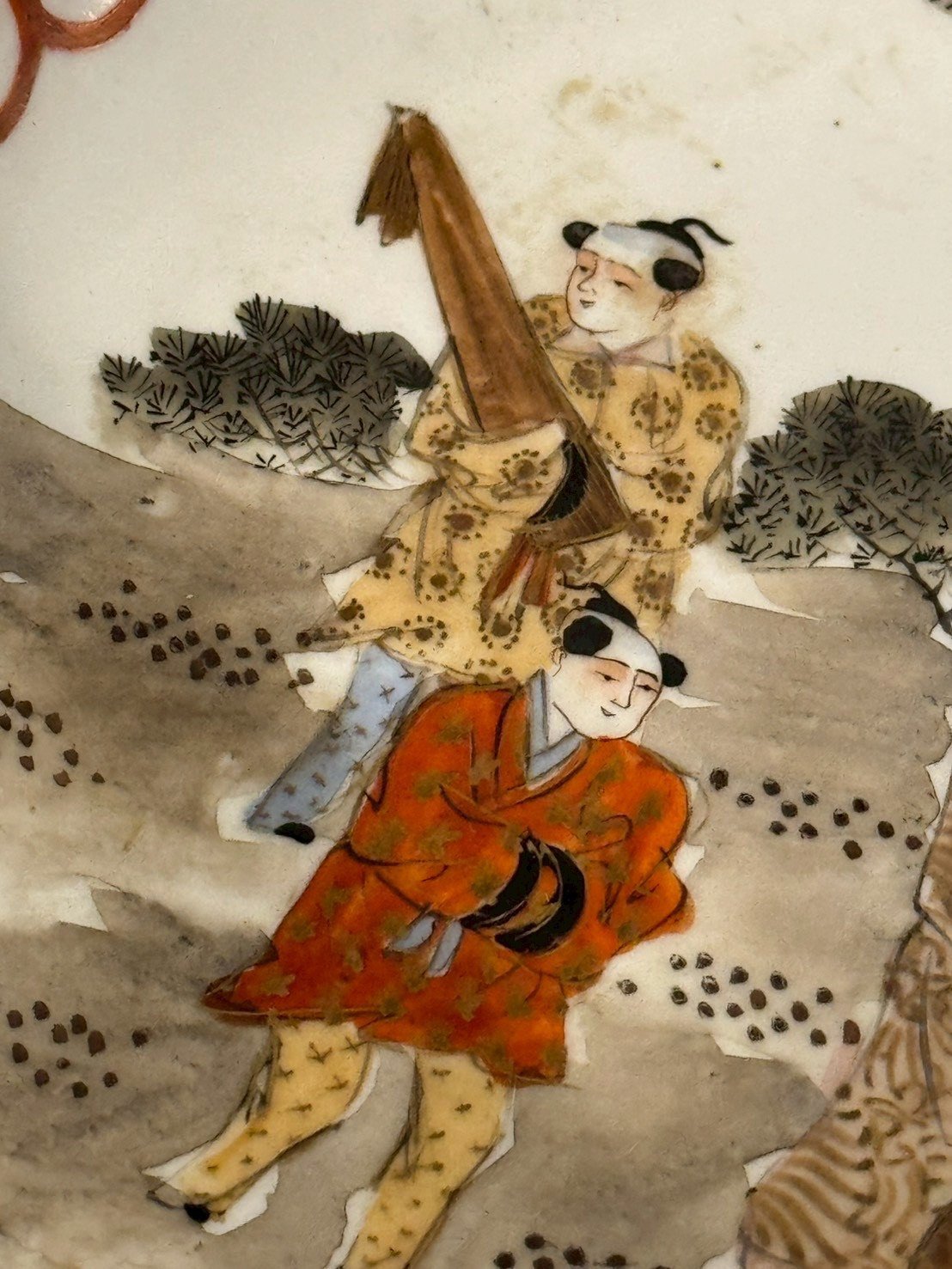
Robes rendered in alternating gilt, aka-e (red overglaze) and black outline
Extremely dense and detailed patterning on the garments
Clearly drawn faces, with beards, gaze and expression
◆ 4. Rich tonal layering and stable glaze colour, rewarding both visually and as craft
Across the piece one can see:
Red-brown, ochre, ink black, gilt, green and blue enamels
An evenly lustrous glaze surface
Clean separation between colour areas, with no muddiness
This shows good control at the kiln, with every enamel staying stable after high-temperature firing — the mark of a high level of craftsmanship.
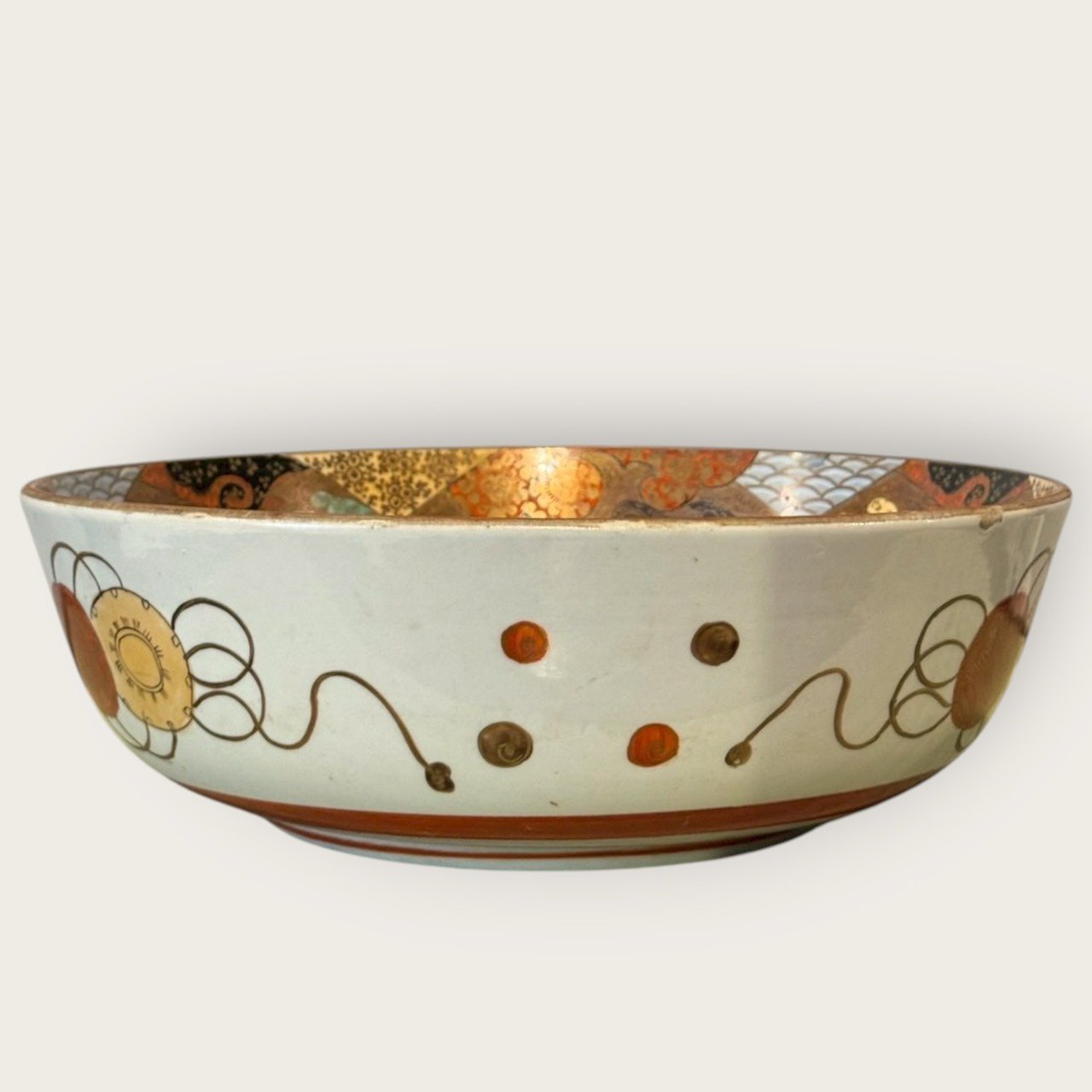
◆ 5. A wide mouth and soft curves — a large Kutani form meant for display
Large bowls of this kind were mostly not made for eating, but rather to be:
Hung on a wall rack
Placed in the tokonoma alcove of a tatami room (床の間)
Used at banquets or in seasonal displays
In other words, a vessel for display.*
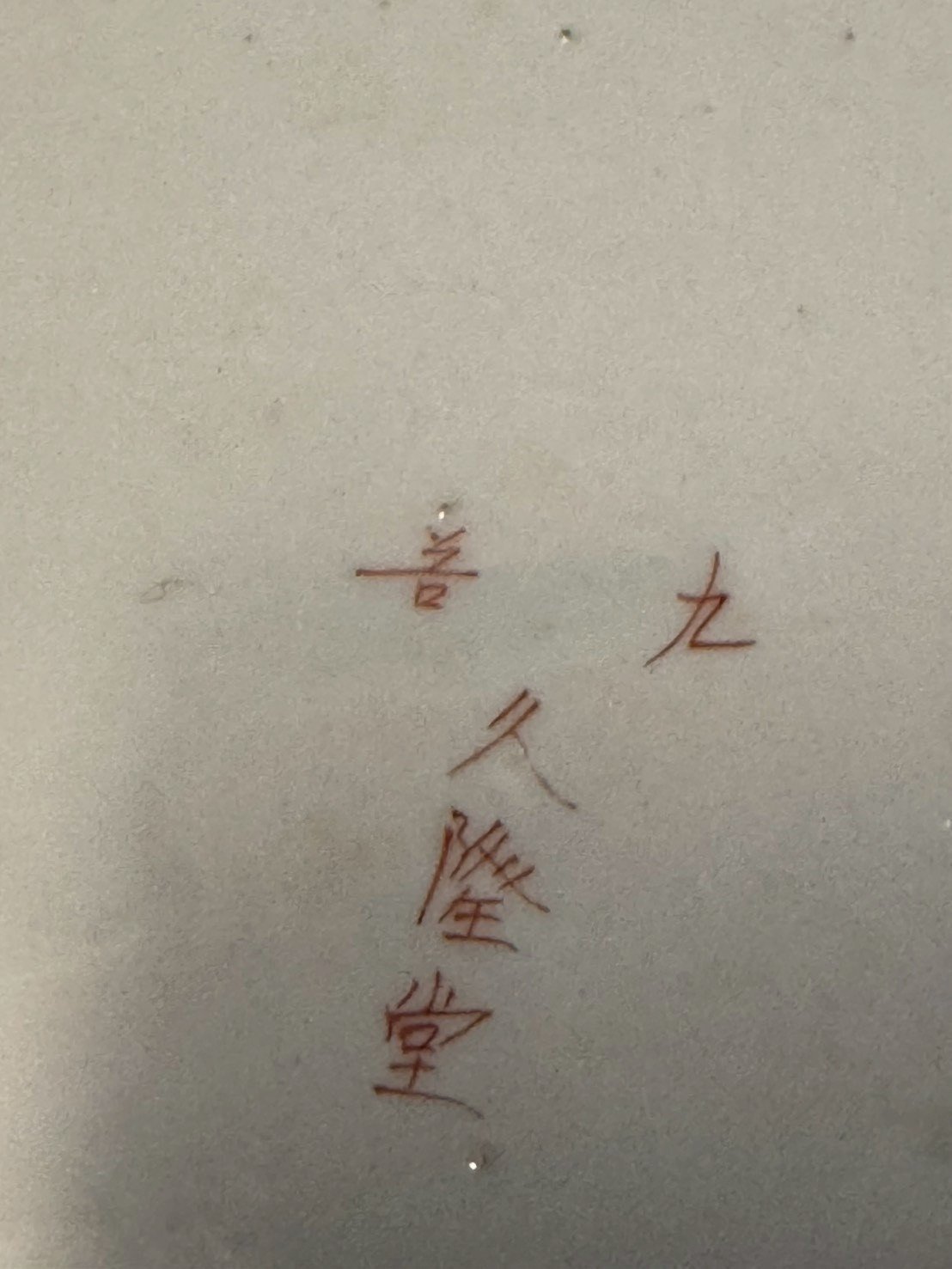
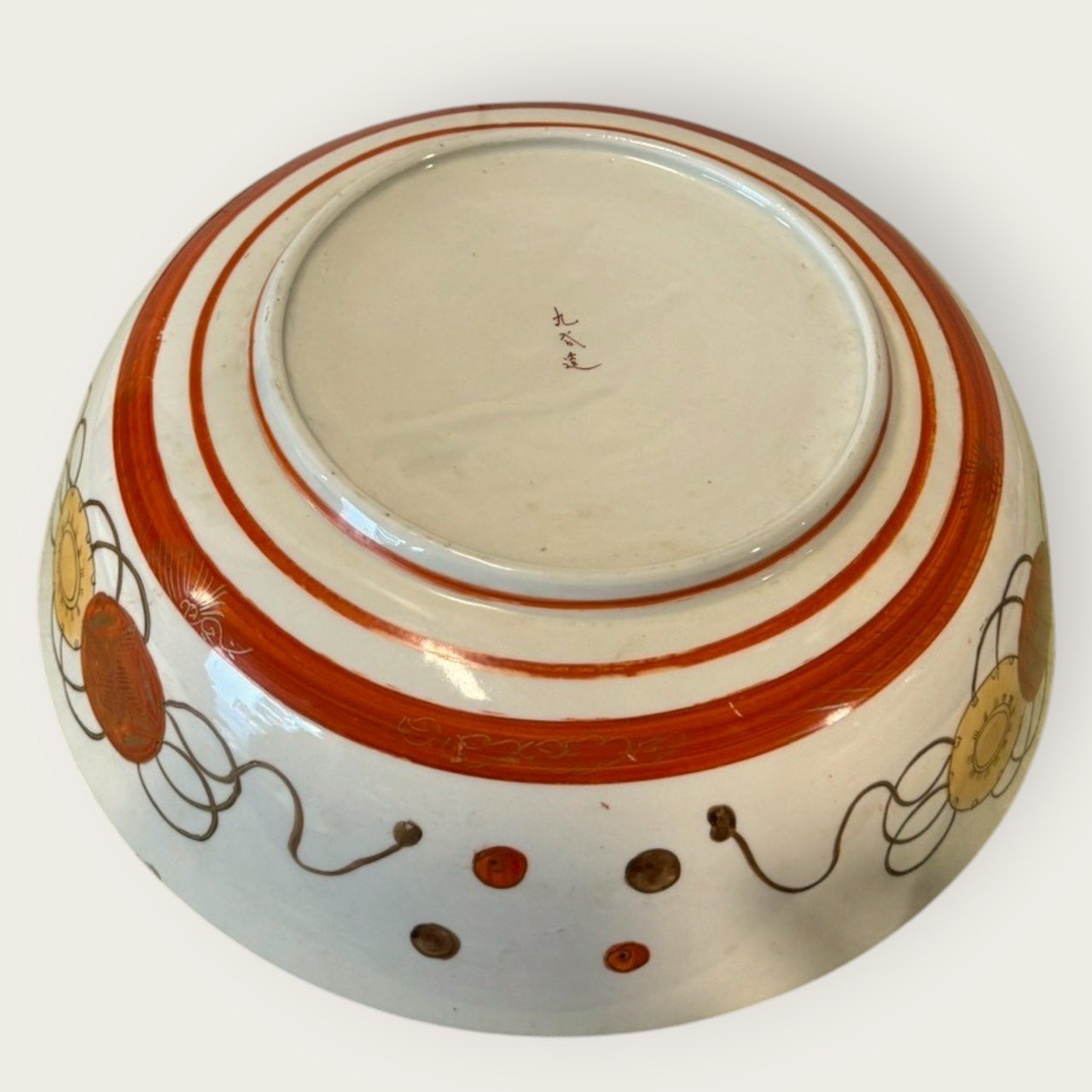
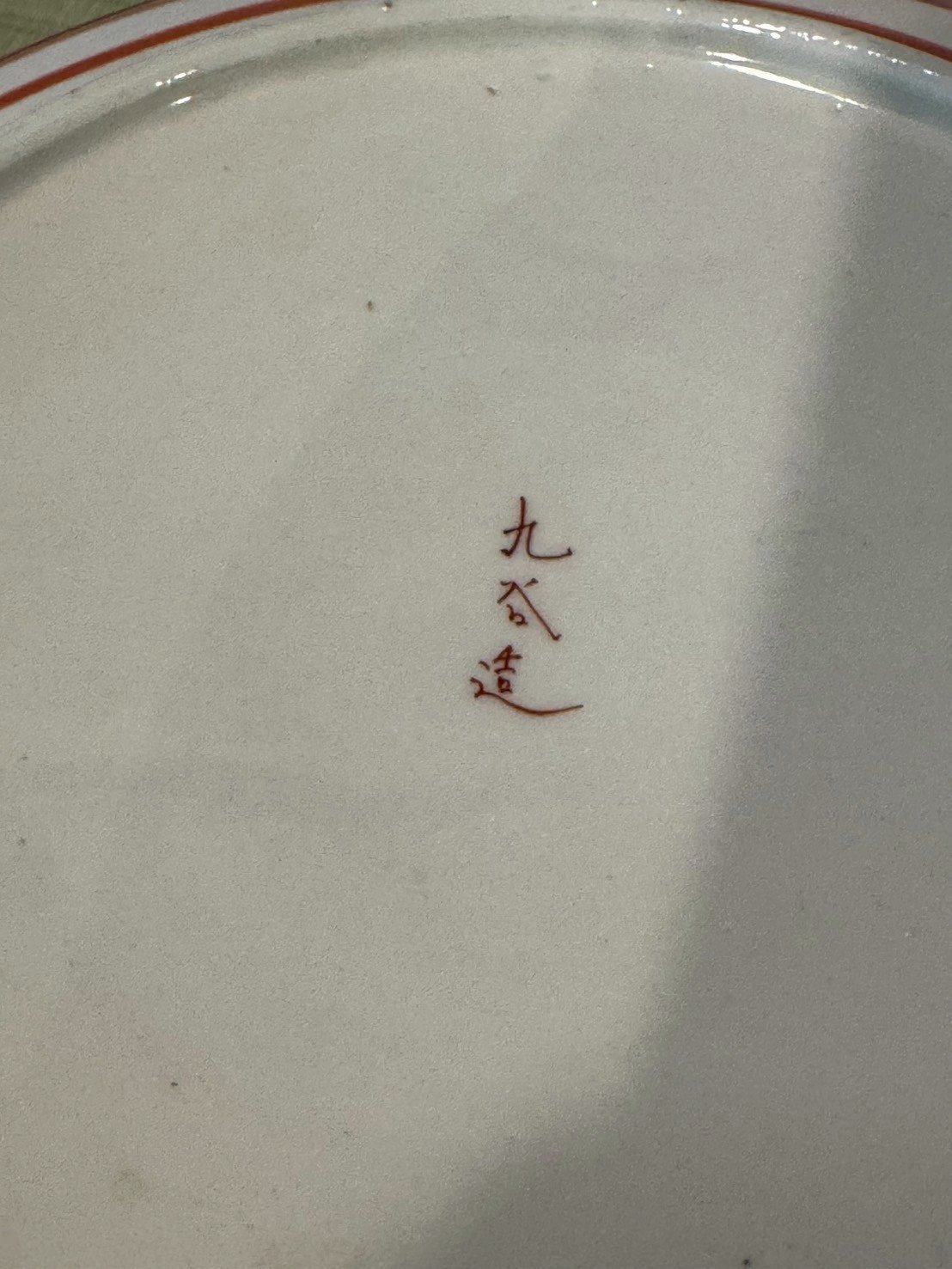
◆ 6. Marked "Kutani-zō" on the foot: a clear kiln attribution, easy to study and collect
The base mark is clear and neatly written, and the manner of writing matches the typical marks of the late Meiji to early Taishō period, which makes it an important basis for dating.
"Kutani-zō" indicates that this is not a later transfer-printed piece nor an unmarked imitation, but a product of an orthodox Kutani workshop, which raises its collecting value.