



Features
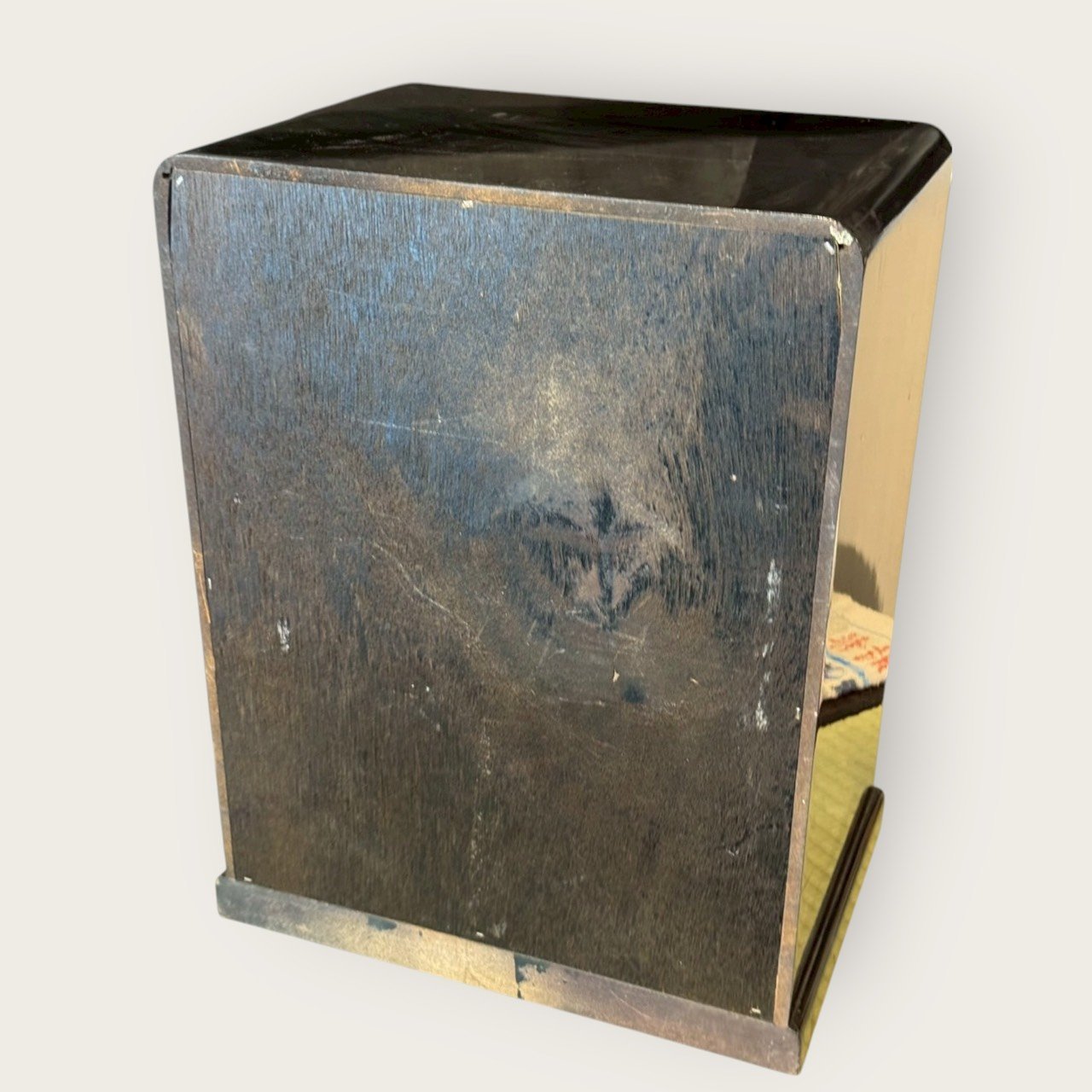
Traditional lacquer on a wooden core: many coats applied and then hand-ground, giving a deep, glossy black
Carved framed door panels: the relief lines are clearly layered, showing a balance of craft and design
Upright, well-balanced proportions: a tabletop size that suits modern interiors
Sound, sturdy construction: a heavy base, with doors that open and close smoothly and without play
Many uses: equally suited to enshrining a Buddhist figure, storing incense utensils or displaying scholar's objects
A finely lustrous lacquer surface: it reflects soft natural light, with excellent character
A strong sense of craftsmanship: precise joinery, with edges and corners ground smooth so they do not catch the hand
Easy to place: it fits Japanese, wabi-sabi, modern minimalist or Chinese Zen interiors alike
Lasting appeal: valuable both to collect and to use
A first choice for an end view: a single piece is enough to become the visual focus of a room
◆ Suggested settings and display
Household butsudan / amulet cabinet: for enshrining Kannon, Amida Buddha or ancestral tablets
Incense or tea spaces: as a cabinet for storing and showing incense and tea utensils
An end view in an entrance hall or living room: pair it with a flower arrangement, a hanging scroll or a small lamp for a wabi-sabi mood
Commercial display: suitable for Japanese restaurants, Zen-style cafés and design select shops