


Features
Large in scale, with strong presence: standing close to 50 cm, it can be the main character of a room whether by the door or on a cabinet.
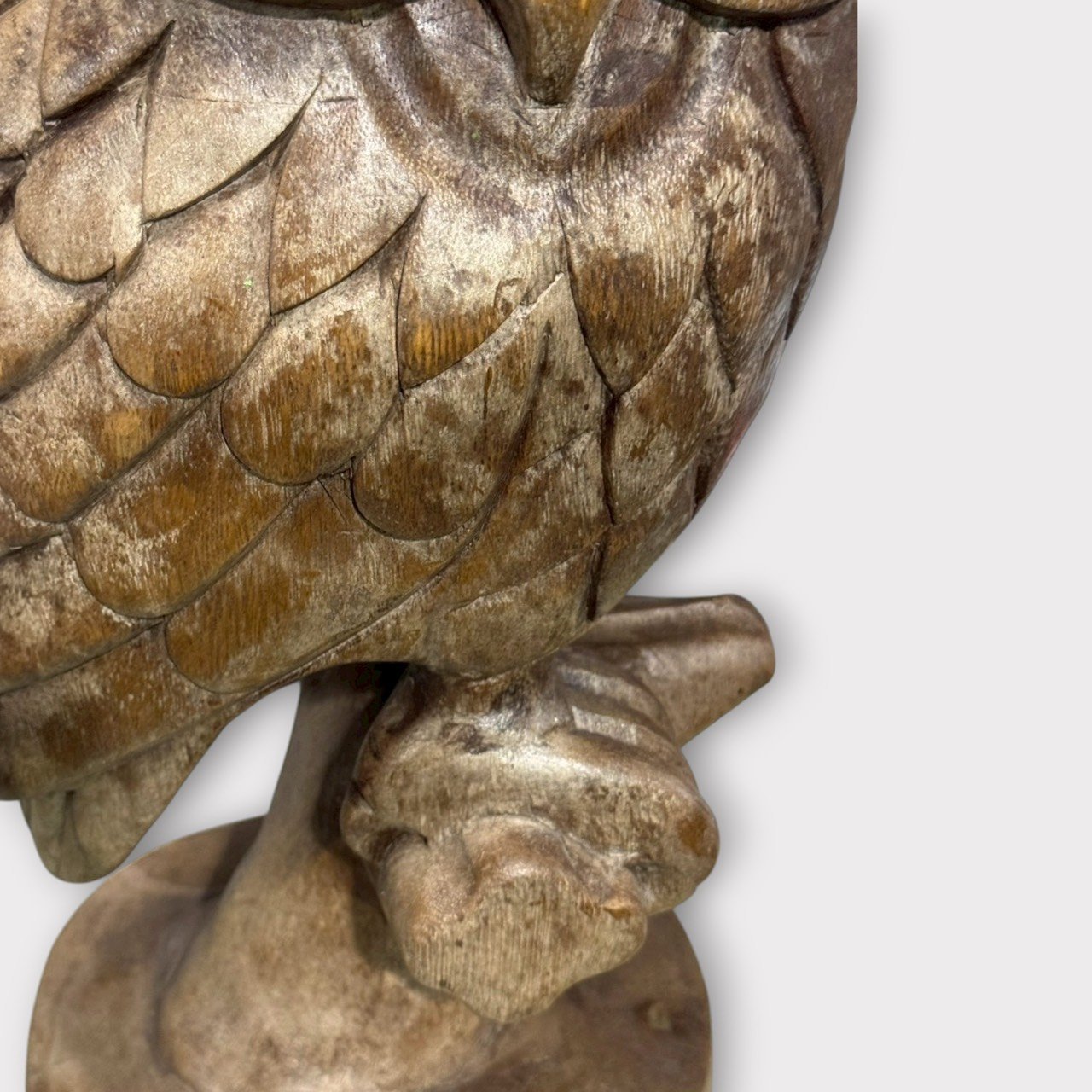
Carved by hand by a craftsman: the feathers are cut layer by layer with clear turns between line and plane, keeping the warmth of visible tool marks.
Wabi-sabi in wood: a matte feel and a natural patina give it the plain, refined character of Japanese wabi-sabi.
An auspicious meaning: in Japanese, fukurō (owl) puns on **"no hardship / fortune comes"**, so owls are often kept as ornaments for protection and good luck.
Steady proportions with a low centre of gravity: the base is thick and solid, so it stands safely.
A material that pairs easily: wood mixes readily with ceramics, bronze, plants and textiles, adding depth to a room.
A visual focus: the large-eyed form is appealing, good for drawing attention in a commercial space or creating a themed photo corner.
Natural old marks add to the story: fine traces of storage and differences in tone give the piece more feeling of age and collectability.
Easy to move and install: lighter than stone or bronze, convenient for exhibitions and market stalls.
Open to further work: if a custom base plaque or spot lighting is wanted, it is easy to build a display plan around it.
◆ Suggested settings / placement
Entrance hall / living-room feature wall: as an image of protection and good fortune, quieter still when paired with a floor lamp or a washi lamp.
Study / studio: placed at the end of a bookshelf or on a side cabinet, creating a calm and focused atmosphere.
Shop counter / restaurant entrance: as themed decoration and a brand mascot, raising recognition and interest.
Exhibitions / photographic sets: with a natural wooden stand, linen and plants, it presents a sense of Japanese living.
As a gift: suitable for an opening, a housewarming or a promotion, with the meaning of fortune arriving and safe protection.