



Features
– An original hand-painted design of the Shōwa period, in a craft now seldom practised
This vessel dates from the mid-Shōwa period, a time when Japanese ceramic production was changing and home culture was flourishing. Wares of the day aimed to be both useful and beautiful, and this hand-painted bowl is a representative example. Each hand-painted piece differs slightly, carrying the individual style of its maker and the aesthetic context of its day, an artistic quality that today's mass-printed ceramics cannot match.
– A twelve-lobed foliate rim, showing the beauty of natural curves
The rim is not a regular circle but rises and falls like petals. In Japan this kind of irregularity is regarded as the interest of a vessel, expressing the natural, imperfect spirit of wabi-sabi; it is distinctive both to the eye and in the hand.
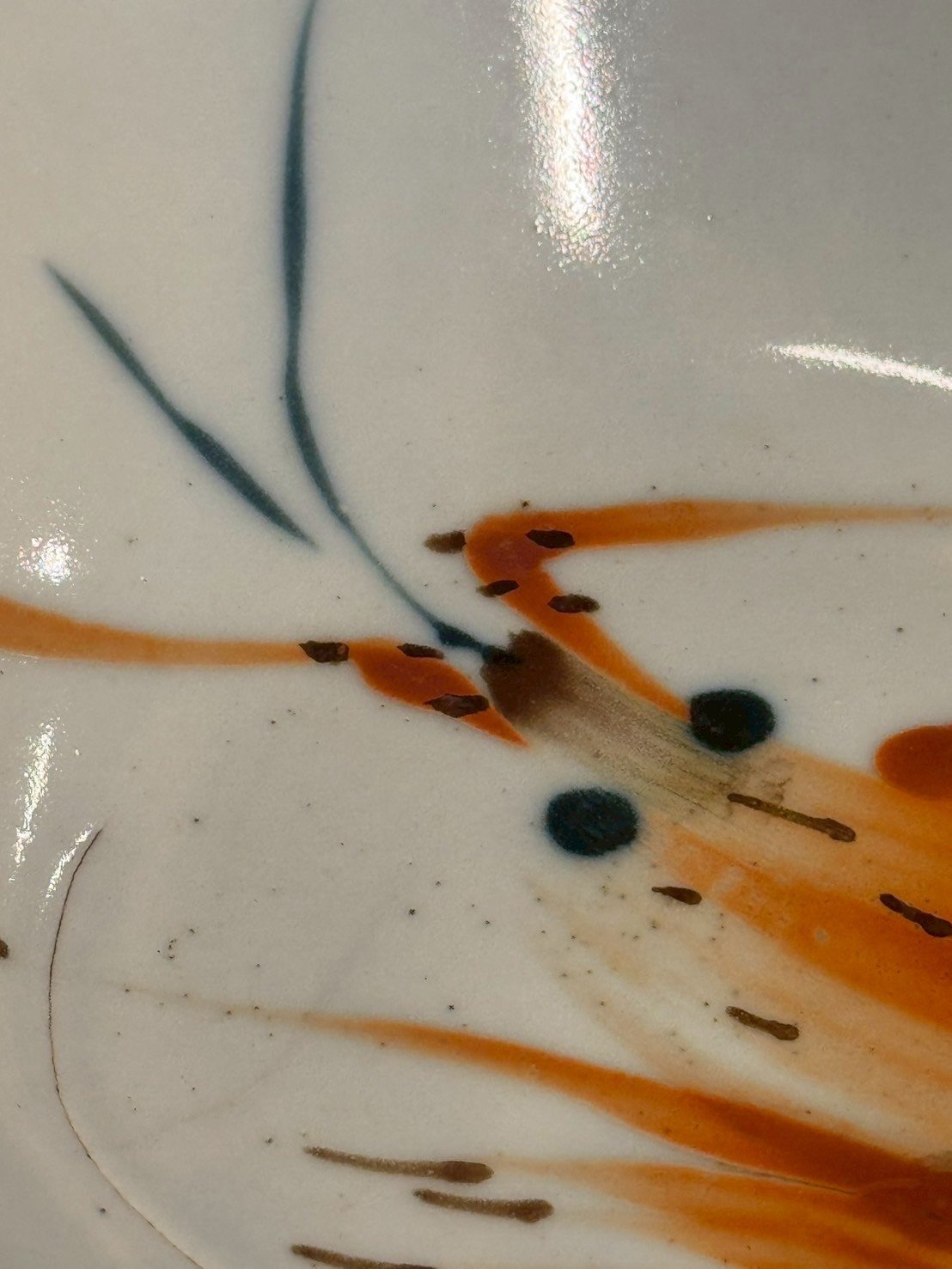
– A goldfish composition, painted with lively, moving brushwork
The main image on the inner wall is a single orange-red goldfish, set among slender deep-blue water weeds and outlined in ink. The composition is full of movement, as though the fish were gliding just below the surface, creating a cool, summery visual world; it also stands for good fortune and unending renewal.
– A Shōwa ceramic trait: natural marks in the glaze, not machine mass production
Small glaze shrinkages, bubbles and slight undulations in the body can be seen. These arose naturally from high-temperature firing and hand-throwing in the ceramics of that time and are not flaws; collectors of vintage pieces value them as marks of time and as genuine beauty.
– A medium-sized vessel, equally good for use and for display
At 21 cm in diameter it is thoroughly practical, serving as a dish for everyday cooking, a salad bowl or a vessel for cold summer noodles; it can equally stand alone as a still-life display, part of an interior arrangement or a photographic prop, so it can be used in many ways.
– The beauty of everyday ware, expressing the spirit of ordinary Shōwa life
Vessels of this kind were not high-end aristocratic wares but came from the practice of beauty in the daily life of ordinary Japanese people, expressing a view of objects in which beauty lies in use and living itself is art. They carry great cultural value and period charm.
◆ Suggested settings
– A dish for Japanese home cooking or for sweets at a tea gathering (good for dressed cold dishes, fried food and side dishes)
– Placed in a Japanese-style interior, an arts venue or an antiques exhibition as a still-life element in the space
– Used as a photographic prop with goldfish, water patterns and summer imagery
– Collectors can add it to a series of Shōwa everyday wares, to feel the craftsmanship and the aesthetics of daily life in the past