





Features
An outstanding example of Kutani gosai polychrome technique
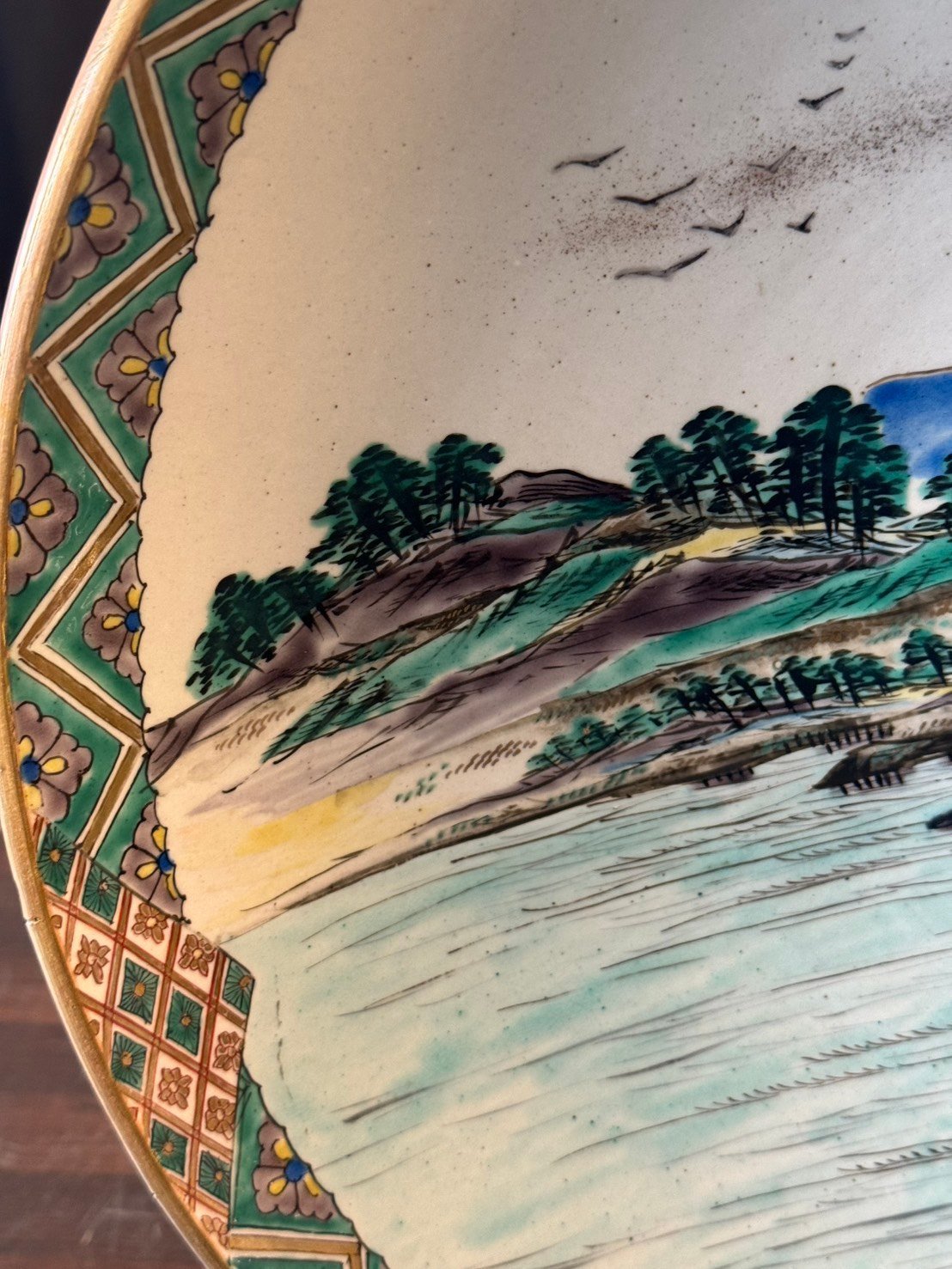
This dish uses the "gosai-de" (five-colour) technique common in late Edo Kutani ware: highly saturated green, yellow, purple, red and blue glazes are laid on in successive layers and fired a second time at low temperature, so the colours are bright without being harsh and the scene has great depth. The wings of the flying geese, the layered mountain landscape and the details of the flowers and grasses show painting of a very high standard in the transitions between colours.
Meticulous composition, brushwork showing real craft
The whole scene is built on a contrast of movement and stillness: geese in flight against the quiet waterside, weeping willow and flowering plants setting the rhythm of the composition. From the distant hills and woods to the chrysanthemums and bamboo leaves in the foreground, every stroke is fine-line work, far more detailed than workshop goods, and very likely from the hand of a professional e-tsuke (decorating) artisan.
A composition carrying East Asian philosophical feeling
The geese fly in pairs across the water, an image of the traveller longing for home and of two birds flying together, and one that carries the old idea of "news borne by the wild geese". The chrysanthemums on the right stand for refinement and long life, and in East Asian culture for the person of noble character. Read as a whole, the dish is a deep and poetic reflection on the turning seasons and on parting and reunion.
A rich border, elegant and never gaudy
The rim is decorated with classic patterns — geometric motifs, key fret (raimon), seigaiha wave scales and hōsōge floral scrolls — standing for good fortune, completeness, protection and continuity. Borders of this kind appear on the better Kutani pieces and concentrate both the artisan's brushwork and the style's aesthetic.
Of value both as a collectable and as a display piece
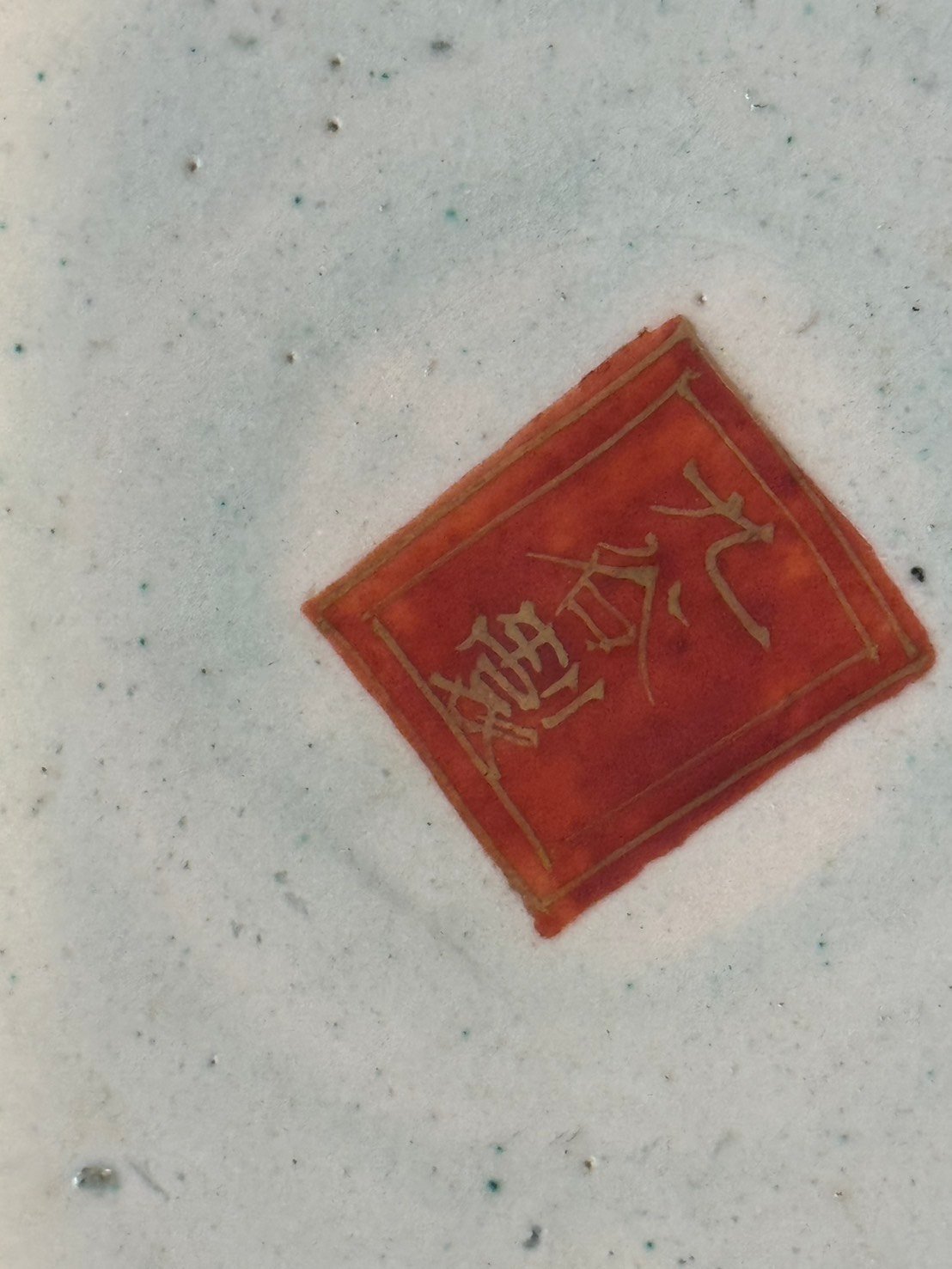
At 40 cm, this is a medium-to-large size among old Kutani dishes. It is complete, the enamels show no loss and the mark is clear, making it significant both for historical study and as an art collectable. Beyond shelf display, fitted with a hanger it also works very well as a wall feature in a home or an arts space.