


Features
◆ Specifications
Height: 51 cm
Rim diameter: 17.2 cm
Width: 23 cm
Condition:
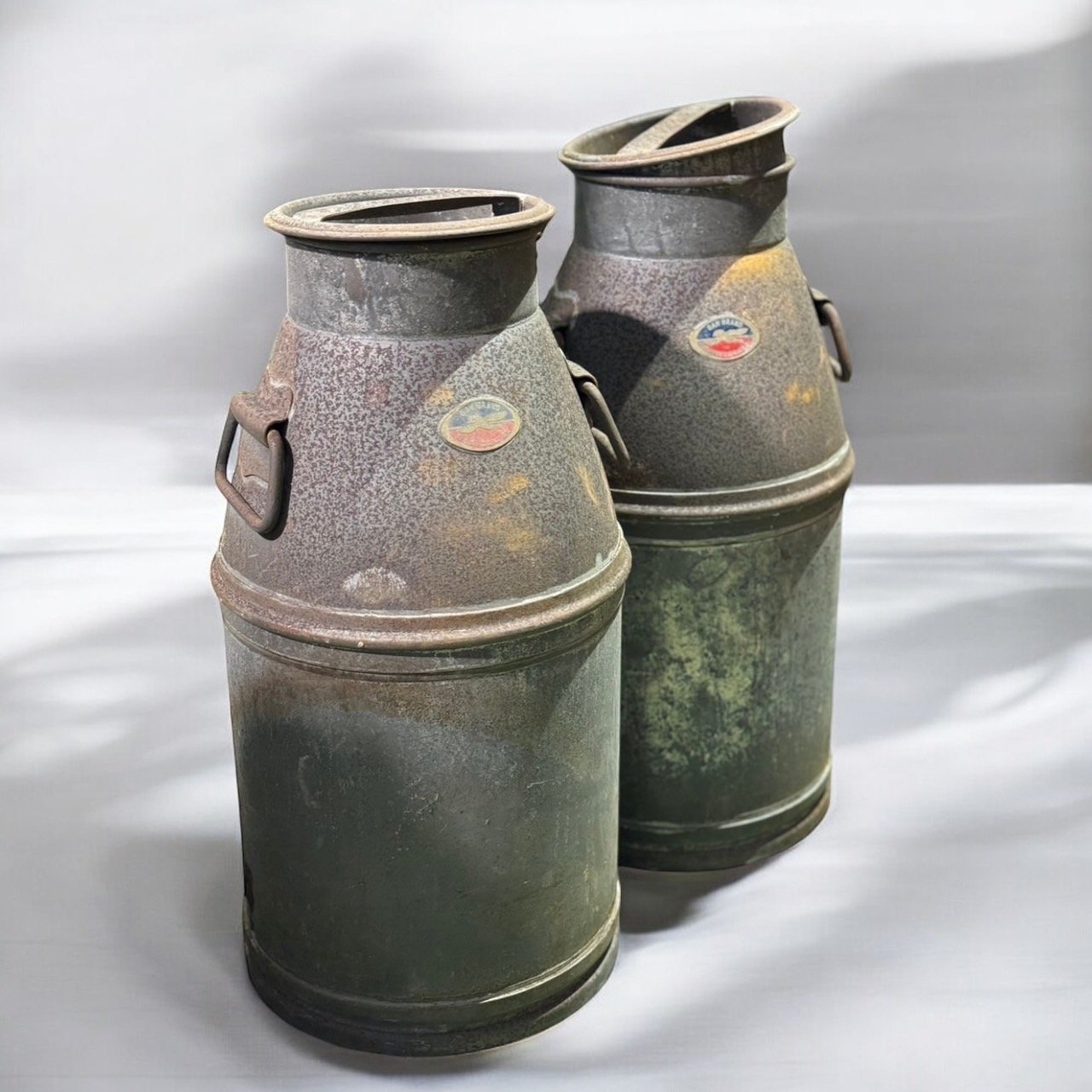
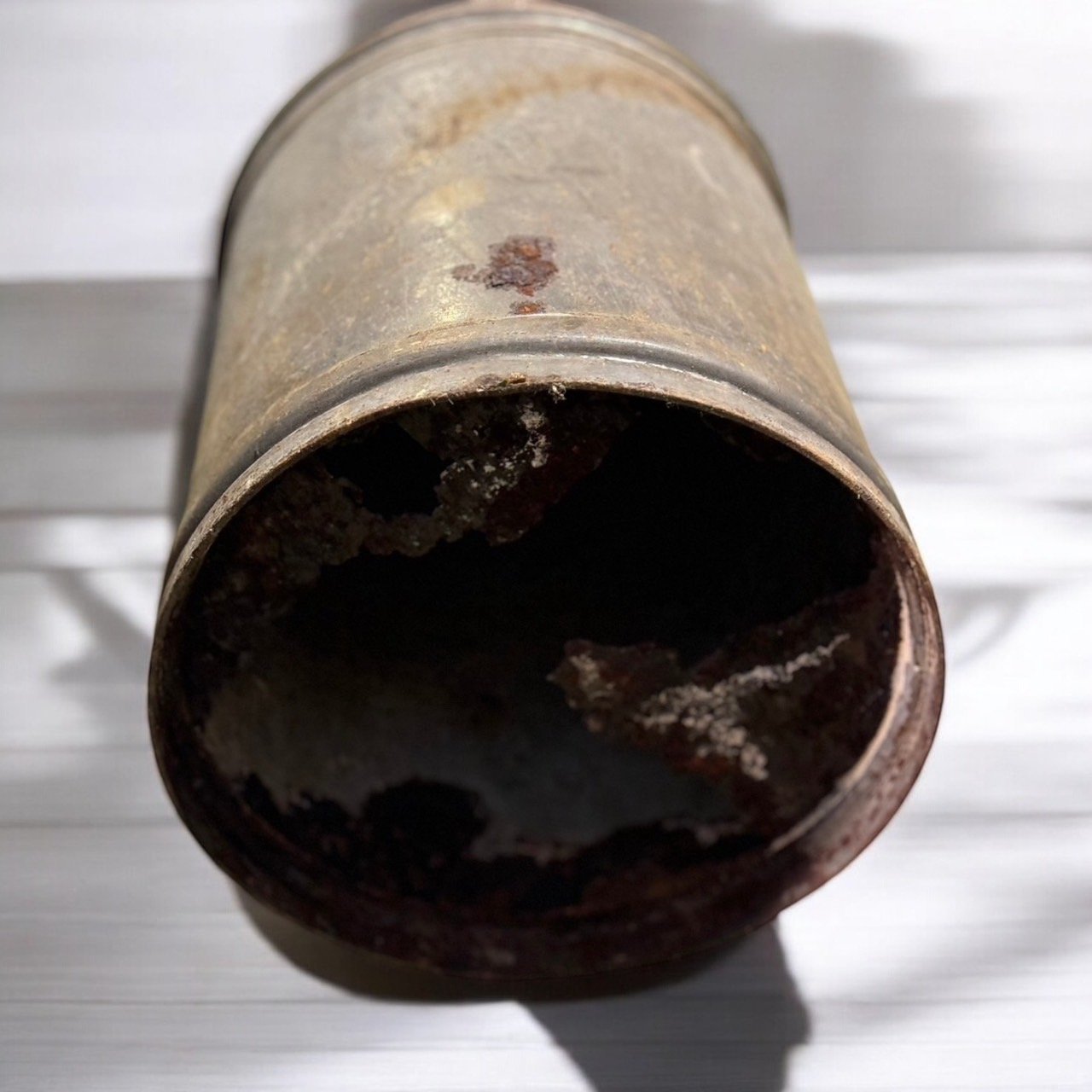
One can has rusted through at the base (the one now available); the base of the other can is still intact (sold), though with even rusting overall.
Condition of the lids: the lids of both cans can no longer be opened, so they cannot be put to actual use.
Historical significance:
These old milk cans are agricultural items from Japan's Shōwa period and carry high historical value. At that time rural Japan still relied mainly on hand labour and simple machinery, and the milk can was an indispensable container in a farmer's daily life, used to hold and transport milk. As agriculture modernized, cans of this kind were gradually retired, so they hold a particular value as a record of agricultural development in the Shōwa period.
Rust and damage:
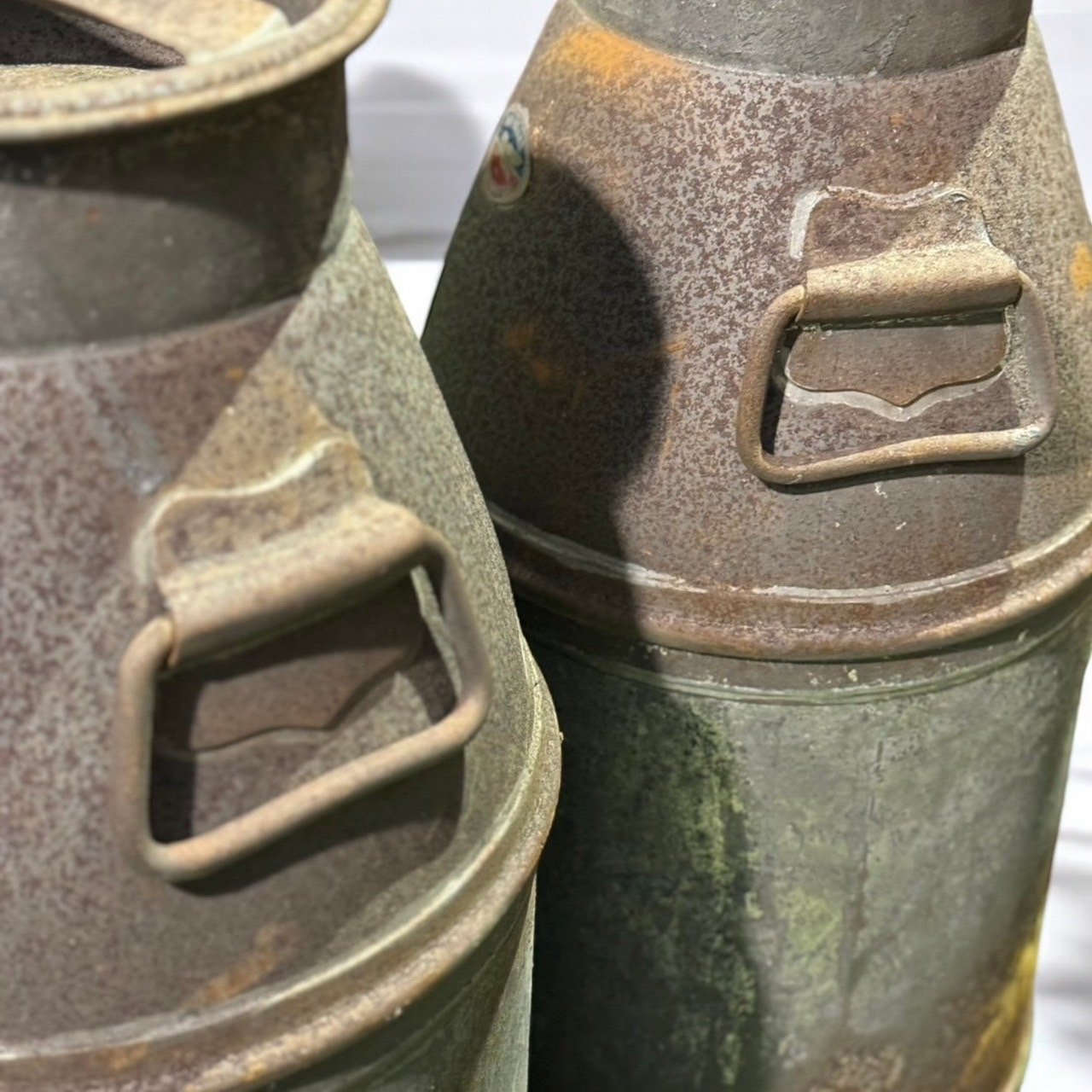
After long use and storage, these milk cans show rust and damage. These marks are evidence that they were actually used in a working environment, and they let collectors and lovers of antiques feel their accumulated history more directly. For collectors who prefer antiques in original condition, this rust and damage is irreplaceable historical evidence.
Lids that cannot be opened:
The lids of both milk cans are rusted shut and cannot be opened, so they cannot be used as actual containers. Although they have lost their practical function, their form remains complete, making them well suited as retro decorative or display pieces.
Distinctive industrial design:
Old milk cans are simple and hard-wearing in design, with a clear industrial character that reflects the craft of the Shōwa period. The handles on both sides make them easy to carry, and although the metal has rusted, it still attests to their sturdy, durable quality.
Artistic and decorative value:
Because of their rust and damage, these old milk cans have great decorative value. They can be used to decorate industrial-style homes, cafés and restaurants, or placed in an outdoor garden, adding a sense of history and a retro atmosphere to the setting.
◆ Suggestions for collecting and display
The cans can be placed indoors as decorative objects, highlighting a retro, industrial sense of beauty.
They can also be placed in a garden as outer covers for plant containers, creating a nostalgic garden design.
As antiques, they bear witness to the history of Japanese agriculture, and suit collectors interested in rural Japanese culture of the Shōwa period.