
Features
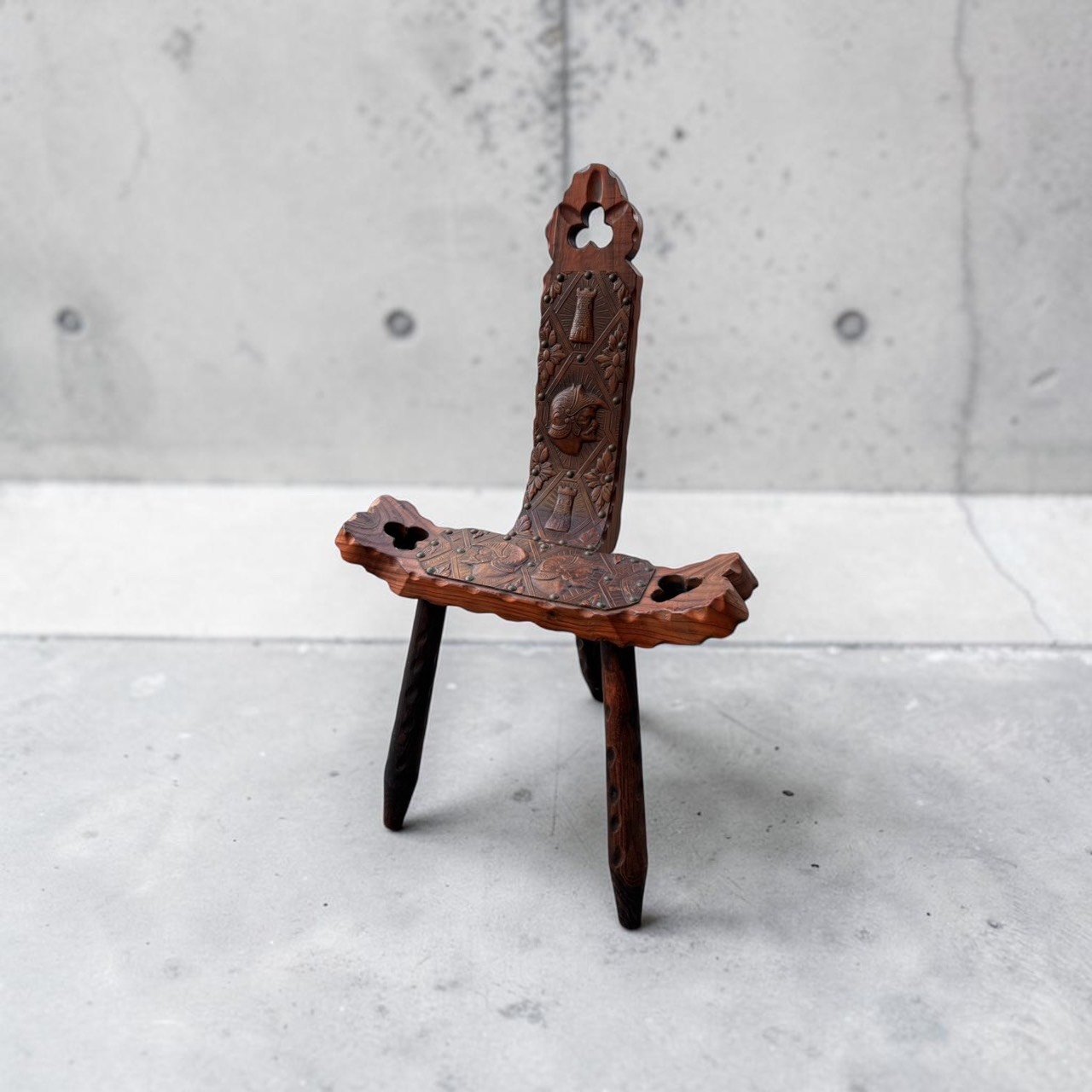
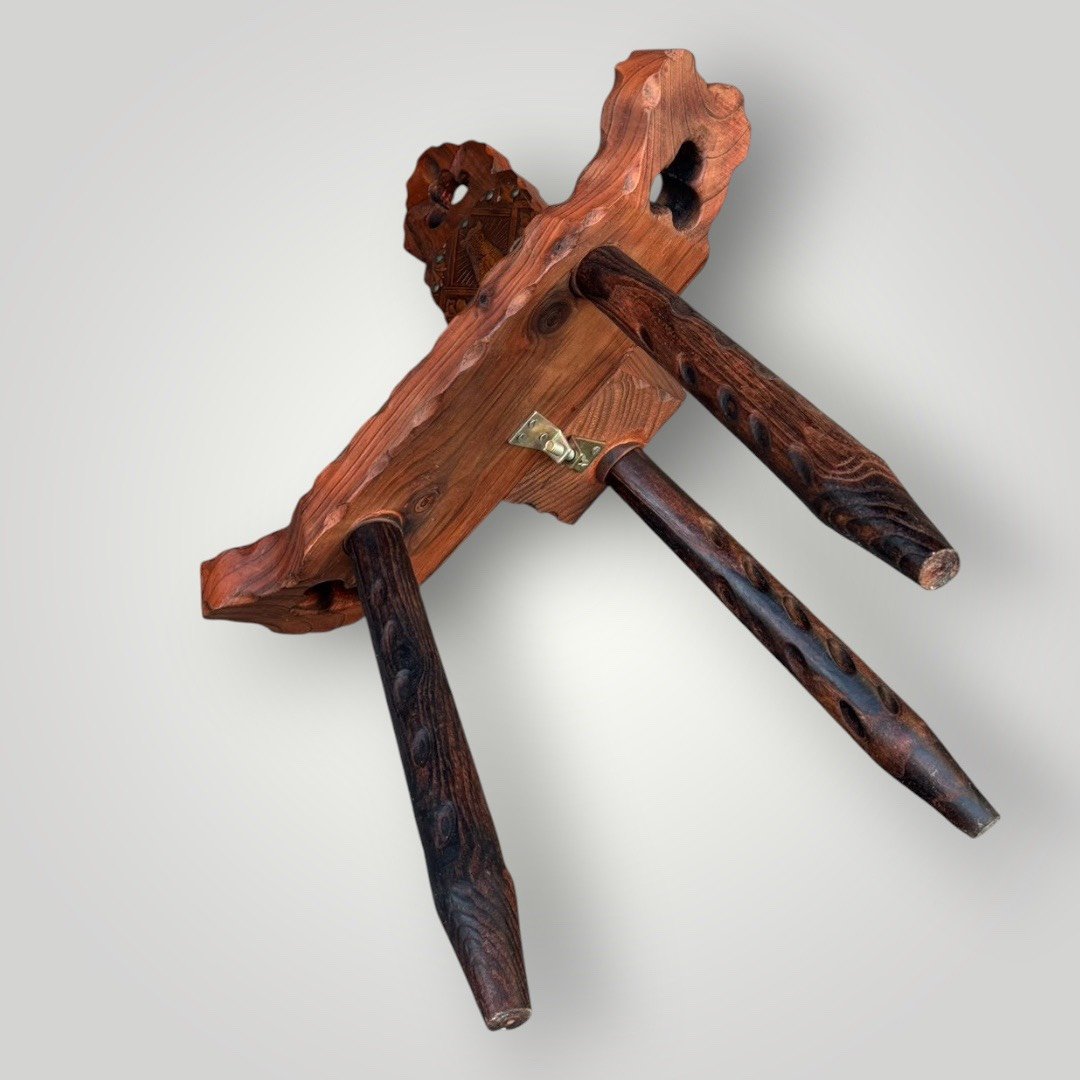
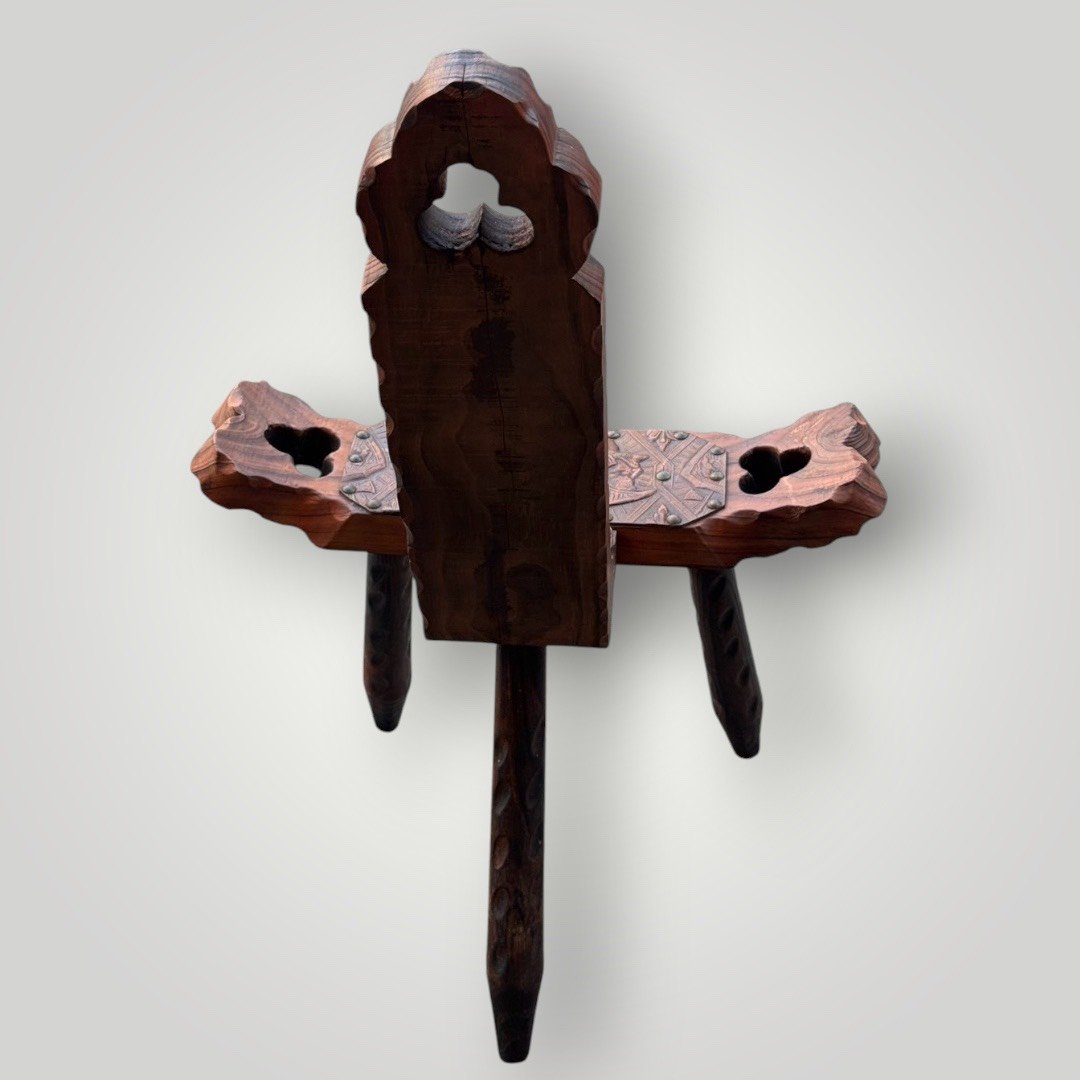
① An uncommon three-legged classical wooden chair structure
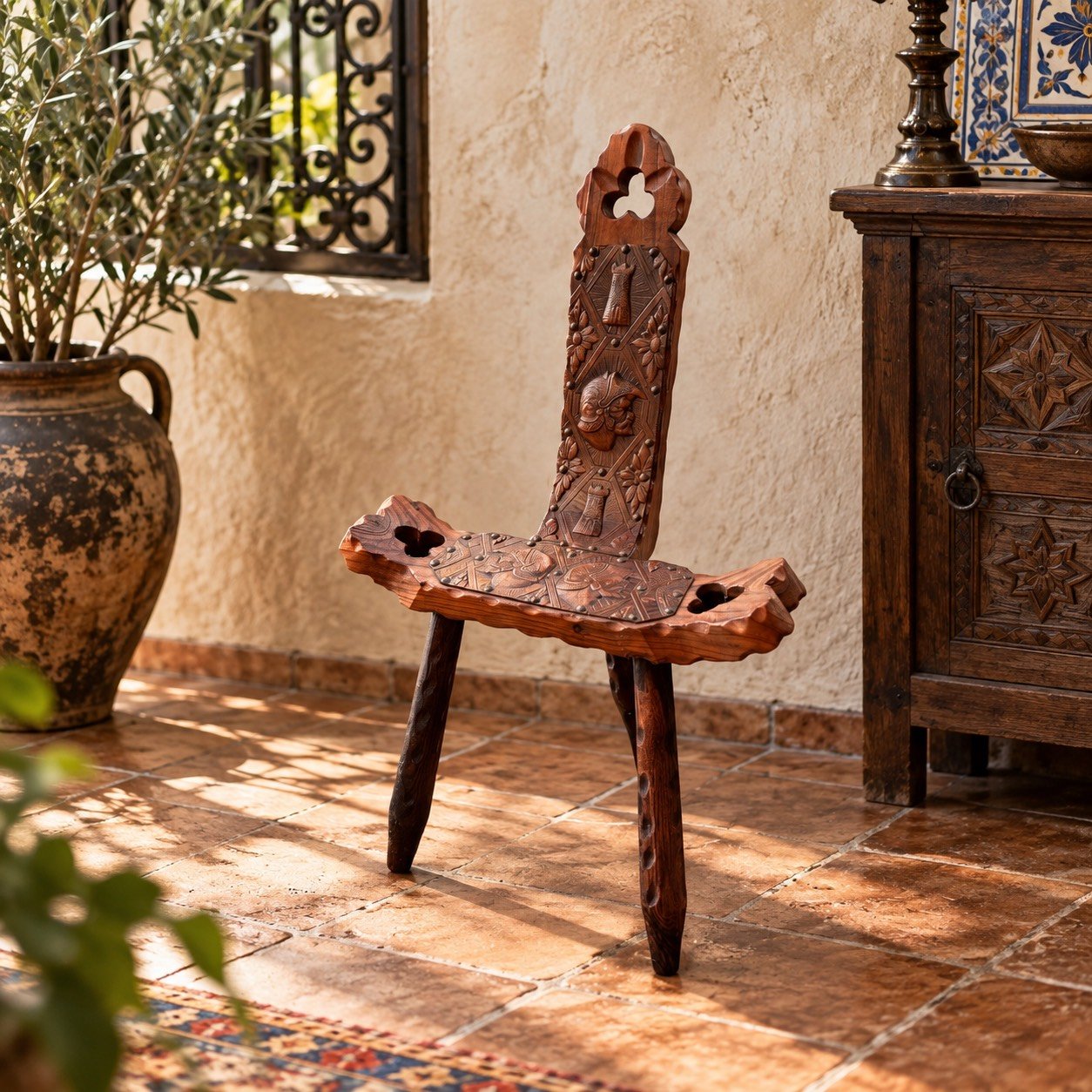
The three-legged design combined with a narrow, tall back gives it a very distinctive silhouette. Seen from the side or the front, the form is strikingly sculptural — quite unlike an ordinary four-legged dining chair or armchair.
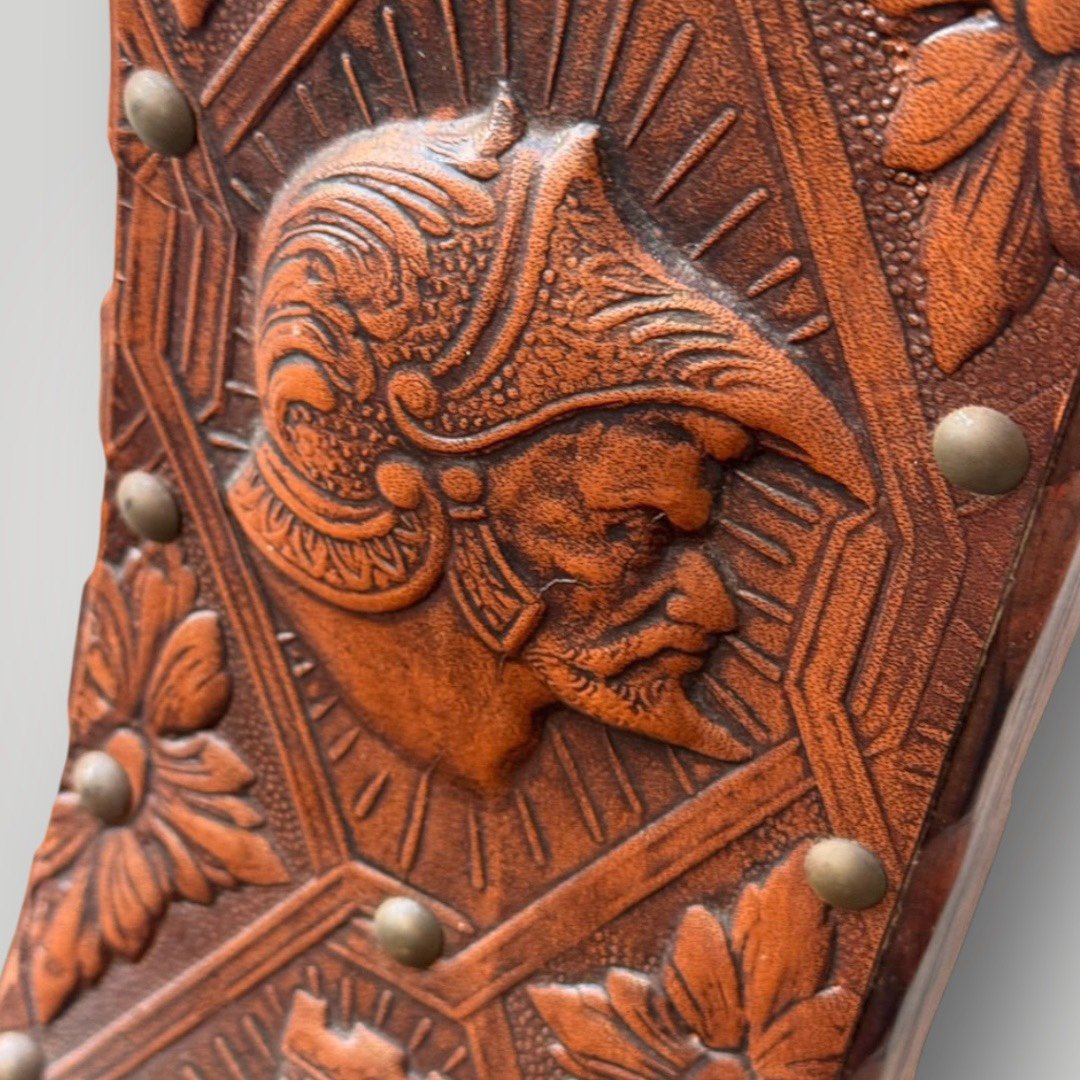
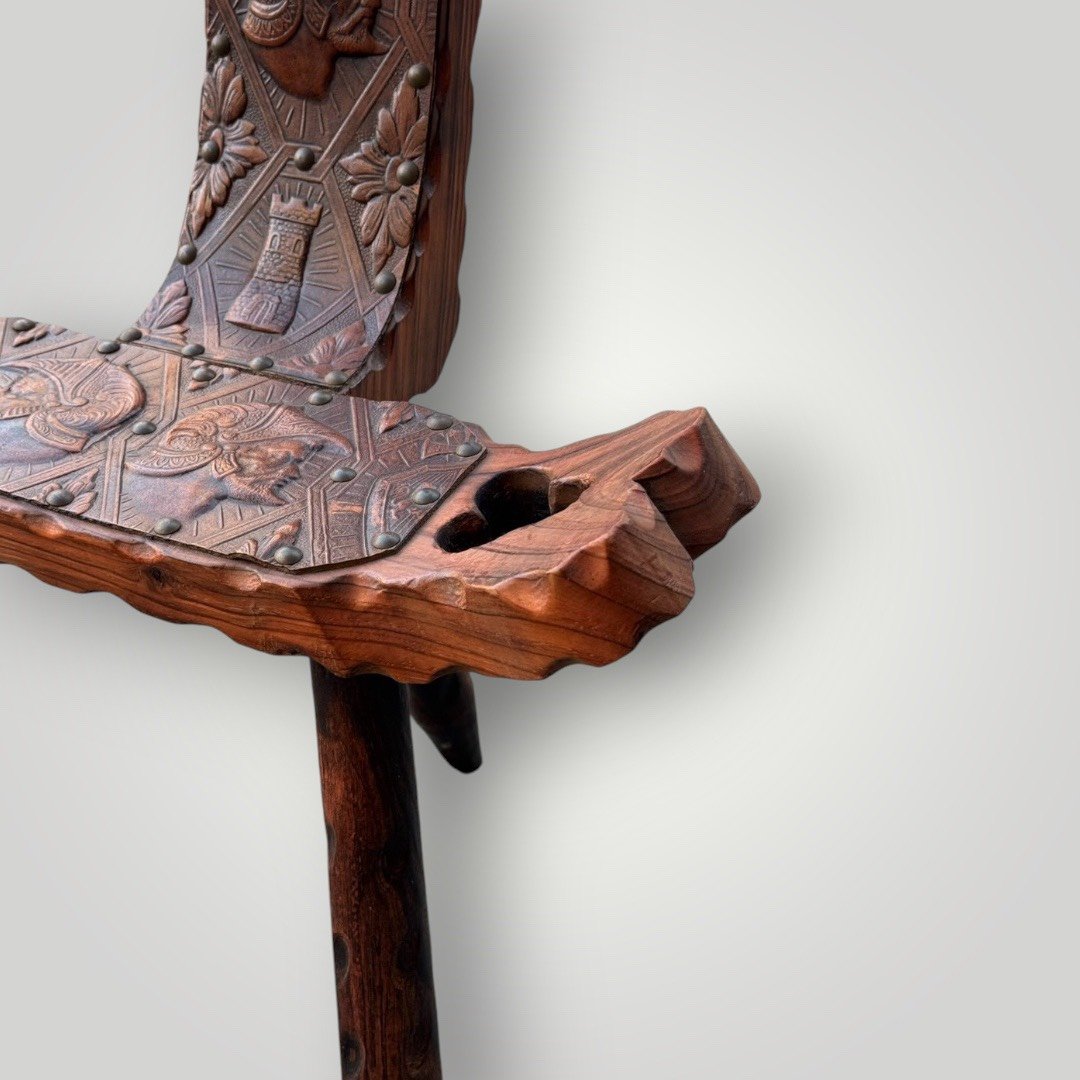
② Extensive embossed leatherwork
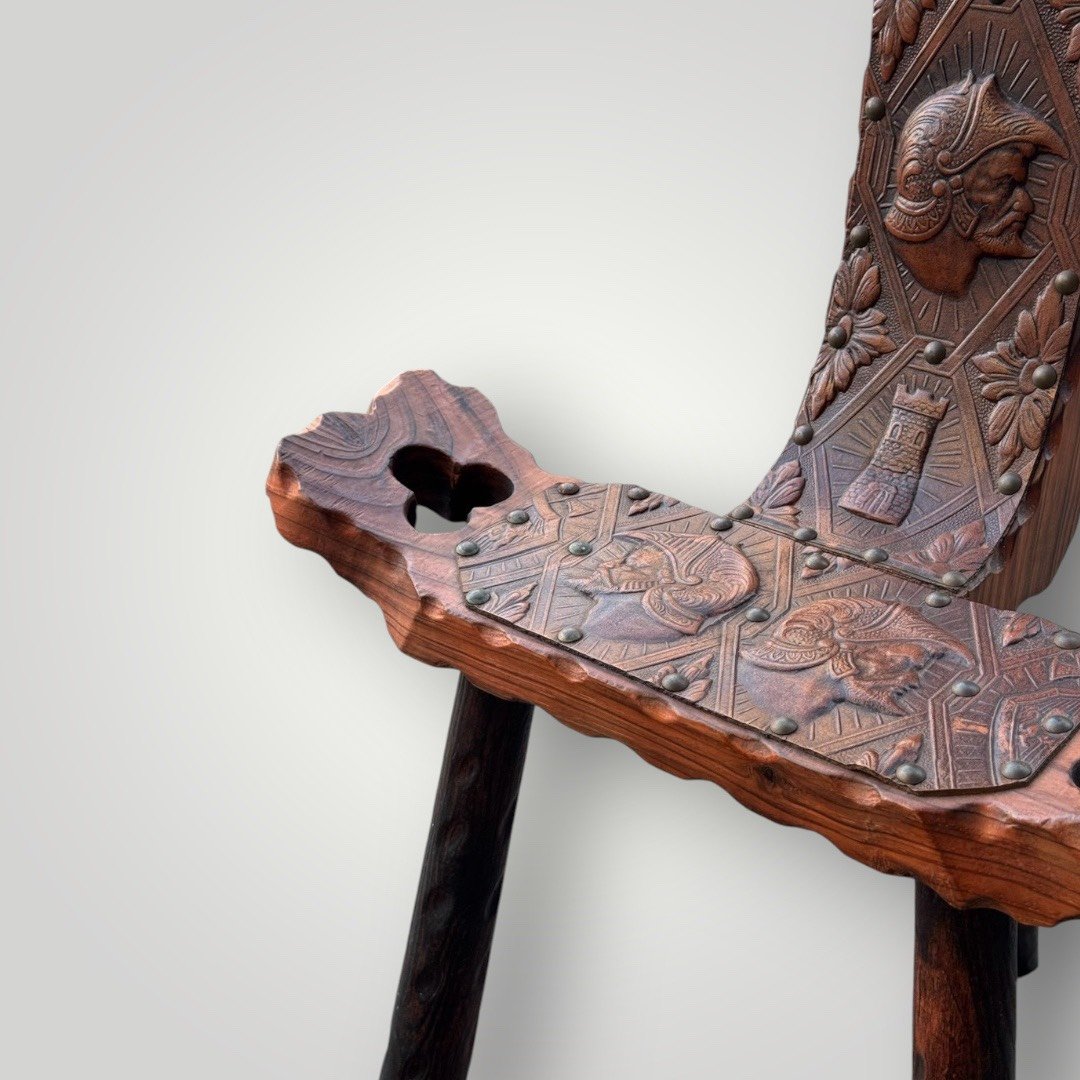
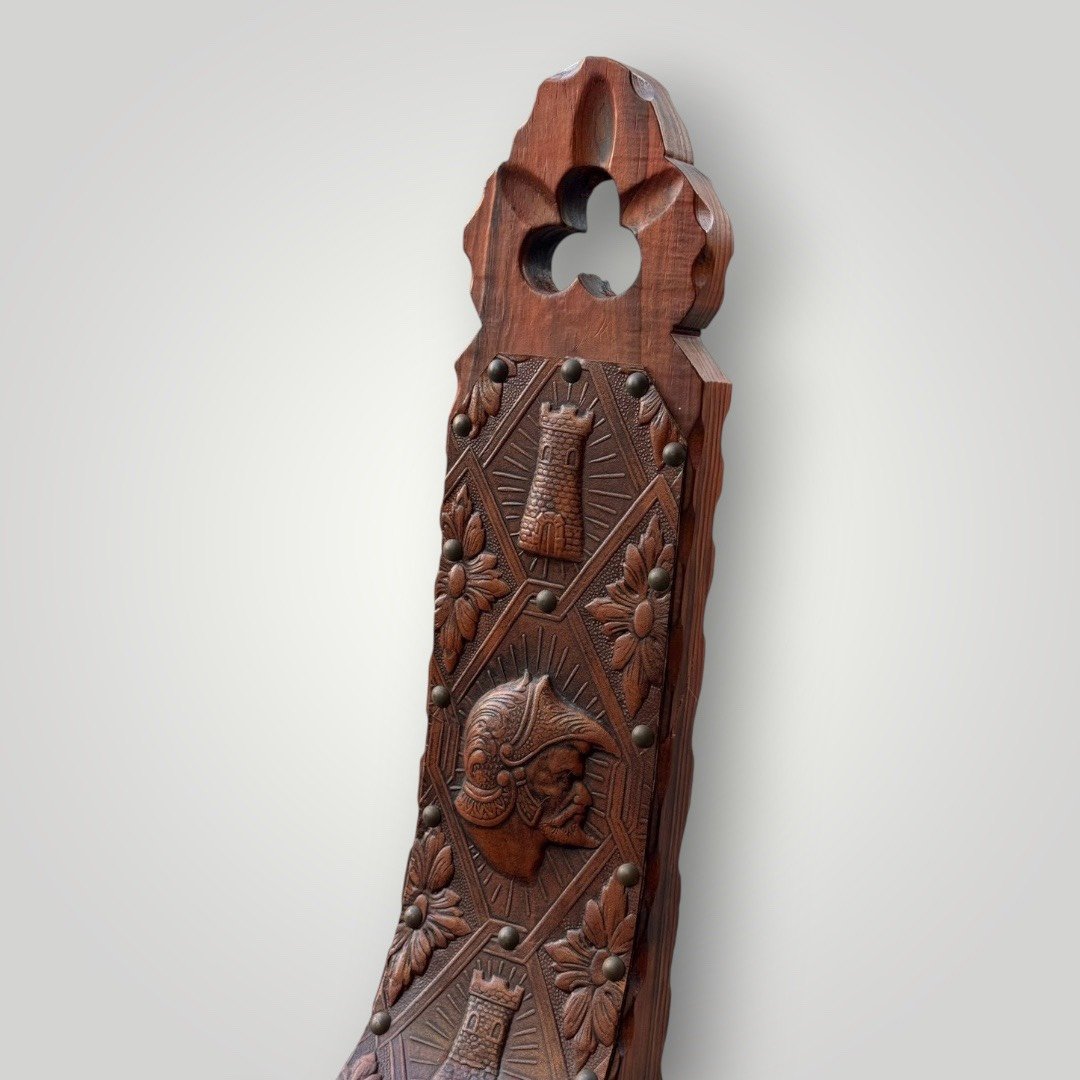
The real highlight is concentrated on the seat and the backrest. The leather is not simply wrapped over the frame; figures, architecture and decorative motifs are worked into it by embossing, giving rich visual depth.
③ Knight × castle motifs
Decoration drawing on European knights and architecture. This is also the most narrative part of the whole piece, carrying an atmosphere of medieval Europe, old castles and Spanish folk furniture.
④ Rivet-fixing details
Between the leather and the wooden body you can see rows of metal rivets holding it in place. Over time the metal, leather and wood have each developed their own aged character, which gives it more depth than a brand-new reproduction piece.
⑤ Pierced high-back form
The openwork at the top of the backrest is clearly decorative and echoes the piercings at the left and right ends of the seat, lending this otherwise weighty wooden piece a touch of airiness and variation in line.
⑥ The sense of time in dark wood and old leather
The tone of the wood surface, the variation in the leather's depth of colour, and the wear left by use are what give this kind of medieval-style European furniture its flavour. There is no need to refinish it to look new; it is better suited to keeping its present sense of age.
⑦ Furniture as a work of art for the space
I wouldn't position this as merely "a chair." Its greatest value lies in its form and decorative quality; even if it is simply placed and never sat on, it can become the visual focus of a space.