Features
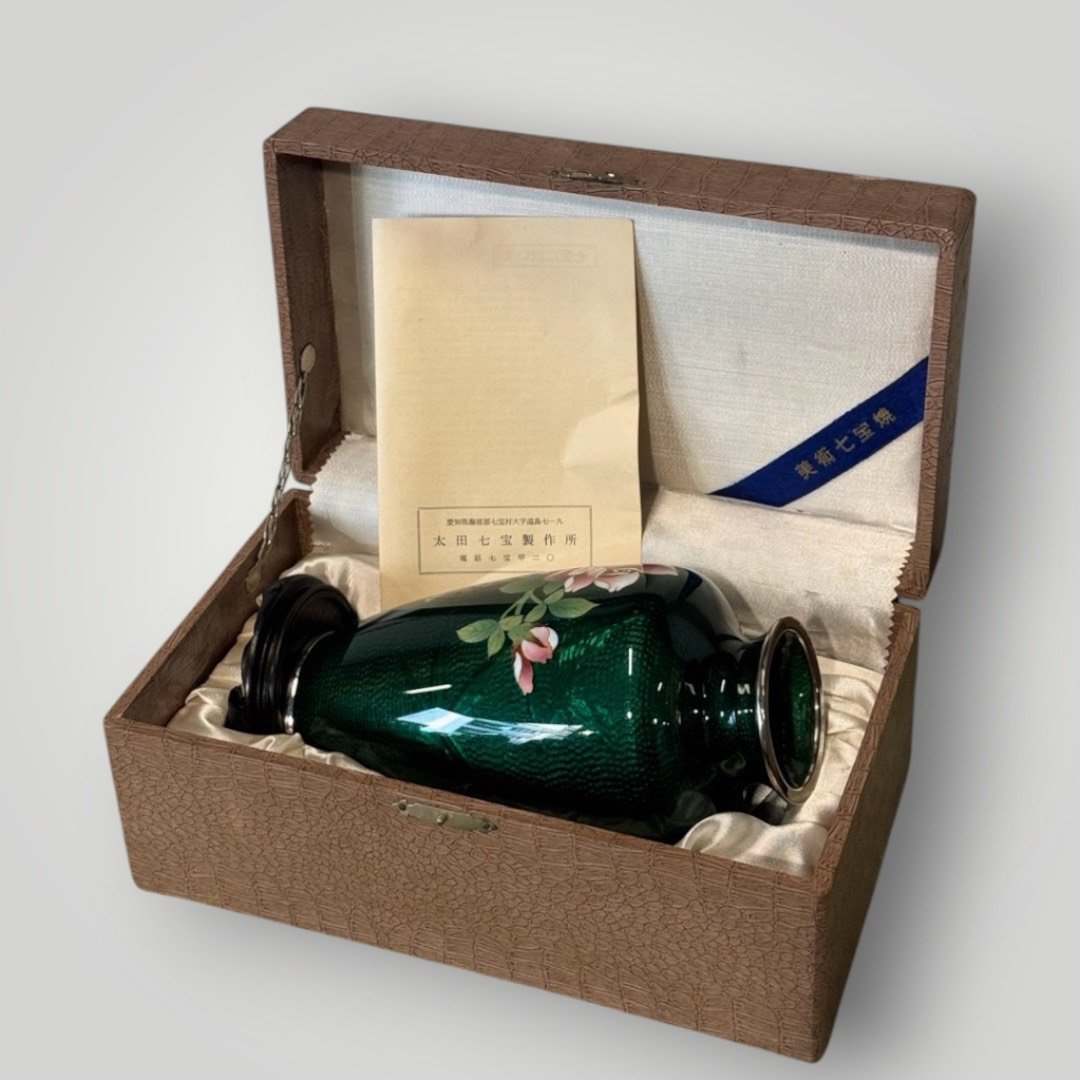
① Original Ota Shippo Seisakusho box documentation
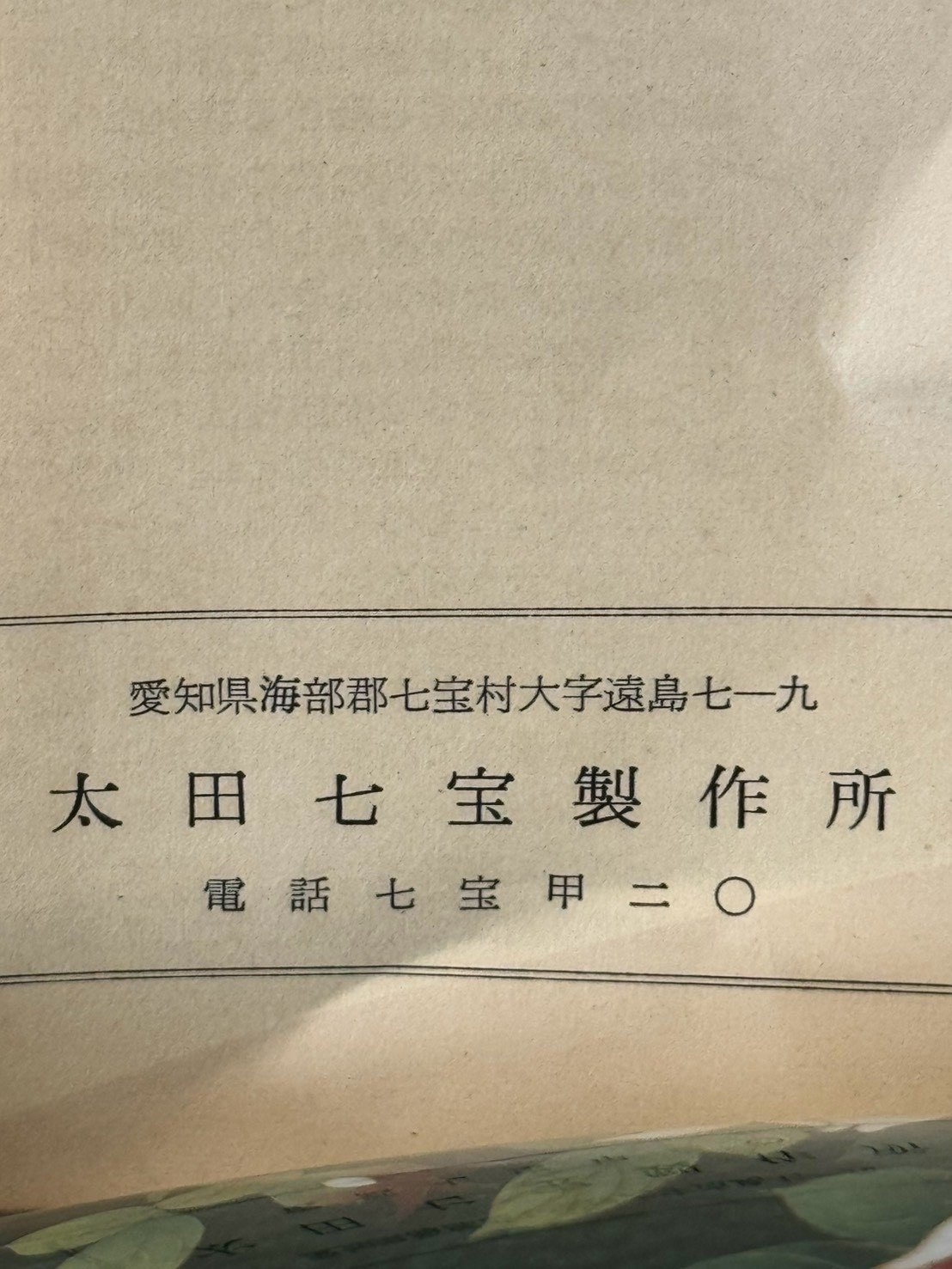
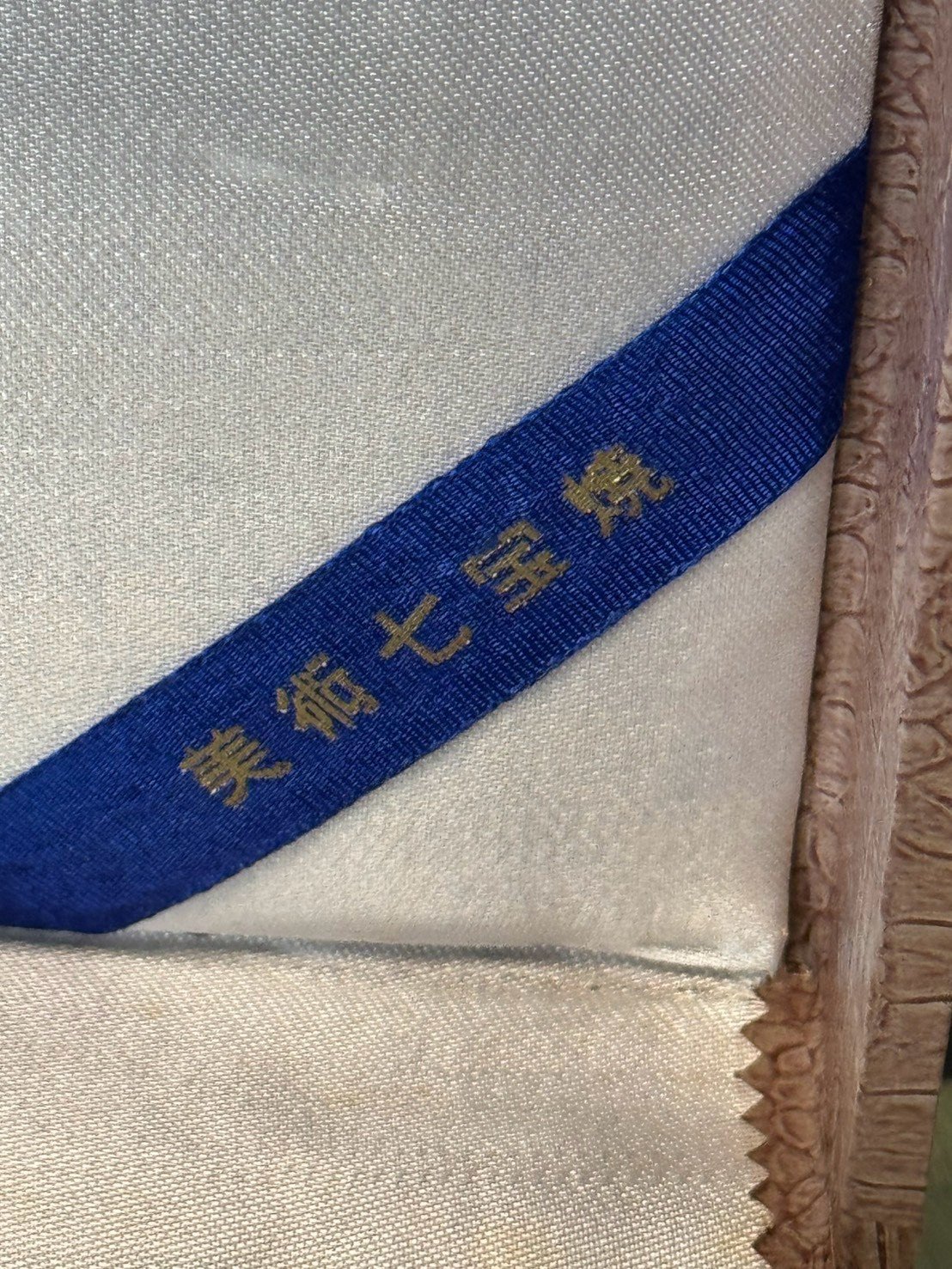
The point most worth emphasizing about this piece is that the original packaging documentation has been preserved. It bears "Ota Shippo Seisakusho" (太田七寶製作所) and the address "愛知県海部郡七宝村大字遠島七一九"; in another photograph of the inner box, gold characters reading "美術七宝" (Art Shippo) can be seen on the blue ribbon. For this reason, when listing it I will include "Ota Shippo Seisakusho" in the item title, rather than simply calling it a generic "Japanese cloisonné vase."
② The regional background of Aichi cloisonné craft
This is well worth introducing in the item's story: the Owari area of Aichi Prefecture is closely connected with the development of modern Japanese cloisonné craft, and the very name "Shippo Village" recorded on the original box reflects the historical ties between the locality and cloisonné work. So beyond the beauty of the vase itself, the workshop name and old address preserved on the original box also become important clues for understanding where this antique came from.
③ A beautiful deep emerald-green ground
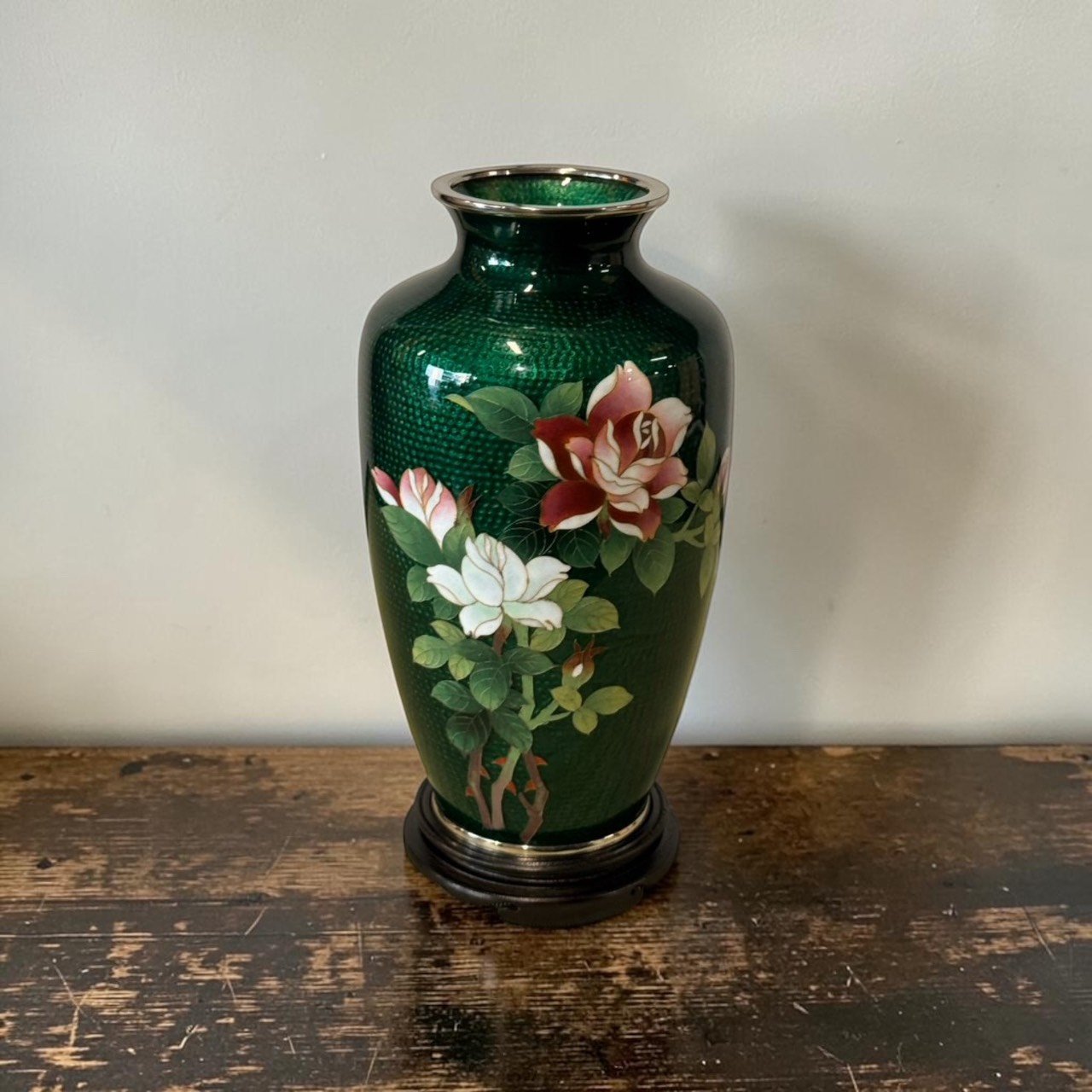
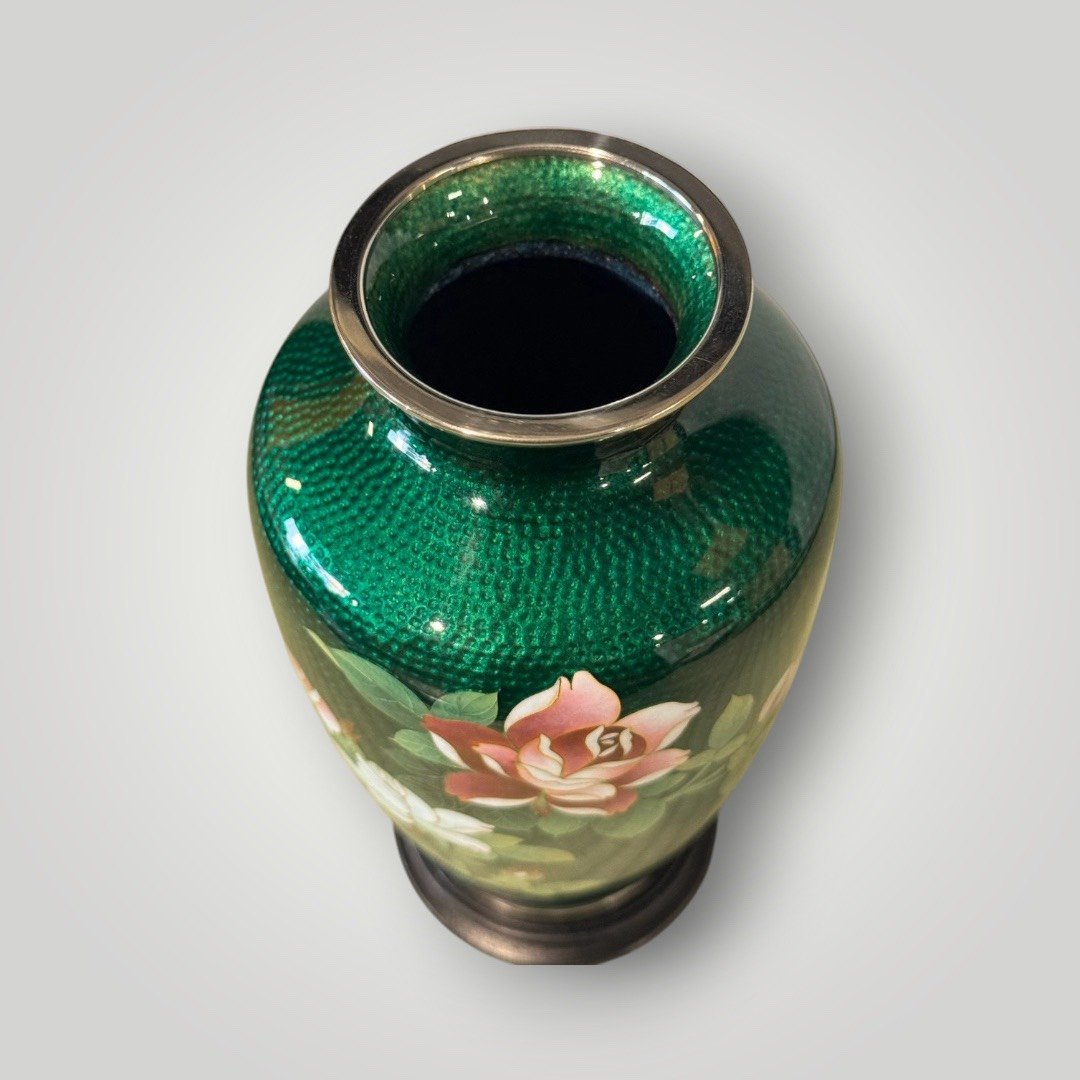
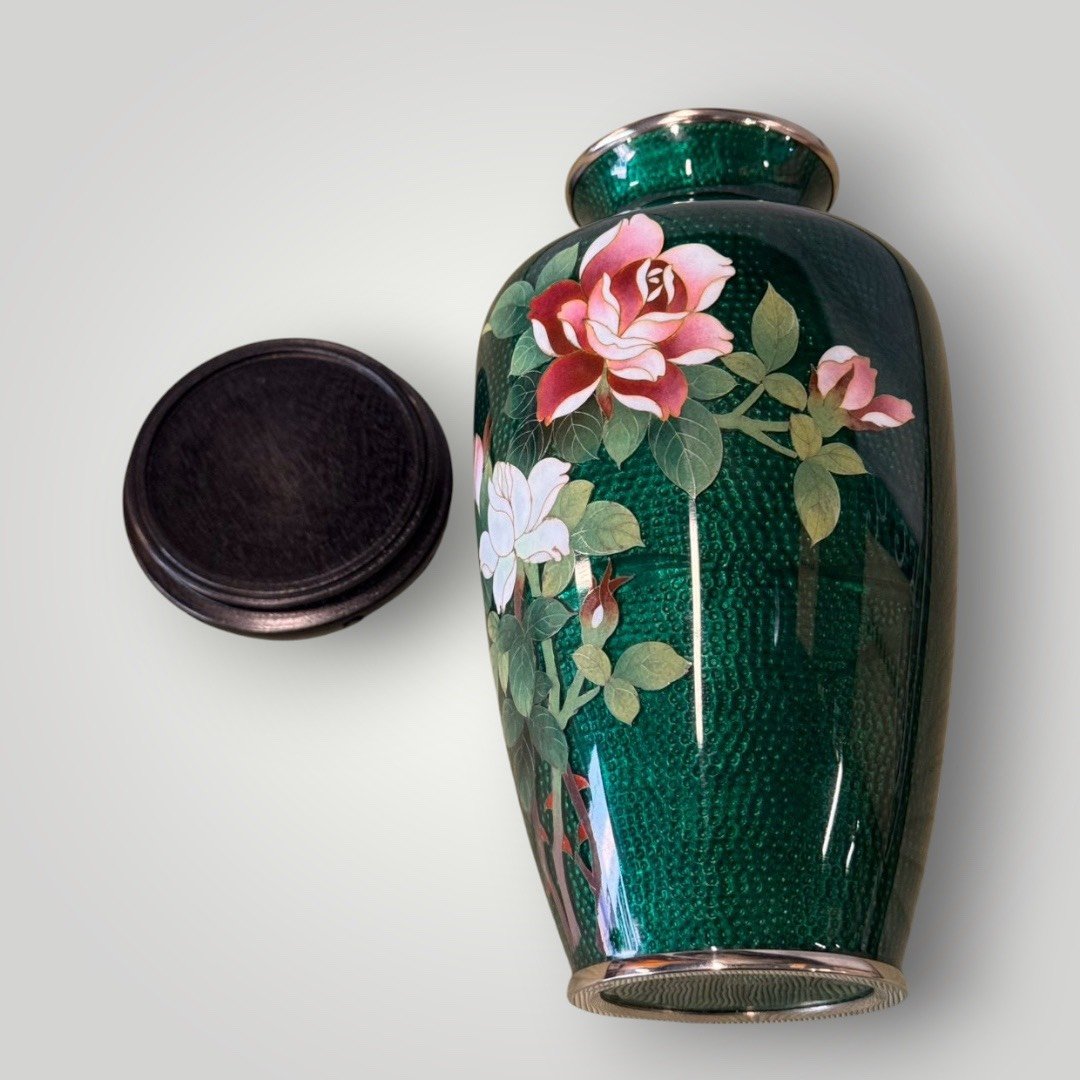
This is not one of the common white- or light-ground cloisonné wares. The large expanse of deep emerald green gives the piece a calm, mature feel and makes the red and white roses stand out all the more. Under lighting in particular, the body takes on a beautiful green sheen, so I would suggest shooting an additional set of side-lit photographs; that will convey the texture better than the current flat frontal lighting.
④ Fine, dense texture on the body
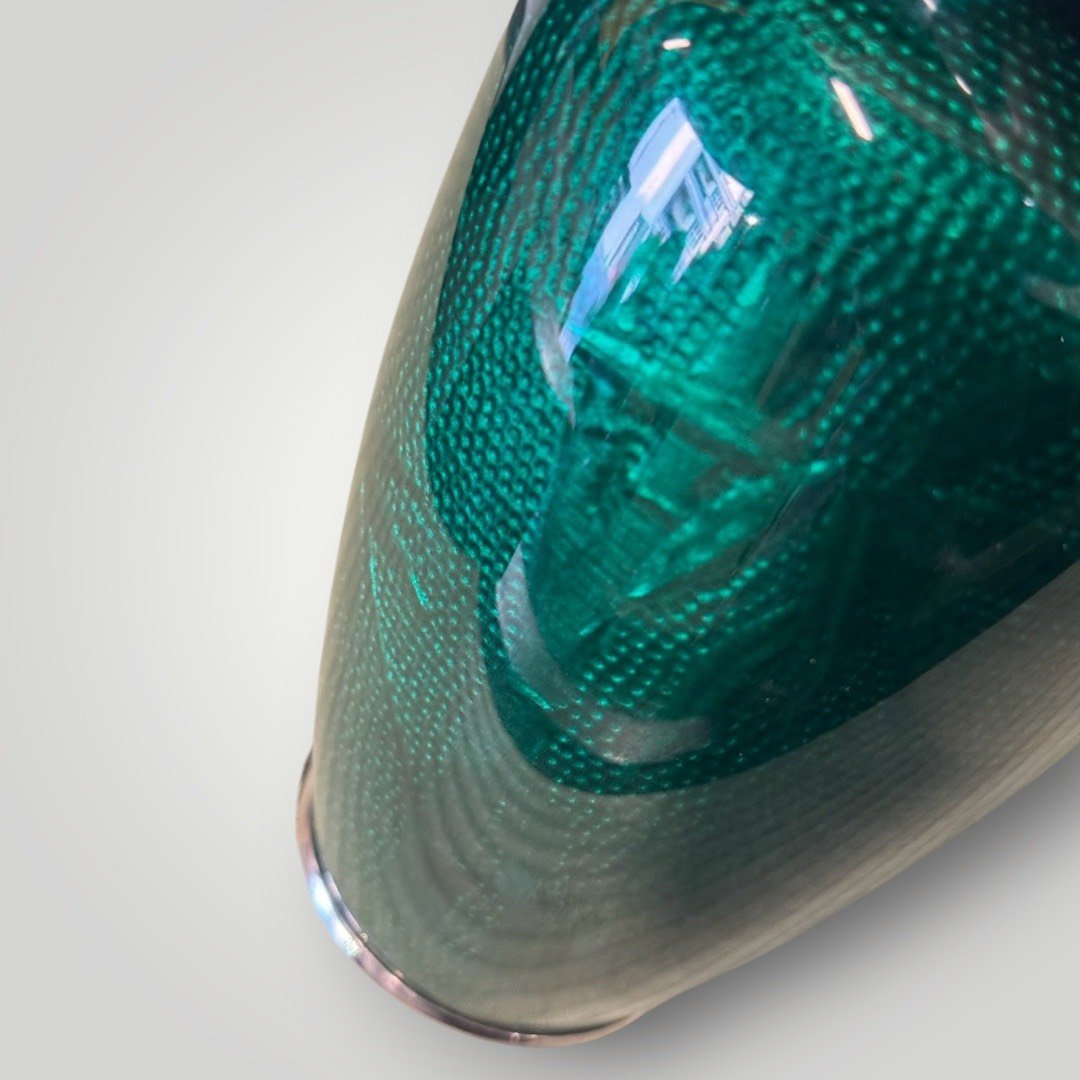
Looking closely at the photographs, the green ground is not a plain smooth surface but has an extremely fine, regular texture. This gives even the areas without floral decoration a rich visual effect.
From a distance it reads as deep emerald green; only up close do you discover the many details hidden within — and that is exactly what makes this piece rewarding to look at again and again.
⑤ Composition of Red and White Roses
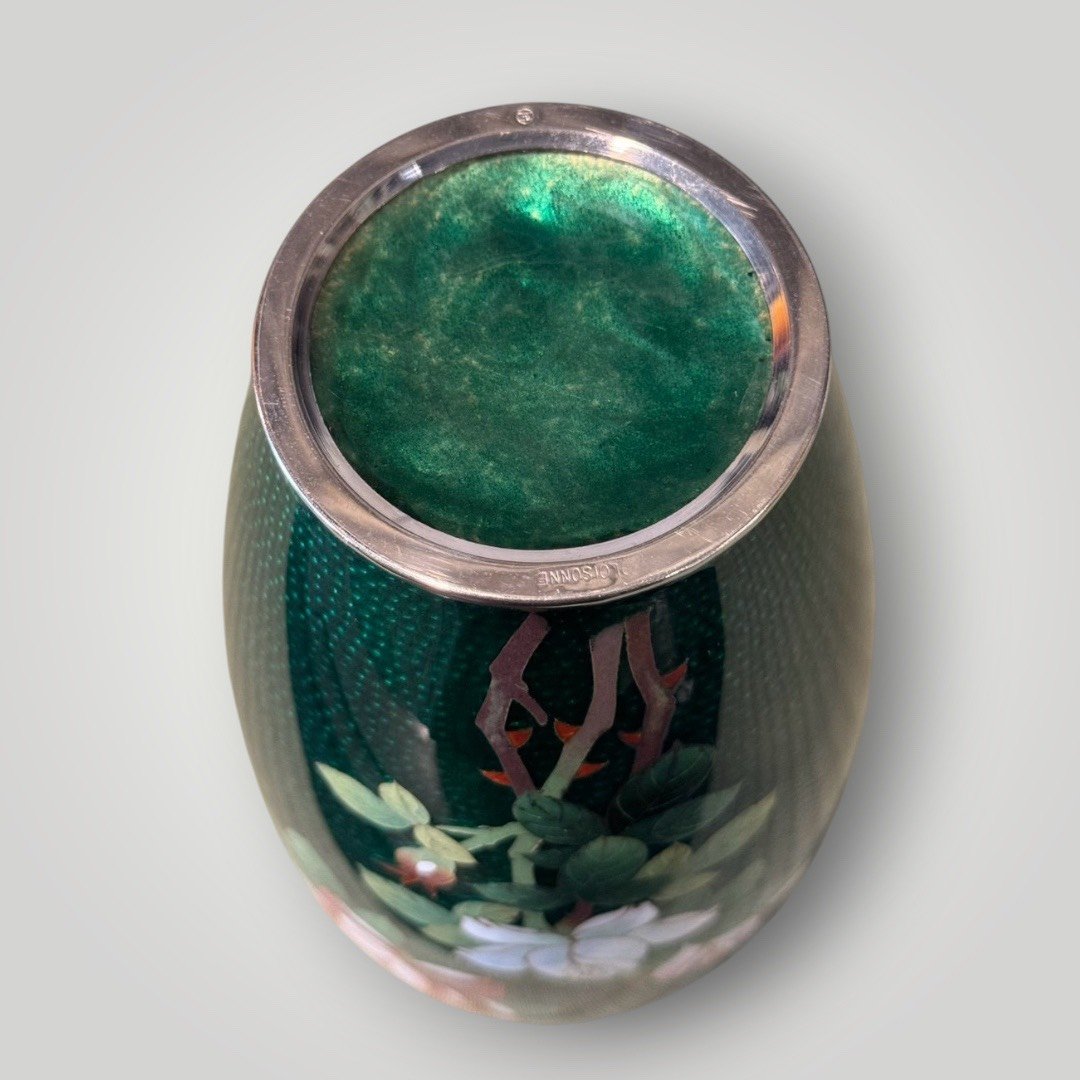
The front of the vase takes blooming roses as its theme. Red, white and pink blossoms are scattered across the surface, with green leaves and branches extending downward, so the composition develops from the center of the body all the way down, rather than leaving only a small motif in the middle. Roses are also a floral subject very well suited to interior display, so unlike certain traditional auspicious motifs that are limited by the style of the space, this piece pairs easily with both Japanese and Western classical interiors.
⑥ Original Box + Wooden Stand: Added Points for Completeness
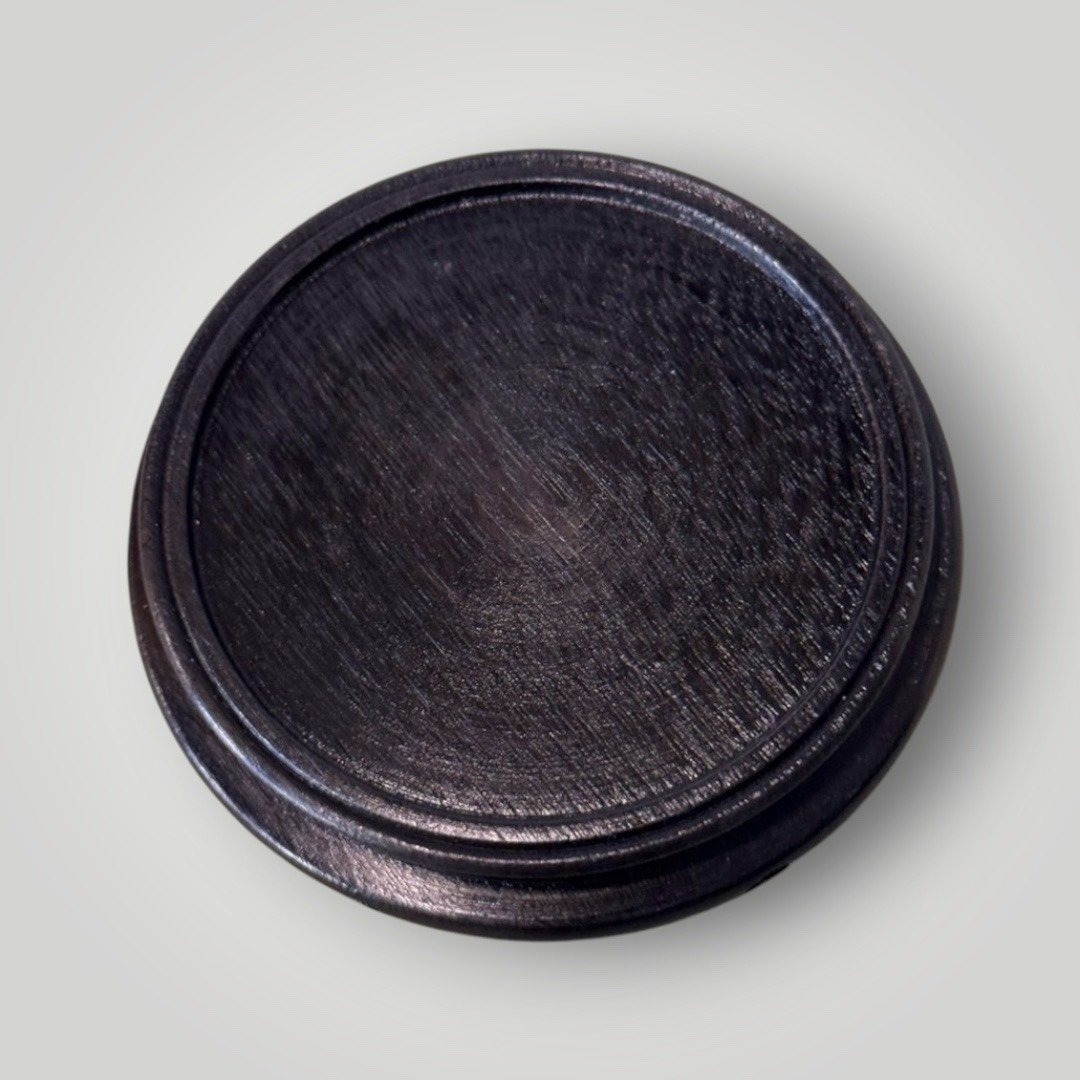
In addition to the vase itself, this piece retains its wooden stand and original box. The wooden stand gives the vase extra height when formally displayed, and turns the work from an ordinary flower vessel into a more complete "craft display piece." For collectors of antiques, the original box is even more important. It is not merely packaging; it also preserves the name of the workshop, its location, and information on the fine cloisonné (bijutsu shippo). For this reason, I would recommend that even if the original box already shows the marks of age, it should by all means be kept together with the work.