Features
Mouth diameter: approx. 12 cm x Widest point of body: approx. 24 cm x Height: 32.1 cm
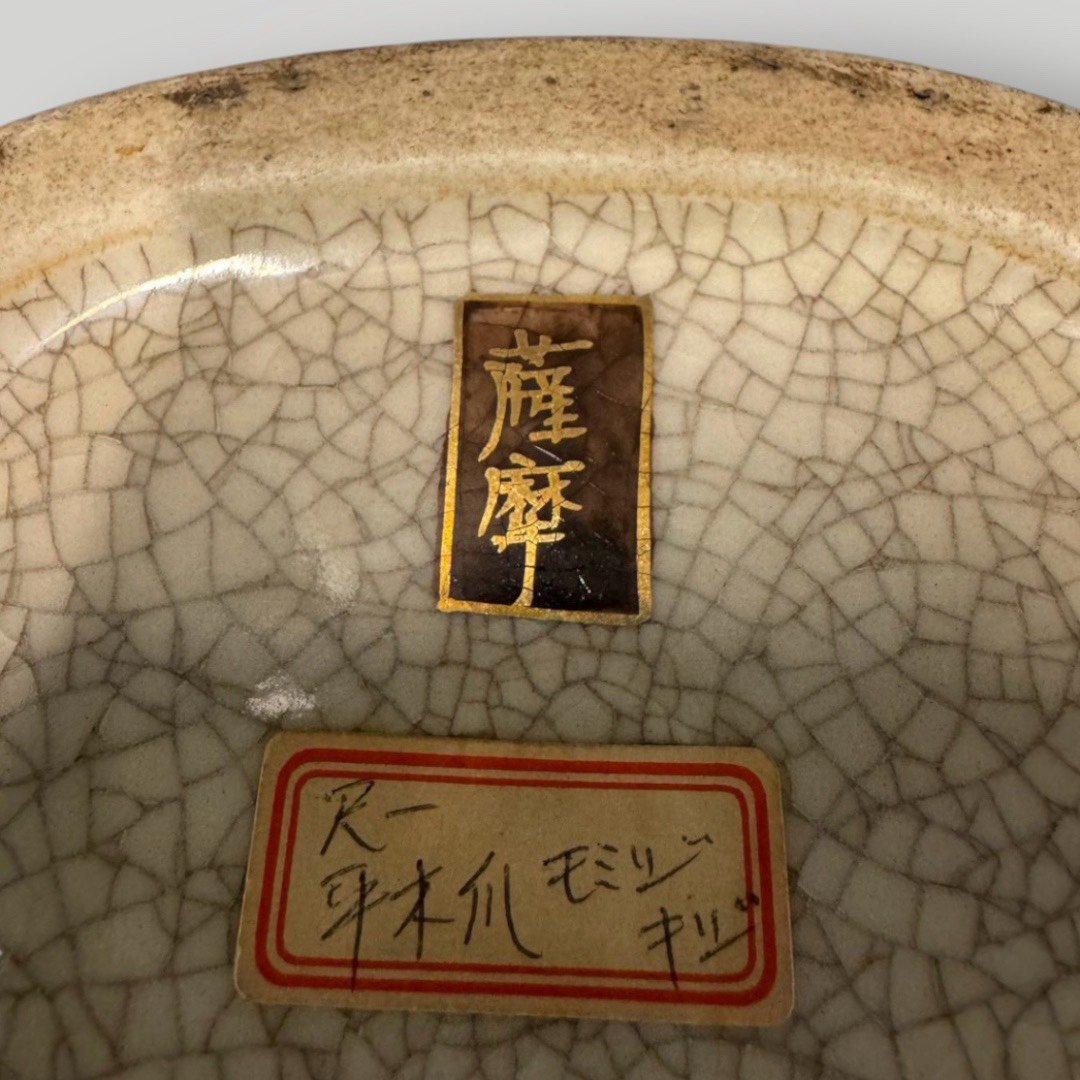
① "Satsuma" mark on the base
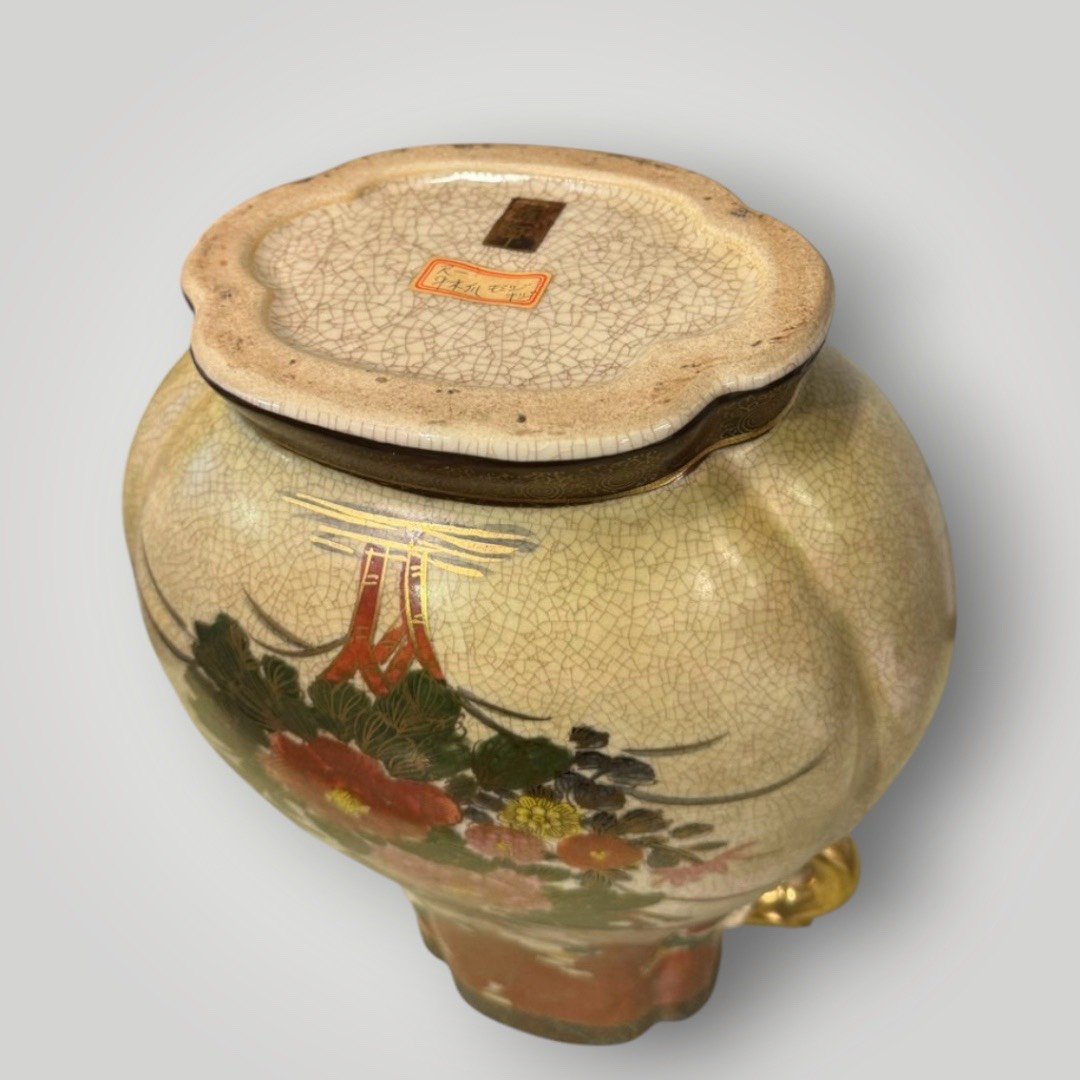
The photograph of the base clearly shows the two characters "Satsuma" within a rectangular cartouche. This is important information well worth preserving and displaying on this piece. The base also retains an old handwritten label with an aged feel; although the writing cannot be fully made out at present, such old labels are part of an antique's history of circulation, so removing or cleaning them off is not recommended.
② Covered all over with fine crackle (kannyu)
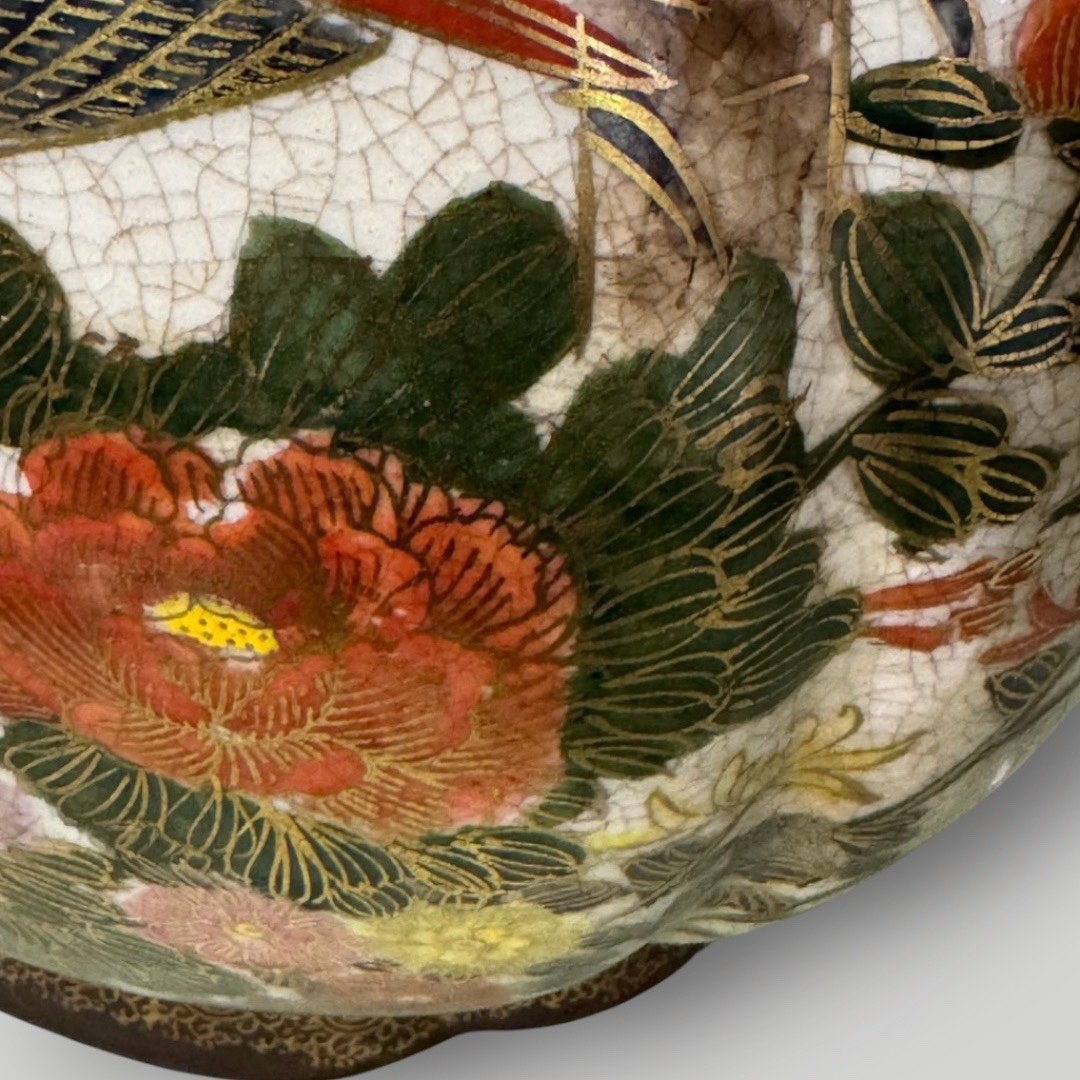
One very appealing feature of this piece is the abundance of naturally formed, fine crackle across the ivory-toned glaze. The base photograph shows this especially clearly. Countless tiny lines cross one another over the glaze, creating an effect resembling ice-crack or tortoise-shell crazing. This texture is completely different from the smooth, even surface of modern new porcelain, and it is precisely one of the most recognizable visual signatures of Satsuma-style wares.
③ Richly gilded bird-and-flower design
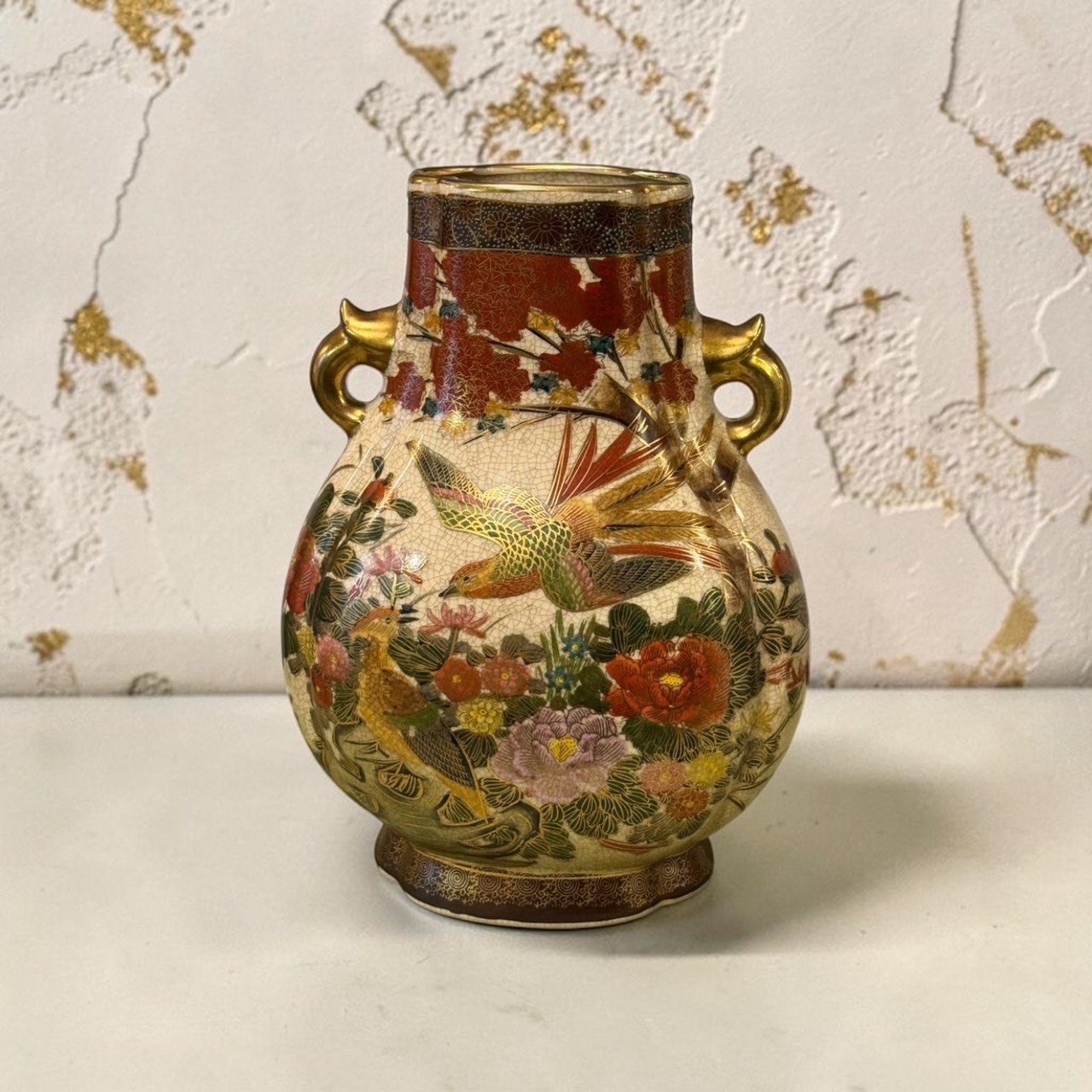
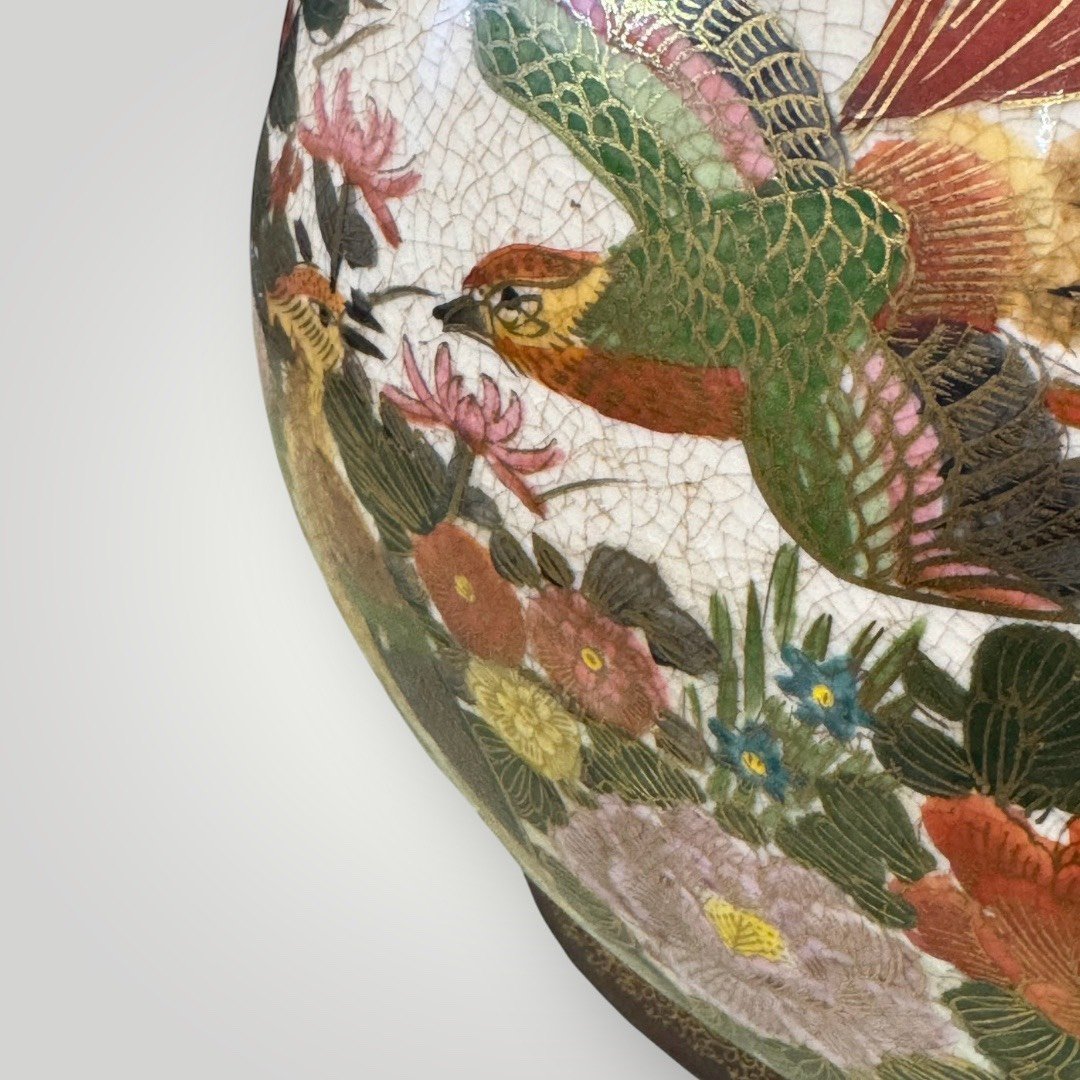
The most striking subject on the front is a bird with its wings spread. The feathers are built up in layers of green, yellow, red and gold, with a second bird and blooming flowers arranged below, so that the body of the vase forms a fully realized bird-and-flower composition. This is not a quick sketch in a few strokes but a densely filled, strongly decorative treatment.
④ Peonies, chrysanthemums and abundant flowers
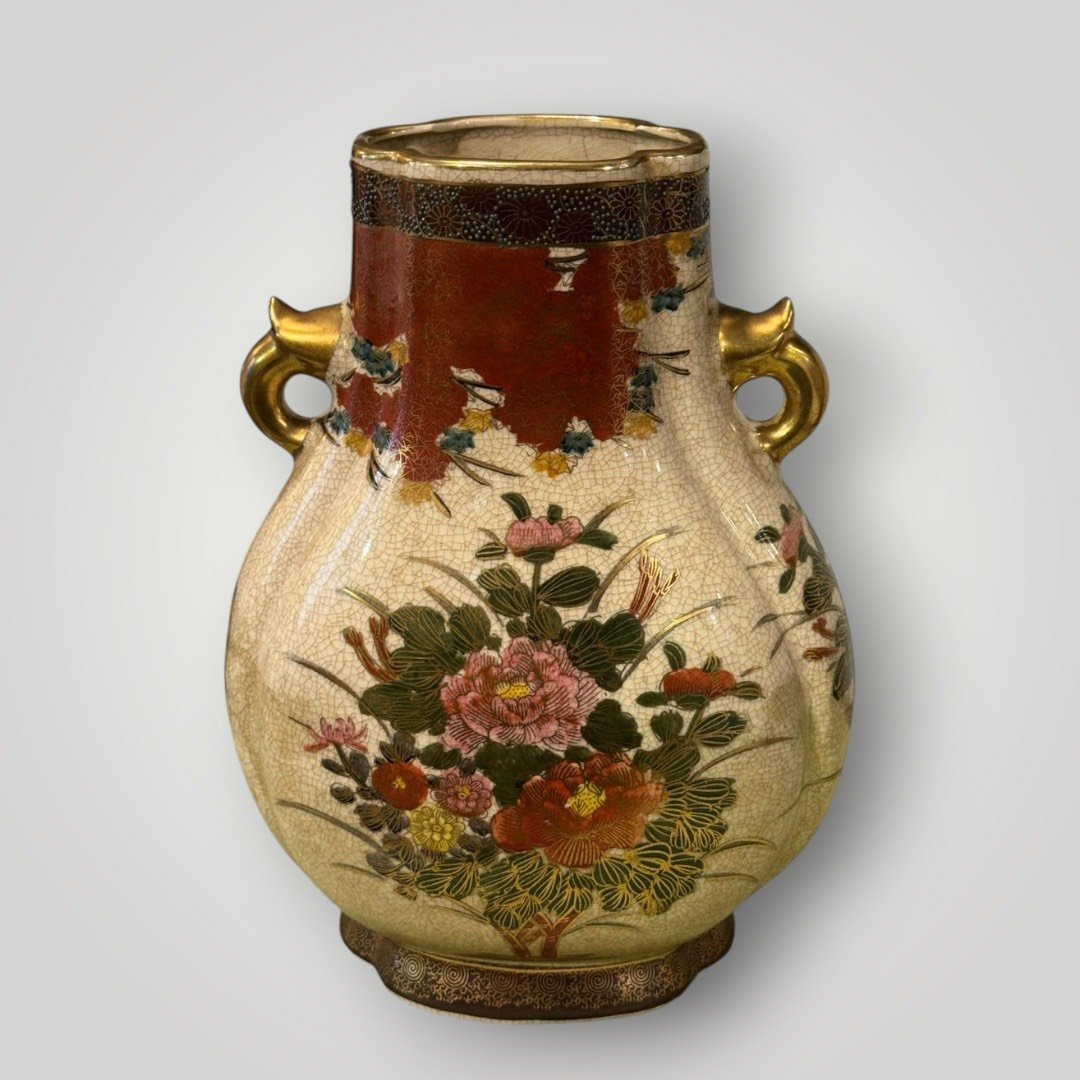
The lower half of the body is especially impressive. Flowers in red, pink, yellow and white overlap layer upon layer, with the large peonies standing out most of all. Dark green leaves fill the spaces around the blossoms, so almost no large area of the vase is left blank. This densely flowering composition suits anyone who enjoys opulent Japanese antique art.
⑤ Abundant gilding adds classical splendour
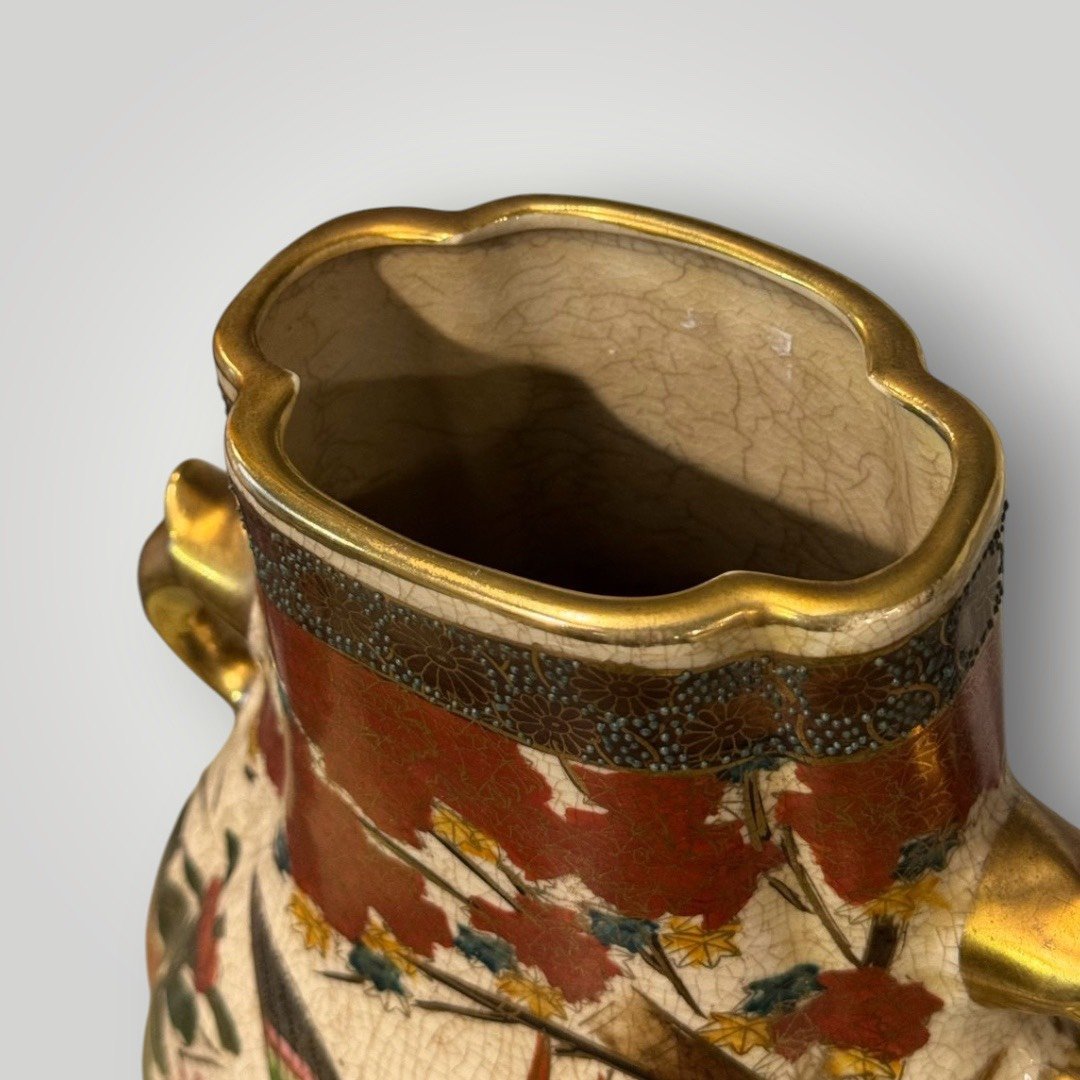
This piece is not painted decoration alone. Gold has been applied to the mouth, the two handles, the birds' feathers, the branches and leaves, and parts of the outlines, so when light strikes from the side the gilding reflects differently from the enamels.
Under warm lighting in particular, the whole piece looks more magnificent than in ordinary photographs.
⑥ Twin handles give the silhouette greater presence
The large ring-shaped handles on either side are a very important formal element of this piece. Their outer surfaces are gilded and they flare slightly outward at the top, lending the whole an air of classical ceremonial ware.
So even without any flowers arranged in it, the vase is already complete as a standalone art object.
⑦ Large size at 32.1 cm
At 32.1 cm high and about 24 cm at its widest, it already has a considerable presence in a room. Small Satsuma pieces are meant to be held in the hand and studied up close; a large twin-handled vase like this leans more toward:
"Place it in a space and enjoy it." From a distance you take in the form; up close you look at the birds and flowers, the gilding and the crackle — each viewing distance offers something different.