
Features
① 1993 BANDAI Japanese nostalgic toy
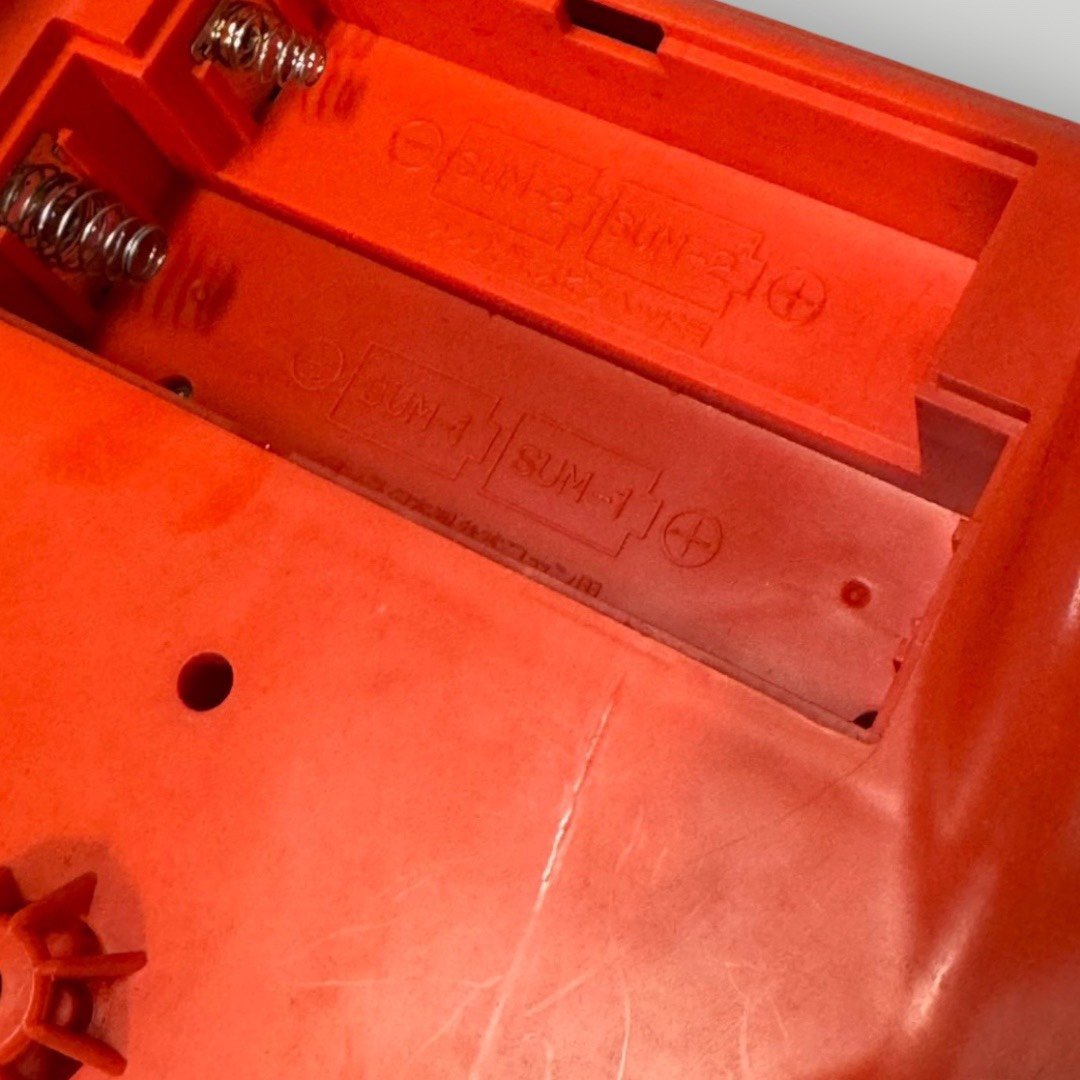
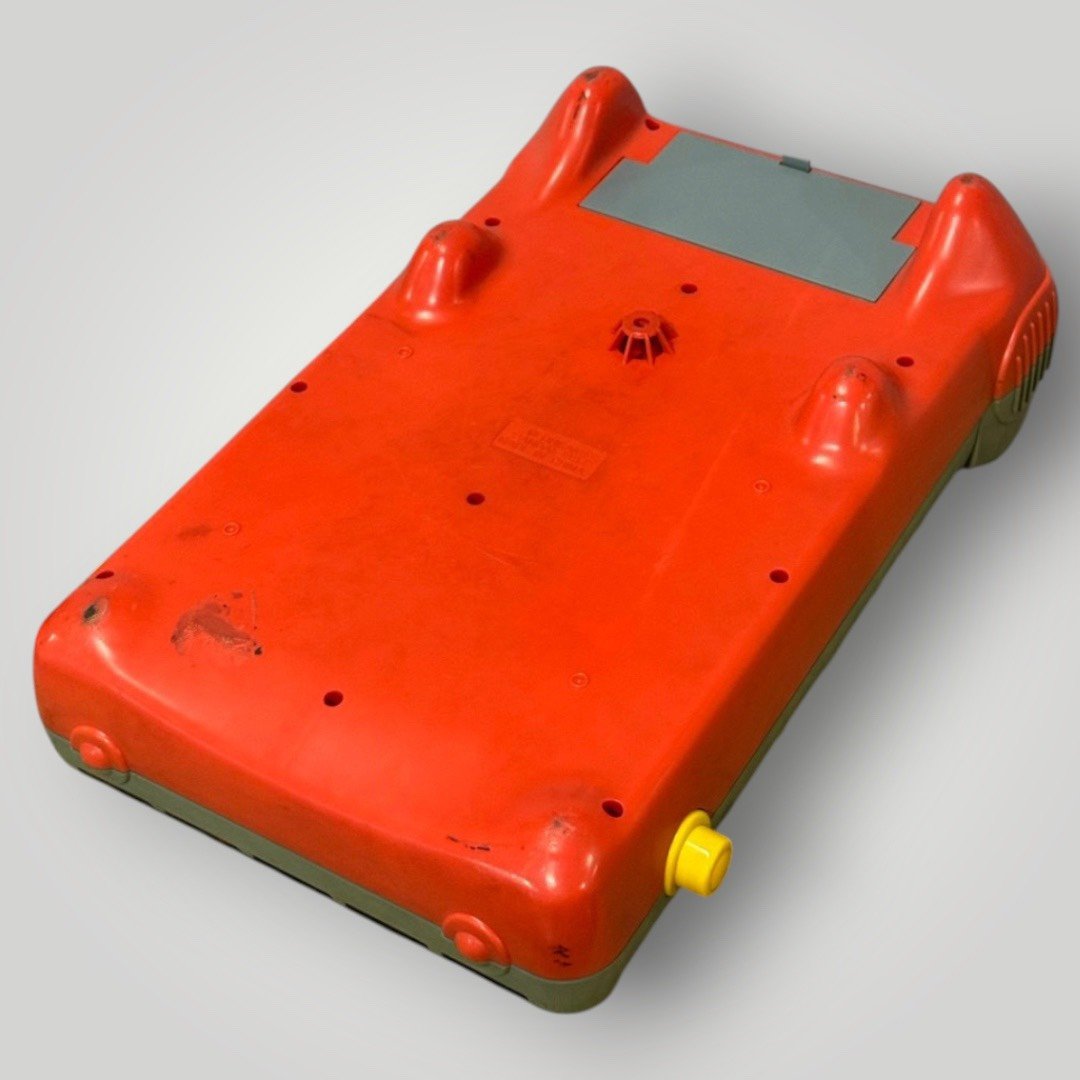
If the factory marking on the base can confirm the year 1993, that will be one of the most important pieces of information at the point of sale. More than 30 years have passed since 1993, so it has gradually moved from being "an old toy" into the category of early-Heisei nostalgic collectibles. For people now around 30–50 years old who grew up with Japanese toy culture, what sells here is not just function but a strong sense of childhood memory.
② A large pachinko-style ball game scaled down to tabletop size
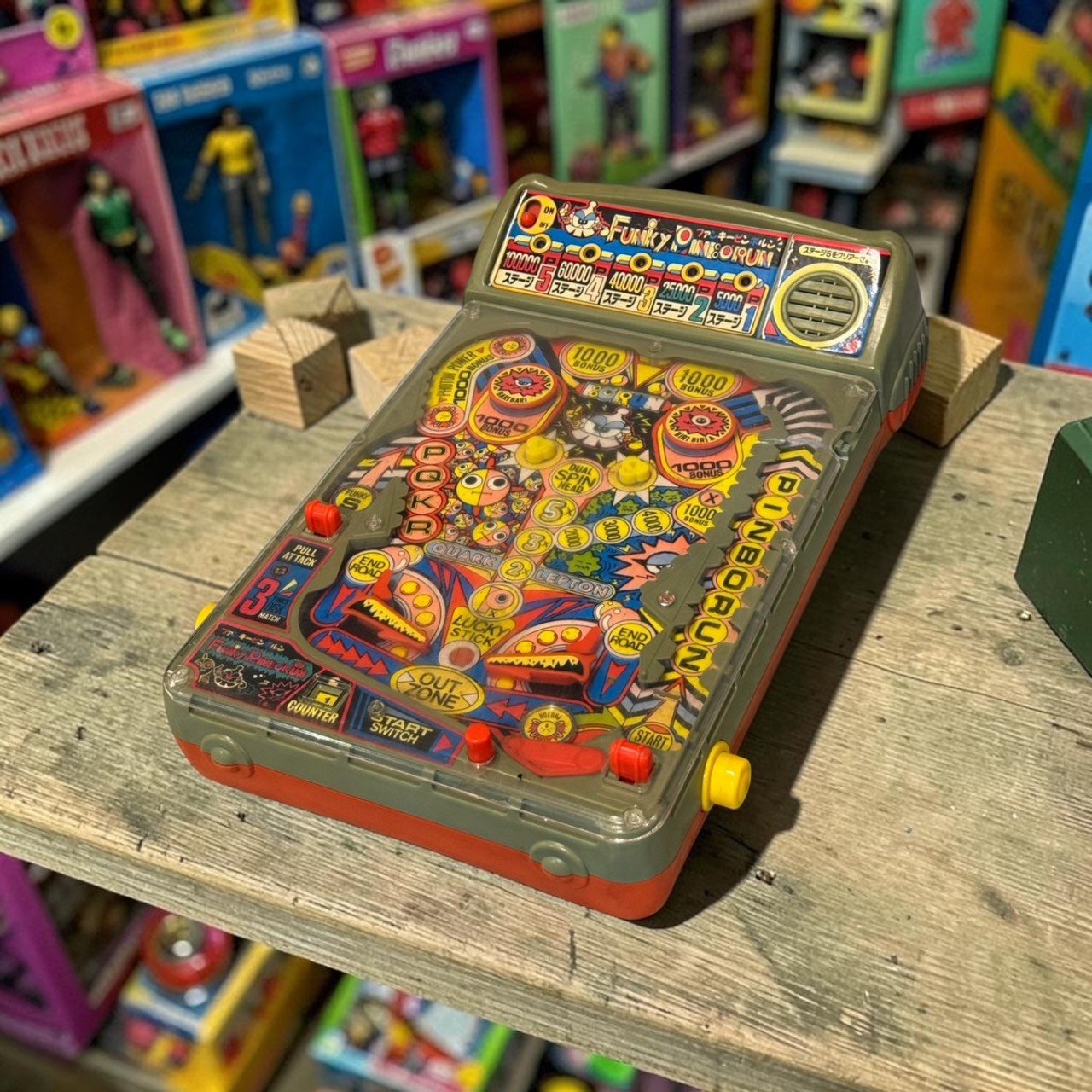
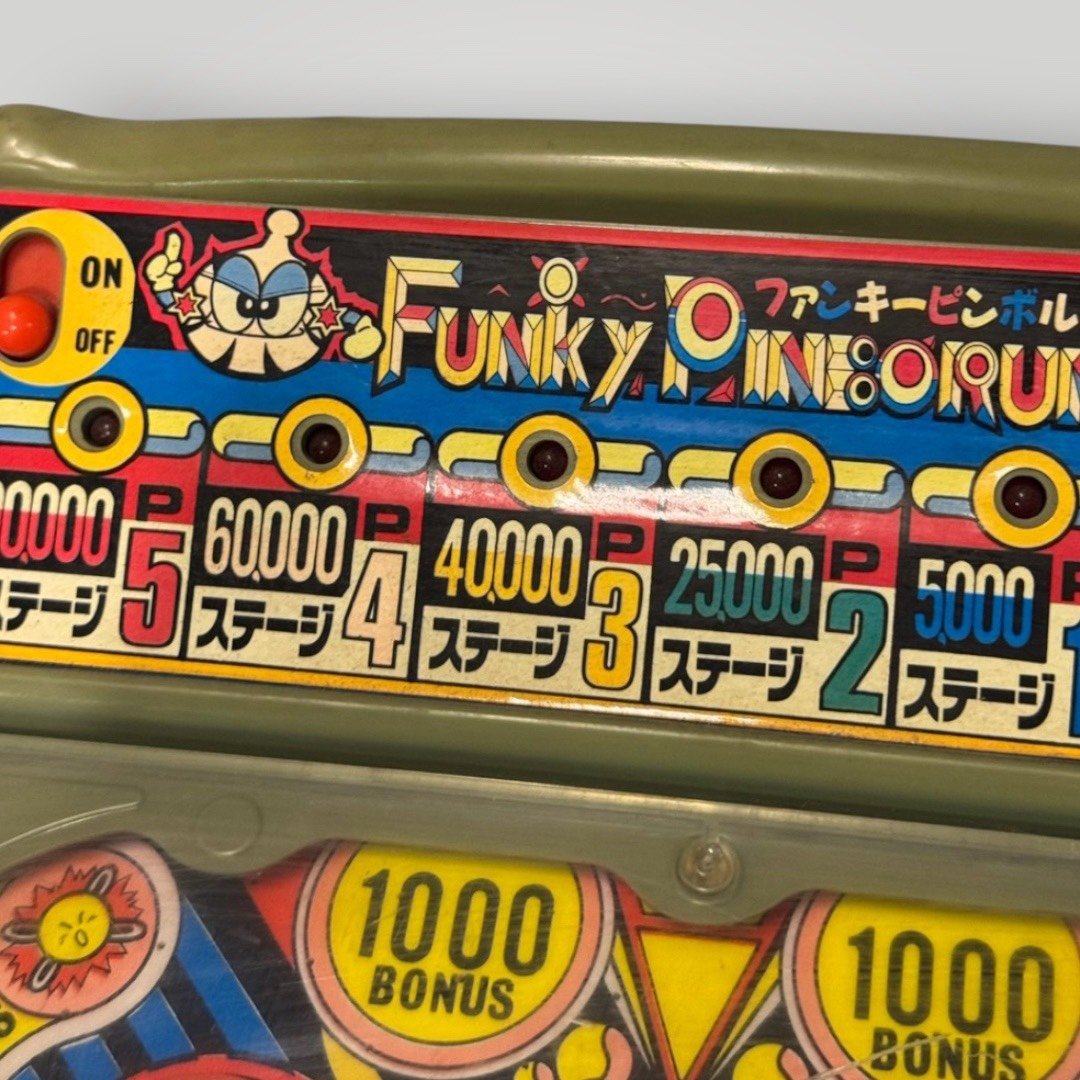
The cabinet measures 36 cm in length, so this is no miniature toy. It retains all the most representative features of a pinball machine: the inclined playfield, the launcher, the obstacle area, the scoring zones and the operating position at the bottom, plus the upright scoring/decorative backboard at the rear. So even if you never play it today and simply place it on a display shelf, anyone can tell at a glance: "That's a vintage pinball machine."
③ The original FUNKY PINBALL colour playfield
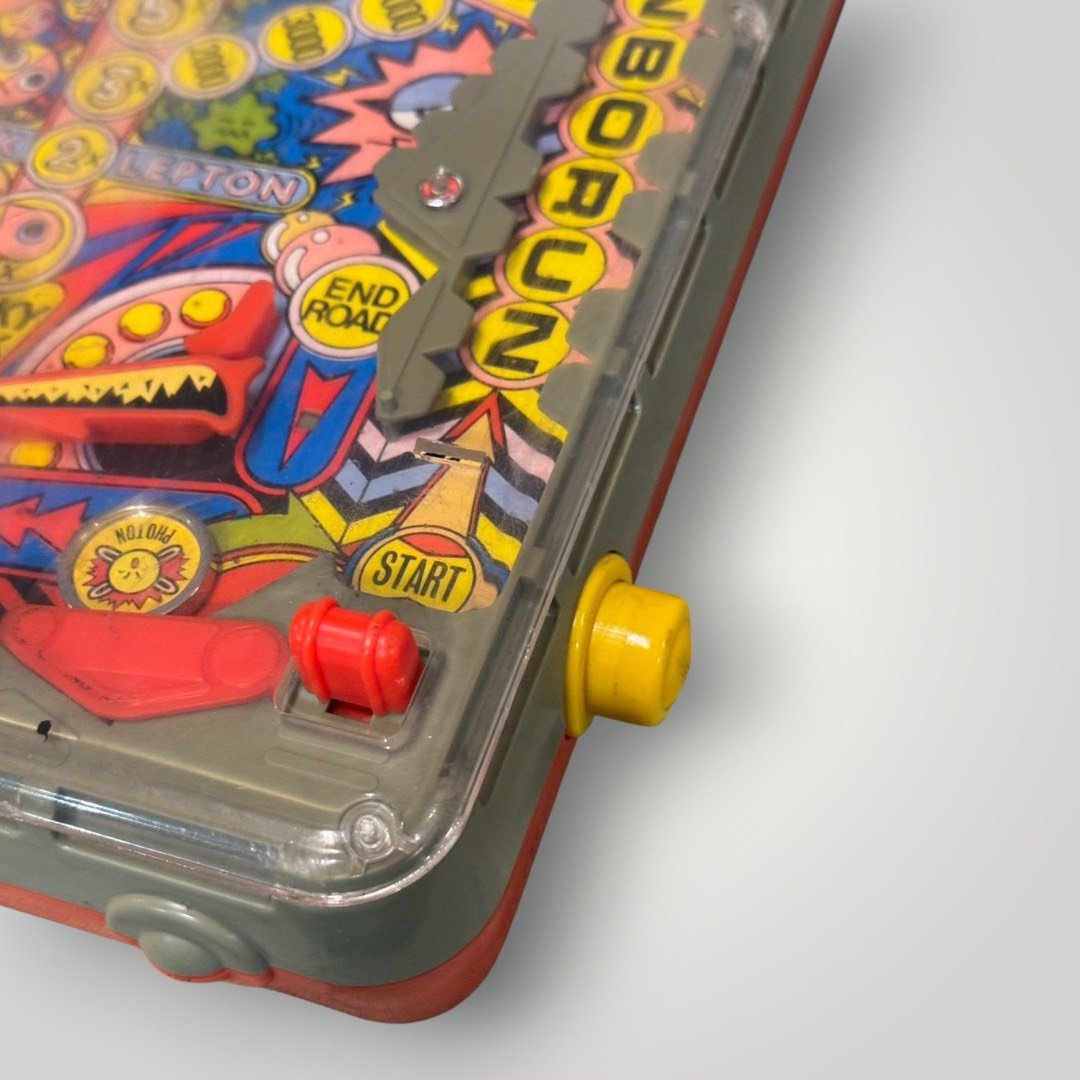
For me the most collectible aspect of this piece is that the original playfield design has been preserved. At the centre you can see exaggerated cartoon characters, monster mouths, radiating patterns, score numbers and various game zones. Wording such as 1000 BONUS, 4000 BONUS, LUCKY STICK, START SWITCH and OUT ZONE is scattered across it. Viewed today, it no longer reads as mere game instructions but rather as a piece of graphic design from 90s Japanese arcade culture.
④ A strong 90s Japanese × American Pop Art flavour
One fascinating thing about Japanese toys of this kind is how freely they absorbed the American comics, amusement arcade, pinball and Pop Art elements of the day and turned them into Japanese children's toys. Highly saturated colours, thick black outlines, explosion graphics, monsters and plenty of English lettering are all gathered on a single playfield. If you enjoy Japanese visual culture from the late Showa to the early Heisei period, pieces like this have far more character than modern reproductions.
⑤ The hands-on feel of a real mechanical toy
Several physical knobs, buttons and operating parts remain on the sides and front of the cabinet. This is also the biggest difference between it and today's mobile phone or handheld games. Toys of the past were all about pulling, pressing, launching, colliding and scoring. These physical mechanical structures are themselves already quite entertaining to display.