Features
Mouth diameter 16.1 cm x Max. width 20 cm x Height 16 cm
① A deep ruri blue with a very strong visual presence
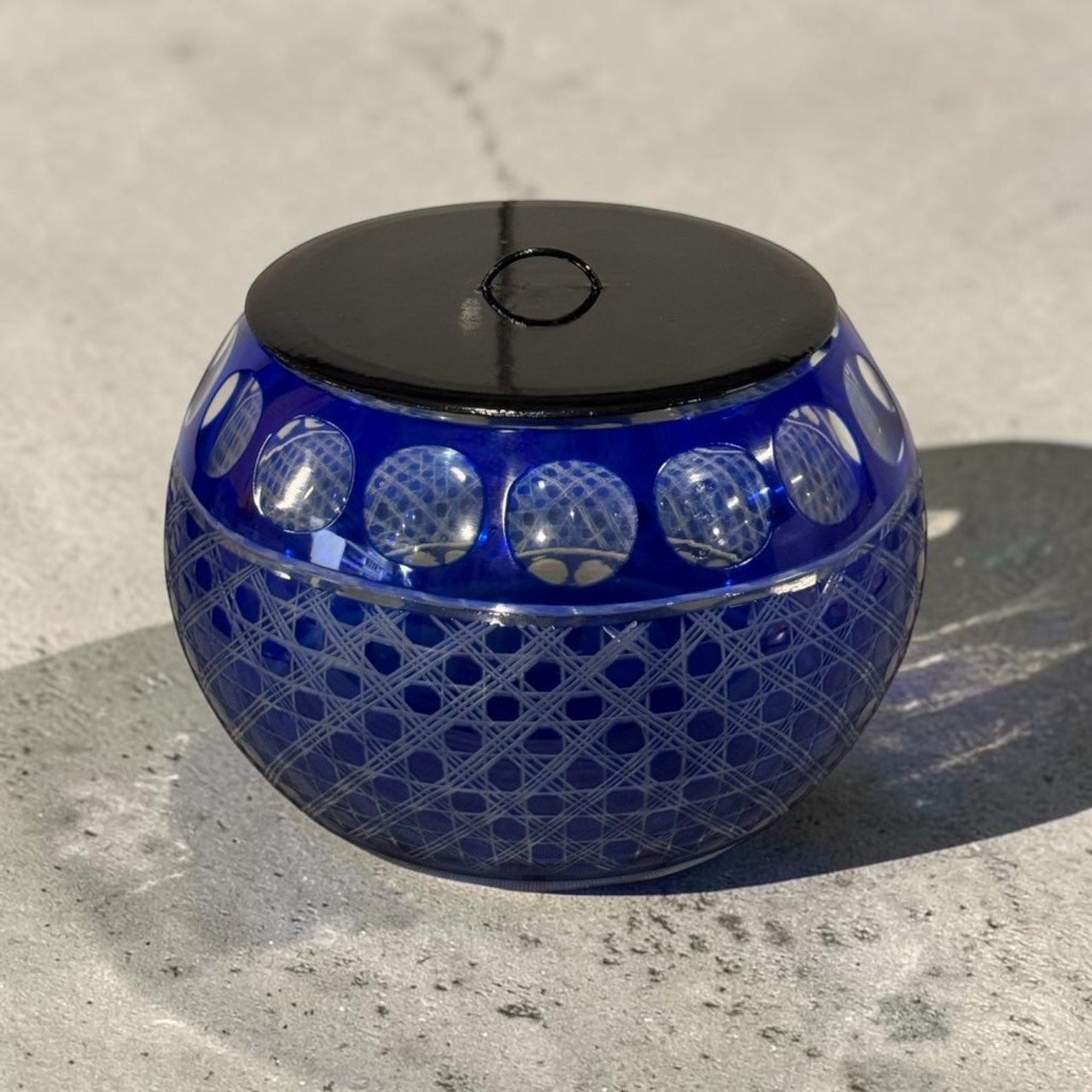
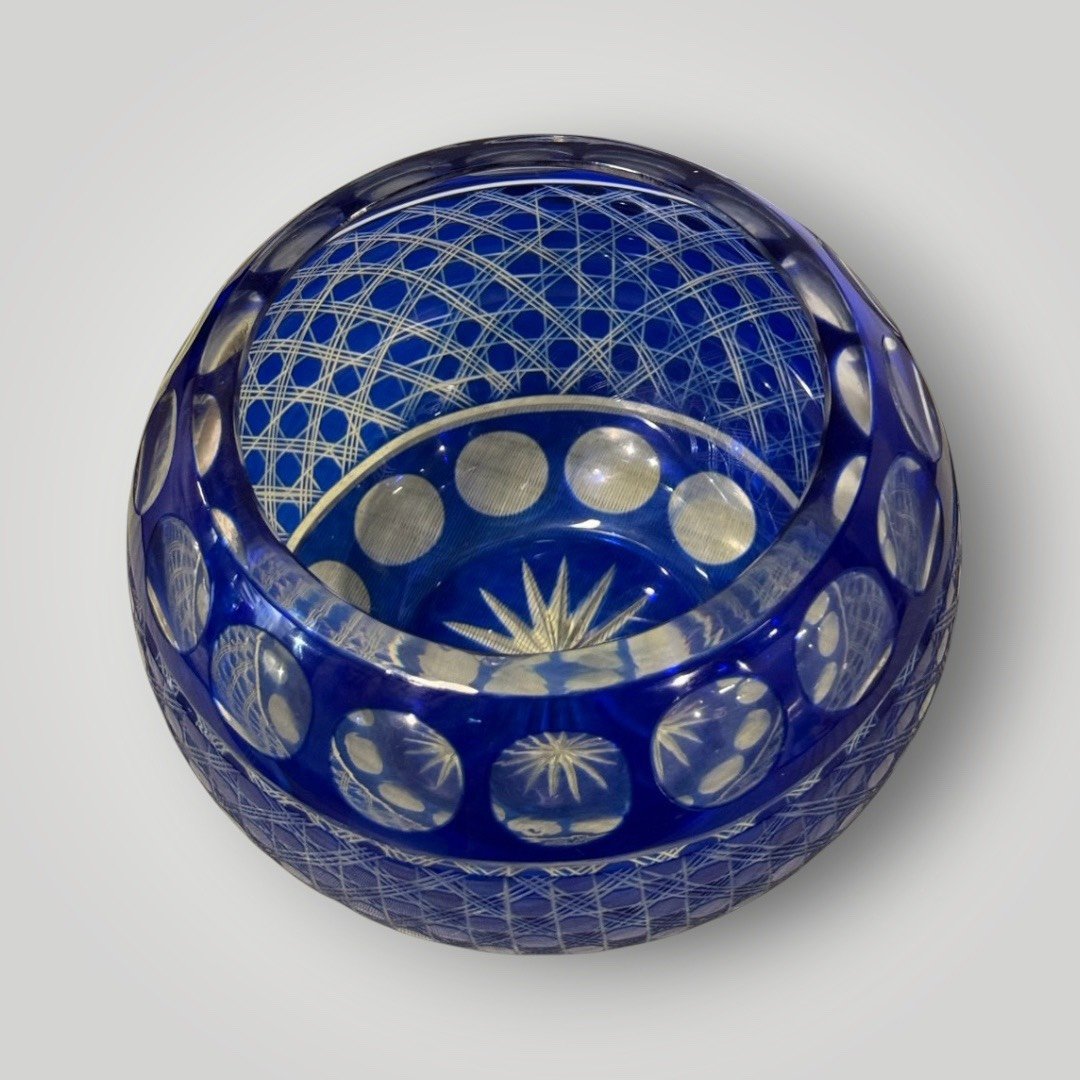
What catches the eye first about this piece is, without question, its color: a rich ruri blue with a beautiful translucency — neither as light as fully clear glass nor as heavy as pottery. Placed on dark antique wooden furniture it looks calm and composed; set on a light-toned wooden cabinet or in a grey-white space, it immediately becomes the visual focal point.
② Geometric kiriko cut-glass decoration
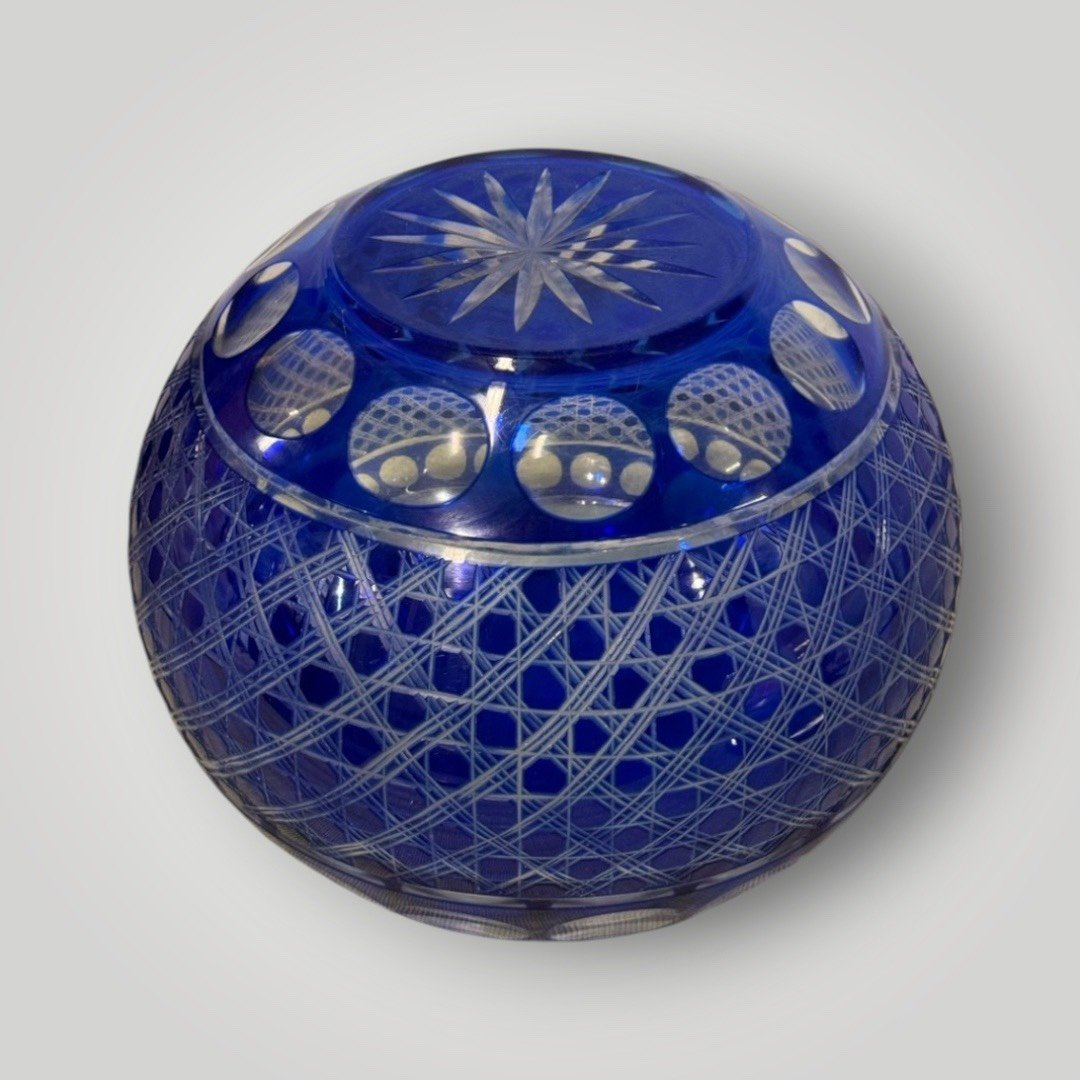
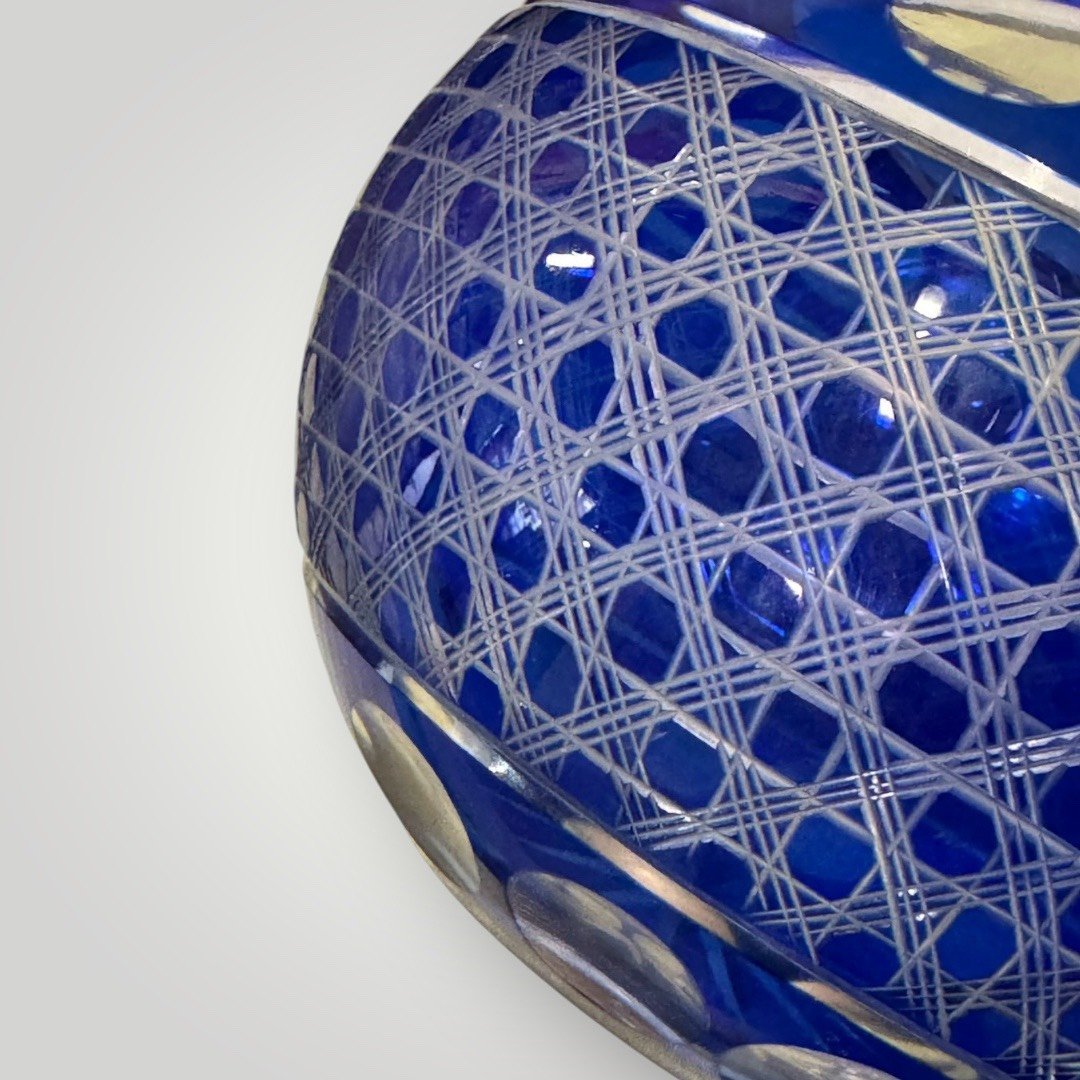
The body is not simply blue glass: it carries extensive cut decoration, with a circular kiriko pattern above and an interlaced net pattern below forming two distinct layers. Up close you can appreciate the cutting itself; from a distance, these patterns create beautiful plays of light and shadow across the curved glass surface.
③ A rounded, low and full form with a distinct Showa feel
A maximum width of about 20 cm paired with a height of 16 cm gives an overall proportion that is not slender but rather rounded and settled. A form like this sits very stably on a tea table, in a washitsu, or on an old wooden cabinet, and needs little else to set it off.
④ The black wooden lid forms a handsome contrast with the ruri blue
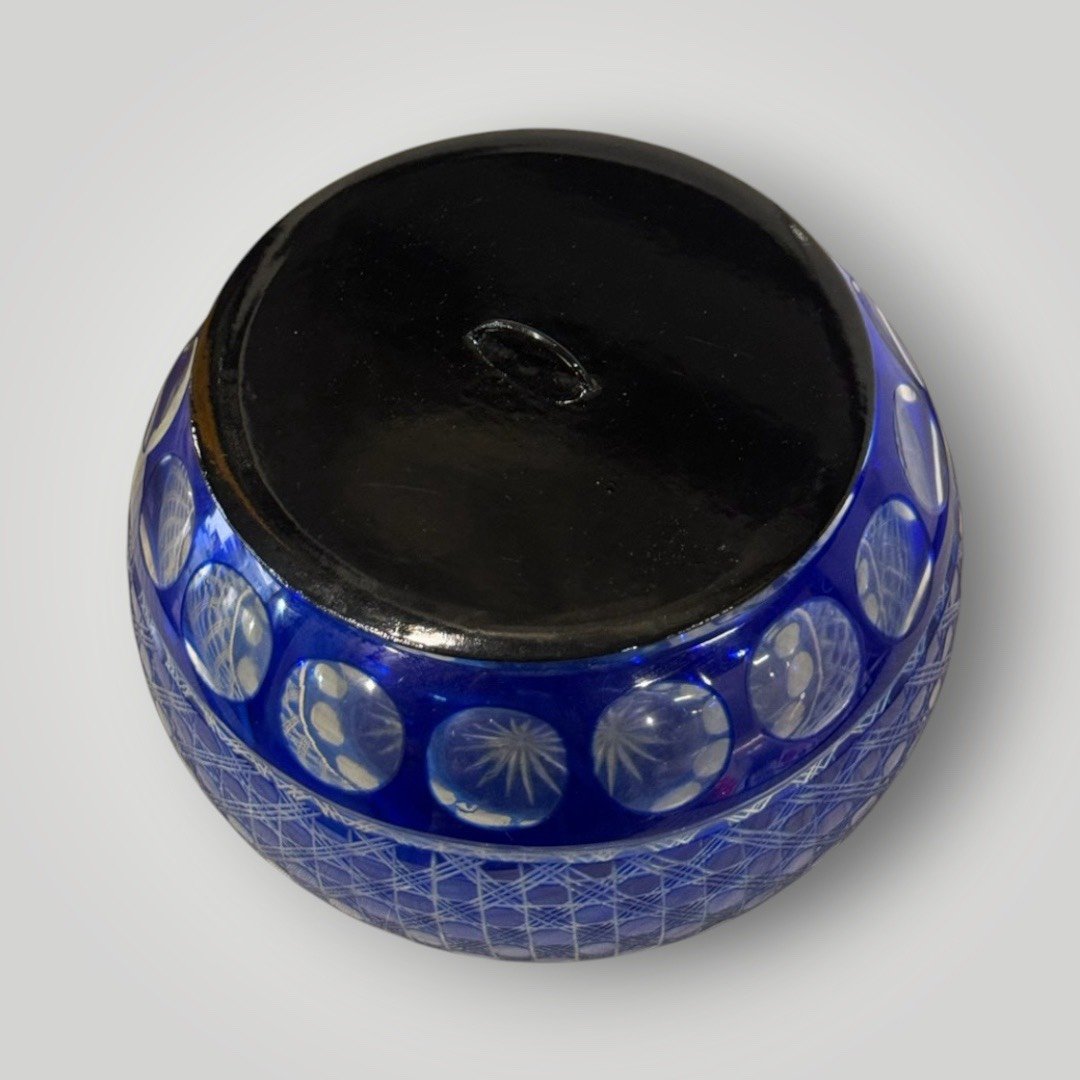
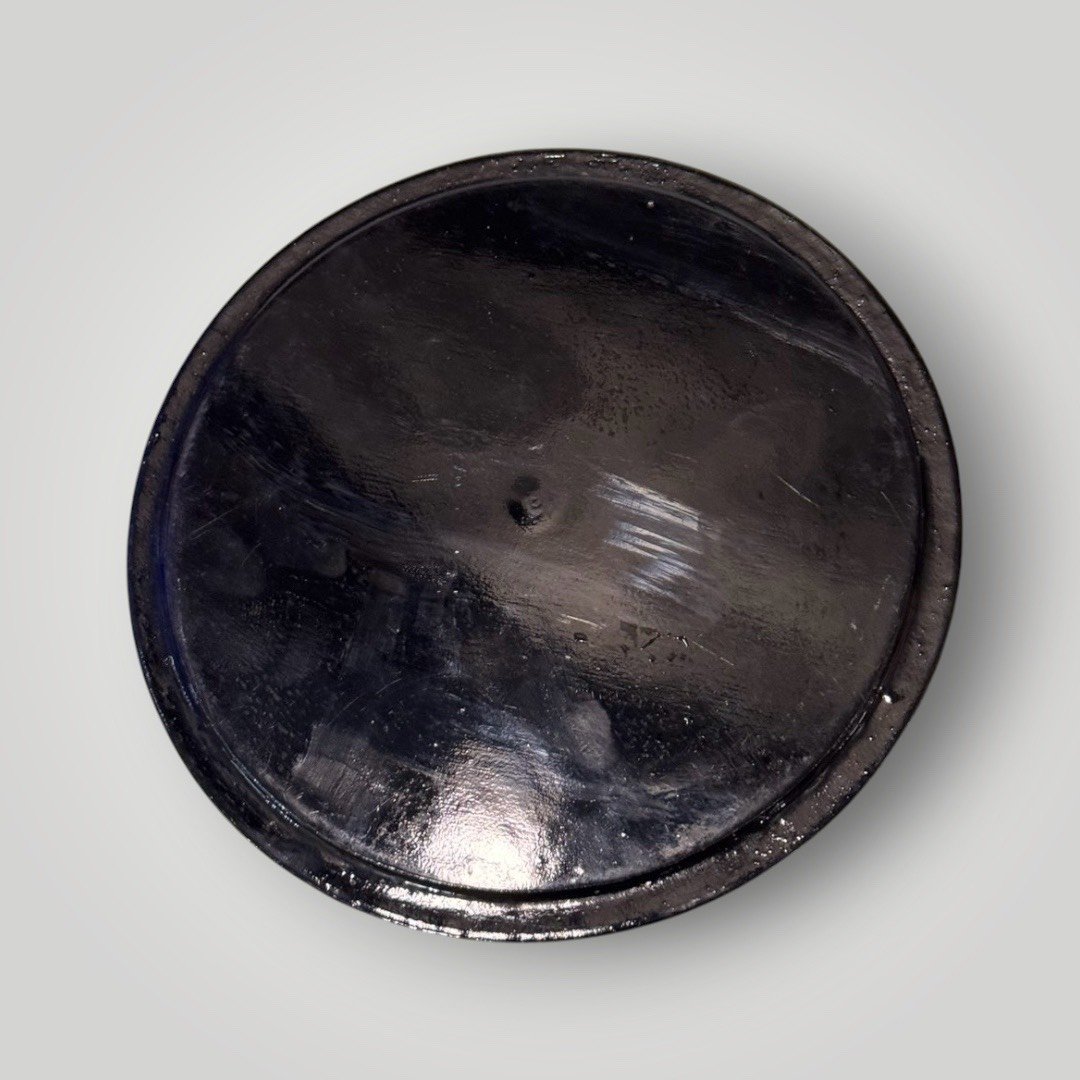
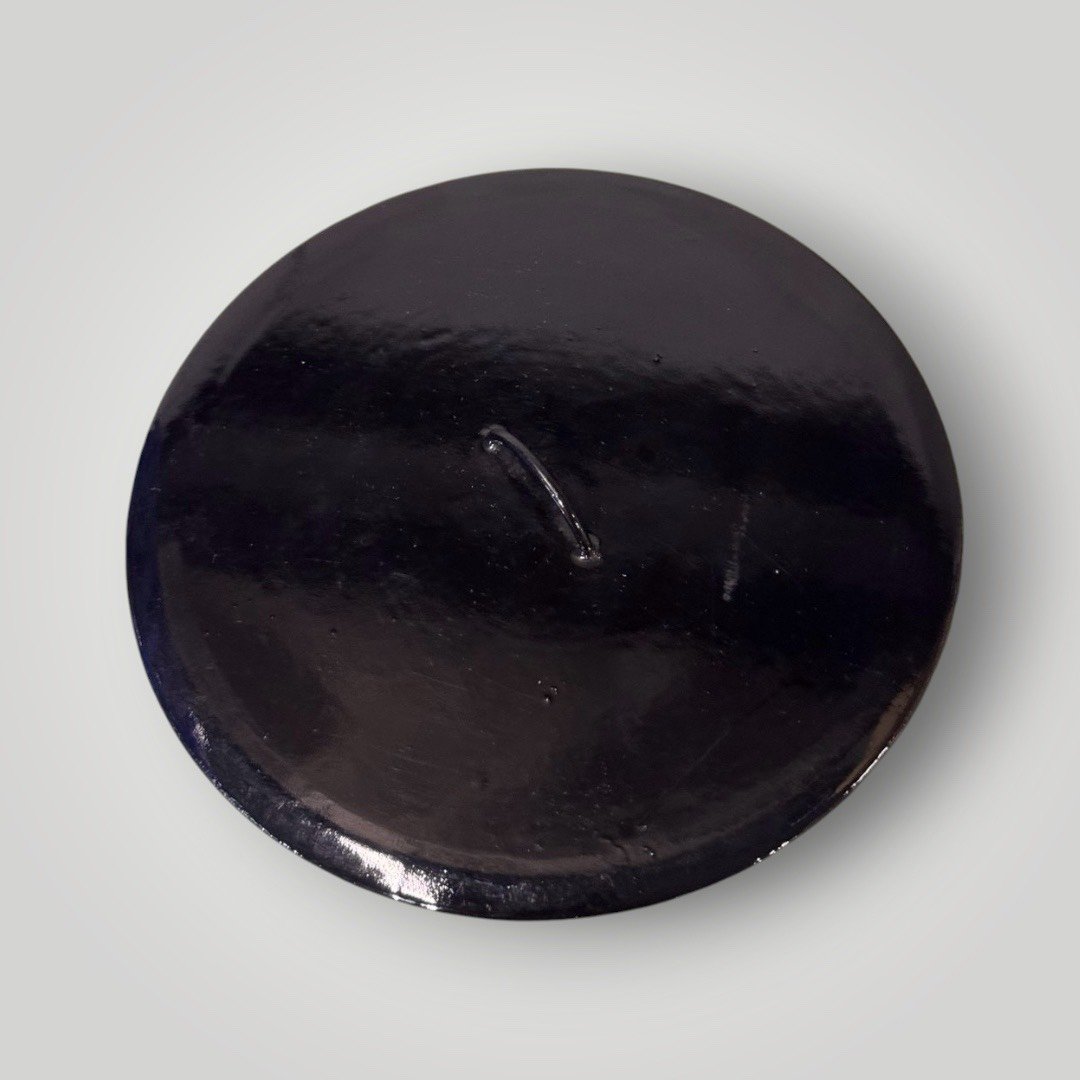
The black wooden lid on top matters a great deal: without it, the piece would more easily read as a large glass bowl; with the black-lacquered lid in place, the overall sense of a Japanese vessel becomes far more complete. The black also barely competes with the deep blue glass — instead it sets off the ruri blue and makes it look even deeper.
⑤ The appeal of displaying it as a mizusashi in a tea setting
The mizusashi is the vessel that holds fresh water in the tea ceremony, and because glass itself conveys a sense of coolness, it is particularly evocative of summer tea gatherings.