Features
① Japanese Wajima-nuri Wood-Bodied Lacquerware
This piece belongs to the traditional Japanese Wajima-nuri lacquerware tradition. Wajima-nuri takes its name from the Wajima area of Ishikawa Prefecture; the traditional craft is built upon a wooden body and completed through many stages of lacquering and finishing. This set of lidded bowls has the warm, mellow quality characteristic of wood-bodied lacquerware, softer to both the eye and the hand than ceramic wares.
② A complete set of five
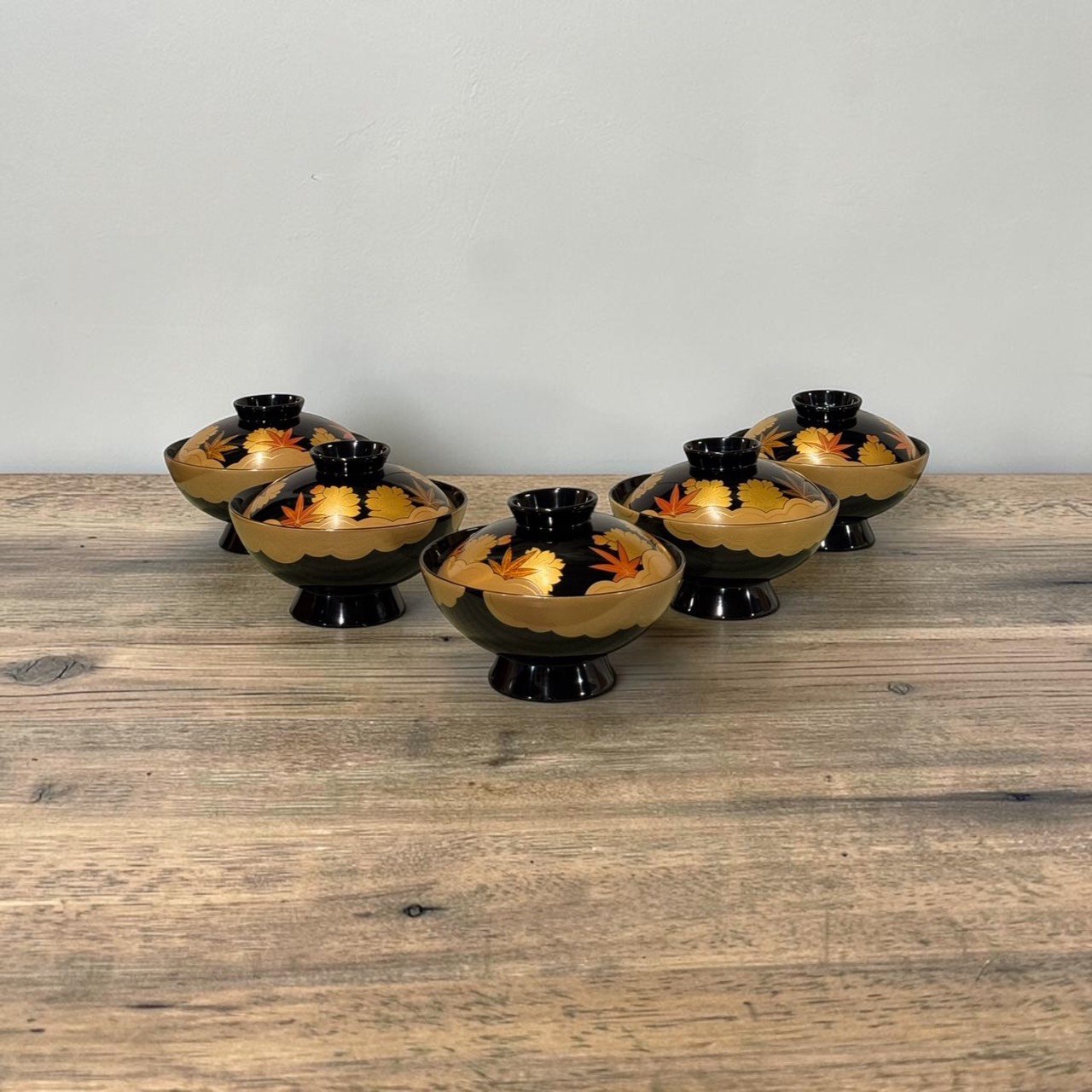
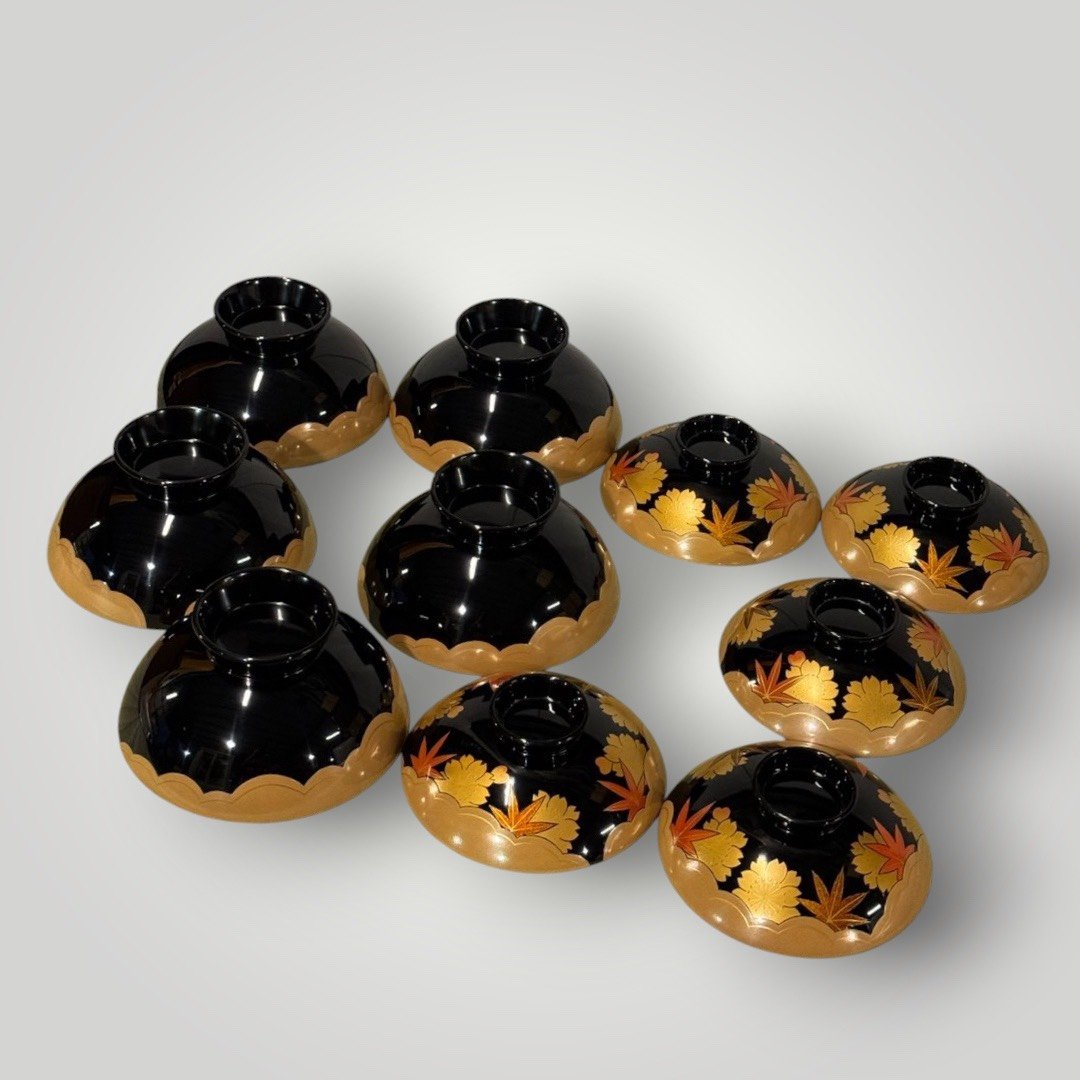
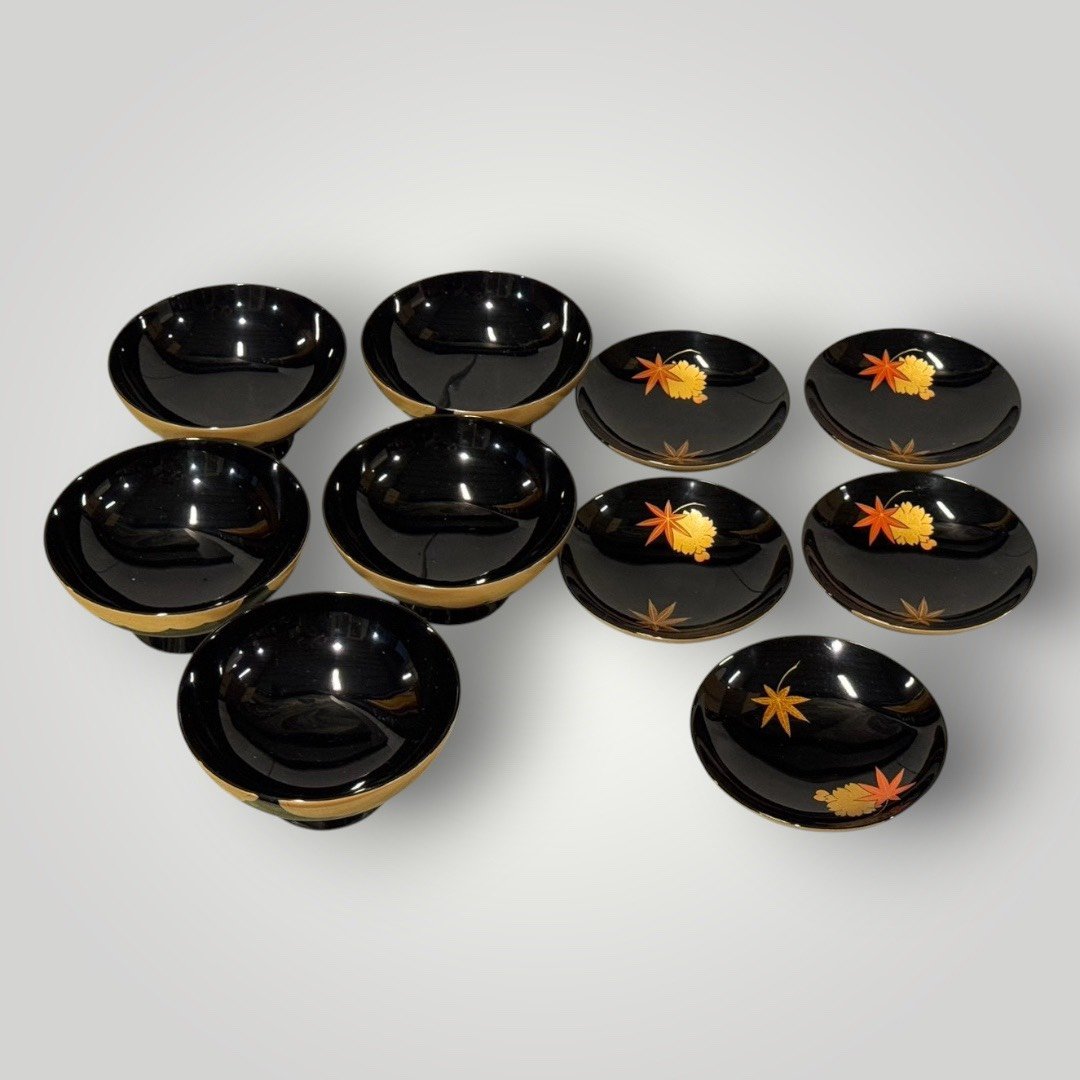
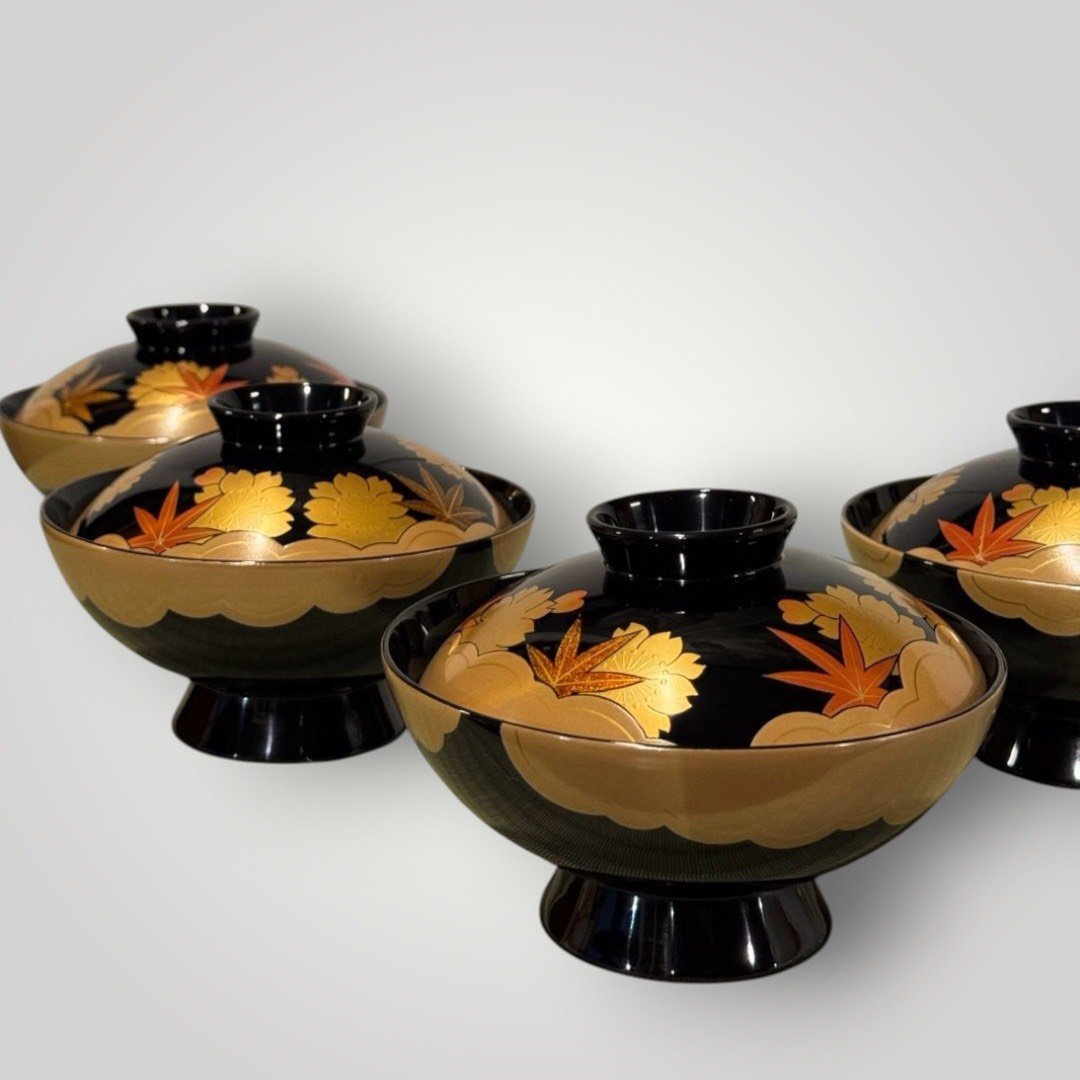
This is not a single lidded bowl but a set of five. All five pieces are consistent in form, lacquer color, and decorative theme, and the set has been preserved complete, giving it the particular sense of order found in traditional Japanese lacquer sets.
③ An elegant contrast of black lacquer and gold
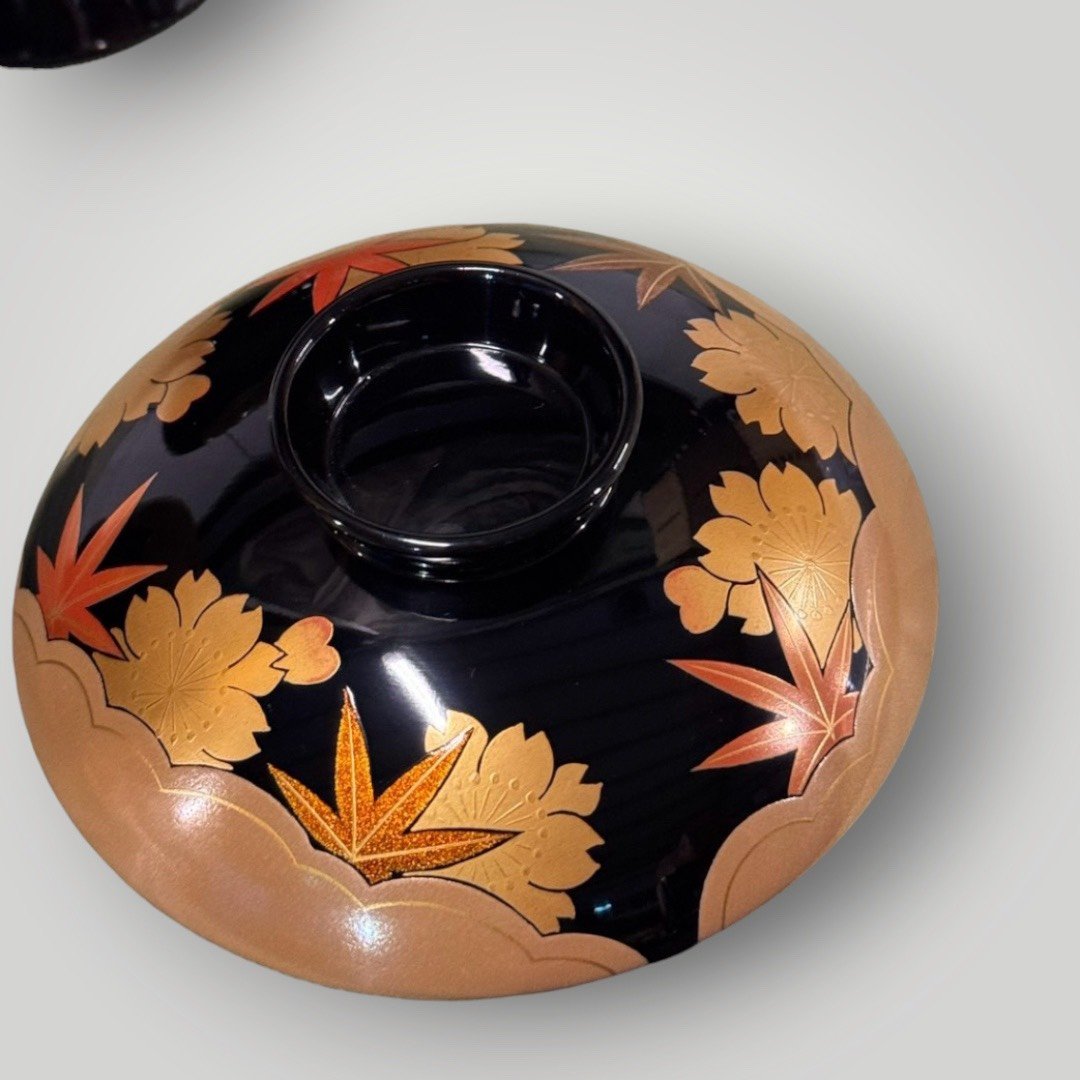
The pieces are based on a deep black lacquer ground. Black is calm and restrained in itself, and when paired with warm tones of gold and orange-vermilion it creates a vivid yet never gaudy visual depth.
When light falls on the lacquer, the black surface takes on a soft natural sheen that contrasts in texture with the gold decoration.
④ Autumn grasses and maple leaf motifs
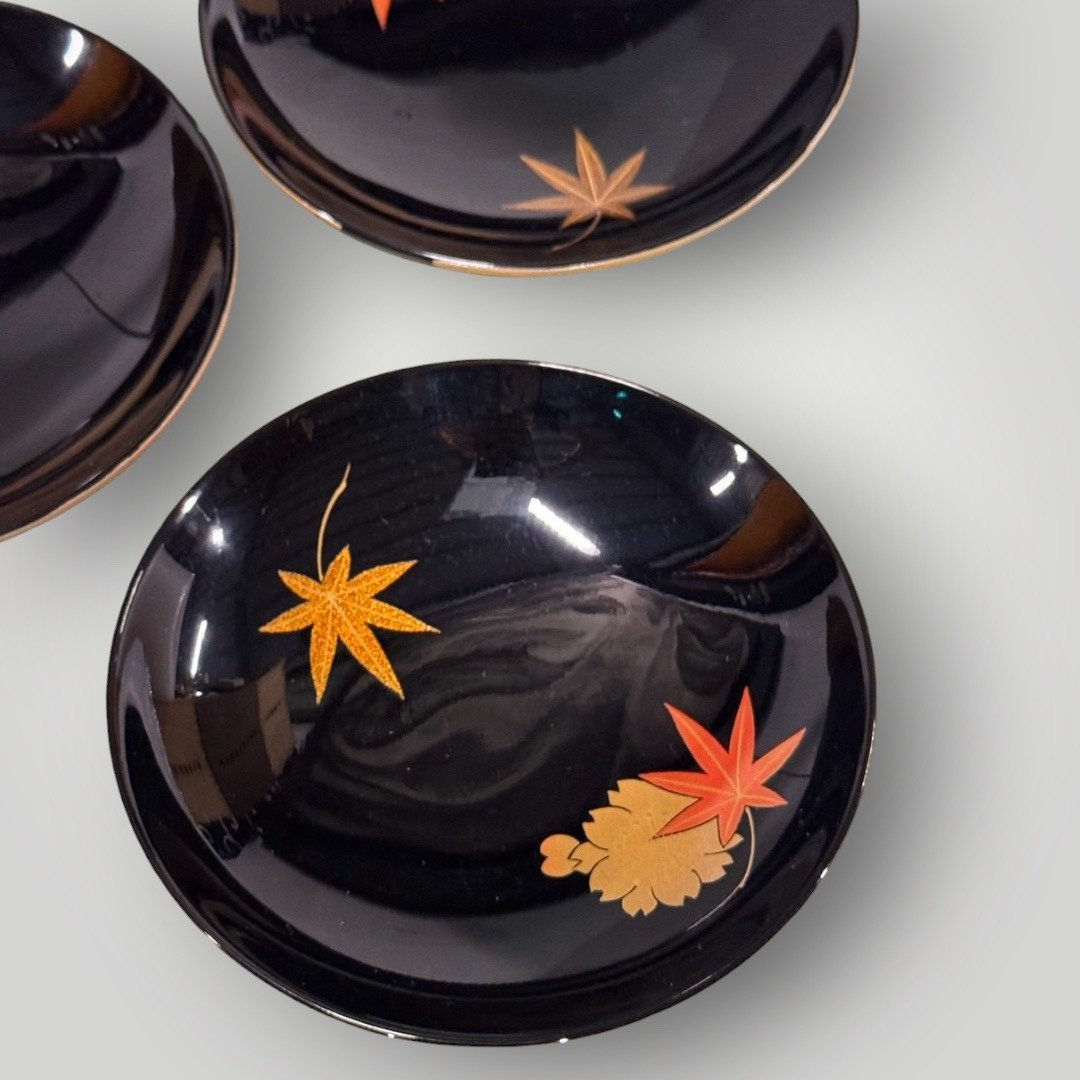
The lids show a variety of leaf patterns rendered in gold, yellow, and orange-vermilion. The red-orange leaves clearly evoke maple, and together with the surrounding gold plant motifs they express the seasonal decorative beauty often seen on traditional Japanese wares, giving the set a strong autumnal feeling.
⑤ Lidded bowls on a tall foot
A relatively tall ring foot beneath the body gives the overall silhouette a more upright poise than an ordinary flat-bottomed soup bowl. The round lid above has a black knob, and lid, body, and tall foot form a complete curved proportion from top to bottom. Lined up as a set of five, they particularly convey the orderliness and ceremonial feeling of traditional Japanese lacquerware.
⑥ Decoration with measured negative space
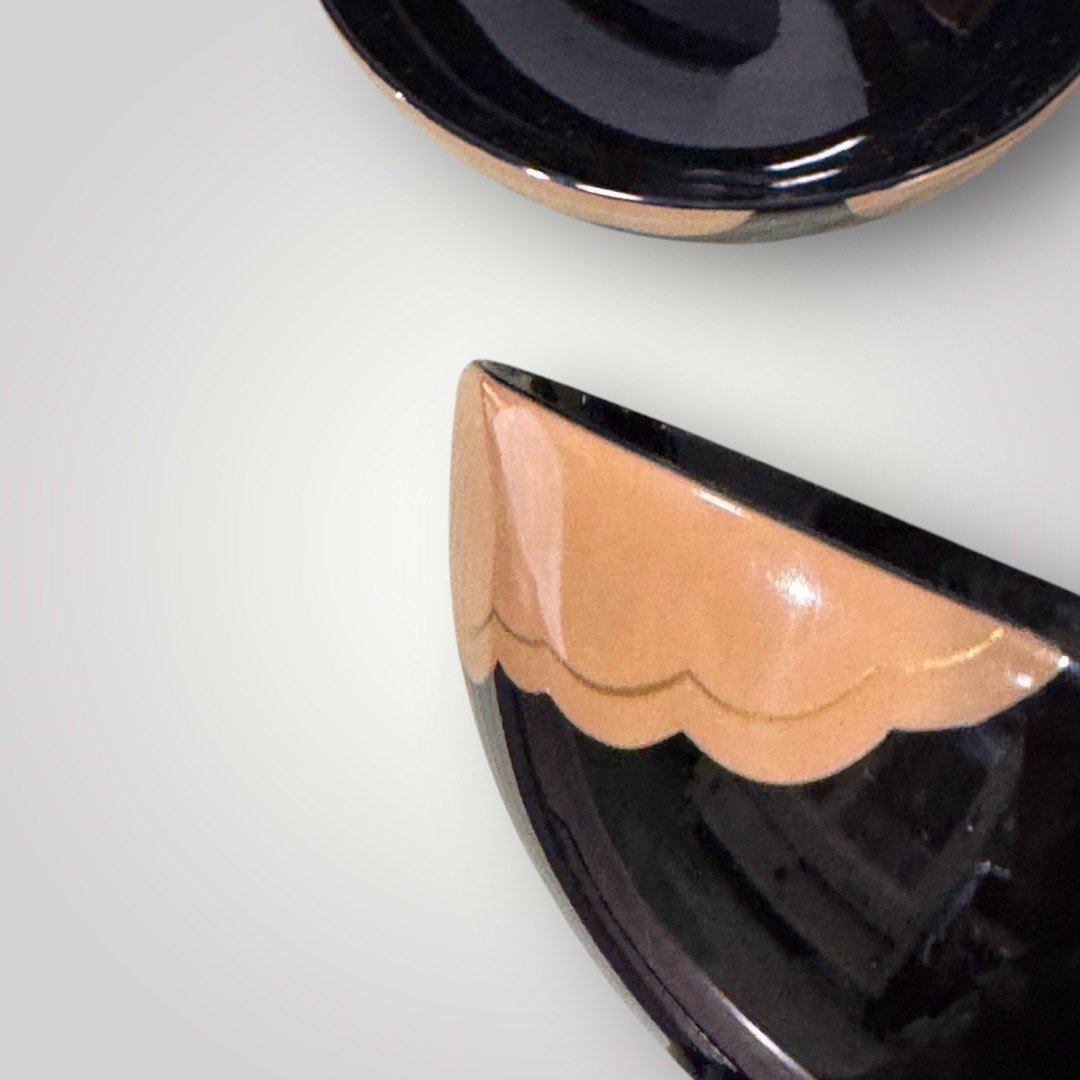
The gold decoration does not cover the entire body; appropriate open space is left between the black lacquer, the gold-brown bands, and the plant motifs, so that although the design is sumptuous, the whole remains quiet and dignified.
⑦ With original wooden box
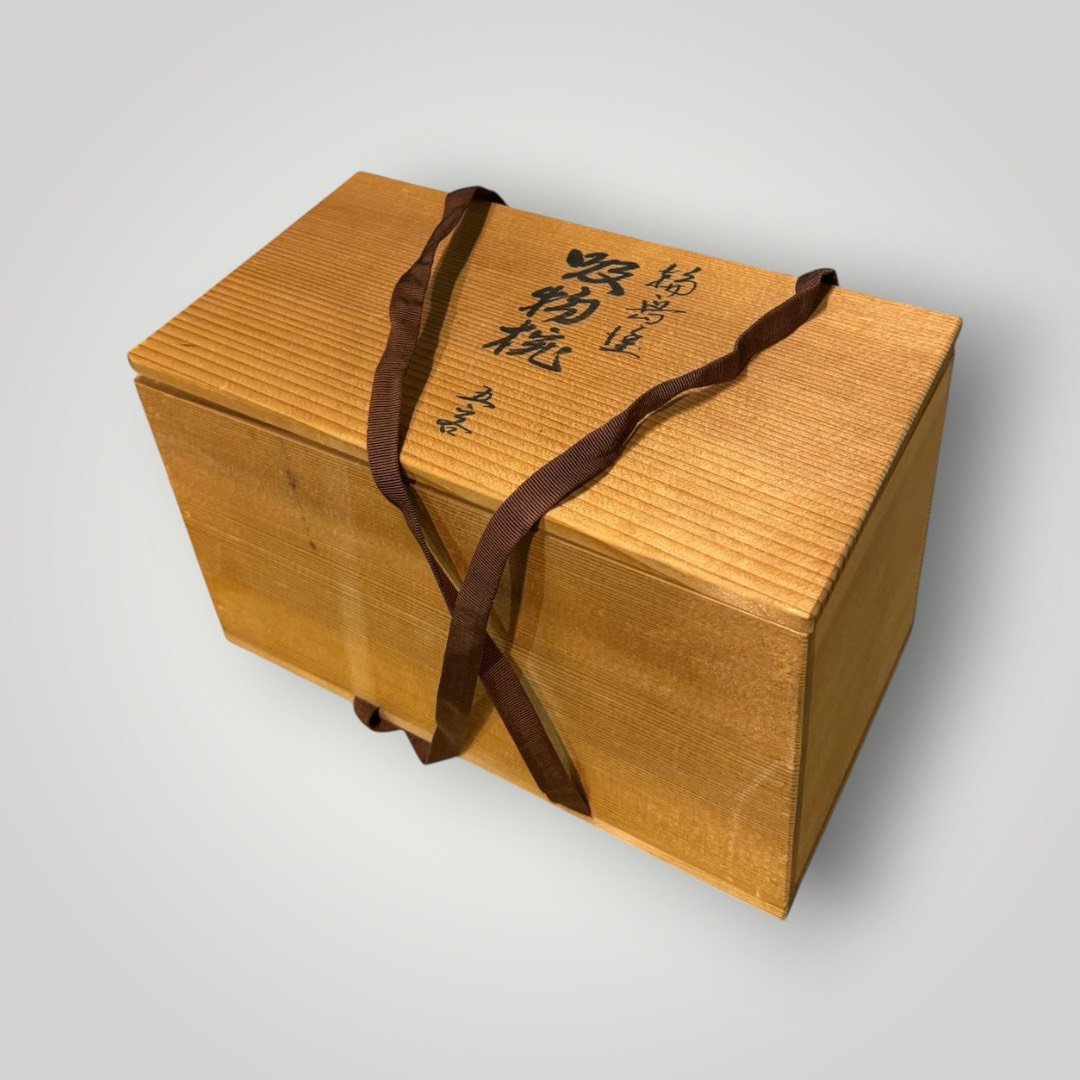
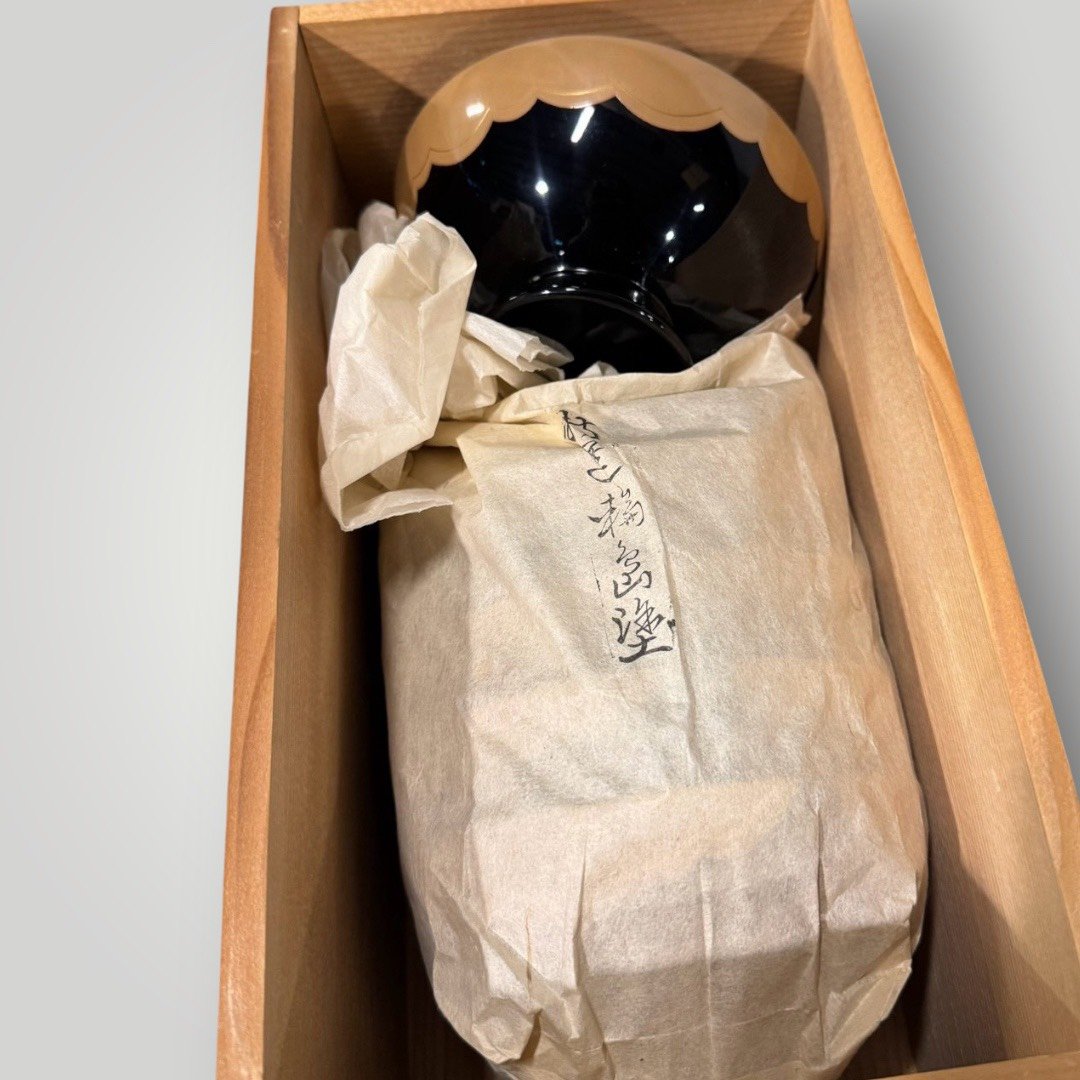
The set comes with its original wooden storage box, the lid bearing Japanese ink inscription, with the original tying cord retained. For Japanese lacquer sets, the tomobako serves not only for storage and preservation but also preserves the original set format and related information of the pieces.
⑧ Beautiful state of preservation
This set shows no signs of use and is very neatly preserved overall; with all five pieces kept together and accompanied by the wooden box, the completeness of the set is all the better.