
Features
① Central and Southern African tribal woodcarving style
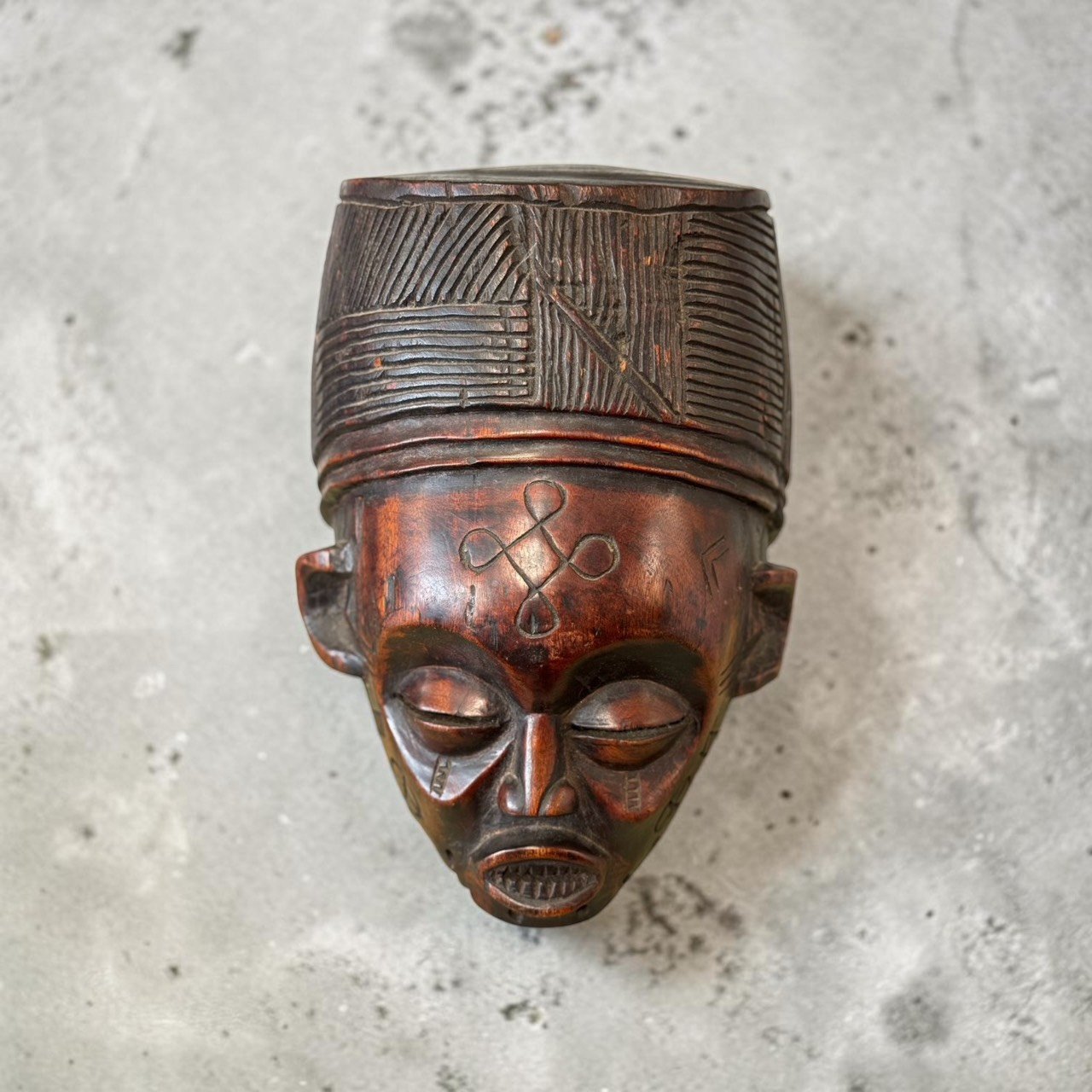
The piece centers on a human head, combined with highly stylized facial features, incised facial markings and a large geometric headdress, presenting a distinct Central and Southern African tribal art vocabulary,
with a strong overall visual character of tribal woodcarving and primitive art.
② Three-dimensional carved head structure
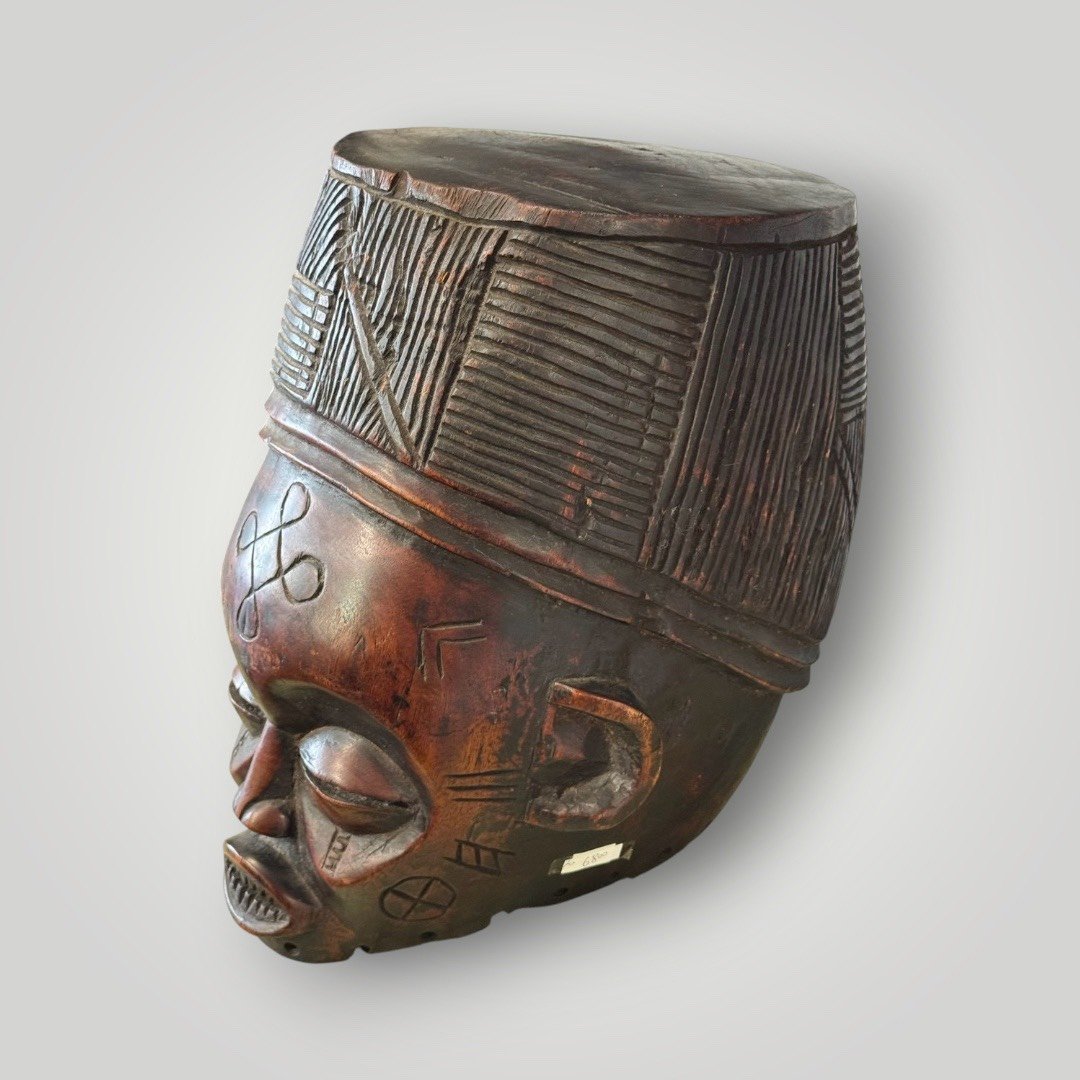
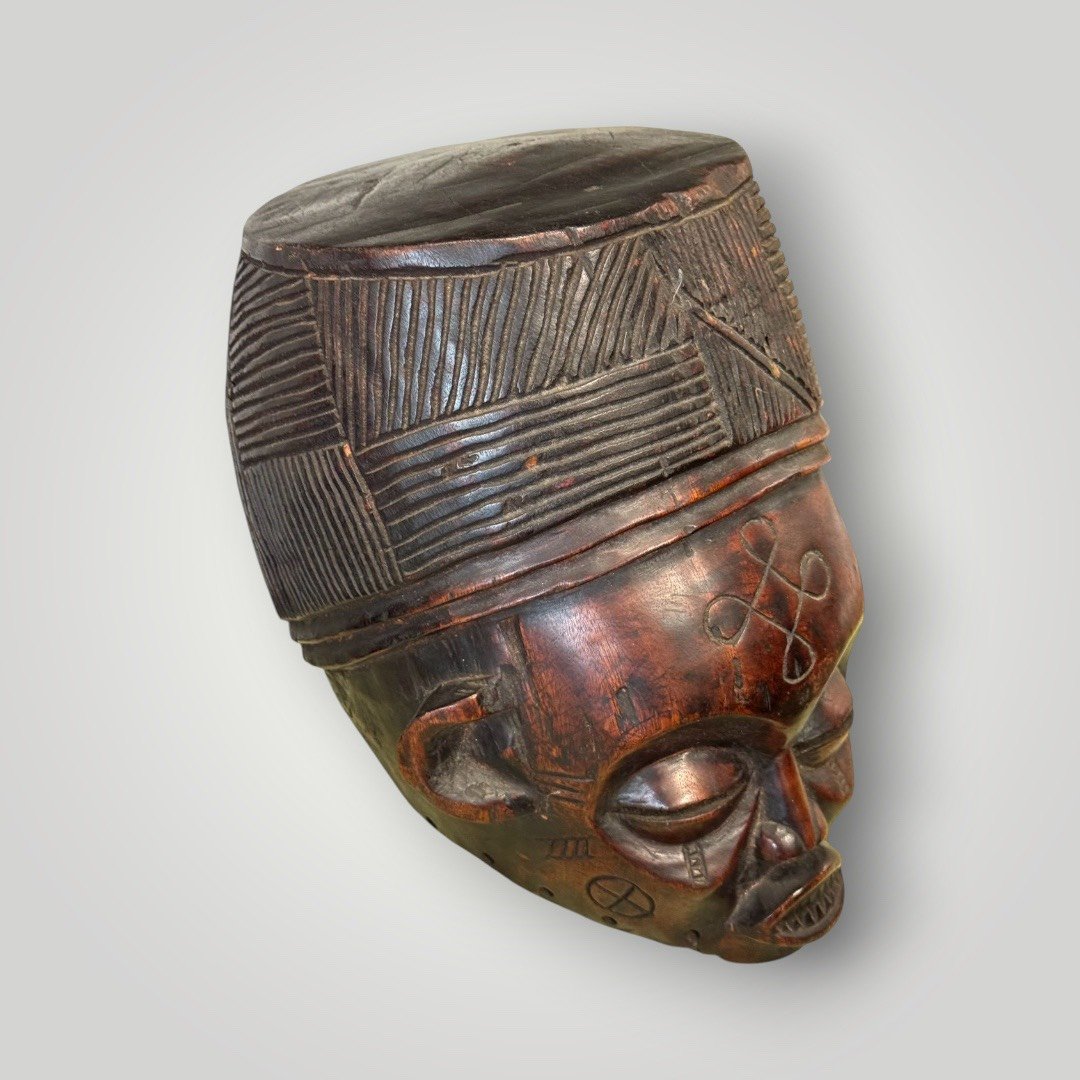
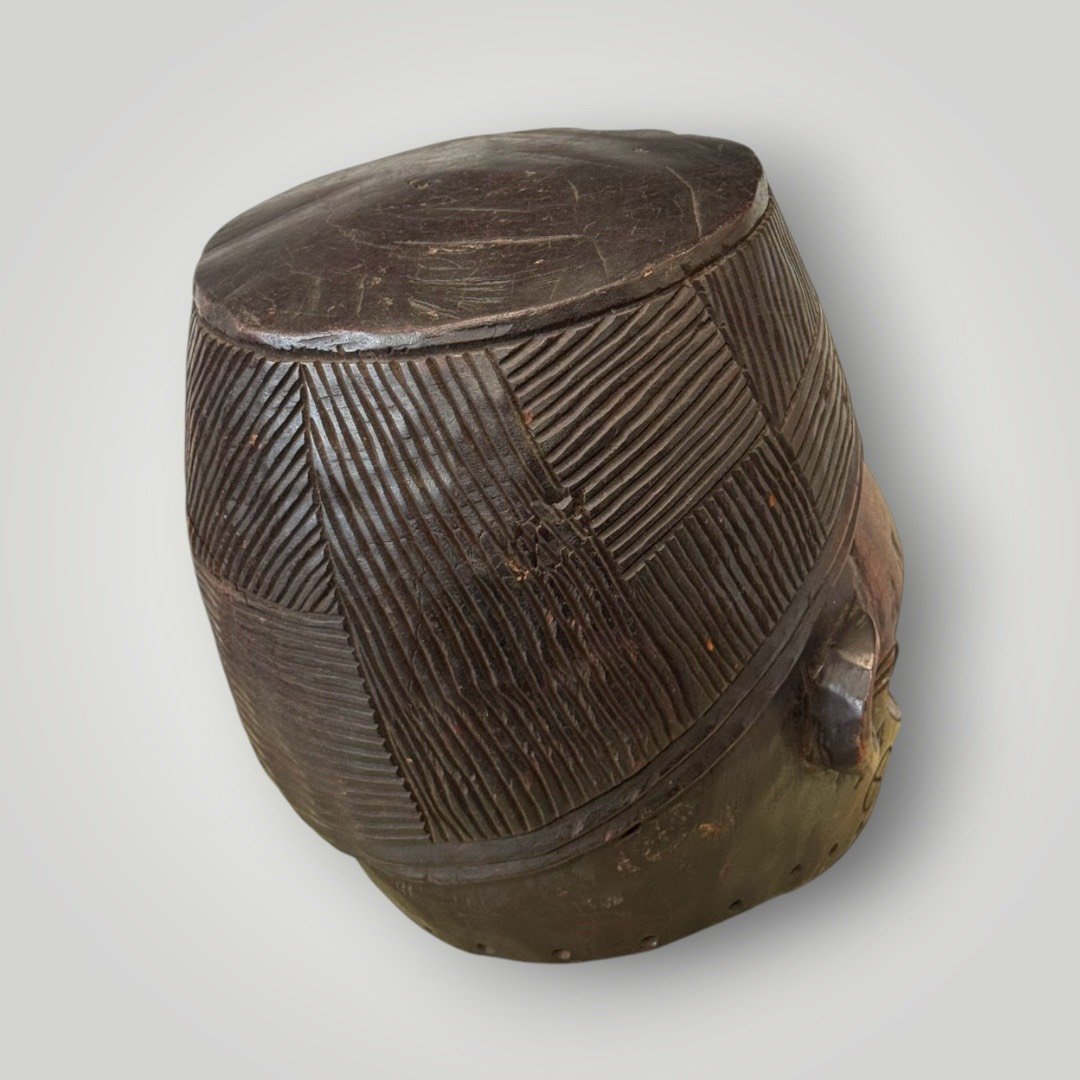
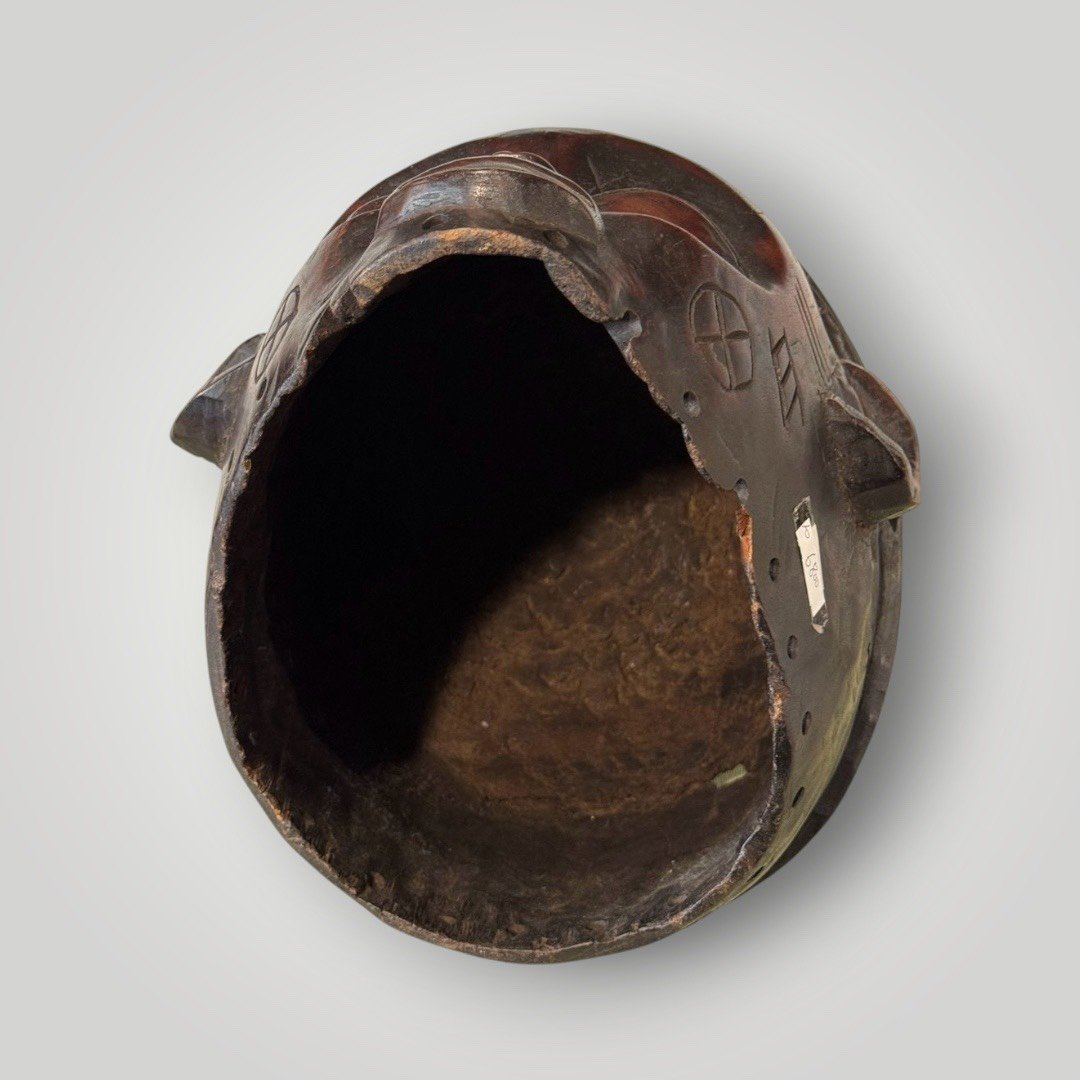
Unlike typical thin wall-hung masks, this piece has a substantial three-dimensional structure, extending from the forehead, bridge of the nose, mouth and ears through to the back of the head and the headdress above, forming a complete sculptural volume.
③ Highly stylized facial features
Thick heavy brow ridges, half-closed eyes, a protruding mouth and detailed teeth together create a very distinct expression; the left and right sides are not perfectly symmetrical in a mechanical sense, retaining the rustic quality characteristic of hand-carved wooden work.
④ Geometric symbol at the center of the forehead
A strikingly prominent set of continuous geometric patterns is carved at the center of the forehead, with lines formed by several ring-like structures linked to one another. Positioned at the visual center of the face, it becomes an important identifying feature of this piece.
⑤ Incised facial detailing
Different forms of line-incised decoration can be seen beneath the eyes, on the cheeks and around the forehead; these patterns, together with the three-dimensional features, create rich surface detail throughout the work.
⑥ Large headdress with geometric incised patterns
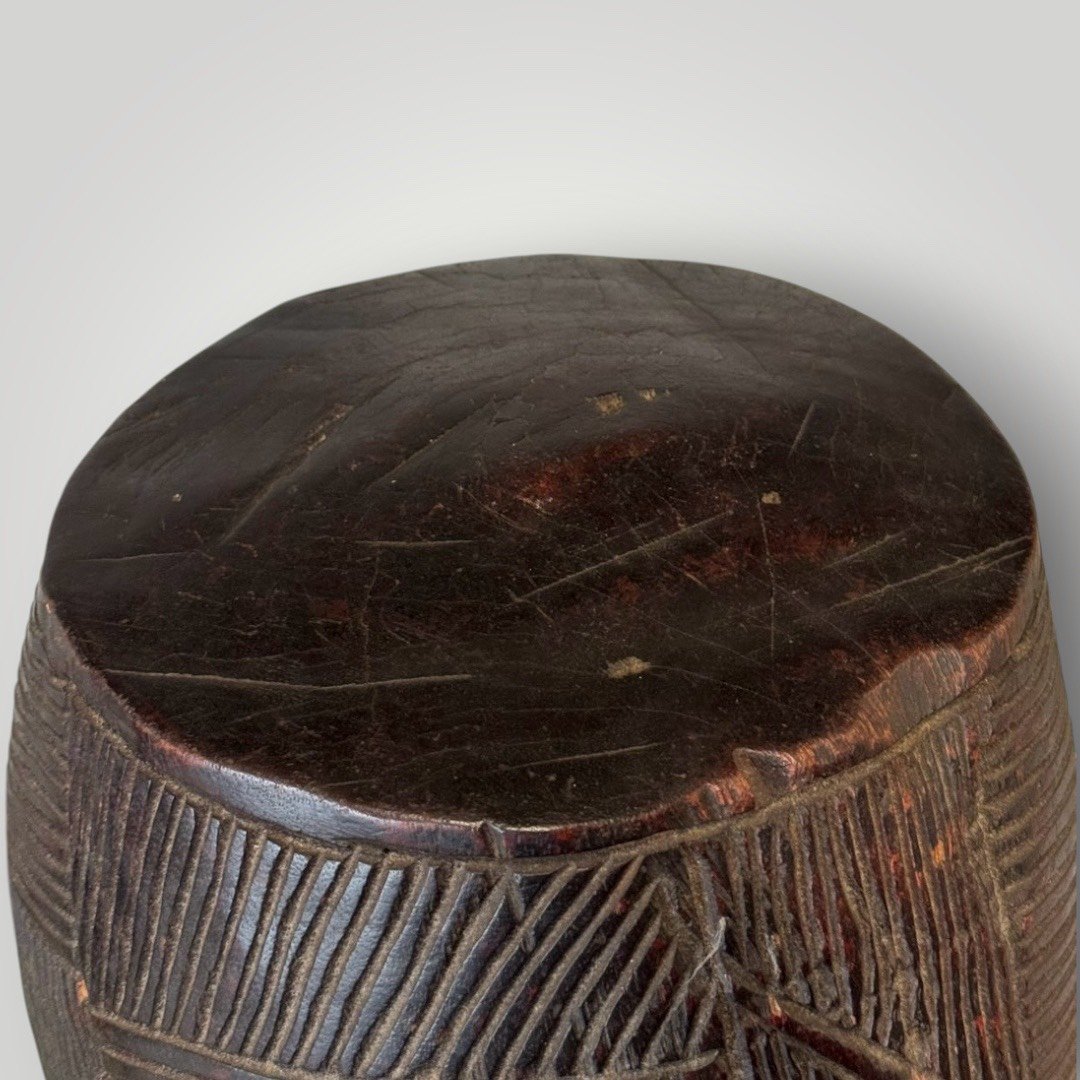
Above the head is a highly conspicuous columnar headdress, its surface carved with dense parallel lines, diagonal lines and geometric blocks; the incised lines running in different directions intersect one another, giving the headdress a visual effect resembling woven texture.
⑦ Dark brown wood with natural variation in tone
The wood ranges overall from dark brown to reddish brown, with varying depths of tone in different areas due to the depth of carving, surface wear and the condition of the wood itself, giving the work a natural sense of age.