Live inventory from DASING's main warehouse | 229 pieces available
[ DASING Collection · Available Now ]

Available Now · Refined Antiques Where Time Stands Still

DASING Japan Art Warehouse currently has 186 pieces online, including tea ceremony utensils, Ko-Imari porcelain, maki-e lacquer and metalwork from the Edo to Shōwa periods. Each comes with its history and a record of its craftsmanship, awaiting the discerning collector.

100% direct from Japan More than vintage pieces — a slice of Japanese history worth collecting
Showing 19 - 27 (94 pieces in total)

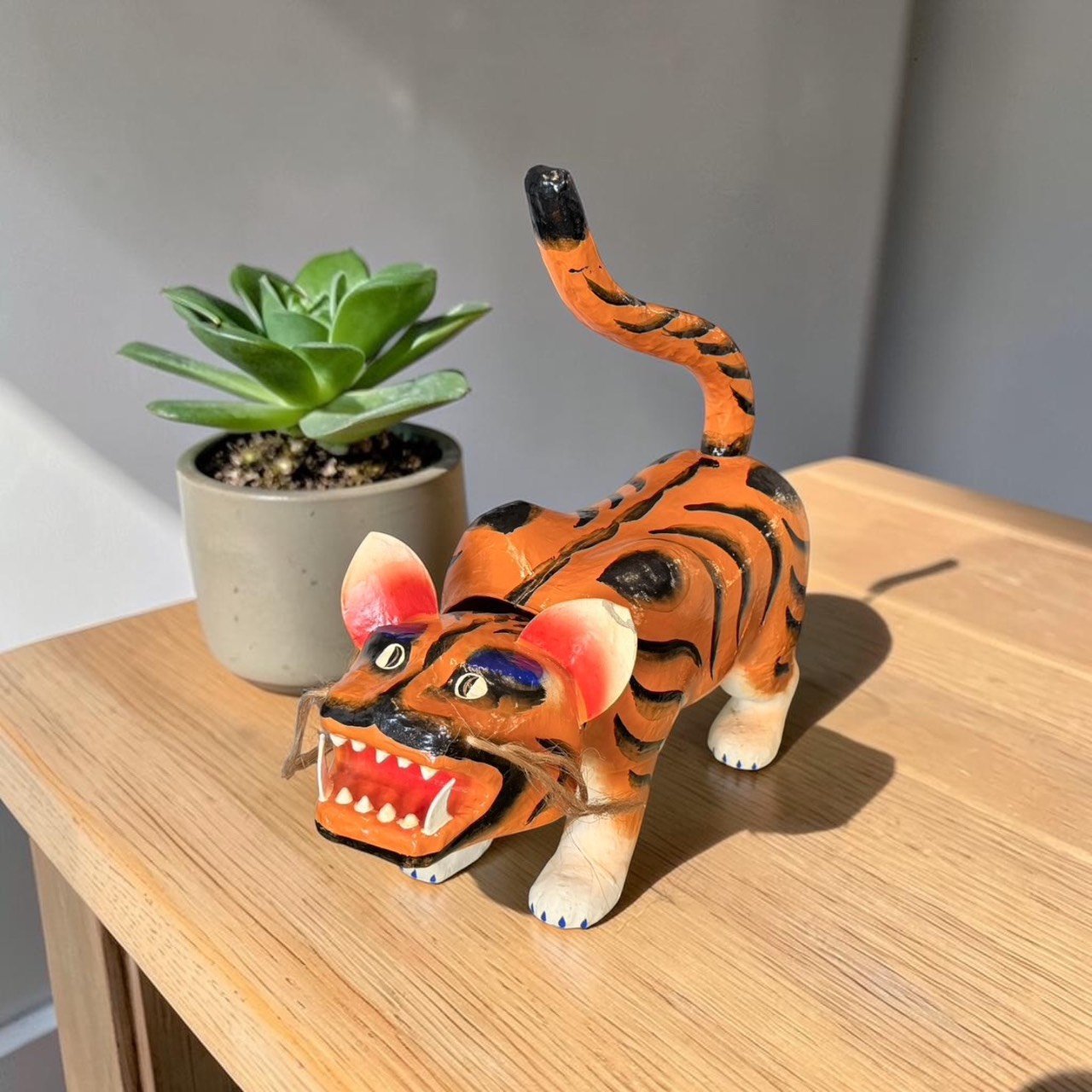
Japanese Hariko Tiger | Hand-Painted Washi Papier-Mâché | Folk-Craft Ornament for Good Fortune and Protection from Evil

The Japanese hariko tiger is one of the representative works of traditional Japanese folk craft. Made by hand using the washi papier-mâché (hariko) technique and finished with vivid painting, it fully expresses the simple beauty of Japanese regional crafts and their culture of auspicious symbols. The hariko tiger dates back to the Edo period, when it was first made as an auspicious ornament for blessings and for warding off evil. It is often seen in traditional customs such as the Tango no Sekku festival, Boys' Day and celebrations for newborns, symbolizing healthy growth, courage and resilience, peace and good fortune, and the protection of the home. This piece is shown in a tense crouching pose, mouth wide open and tail raised high, with hand-painted black stripes, a bright red mouth and an exaggerated expression, giving it the strong character of Japanese rustic folk art. The whiskers are made of natural material, adding vitality and collectable charm; it is a work of Japanese folk art combining cultural value with striking visual impact. (Ears damaged)
Price NT$ 4,500≈ US$ 140

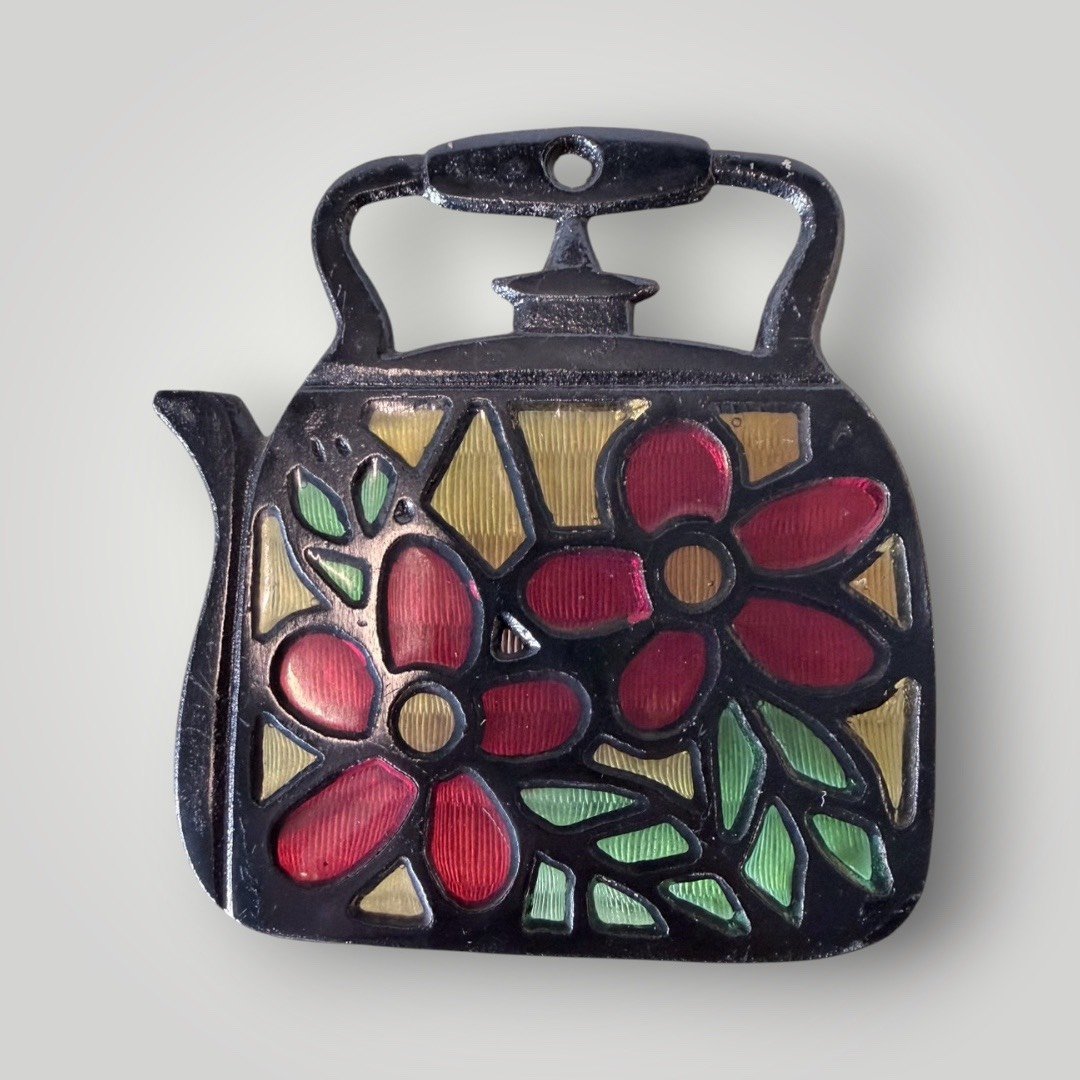
Vintage Japanese Teapot-Shaped Art Trivet

This vintage Japanese art trivet takes the classic outline of a teapot as its design theme, combining a sturdy cast-iron frame with inset coloured glass to create a household piece that is both practical and artistic. The teapot symbolizes warmth, gathering together and hospitality; with its motif of flowers in full bloom and vivid red, green and amber glass, it shows soft, layered shifts of colour when light falls on it, full of vintage charm. Even when not used as a trivet, it is an ornament well worth looking at. Blending the spirit of Japanese craftsmanship with European country style, it suits collectors who love antiques, aesthetic living and distinctive home décor.

Price NT$ 800≈ US$ 25

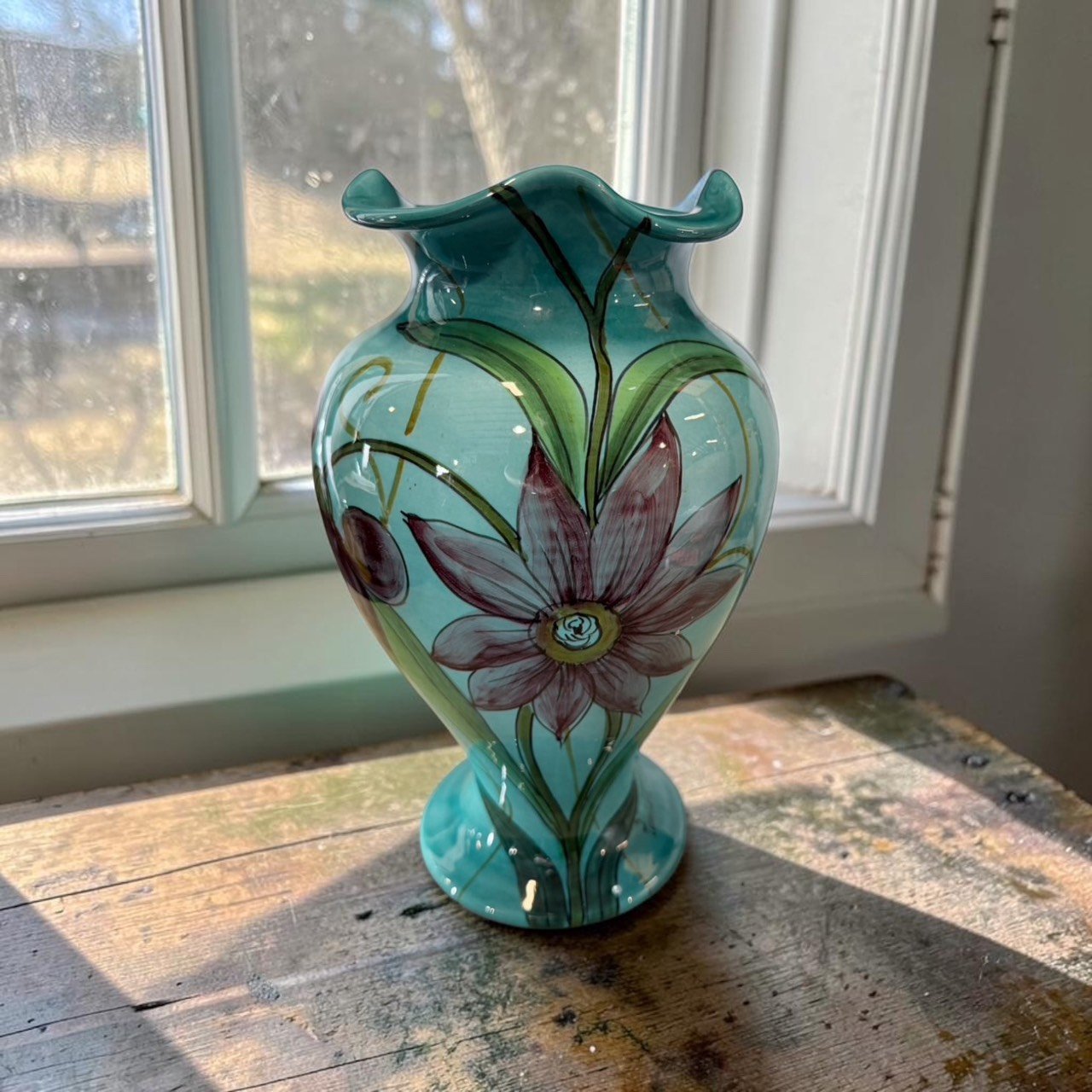
CERAMICHE PAOLI Hand-Painted Vase, Italy

A hand-painted art vase by the well-known Italian ceramics brand CERAMICHE PAOLI, renowned for its vivid colours, flowing lines and delicate floral painting — a classic and highly representative example of European decorative art for the home. This vase has an elegant aqua-green glaze as its ground, with hand-painted motifs of blossoming flowers, vines and leaves; the overall palette is soft yet full of life. The mouth curls naturally outward on two sides, adding visual depth and showing the emphasis Italian ceramics places on artistry and design. Each piece is hand-painted by an artisan, so the patterns, brushwork and layers of colour are unique to each one, making it not merely a vase but an art ceramic worth savouring closely.

Price NT$ 1,800≈ US$ 57

Shōwa-period Ittōbori Carved Wood Daruma Figure, Japan

A handmade wooden Daruma figure from Japan's Shōwa period, carved using the traditional Japanese ittōbori (single-knife carving) technique. Made from natural wood, it keeps the warm grain and aged colour of the wood itself; the craftsman's skilled knife-work renders Daruma's piercing eyes, his resolute and composed expression, and forceful facial features. Daruma derives from Bodhidharma, founder of Zen Buddhism, and in Japanese culture is regarded as a symbol of perseverance, determination, success and the fulfilment of wishes. Since the Edo period, Daruma has become one of the most representative good-luck charms in Japanese folk culture, widely associated with wishes for prosperous business, passing exams, career success and achieving life goals. This is not an ordinary mass-produced craft item but was carved cut by cut using traditional woodcarving techniques; from the eyes and bridge of the nose to the lines of the mouth, it is full of the craftsman's warmth, displaying a strong Shōwa-period folk-craft style and the character of Japanese woodcarving.

Price NT$ 8,000≈ US$ 250

Shōwa-period Set of Ten Hand-Painted Wooden Daruma by the Master Craftsman “Daruma Jisshū”, Japan

This is a highly representative Daruma-themed collector's work from Japan's Shōwa period, created by the Japanese master craftsman “Daruma Jisshū.” The set of ten wooden Daruma figures, each with a different spirit, is preserved complete and comes with its original wooden glass-fronted display case. In Japanese culture, Daruma (だるま) symbolizes perseverance, good fortune, business success and the fulfilment of wishes, and is one of Japan's most representative good-luck charms. Japanese people often dedicate a Daruma at New Year, when opening a business, and for exams, elections and other important life goals, praying for their wishes to come true. The defining feature of this set is that it brings together ten Daruma with different expressions and moods; each is hand-painted on natural wood, retaining the wood grain and the craftsman's brushstrokes and showing the unique charm of Shōwa-period Japanese folk craft.

Price NT$ 18,000≈ US$ 565

Shōwa-period Shishi Guardian Beast Flower Stand, Japan

A large flower stand in the form of a shishi guardian beast, made in Japan's Shōwa period and modelled on the traditional Japanese mythical beast, the shishi (as in the shishimai lion dance and the shishigashira lion head). It is painted all over in vivid vermilion, with a golden mane and a black back; the strong colour contrast gives it great visual impact. In Japanese folk belief the shishi symbolizes warding off evil and misfortune, guarding the home and inviting blessings and good fortune; since ancient times it has been widely used in shrine festivals, traditional performing arts, good-luck displays in shops and the decoration of large residences. This piece shows the shishi in a crouching pose, its four legs steady and strong, its expression dignified yet with a touch of humour and liveliness, fully showing the character and appeal of Shōwa-era folk craft.

Price NT$ 28,000≈ US$ 880

Iron Rooster Ornament Signed by a Nitten Sculptor, Japan

This iron rooster ornament bearing the signature of a Japanese Nitten sculptor is a significant piece of metal craft with a “museum-grade” artistic background. Works of this kind are not ordinary decorations but carefully made pieces by artists selected for the Nitten, Japan's highest-ranking art exhibition. Its flowing avant-garde form and solid iron texture represent a high point of Shōwa-period Japanese metalwork sculpture.

Price NT$ 5,000≈ US$ 155

Lacquered Wooden Tengu Mask, Japan

This Japanese tengu mask of lacquered wood is a work of art with a very strong presence and religious craft character, of the kind kept to guard and protect a space. In traditional Japanese belief the tengu is regarded as an embodiment of the divine power of the mountains and forests, possessed of supernatural powers — a spirit that guards the wilds. Masks of this kind are used not only in festivals and Noh performances; because of their strong associations with “protection” and “warding off evil,” they became an indispensable talisman for peace and safety in Japanese homes and shops.

Price NT$ 3,000≈ US$ 94

Castagna Artisan-Made Owl Figure, Italy

This Italian Castagna owl figure is a classic work from a famous Italian sculpture workshop of the 1980s. A Western vintage piece of very high craftsmanship, its realistic style and warm texture resonate beautifully with the “view of nature” and “wood tones” of Japanese-style interiors. Across world cultures the owl symbolizes “wisdom” and “protection,” and in Japan its name, fukurō, also carries the auspicious pun “no hardship” (不苦労); it is a fine piece combining collectability and meaning.

Price NT$ 2,000≈ US$ 63
CURATOR'S SPECIAL SELECTION

This Season's Picks · The Beauty of Shōwa Silver and Metalwork

Go to Auctions
Shōwa Metalwork · Selected Silver

1952 Kobe Vintage STERLING SILVER Engraved Jewelry Cabinet

A small jewelry cabinet made in Kobe in 1952, crafted in STERLING SILVER. The double-door body is finely engraved with flowers and foliage, and the doors, hinges and clasps show layers of classical metalwork. Over the years the silver has naturally oxidized into varied tones and signs of use, making the delicate engraving stand out more vividly in light and shadow.

NT$ 88,000 Condition: visually very beautiful
View Details
DASING Japan Art Warehouse antique collection: metal seated figure in the style of Water-Moon Guanyin
BUDDHIST ART

Chinese Antique | Metal Seated Figure in the Water-Moon Guanyin Style

NT$ 30,000

Wearing an ornate jeweled crown, draped in celestial robes and necklaces, the figure sits in the "royal ease" posture, one leg raised and the other hanging naturally, capturing the graceful, relaxed pose of Water-Moon Guanyin. The face is lowered with a calm expression, and the bronze-toned finish is naturally deep and steady — well suited to a tea room, study or quiet space.

Selected Eastern Buddhist Art View Details
AUTHENTICITY & SAFE TRANSPORT

For DASING Collectors · Three Commitments for Peace of Mind

Every piece has weathered centuries. We bring an exacting, professional approach to antique art to every handover and delivery.

Sourced in Japan · Shipped to Kaohsiung

We keep searching all over Japan for antiques and vintage pieces with character — ceramics, tea ceremony utensils, vases, wood carvings, furniture and Shōwa-era goods — and bring them across the sea to DASING.

Real Photos · Shown as It Is

Items are photographed as they are, showing color, texture, detail and actual appearance as closely as possible, so buying online comes closer to seeing them in person.

Vintage Condition · Fully Described

Antiques often show wear, oxidation, kiln flaws, repairs or other signs of age. We show these as fully as we can in photos and item descriptions, so you can understand each piece before deciding to buy.