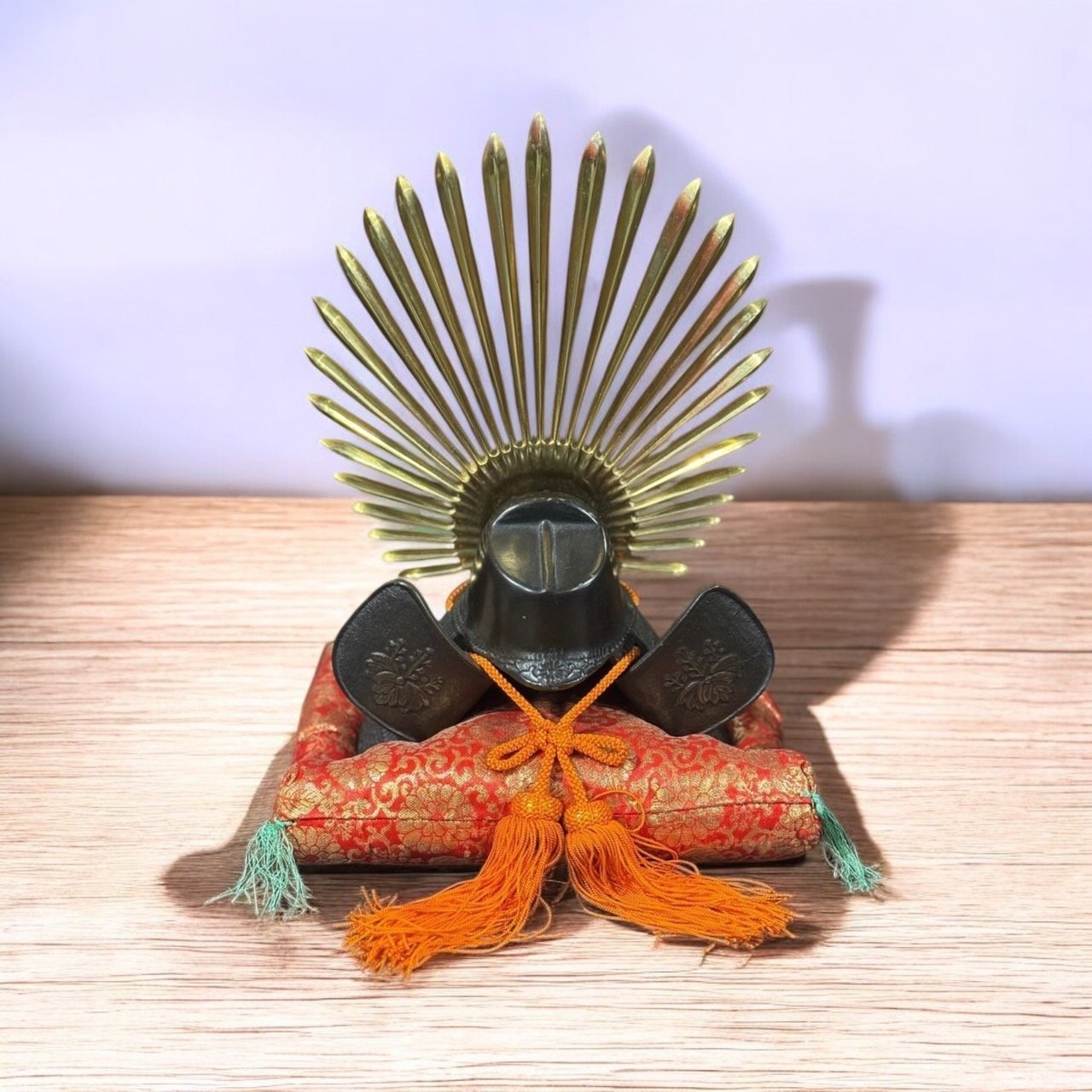
Cast-Iron Kabuto Helmet Ornament, Japan
A Japanese cast-iron helmet ornament inspired by the samurai helmet (kabuto), combining traditional samurai culture with a craftsman's handwork. Made by iron casting, the helmet is sturdy and heavy, conveying the resolve and dignity of the samurai spirit of the Sengoku (Warring States) period. The radiating gilt-copper crest at the back (kuwagata) symbolises the brilliant rays of the sun; designs of this kind are often seen on the helmets of Sengoku-period daimyō, notably in the armour of warlords such as Tokugawa Ieyasu and Date Masamune. The overall form is imposing, and the gold tassels and embroidered cushion add splendour and nobility, enhancing its display and collecting value. Helmet ornaments of this kind are usually displayed for the Boys' Festival on the fifth day of the fifth month (Kodomo no Hi), as a prayer for children's healthy growth and in the spirit of the samurai. They are also widely used in collections of traditional Japanese culture, in tea ceremony displays and as gifts.


