Live inventory from DASING's main warehouse | 229 pieces available
[ DASING Collection · Available Now ]

Available Now · Refined Antiques Where Time Stands Still

DASING Japan Art Warehouse currently has 186 pieces online, including tea ceremony utensils, Ko-Imari porcelain, maki-e lacquer and metalwork from the Edo to Shōwa periods. Each comes with its history and a record of its craftsmanship, awaiting the discerning collector.

100% direct from Japan More than vintage pieces — a slice of Japanese history worth collecting

Results for “日本古董” Clear search

Showing 19 - 25 (25 pieces in total)

Shōwa-period Set of Ten Hand-Painted Wooden Daruma by the Master Craftsman “Daruma Jisshū”, Japan

This is a highly representative Daruma-themed collector's work from Japan's Shōwa period, created by the Japanese master craftsman “Daruma Jisshū.” The set of ten wooden Daruma figures, each with a different spirit, is preserved complete and comes with its original wooden glass-fronted display case. In Japanese culture, Daruma (だるま) symbolizes perseverance, good fortune, business success and the fulfilment of wishes, and is one of Japan's most representative good-luck charms. Japanese people often dedicate a Daruma at New Year, when opening a business, and for exams, elections and other important life goals, praying for their wishes to come true. The defining feature of this set is that it brings together ten Daruma with different expressions and moods; each is hand-painted on natural wood, retaining the wood grain and the craftsman's brushstrokes and showing the unique charm of Shōwa-period Japanese folk craft.

Price NT$ 18,000≈ US$ 565

Shōwa-period Ittōbori Carved Wood Daruma Figure, Japan

A handmade wooden Daruma figure from Japan's Shōwa period, carved using the traditional Japanese ittōbori (single-knife carving) technique. Made from natural wood, it keeps the warm grain and aged colour of the wood itself; the craftsman's skilled knife-work renders Daruma's piercing eyes, his resolute and composed expression, and forceful facial features. Daruma derives from Bodhidharma, founder of Zen Buddhism, and in Japanese culture is regarded as a symbol of perseverance, determination, success and the fulfilment of wishes. Since the Edo period, Daruma has become one of the most representative good-luck charms in Japanese folk culture, widely associated with wishes for prosperous business, passing exams, career success and achieving life goals. This is not an ordinary mass-produced craft item but was carved cut by cut using traditional woodcarving techniques; from the eyes and bridge of the nose to the lines of the mouth, it is full of the craftsman's warmth, displaying a strong Shōwa-period folk-craft style and the character of Japanese woodcarving.

Price NT$ 8,000≈ US$ 250

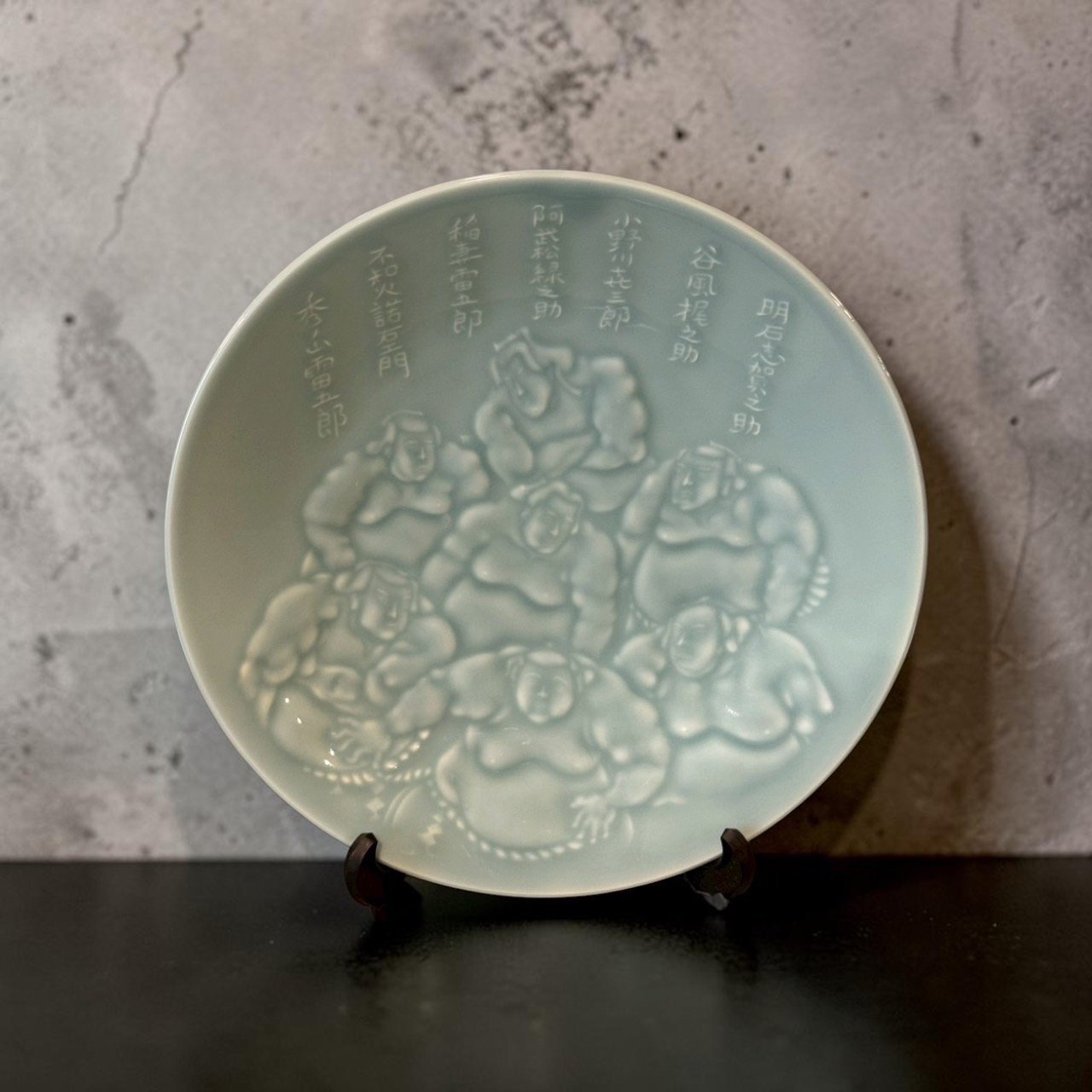
Commemorative Celadon Large Dish with Relief Portraits of Successive Yokozuna, Japan

This is a commemorative collector's large dish on the theme of Japanese sumo culture. Fired in mellow, elegant celadon, its surface is worked in three-dimensional relief, vividly depicting several of the most representative yokozuna in the history of Japanese sumo. Around the dish can be seen the names of famous yokozuna, including Akashi Shiganosuke, Tanikaze Kajinosuke, Onogawa Kisaburō, Ōnomatsu Midorinosuke, Inazuma Raigorō, Shiranui Dakuemon and Hidenoyama Raigorō — all legendary figures of great importance in the development of sumo. More than a functional porcelain piece, it is a commemorative artwork combining Japanese sports culture, historical figures and ceramic craft; for collectors who love Japanese culture and the history of sumo, it holds considerable collecting value and conversational interest.

Price NT$ 2,000≈ US$ 63

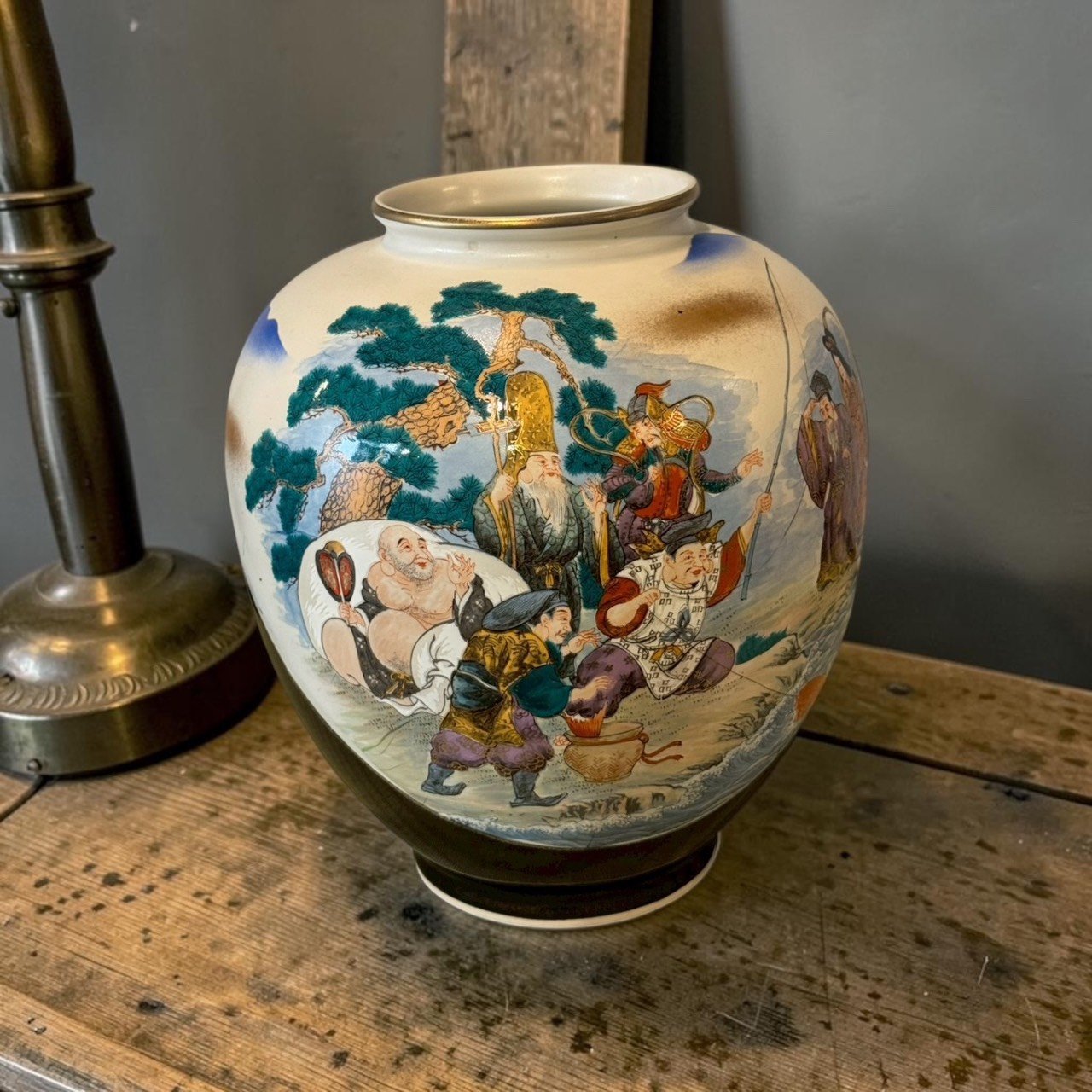
Kutani Ware Hand-Painted Vase / Decorative Jar with the Seven Lucky Gods, Japan

This large hand-painted Kutani ware vase (decorative jar) from Japan has a full, stately form. Made with traditional Japanese Kutani painting techniques, its body is painted with extremely fine brushwork depicting the Shichifukujin (Seven Lucky Gods), the most representative auspicious deities of Japanese folk belief. The scene includes figures such as Jurōjin, Hotei, Ebisu and Daikokuten, their expressions lively and natural, set among pine trees, landscapes, auspicious clouds and coastal scenery, giving a strong character of traditional Japanese auspicious culture. The colours are vivid without being garish; the figures' robes, facial expressions and background scenery were all painted stroke by stroke by the artisan, fully displaying the painting skill for which Kutani ware is known worldwide. The base bears a kiln mark, typical of collectable Japanese ceramics; the piece combines artistic appreciation, cultural symbolism and collecting value.

Price NT$ 3,000≈ US$ 94

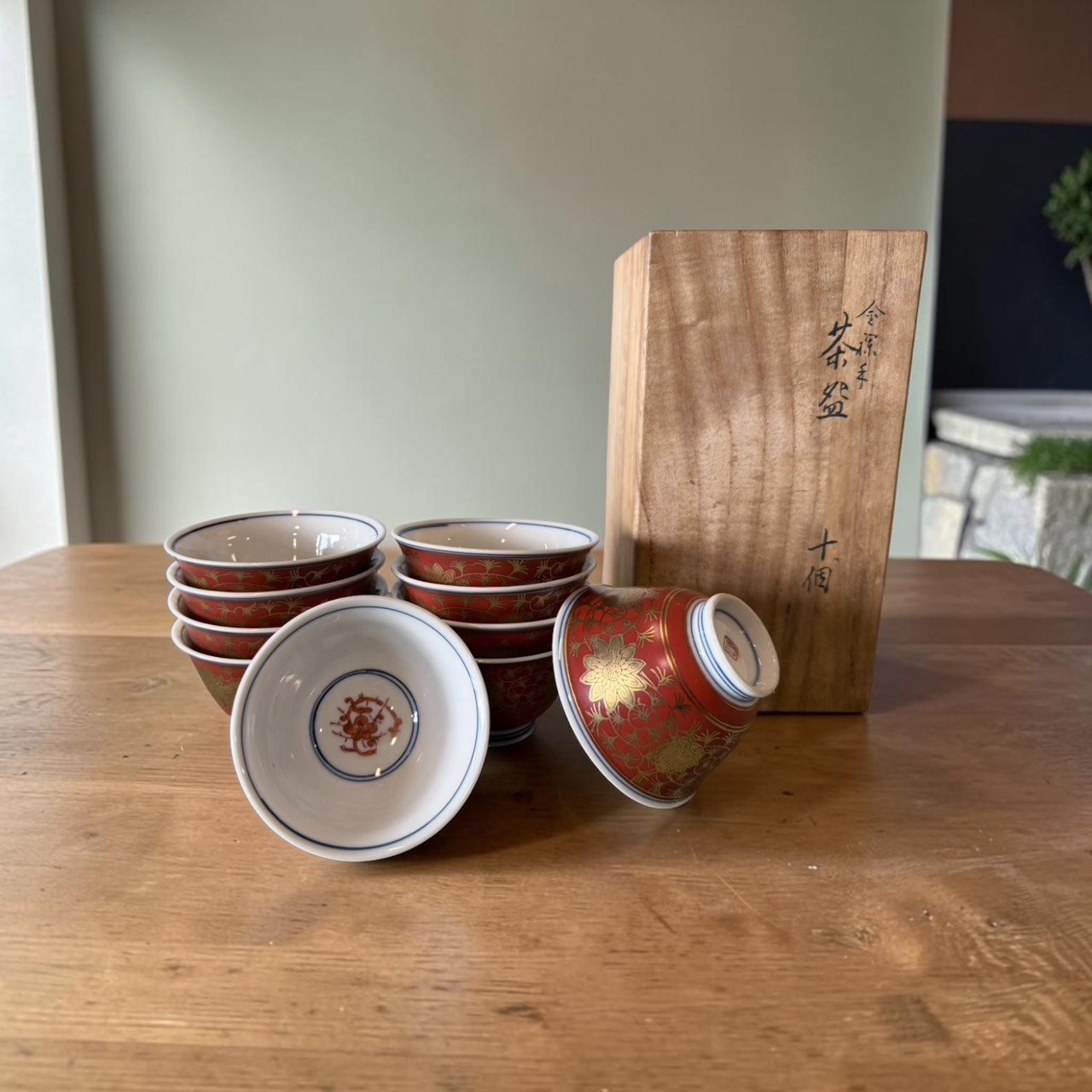
Set of Ten Kinrande Teacups, Japan (with Tomobako)

This set of ten Japanese teacups is decorated in the traditional Japanese kinrande (gold brocade) style, with a vermilion glaze and finely painted gilt floral motifs; the whole is sumptuous yet elegant and shows a strong Japanese ceramic character. The outer walls are covered with gilt chrysanthemums and floral patterns, the gold flowers appearing all the richer against the red glaze; the interiors are kept a plain pure white, and a traditional crest is painted at the bottom of each cup, so the set combines visual beauty with practicality for drinking tea. It comes with its original wooden tomobako, which makes storage and preservation easier and adds to the completeness and collecting value of the set. The ten cups survive as a complete set, well suited to tea gatherings, serving tea to guests, or a collection of Japanese tea ceremony utensils — a classic tea ware combining practicality and artistry.

Price NT$ 3,000≈ US$ 94

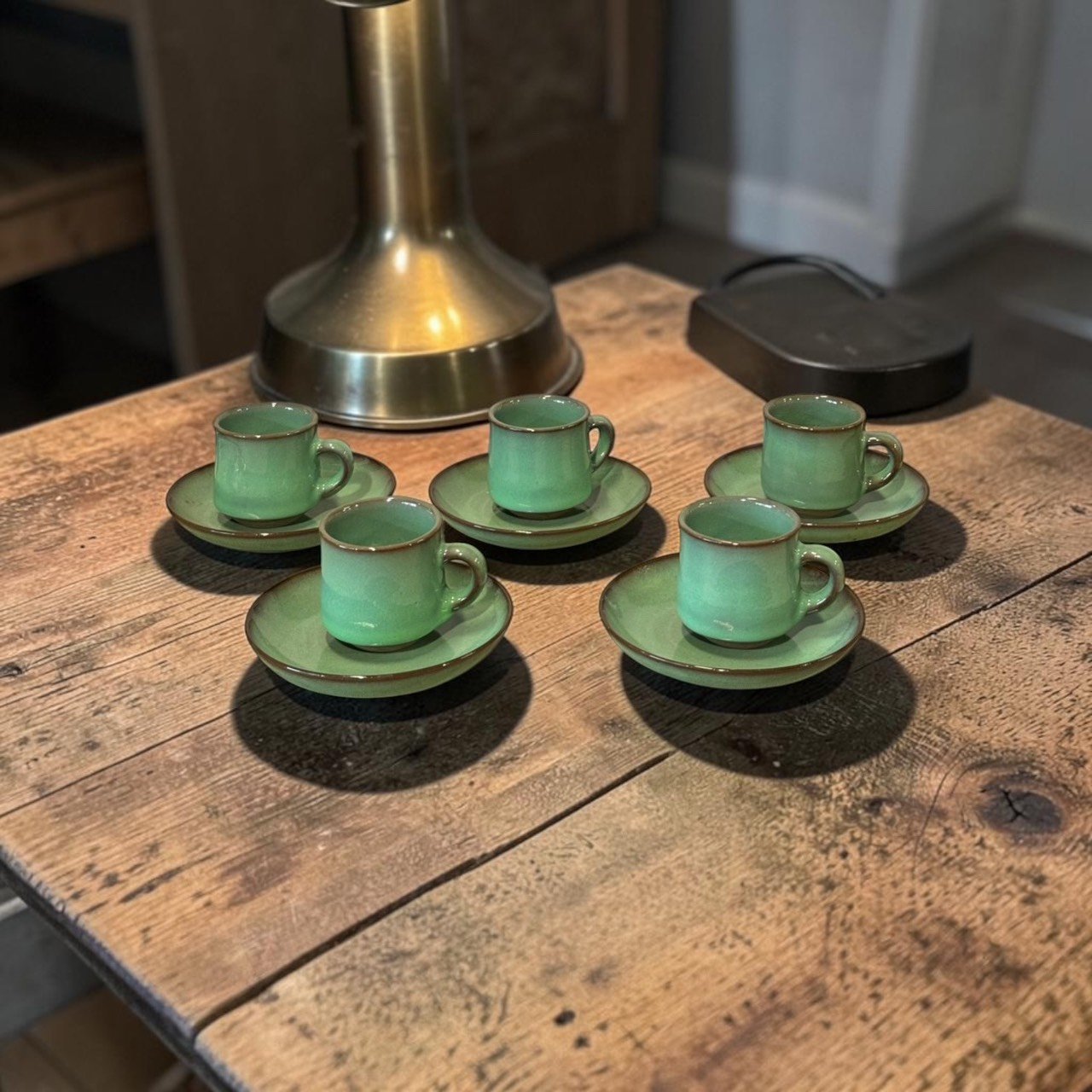
Japanese Green-Glazed Ceramic Coffee Cup Set | With Wooden Box

This Japanese green-glazed ceramic coffee set takes a warm, quiet green glaze as its keynote, with dark rims on the cups and saucers, creating a very elegant Japanese retro atmosphere. The cups are simple and solid in form, with steady proportions; instead of showy decoration, the visual focus is the depth of the glaze itself and the texture of the pottery. This design fits the aesthetic common to Japanese wares: understated, enduring and practical, revealing more of its character the more it is used. Five cups and saucers can be seen in the set, neatly matched, and it is kept in a wooden box, adding to its completeness and collectibility. The green glaze shows subtle color differences in different light, with soft natural variations from bluish green and pea green to a greyish jade green; so even within one set, each cup retains slight differences from handwork and firing, one of the most charming aspects of pottery. (The wooden box is damaged and held together with tape.)

Price NT$ 2,300≈ US$ 72

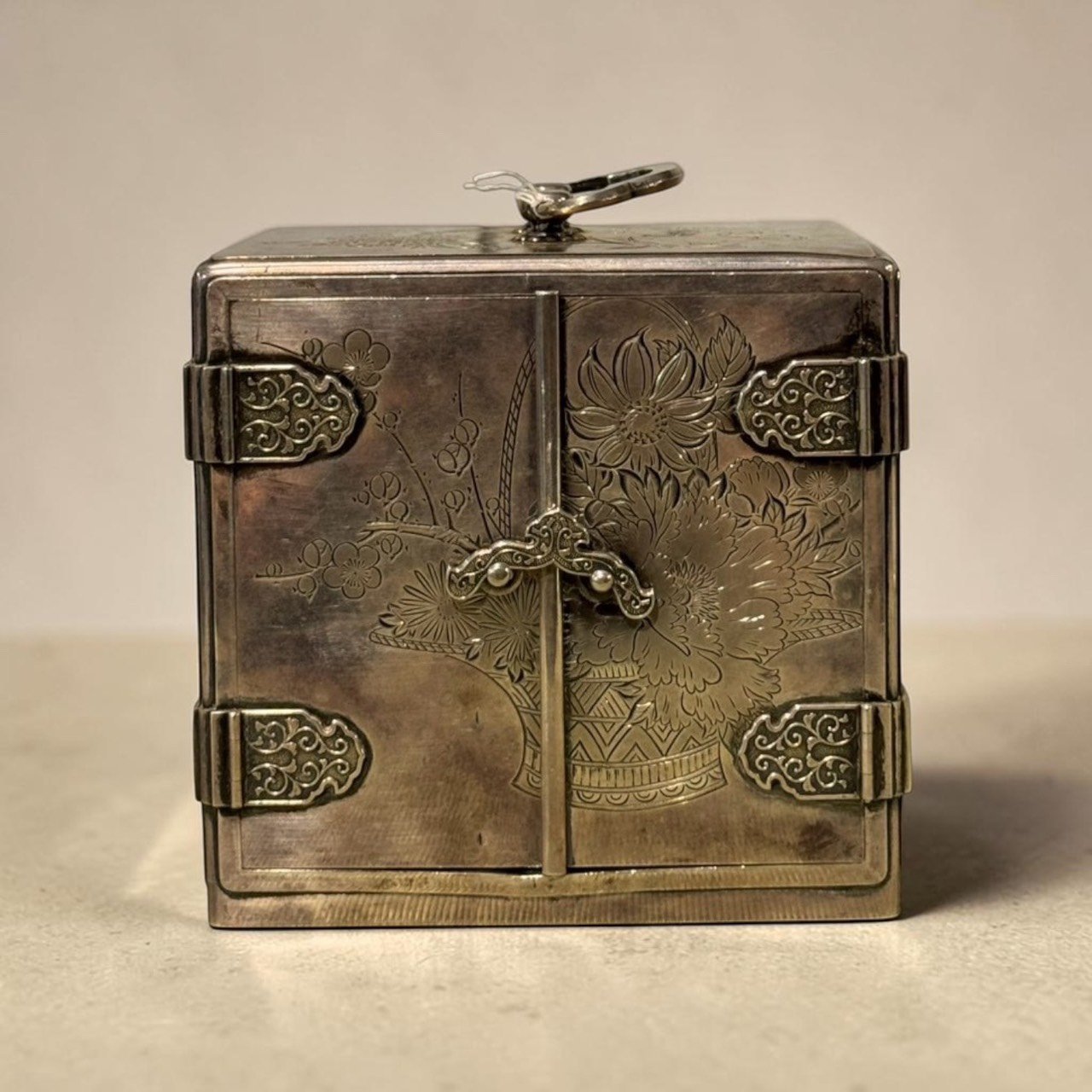
Kobe, 1952 | Sterling Silver Jewelry Cabinet with Carved Floral Decoration

This Kobe jewelry cabinet from 1952 is a rather rare and refined piece of old silverware, combining sterling silver, Japanese floral carving and practical storage. It takes the form of a small cabinet with double doors at the front. At the center of the doors is carved a vase of flowers in full bloom, flanked by plum blossoms, chrysanthemums and foliage in an elegant, delicate composition. The door edges, hinges and central clasp feature more sculptural scrolling foliage and metalwork decoration, so that despite its small size the piece has the complete proportions and layered craftsmanship of classical furniture. The surface retains the grey-silver, dark brown and partly bright silver tones formed by the natural oxidation of old silver, and wear and scratches from age are visible in places, unlike the uniform bright finish of modern polished silver. This naturally formed patina and variation in tone give the piece a stronger sense of age and make the high and low relief of the carved patterns stand out more clearly.

Price NT$ 88,000≈ US$ 2,765
CURATOR'S SPECIAL SELECTION

This Season's Picks · The Beauty of Shōwa Silver and Metalwork

Go to Auctions
Shōwa Metalwork · Selected Silver

1952 Kobe Vintage STERLING SILVER Engraved Jewelry Cabinet

A small jewelry cabinet made in Kobe in 1952, crafted in STERLING SILVER. The double-door body is finely engraved with flowers and foliage, and the doors, hinges and clasps show layers of classical metalwork. Over the years the silver has naturally oxidized into varied tones and signs of use, making the delicate engraving stand out more vividly in light and shadow.

NT$ 88,000 Condition: visually very beautiful
View Details
DASING Japan Art Warehouse antique collection: metal seated figure in the style of Water-Moon Guanyin
BUDDHIST ART

Chinese Antique | Metal Seated Figure in the Water-Moon Guanyin Style

NT$ 30,000

Wearing an ornate jeweled crown, draped in celestial robes and necklaces, the figure sits in the "royal ease" posture, one leg raised and the other hanging naturally, capturing the graceful, relaxed pose of Water-Moon Guanyin. The face is lowered with a calm expression, and the bronze-toned finish is naturally deep and steady — well suited to a tea room, study or quiet space.

Selected Eastern Buddhist Art View Details
AUTHENTICITY & SAFE TRANSPORT

For DASING Collectors · Three Commitments for Peace of Mind

Every piece has weathered centuries. We bring an exacting, professional approach to antique art to every handover and delivery.

Sourced in Japan · Shipped to Kaohsiung

We keep searching all over Japan for antiques and vintage pieces with character — ceramics, tea ceremony utensils, vases, wood carvings, furniture and Shōwa-era goods — and bring them across the sea to DASING.

Real Photos · Shown as It Is

Items are photographed as they are, showing color, texture, detail and actual appearance as closely as possible, so buying online comes closer to seeing them in person.

Vintage Condition · Fully Described

Antiques often show wear, oxidation, kiln flaws, repairs or other signs of age. We show these as fully as we can in photos and item descriptions, so you can understand each piece before deciding to buy.