How to Learn the Japanese Tea Ceremony
A Complete Guide to Learning the Japanese Tea Ceremony. The tea ceremony, one of the essences of traditional Japanese culture, is not only a ritual of drinking tea but also a discipline that blends aesthetics, etiquette and spirit

A Complete Guide to Learning the Japanese Tea Ceremony
The tea ceremony, one of the essences of traditional Japanese culture, is more than a ritual for drinking tea: it is an art that brings together beauty, etiquette and spiritual cultivation. What it asks of you is not only how to make tea but a whole way of living. To many beginners, learning the tea ceremony can look complicated, but step by step anyone can come to appreciate its depth and its beauty.
The history and core ideas of the tea ceremony
The tea ceremony began in the 9th century and was brought to its height in the 16th century by Sen no Rikyū, who established its core spirit: wa-kei-sei-jaku. These four words contain the whole philosophy of the tea ceremony:
- Wa (harmony): seeking harmony, not only between people but with nature and within the mind.
- Kei (respect): respect for others, whether for the guests, for the utensils or for nature.
- Sei (purity): a clean mind and a clean space; not only physical cleanliness but a purity of spirit.
- Jaku (tranquillity): a quiet and settled state of mind, seeking inner calm and peace.
Choosing a school of tea
The first step in learning the tea ceremony is to choose a school. The main schools of tea are:
- Urasenke: the most popular school, favouring simplicity and tea gatherings suited to a wide public.
- Omotesenke: known for its gravity and its adherence to tradition, more formal than Urasenke.
- Mushanokōjisenke: stresses simplicity and naturalness, with relatively simple ritual.
An introduction to tea ceremony utensils
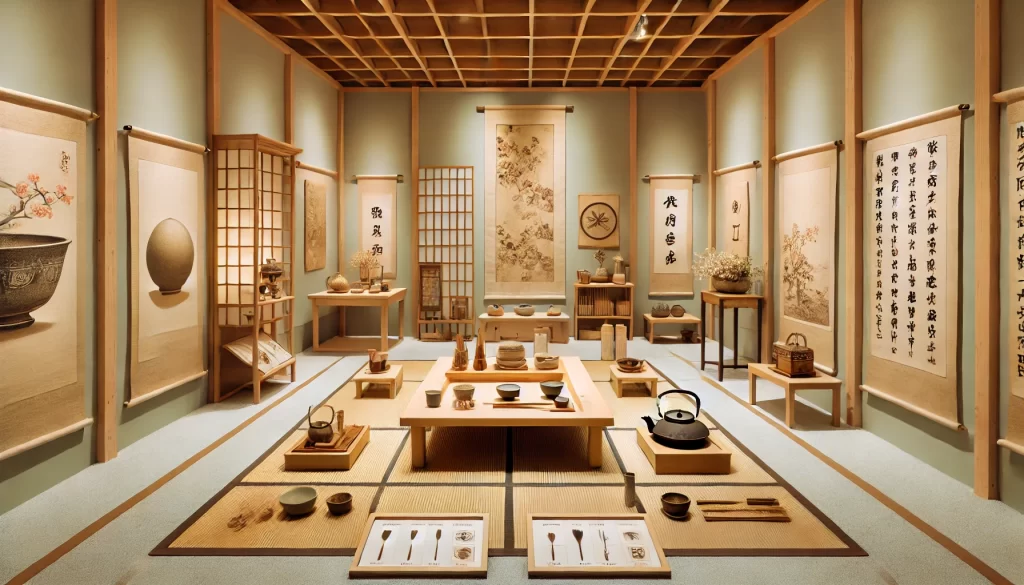
Learning the tea ceremony means learning about the various utensils and how to use them. Common tea ceremony utensils include:
- Chawan (tea bowl): the vessel the tea is served in. Different bowls are chosen for different seasons or occasions.
- Chasen: a whisk made of bamboo, used to whisk matcha until it is smooth and even.
- Chashaku: the small scoop used to measure out matcha powder.
- Chagama: the kettle in which water is boiled, usually heated over charcoal.
The basic steps of the tea ceremony
Every step of the tea ceremony carries a deep meaning. From preparing the utensils to making and tasting the tea, each one calls for attention and care:
- Preparing the utensils: cleaning the utensils expresses respect for the guests and keeps the whole ceremony pure.
- Whisking the matcha: whisk the matcha powder gently into hot water with the chasen to produce a fine, smooth tea. The speed and the manner of whisking take some practice.
- Tasting the tea: tasting is not simply the act of drinking; it also means taking in the flavour of the tea and the texture of the bowl, and feeling through them the stillness of the tea ceremony.
- Observing the etiquette: every step of the tea ceremony has its own etiquette, from how tea is served to a guest to how thanks are given, and all of it expresses the spirit of tea.
Taking tea ceremony classes and attending tea gatherings
If you want to learn the tea ceremony systematically, consider taking classes with a professional teacher. Taught by experienced instructors, these classes cover the use of the utensils, the steps and the etiquette, and help students understand the heart of the tea ceremony. Attending a tea gathering is a good chance to feel its atmosphere and experience the ritual in practice.
The tea ceremony, the seasons and culture
The tea ceremony is deeply shaped by the four seasons: different utensils, settings and rituals are used at different times of year, reflecting how closely it is bound to nature. Grasping these details deepens your understanding of the tea ceremony and makes practice easier.
FAQ
Which school should I start with when learning the tea ceremony?
If you are a beginner, Urasenke is a good place to start, as its form is simple and suited to a wide public. As your understanding of the tea ceremony deepens, you can go on to explore the other schools.
Do I have to buy my own tea ceremony utensils?
Yes. Having your own utensils lets you practise at home. At the start, though, you can begin with the basic pieces and build up gradually.
What do I need to prepare for a tea gathering?
The host normally provides the utensils needed. As a guest, you only need to learn the basic etiquette beforehand, such as how to taste the tea and how to express your thanks.
How long does it take to learn the tea ceremony?
That depends on how often you practise and how deeply you go. Going from the basic steps to a command of the whole procedure may take anywhere from a few months to several years of practice.
How do I care for tea ceremony utensils?
Each utensil is cared for differently. A chasen, for example, should not be left soaking in water for long, while a chawan should be washed carefully and left to dry naturally. DASING Japan Art Warehouse provides detailed care guides for utensils, so that you can extend the life of your tea ware.
DASING Japan Art Warehouse - Your Partner in Learning the Tea Ceremony
Learning the Japanese tea ceremony brings together spiritual cultivation and practical skill. DASING Japan Art Warehouse offers a range of fine tea ceremony utensils and learning resources. Whether you are a beginner or a long-standing enthusiast, we can help you gain a deeper command of the art of tea. Explore our tea ceremony collection and make your journey into tea fuller and richer.