Live inventory from DASING's main warehouse | 261 pieces available
[ DASING Collection · Available Now ]

Available Now · Refined Antiques Where Time Stands Still

DASING Japan Art Warehouse currently has 186 pieces online, including tea ceremony utensils, Ko-Imari porcelain, maki-e lacquer and metalwork from the Edo to Shōwa periods. Each comes with its history and a record of its craftsmanship, awaiting the discerning collector.

100% direct from Japan More than vintage pieces — a slice of Japanese history worth collecting
Showing 1 - 9 (250 pieces in total)
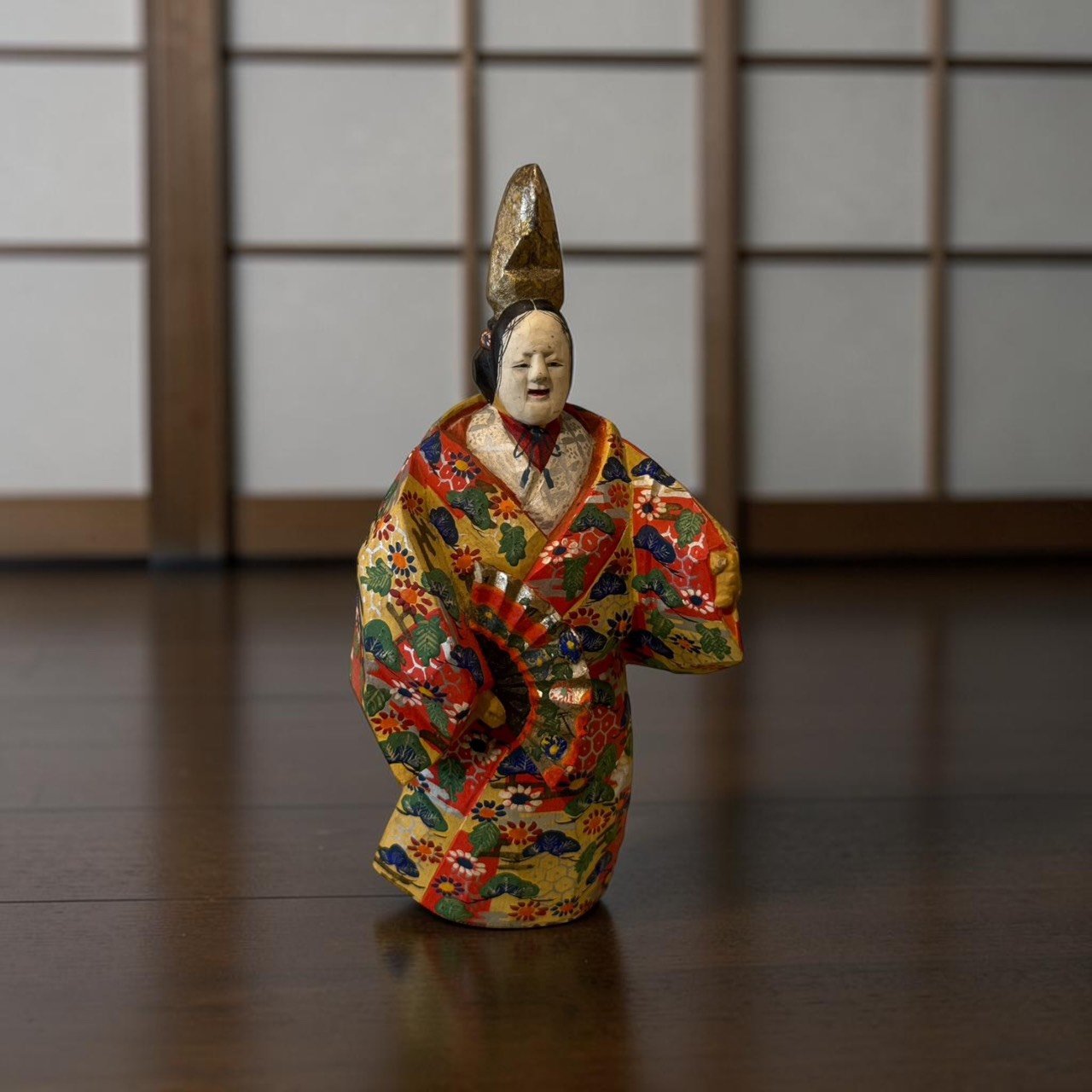
apanese Nara Ittobori Style Noh Doll – Shizuka / Traditional Hand-Painted Wooden Figurine

Japanese Antique | Nara Ittobori Noh Figure "Shizuka" · by Nanto Sanmyaku Hikohisa · Polychrome Wood Carving Ornament

Nara ittobori, also known as Nara ningyo, is one of Japan's representative traditional wood-carving crafts. Its character lies in retaining the crisp facets and angles left by the carving blade, which are then finished with vivid polychrome painting, so that a piece displays both the rustic quality of wood carving and the richness of decorative art. Unlike statues that pursue complete realism, Nara ittobori places greater emphasis on a figure's posture, the outline of the costume, and the overall spirit. This carving of the Noh character "Shizuka" expresses exactly this artistic appeal of traditional Japanese figural craft. The face is fair, the brows and eyes gentle, and a faint smile rests at the corners of the mouth; the tall golden crown on the head sets off the elegant bearing of a stage character. The kimono is dominated by vermilion and golden yellow, combined with painted flower and leaf motifs in deep blue, emerald green and white, giving bright, layered color. The wide sleeves and the slightly dance-like stance make the piece seem to hold a moment of performance, even at rest.
Price NT$ 1,500≈ US$ 46
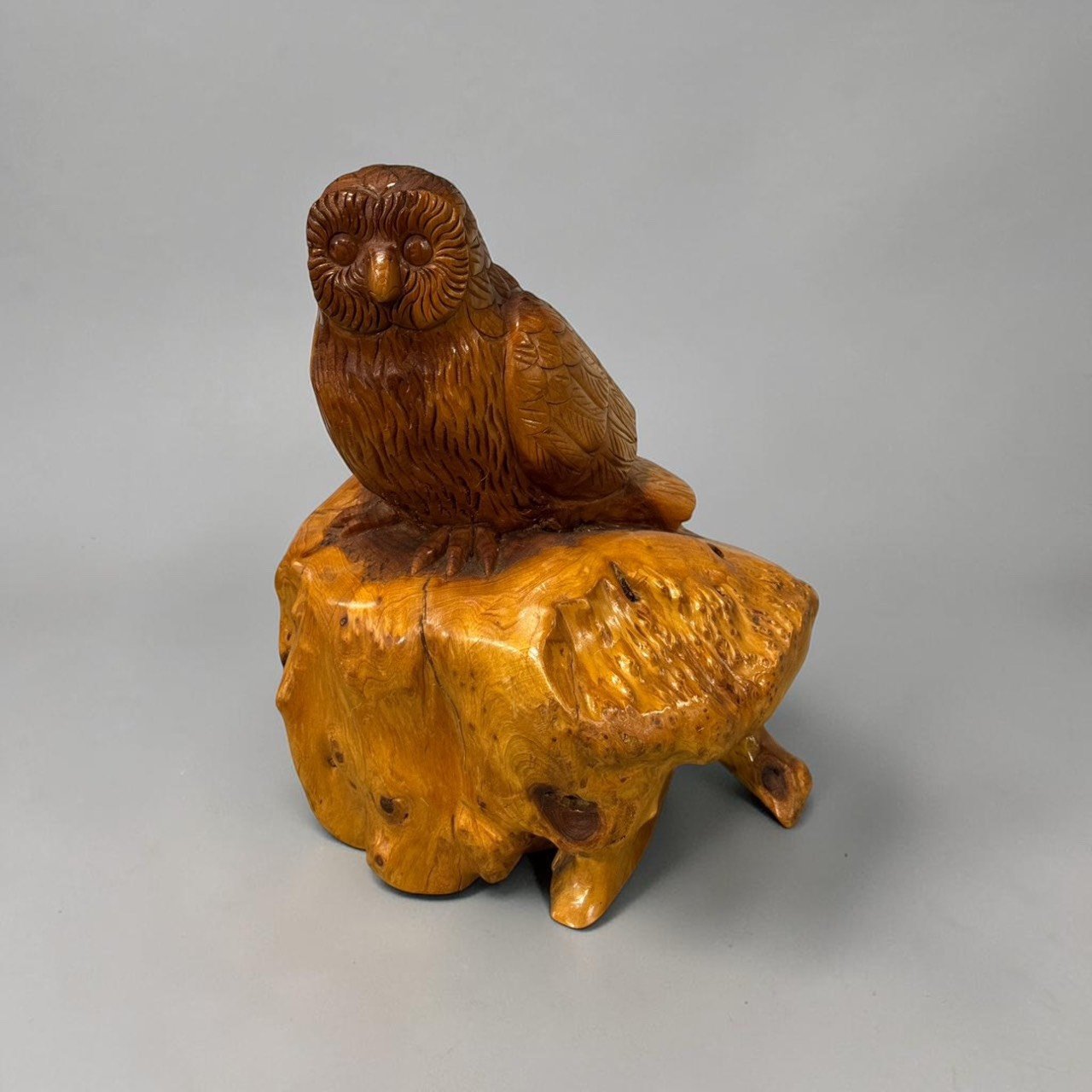
Japanese Vintage Hand-Carved Wooden Owl on Natural Root Base

Hand-Carved Natural Wood Owl | Three-Dimensional Ornament on a Tree-Root Wood Base

Japanese folk craft (mingei) values natural materials and the plain beauty revealed by handwork. Wood carvings pay attention not only to form but also to the grain, color, and sense of life in the wood itself. This carved owl perfectly displays such characteristics. The owl sits upright on a base shaped from a natural tree root, its body round and full, its eyes wide open, its expression carrying a measure of calm along with a touch of charm. Using knife cuts of varying depth, the carver renders the ring of feathers around the head, the fine feather patterns on the breast, and the layered, overlapping structure of the wings, giving the otherwise static wood a rich three-dimensional quality. The base retains the undulations, knots, holes, and irregular contours of the natural tree root, forming a visual contrast with the delicate carving of the owl.

Price NT$ 4,500≈ US$ 135
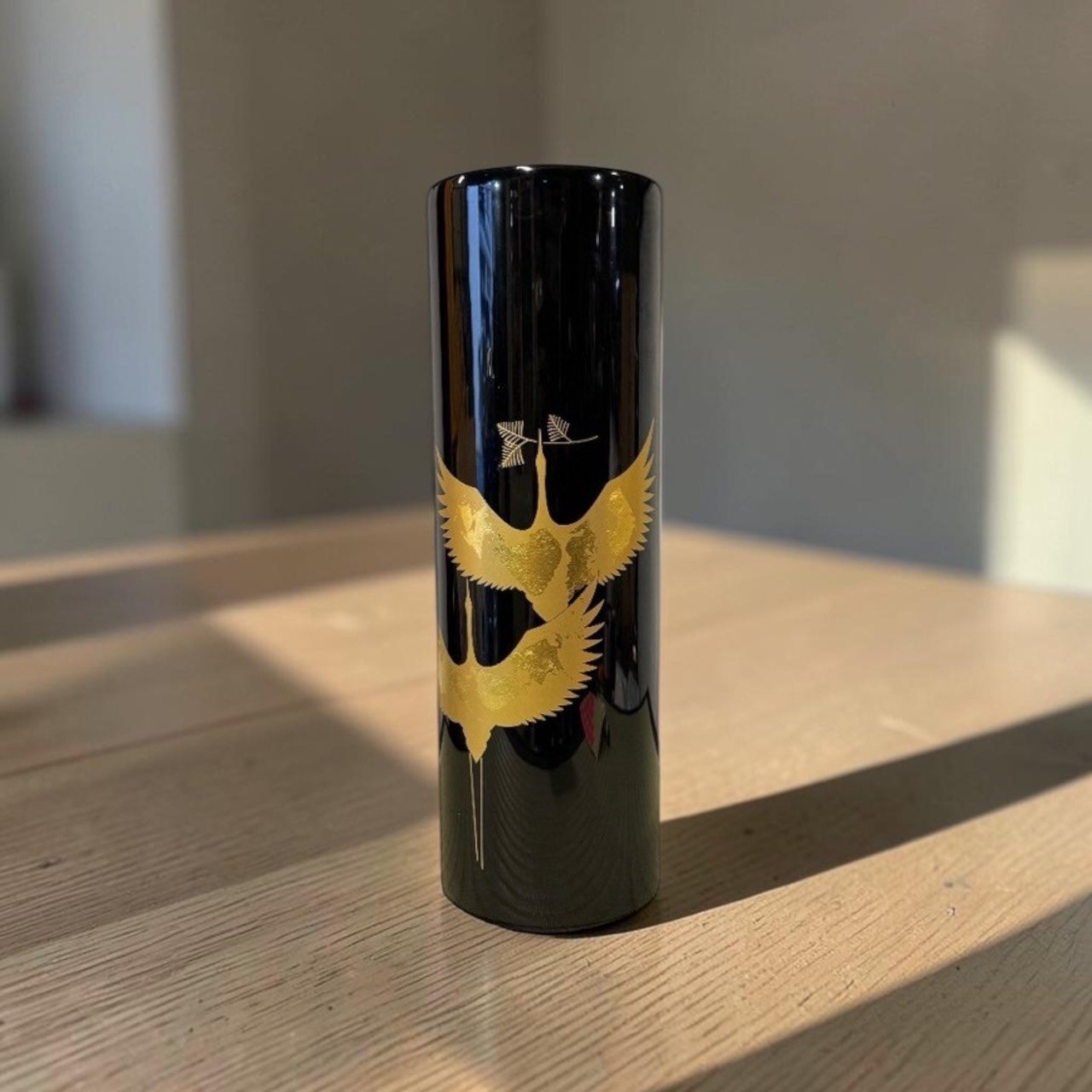
apanese Vintage Black Lacquer Cylindrical Vase – Golden Cranes Motif

Wood-Bodied Black Lacquer Cylindrical Vase with Gold Double-Crane Motif | Pine and Crane Longevity | Japanese-Style Ikebana Utensil

Japanese lacquer craft has a long history, and its use can be seen in everything from everyday vessels and tea utensils to Buddhist objects and decorative arts. Black lacquer is one of the most representative expressions in traditional Japanese lacquerware; its deep tone sets off gold decoration, allowing patterns to reveal rich visual layers under different light. This vase has a wood-bodied cylindrical form, the exterior covered in black lacquer with a bright, smooth surface and a mirror-like reflective quality. The body has no elaborate carving or structural variation, instead using slender vertical lines to present a simple and dignified form. The front is decorated with a gold double-crane motif, the cranes with wings spread and long, slender necks in elegant poses, accompanied by partial branch-and-leaf lines, filling the piece with the flowing quality characteristic of East Asian art.

Price NT$ 1,200≈ US$ 37
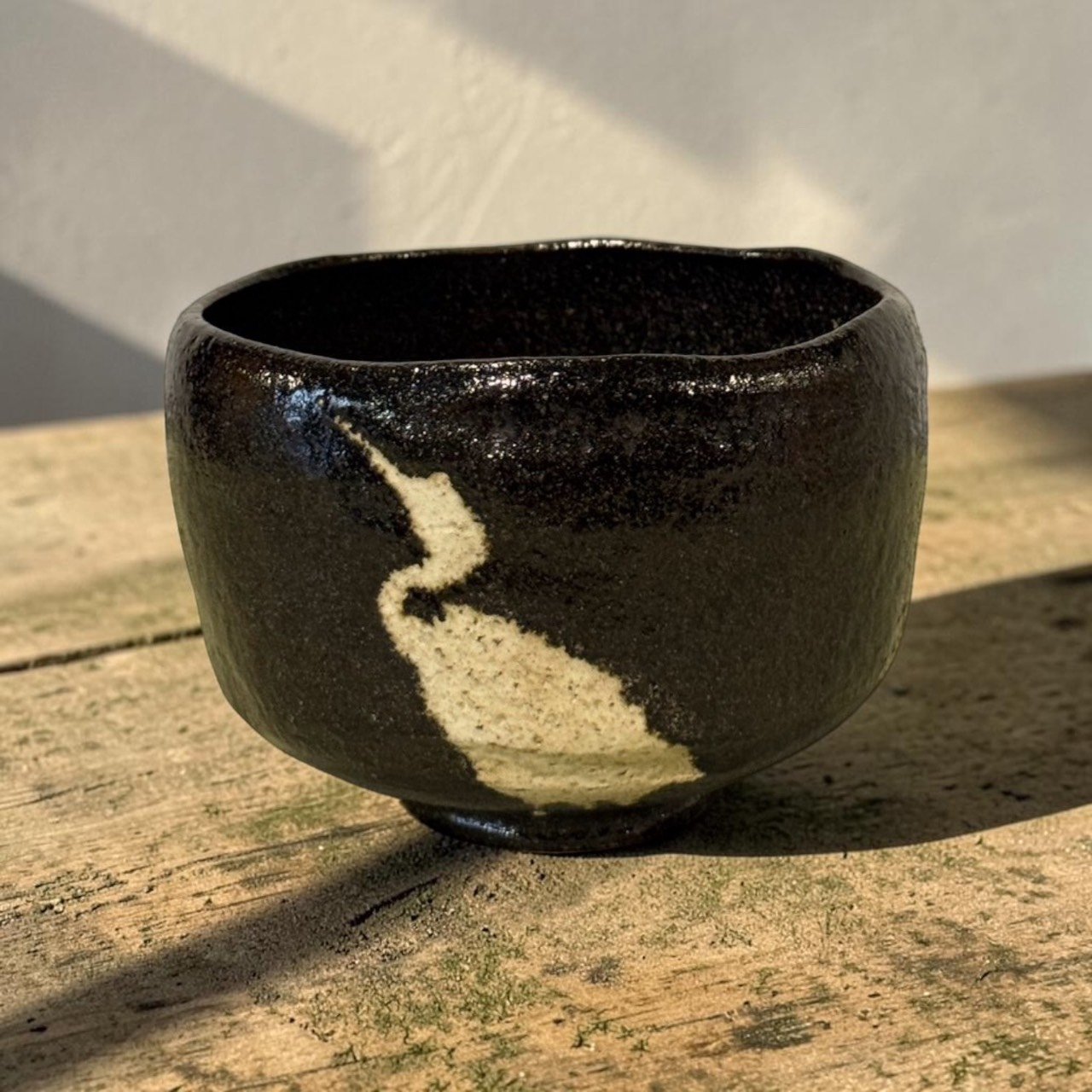
Kyoto Shoraku Kiln – Black Raku Tea Bowl with White Crane Motif

Shoraku Kiln, Kyoto, Japan | Kuro-raku Matcha Tea Bowl with Crane Motif, Black-Glazed Tea Utensil

Raku ware is one of the most representative forms of pottery in Japanese tea culture, with deep ties to the wabi-cha spirit championed by Sen no Rikyu. Compared with ceramics that pursue regularity, symmetry and lavish decoration, Raku ware places greater emphasis on the feel of the object in the hand, its natural form, and the intimate relationship between the tea bowl and its user. This bowl in the kuro-raku style is covered with a thick black glaze; the color is not a perfectly even pure black, but shifts between deep black, ink-brown and subtle luster according to the angle of the light. The rim has a natural undulation rather than a strictly perfect circle, expressing the irregular beauty prized in traditional hand-formed tea bowls.

Price NT$ 2,800≈ US$ 85
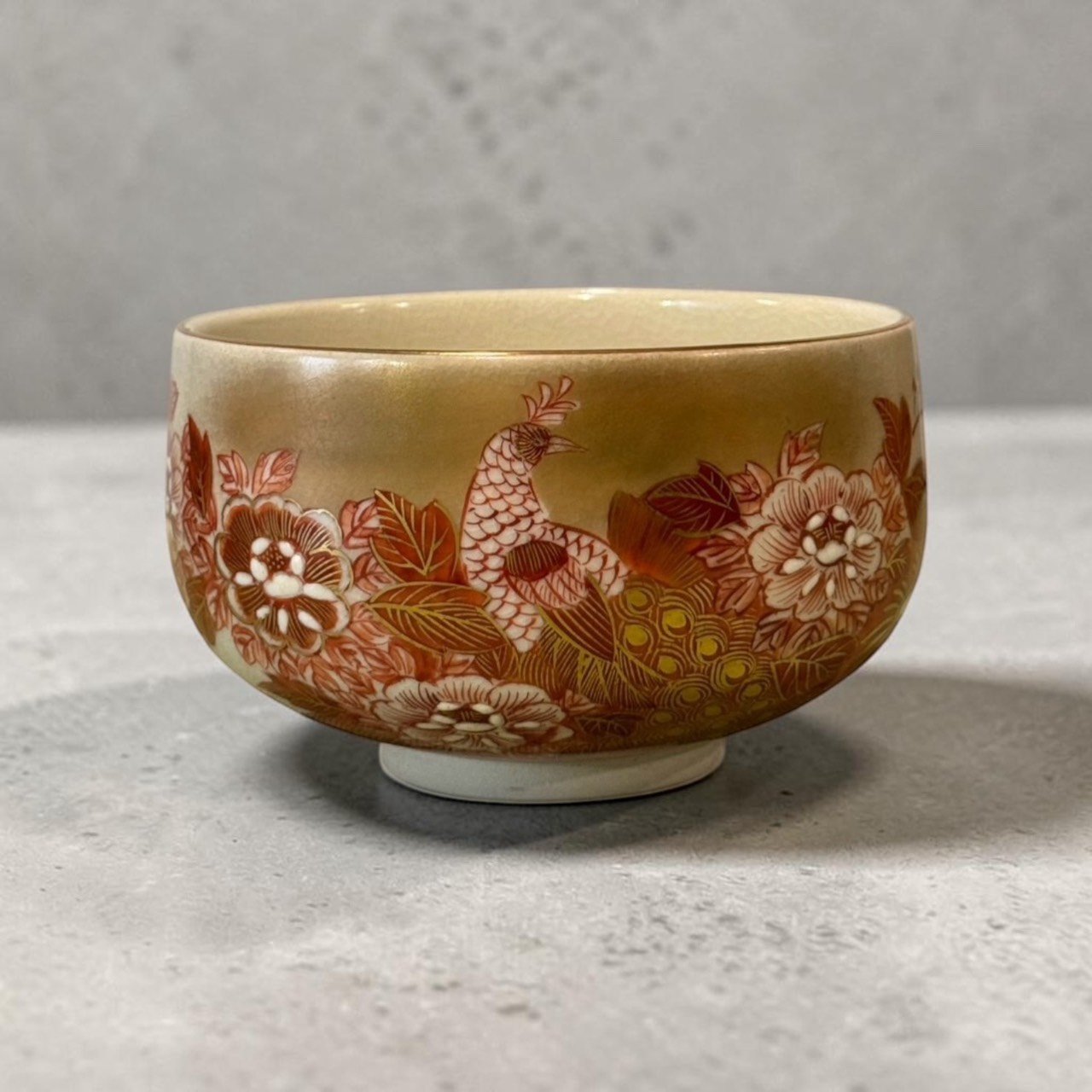
Japanese Kutani Ware Tea Bowl – Gilded Floral & Peacock Motif with Wooden Box

Kutani Gold-Decorated Bird-and-Flower Tea Bowl・Aka-e Peony and Peacock Design・With Original Wooden Tomobako

Kutani ware is one of Japan's most representative traditional ceramic crafts, known for its vivid colors, rich pictorial subjects and decorative quality. This tea bowl takes a rounded, full form, with a smoothly flaring rim and a belly that draws naturally inward, set on a small foot ring, giving the whole a steady yet gentle proportion. Most striking is the finely painted bird-and-flower decoration on the body, dominated by russet brown and vermilion tones, depicting blossoming flowers, layered overlapping leaves, and birds with delicately rendered feather texture. Touches of gold appear in places, making the bird-and-flower motifs all the more sumptuous against the soft glaze.

Price NT$ 3,000≈ US$ 91
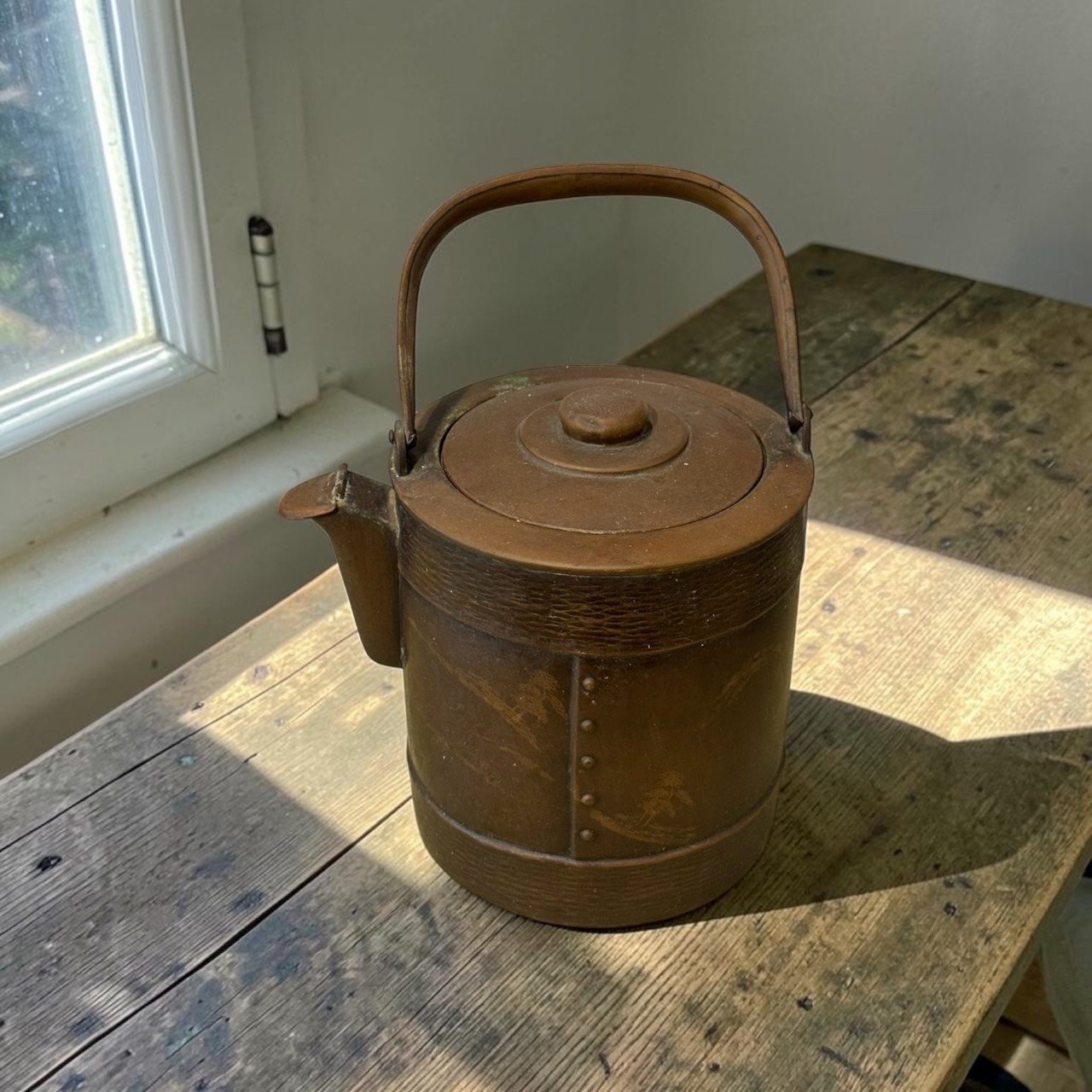
Vintage Japanese Copper Water Vessel — Traditional Tea Ceremony Mizutsugi

Tea Ceremony Copper Water Pot・Antique Bronze-Toned Handled Mizutsugi・Retro Tea Ceremony Water Vessel

A vintage Japanese copper water pot in the traditional handled (teiryo) form. The body has a solid, composed cylindrical shape, paired with a naturally curved metal handle, a round lid and a side spout, expressing the plain yet practical design spirit of traditional Japanese tea ceremony wares. In Japanese tea ceremony culture, the mizutsugi is a vessel used to replenish water for the tea gathering, commonly seen in the preparation of the tea ceremony and the tidying of the tea setting. Depending on the school and the situation of use, the material, form and purpose of a mizutsugi may differ. The most captivating aspect of this water pot is the antique bronze tone that has formed naturally on its surface. Through years of storage, the original metallic luster has gradually turned to deep brown, russet copper and, in places, verdigris tones. Different areas show oxidation of varying depth, creating a layered, rustic texture.

Price NT$ 3,800≈ US$ 115
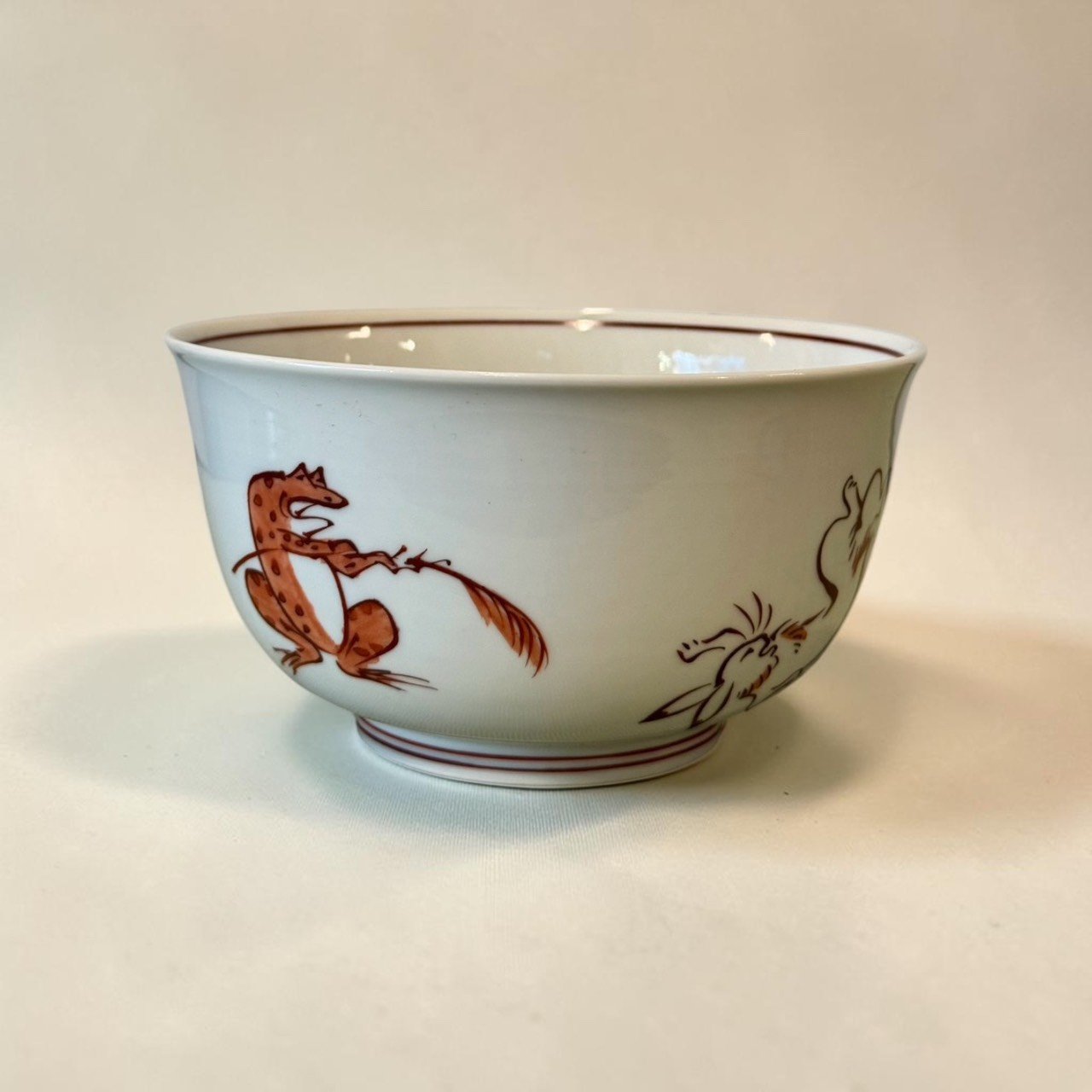
Japanese Chōjū-giga Inspired Tea Bowl

Kozan-ji Choju Giga Aka-e Rabbit and Frog Matcha Bowl

A vintage Japanese matcha bowl, decorated with inspiration from the Choju Giga (Frolicking Animals scrolls), one of the most representative works of traditional Japanese art, bringing the lively anthropomorphized poses of rabbits, frogs and other animals onto a warm, understated ceramic vessel. The Choju Giga is a celebrated classical Japanese picture scroll, and the surviving work has deep ties to Kozan-ji temple in Toganoo, Kyoto. In the painting, rabbits, frogs, monkeys and other animals imitate human activities, and the spirited brushwork presents scenes full of humor and vitality. Particularly worth noting is the side of the bowl, which bears the characters "Kozan-ji" within a rectangular frame, echoing the Choju Giga theme and giving the whole piece a distinctly classical Japanese artistic character.

Price NT$ 850≈ US$ 26
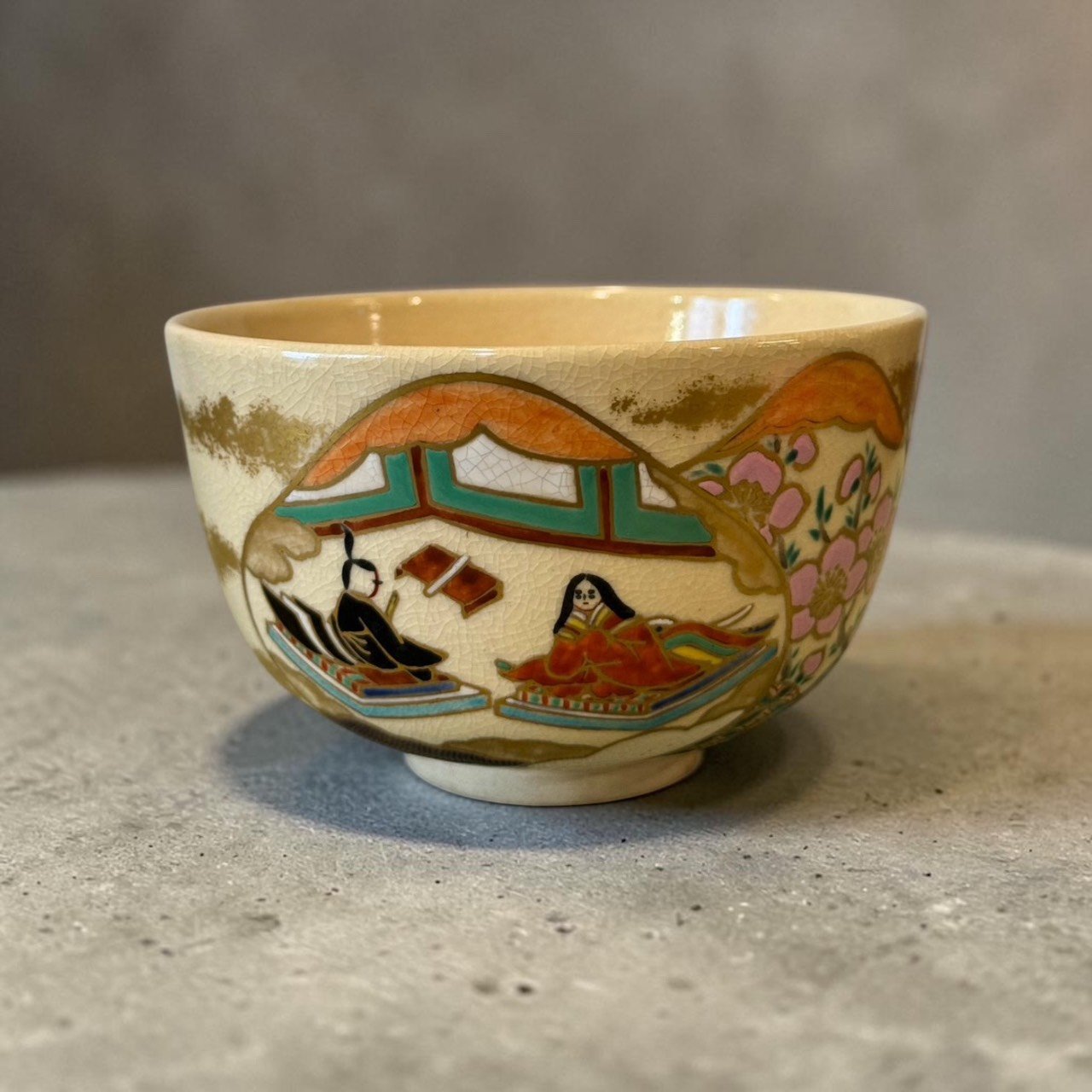
apanese Kyo-yaki Style Tea Bowl with Heian Court Figures & Wooden Box

Kyo-yaki Signed Tea Bowl, Heian Court Figures, Gold-Decorated Cherry Blossom Motif, with Original Wooden Storage Box

Kyoto has a long history of ceramic culture, and Kyo-yaki (Kyoto ware) is renowned for its rich decorative expression, diverse painted subjects and refined tea ceremony wares. Unlike pottery that emphasizes clay texture and natural kiln effects, many Kyo-yaki pieces place particular importance on the painting art of the vessel's surface, frequently incorporating figures, landscapes, birds and flowers, seasonal scenery and classical literary themes into ceramic work. This tea bowl conveys a strong sense of Kyoto's decorative ceramic art. The bowl has an overall form that flares slightly outward, with a wide mouth rim, a rounded body, and a base drawn in to a footring. The proportions are natural, combining the practical structure of a tea bowl with visual appeal.

Price NT$ 2,500≈ US$ 76
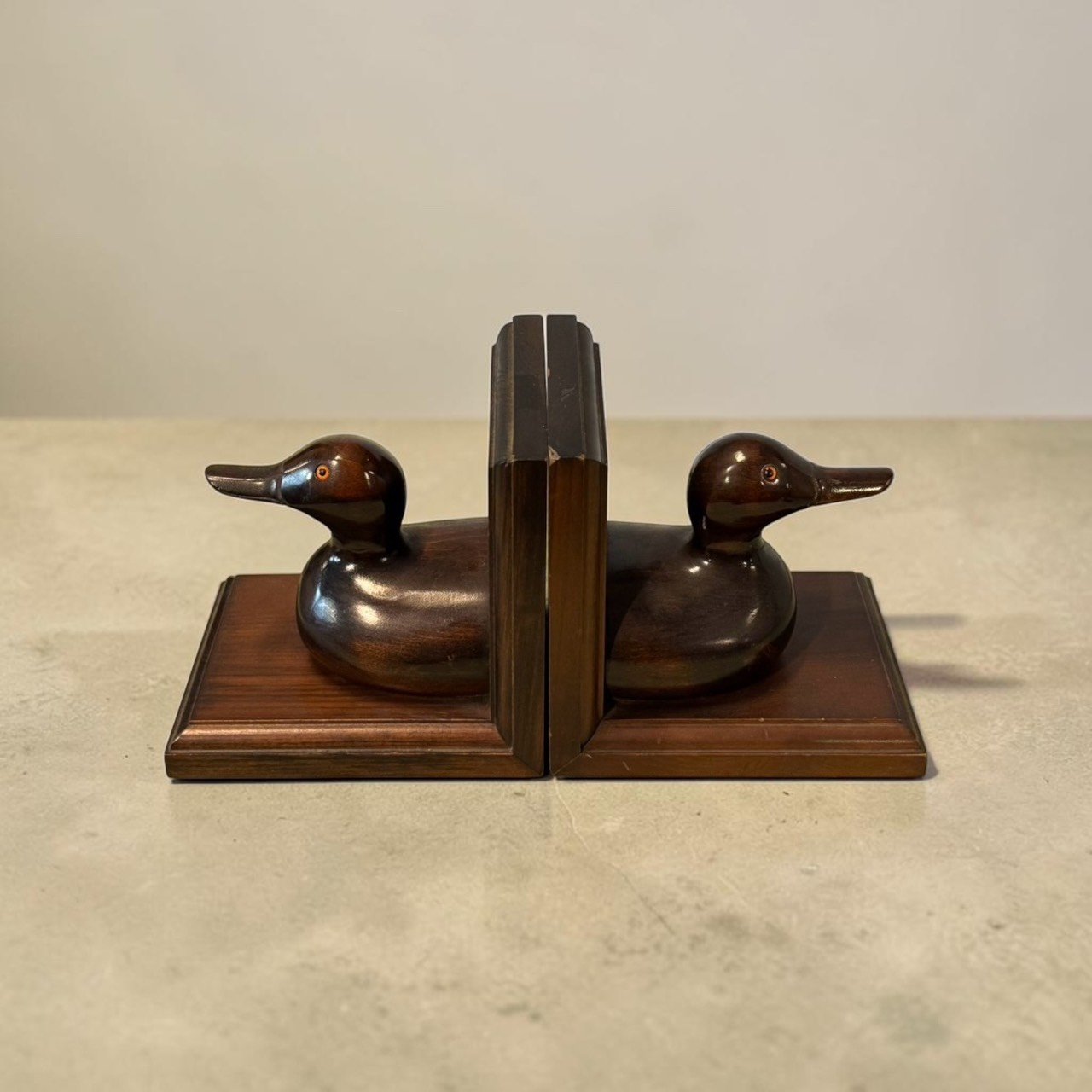
Japanese Vintage TSUBOGEN CRAFT Handmade Wooden Duck Bookends

Japanese Vintage | TSUBOGEN CRAFT Hand-Carved Wooden Double-Duck Bookends

In Japanese traditional woodcraft and household goods, animal forms have long been a much-loved subject. Ducks, waterfowl, and other creatures of nature in particular are often rendered through simplified carved lines and the natural texture of the wood, producing a gentle and approachable artistic style. This pair of vintage Japanese carved wooden duck bookends shows exactly this design charm of bringing natural subjects into everyday objects. The piece consists of two separate wooden bookends, each with a carved duck. The duck's body is rounded and full, the head slightly raised, and the bill extending outward. The duck's body and the base form a stable visual structure, and together with the upright wooden panel the piece serves both as sculpture and as a book support. The two ducks face left and right respectively, creating a sense of answering symmetry when placed as a pair; even without books, they work as a standalone set of wooden decorative objects. (There is a small chip near the foot on one of them.)

Price NT$ 3,000≈ US$ 91
CURATOR'S SPECIAL SELECTION

This Season's Picks · The Beauty of Shōwa Silver and Metalwork

Go to Auctions
Shōwa Metalwork · Selected Silver

1952 Kobe Vintage STERLING SILVER Engraved Jewelry Cabinet

A small jewelry cabinet made in Kobe in 1952, crafted in STERLING SILVER. The double-door body is finely engraved with flowers and foliage, and the doors, hinges and clasps show layers of classical metalwork. Over the years the silver has naturally oxidized into varied tones and signs of use, making the delicate engraving stand out more vividly in light and shadow.

NT$ 88,000 Condition: visually very beautiful
View Details
DASING Japan Art Warehouse antique collection: metal seated figure in the style of Water-Moon Guanyin
BUDDHIST ART

Chinese Antique | Metal Seated Figure in the Water-Moon Guanyin Style

NT$ 30,000

Wearing an ornate jeweled crown, draped in celestial robes and necklaces, the figure sits in the "royal ease" posture, one leg raised and the other hanging naturally, capturing the graceful, relaxed pose of Water-Moon Guanyin. The face is lowered with a calm expression, and the bronze-toned finish is naturally deep and steady — well suited to a tea room, study or quiet space.

Selected Eastern Buddhist Art View Details
AUTHENTICITY & SAFE TRANSPORT

For DASING Collectors · Three Commitments for Peace of Mind

Every piece has weathered centuries. We bring an exacting, professional approach to antique art to every handover and delivery.

Sourced in Japan · Shipped to Kaohsiung

We keep searching all over Japan for antiques and vintage pieces with character — ceramics, tea ceremony utensils, vases, wood carvings, furniture and Shōwa-era goods — and bring them across the sea to DASING.

Real Photos · Shown as It Is

Items are photographed as they are, showing color, texture, detail and actual appearance as closely as possible, so buying online comes closer to seeing them in person.

Vintage Condition · Fully Described

Antiques often show wear, oxidation, kiln flaws, repairs or other signs of age. We show these as fully as we can in photos and item descriptions, so you can understand each piece before deciding to buy.