Live inventory from DASING's main warehouse | 261 pieces available
[ DASING Collection · Available Now ]

Available Now · Refined Antiques Where Time Stands Still

DASING Japan Art Warehouse currently has 186 pieces online, including tea ceremony utensils, Ko-Imari porcelain, maki-e lacquer and metalwork from the Edo to Shōwa periods. Each comes with its history and a record of its craftsmanship, awaiting the discerning collector.

100% direct from Japan More than vintage pieces — a slice of Japanese history worth collecting

Results for “Edo Period” Clear search

Showing 1 - 6 (6 pieces in total)

Wooden Shop Sign for Grey-Hair Dye (Edo Period, Japan)

This wooden shop sign for grey-hair dye dates from the Edo period in Japan; a historical artefact of considerable collecting value, it expresses the distinctive beauty of the commercial culture and craft of its time. Made of wood and weathered by the years, it bears the marks of history and has a strongly rustic character.

Price NT$ 12,000≈ US$ 365
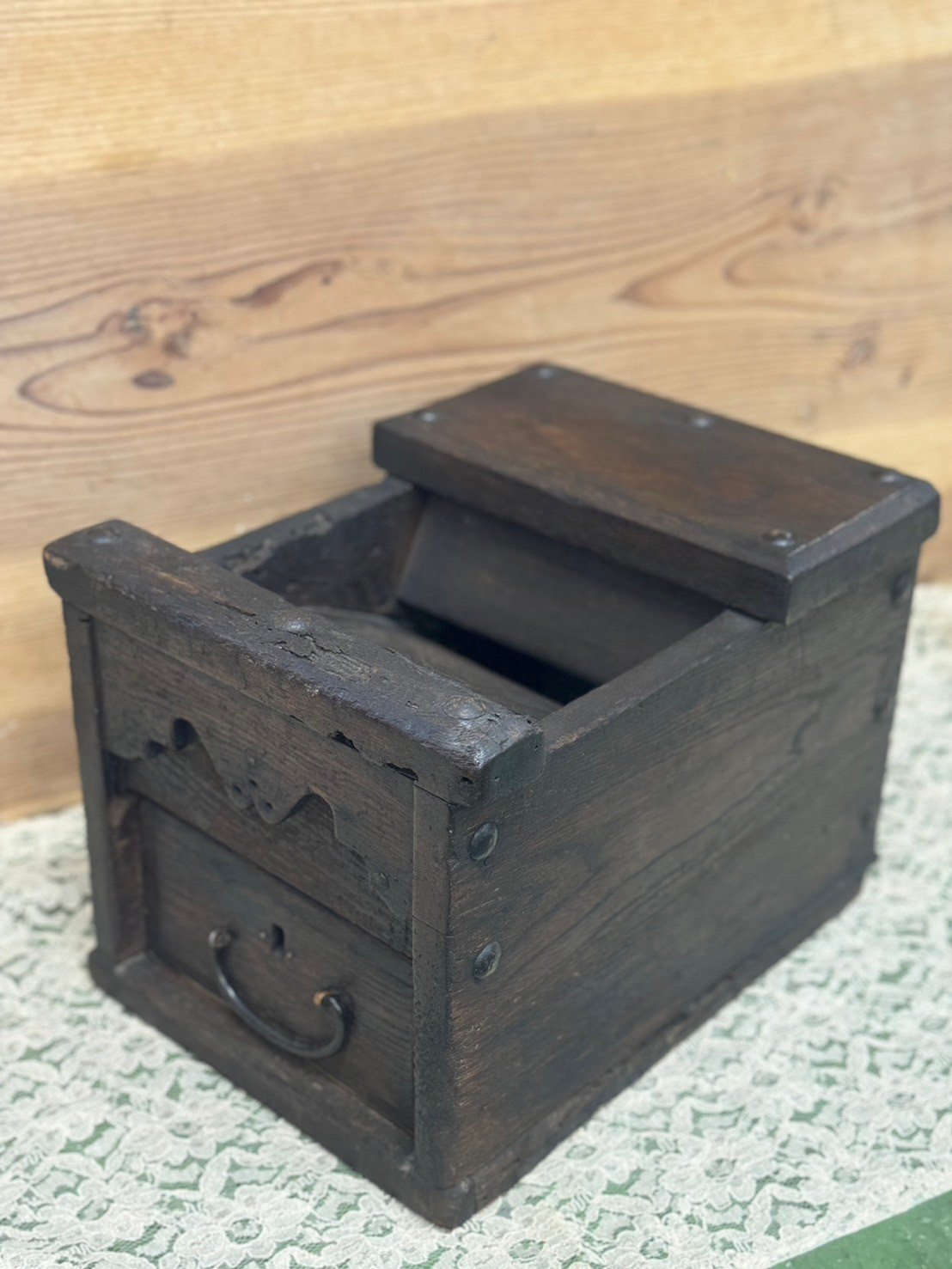
Antique Money Box, Japan

This Edo-period Japanese money box is an antique of considerable historical value and practical function. In old Japan, such boxes were containers for storing coins and valuables; sturdy and durable, they were usually made of heavy timber with metal fittings to keep the contents safe. The design of this box is plain and unadorned, and its surface retains the marks of history, showing the patina of age and a rustic beauty. (An old piece with signs of age; there is also a Mount Fuji design on the back)

Price NT$ 5,000≈ US$ 150

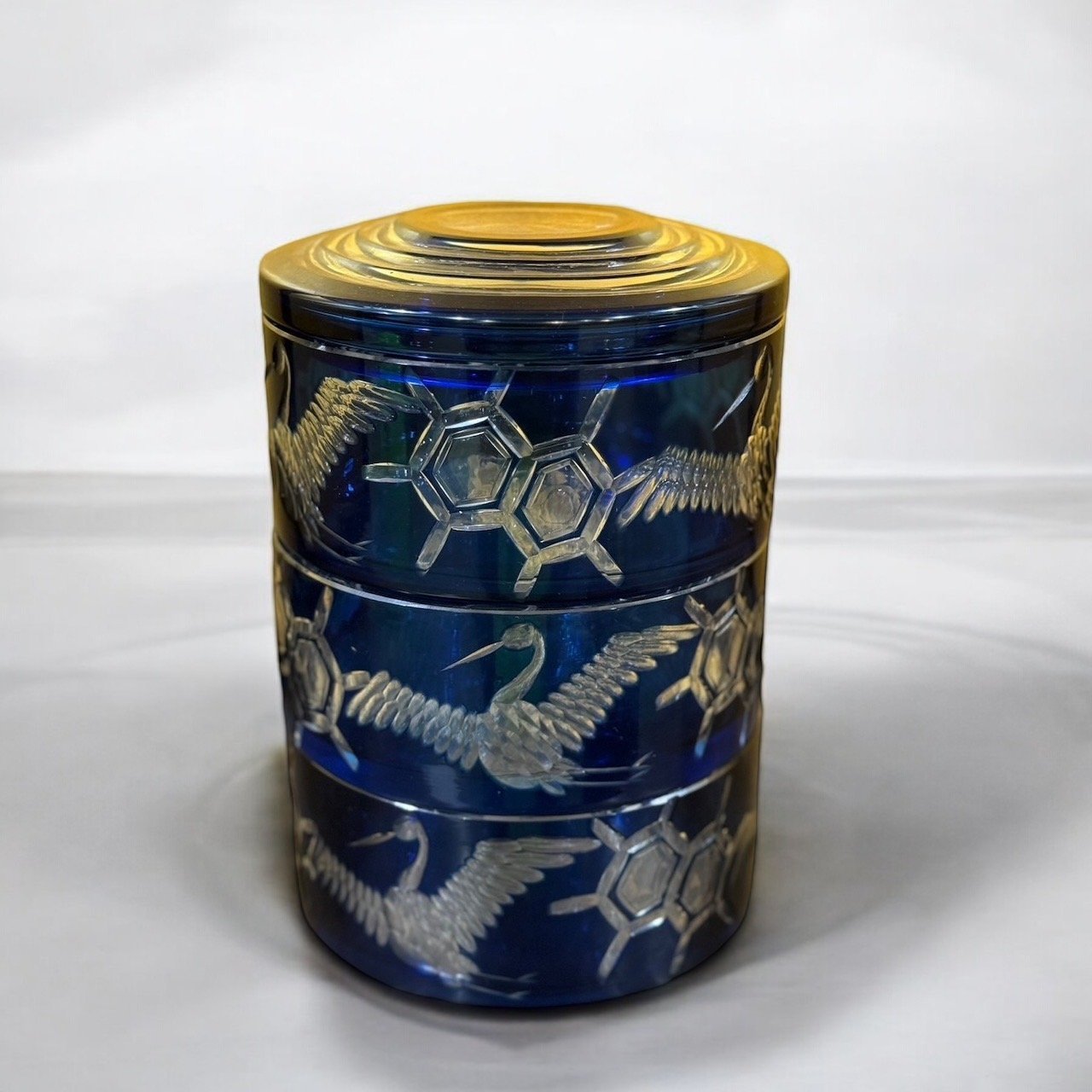
Edo Kiriko Cut-Glass Three-Tier Box, Japan (With Tomobako)

A three-tier box in Japanese Edo Kiriko cut glass, a work of art with considerable collecting value. Edo Kiriko is the representative Japanese tradition of glass cutting, which began in the Edo period (17th century) and is known for its precise cutting. This piece is made of deep blue glass, finely cut with cranes and tortoises on the body of the box, motifs that signify longevity and prosperity and symbolise good fortune and blessings.

Price NT$ 26,800≈ US$ 815

Double-Sided Old Wooden Japanese Pharmacy Sign, “家秘一元丹” (Kahi Ichigentan)

A double-sided old wooden sign from Japan, dating from before the Shōwa era. The front is carved with the words “家秘一元丹” (Kahi Ichigentan), one of the phrases used on signs by folk pharmacies of the time selling secret-formula medicines. “Ichigentan” refers to an affordable household remedy with wide-ranging effects, carrying the idea that “one dose cures a hundred ills”; “kahi” (family secret) stresses that the formula was handed down within the shop's family, making it distinctive and highly trusted. The back is carved “呉服大賣物類”, meaning the sale of fabrics, kimono and related goods. This vividly reflects the character of Japanese popular commercial culture from the late Edo period through the Taishō and early Shōwa periods, when a single shop often combined several trades, selling both medicines and textiles and sundries to meet the everyday needs of ordinary people and adapt to economic change. This multi-trade model not only shows the flexibility of local merchants but also created streetscapes rich in cultural memory. (With an iron hanging hook; can be wall-mounted or hung for display as is.)

Price NT$ 8,800≈ US$ 265

Shōwa-period Ittōbori Carved Wood Daruma Figure, Japan

A handmade wooden Daruma figure from Japan's Shōwa period, carved using the traditional Japanese ittōbori (single-knife carving) technique. Made from natural wood, it keeps the warm grain and aged colour of the wood itself; the craftsman's skilled knife-work renders Daruma's piercing eyes, his resolute and composed expression, and forceful facial features. Daruma derives from Bodhidharma, founder of Zen Buddhism, and in Japanese culture is regarded as a symbol of perseverance, determination, success and the fulfilment of wishes. Since the Edo period, Daruma has become one of the most representative good-luck charms in Japanese folk culture, widely associated with wishes for prosperous business, passing exams, career success and achieving life goals. This is not an ordinary mass-produced craft item but was carved cut by cut using traditional woodcarving techniques; from the eyes and bridge of the nose to the lines of the mouth, it is full of the craftsman's warmth, displaying a strong Shōwa-period folk-craft style and the character of Japanese woodcarving.

Price NT$ 8,000≈ US$ 245

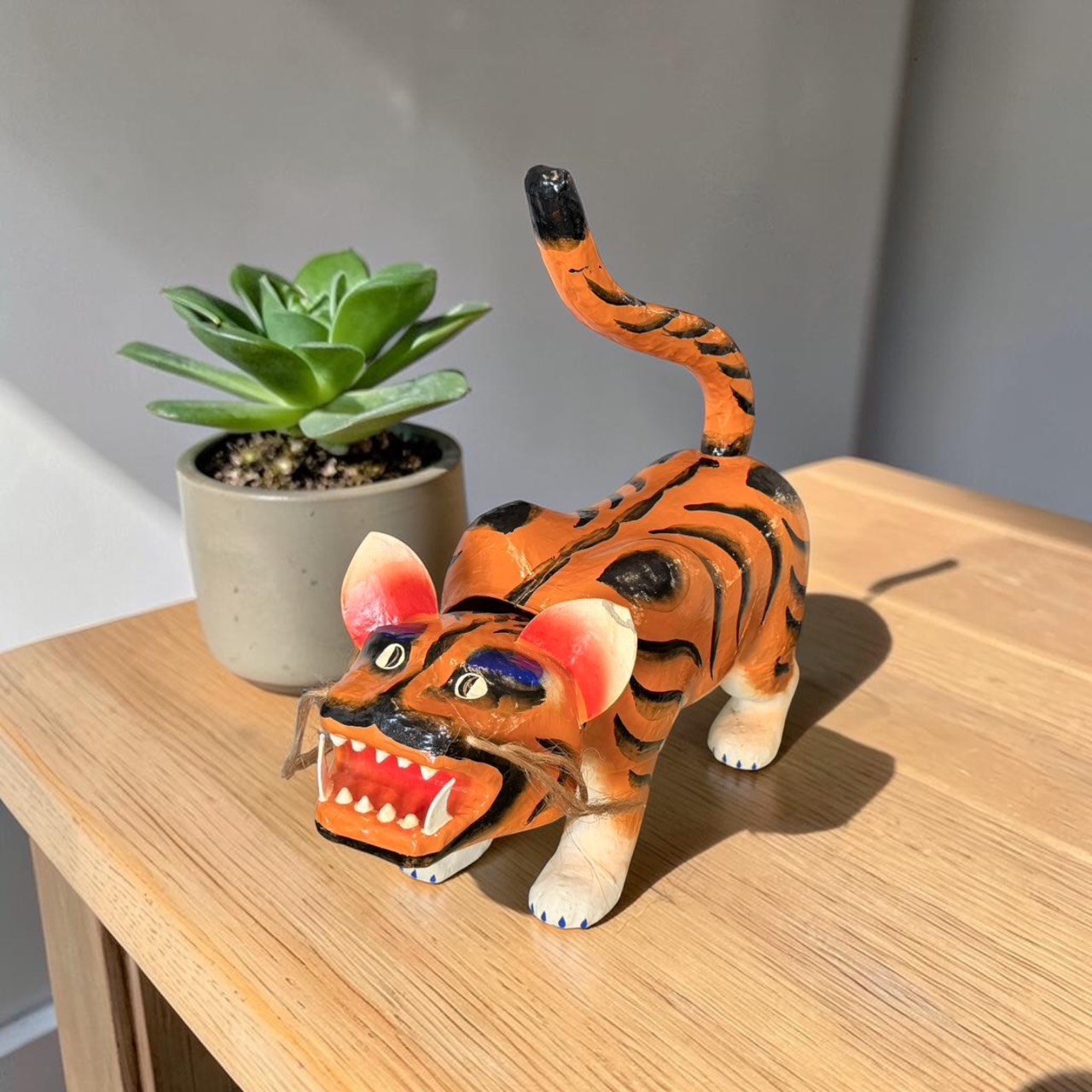
Japanese Hariko Tiger | Hand-Painted Washi Papier-Mâché | Folk-Craft Ornament for Good Fortune and Protection from Evil

The Japanese hariko tiger is one of the representative works of traditional Japanese folk craft. Made by hand using the washi papier-mâché (hariko) technique and finished with vivid painting, it fully expresses the simple beauty of Japanese regional crafts and their culture of auspicious symbols. The hariko tiger dates back to the Edo period, when it was first made as an auspicious ornament for blessings and for warding off evil. It is often seen in traditional customs such as the Tango no Sekku festival, Boys' Day and celebrations for newborns, symbolizing healthy growth, courage and resilience, peace and good fortune, and the protection of the home. This piece is shown in a tense crouching pose, mouth wide open and tail raised high, with hand-painted black stripes, a bright red mouth and an exaggerated expression, giving it the strong character of Japanese rustic folk art. The whiskers are made of natural material, adding vitality and collectable charm; it is a work of Japanese folk art combining cultural value with striking visual impact. (Ears damaged)

Price NT$ 4,500≈ US$ 135
CURATOR'S SPECIAL SELECTION

This Season's Picks · The Beauty of Shōwa Silver and Metalwork

Go to Auctions
Shōwa Metalwork · Selected Silver

1952 Kobe Vintage STERLING SILVER Engraved Jewelry Cabinet

A small jewelry cabinet made in Kobe in 1952, crafted in STERLING SILVER. The double-door body is finely engraved with flowers and foliage, and the doors, hinges and clasps show layers of classical metalwork. Over the years the silver has naturally oxidized into varied tones and signs of use, making the delicate engraving stand out more vividly in light and shadow.

NT$ 88,000 Condition: visually very beautiful
View Details
DASING Japan Art Warehouse antique collection: metal seated figure in the style of Water-Moon Guanyin
BUDDHIST ART

Chinese Antique | Metal Seated Figure in the Water-Moon Guanyin Style

NT$ 30,000

Wearing an ornate jeweled crown, draped in celestial robes and necklaces, the figure sits in the "royal ease" posture, one leg raised and the other hanging naturally, capturing the graceful, relaxed pose of Water-Moon Guanyin. The face is lowered with a calm expression, and the bronze-toned finish is naturally deep and steady — well suited to a tea room, study or quiet space.

Selected Eastern Buddhist Art View Details
AUTHENTICITY & SAFE TRANSPORT

For DASING Collectors · Three Commitments for Peace of Mind

Every piece has weathered centuries. We bring an exacting, professional approach to antique art to every handover and delivery.

Sourced in Japan · Shipped to Kaohsiung

We keep searching all over Japan for antiques and vintage pieces with character — ceramics, tea ceremony utensils, vases, wood carvings, furniture and Shōwa-era goods — and bring them across the sea to DASING.

Real Photos · Shown as It Is

Items are photographed as they are, showing color, texture, detail and actual appearance as closely as possible, so buying online comes closer to seeing them in person.

Vintage Condition · Fully Described

Antiques often show wear, oxidation, kiln flaws, repairs or other signs of age. We show these as fully as we can in photos and item descriptions, so you can understand each piece before deciding to buy.