Live inventory from DASING's main warehouse | 261 pieces available
[ DASING Collection · Available Now ]

Available Now · Refined Antiques Where Time Stands Still

DASING Japan Art Warehouse currently has 186 pieces online, including tea ceremony utensils, Ko-Imari porcelain, maki-e lacquer and metalwork from the Edo to Shōwa periods. Each comes with its history and a record of its craftsmanship, awaiting the discerning collector.

100% direct from Japan More than vintage pieces — a slice of Japanese history worth collecting

Results for “Tea Wares” (also searching: chadogu, tea vessels, tea ceremony) Clear search

Showing 19 - 27 (41 pieces in total)

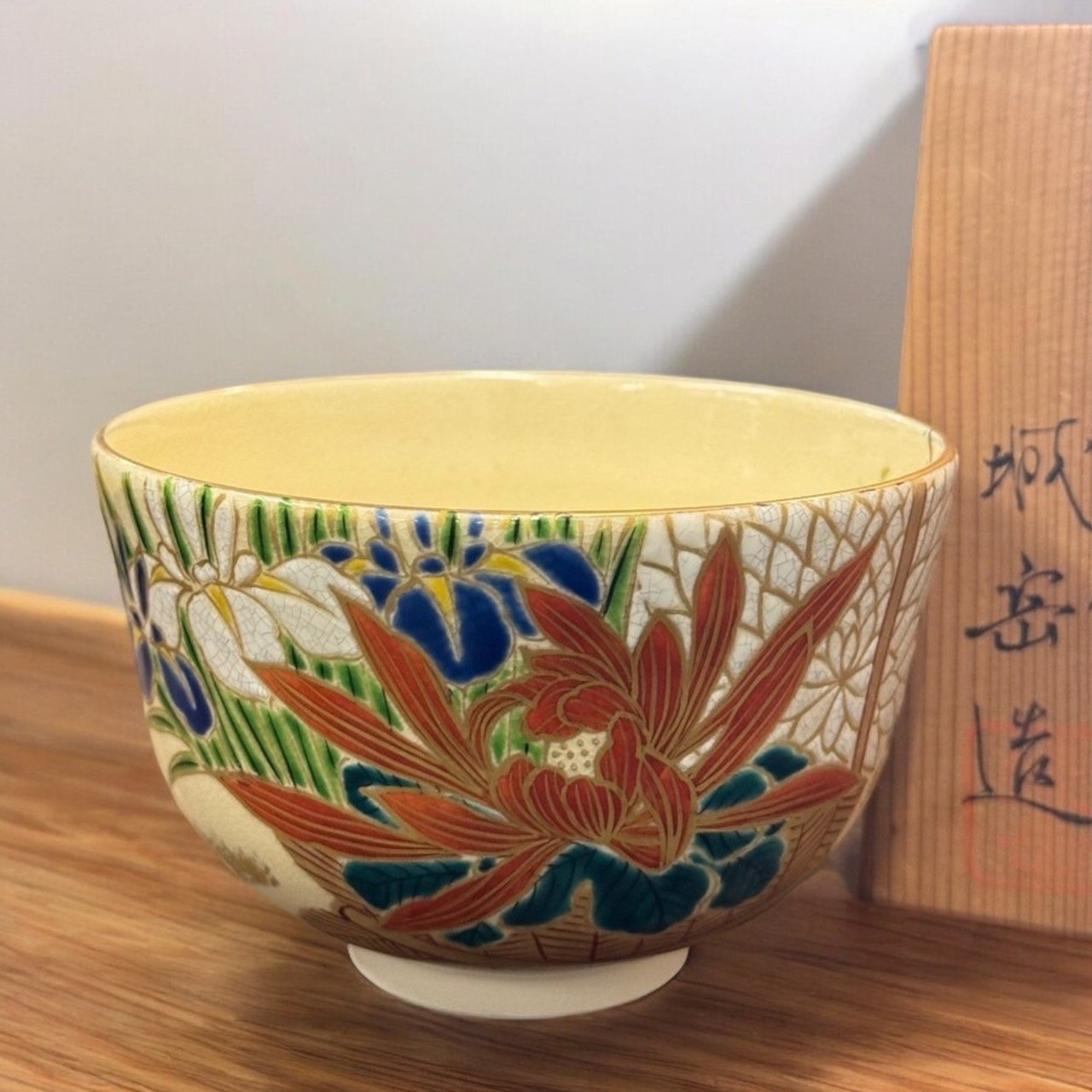
Kyō Ware Chawan (Tea Bowl), Japan

This Japanese Kyō ware chawan represents the essence of Kyōto's traditional ceramic craft. Kyō ware (Kyō-yaki) is a long-established pottery tradition of the Kyōto area, known for rich colours, refined workmanship and ornate decoration, and is much loved by devotees of the Japanese tea ceremony and collectors of ceramics. The bowl is hand-painted with flowers, with gold patterning set against vivid blue, red and green, expressing an elegant, noble Japanese aesthetic. The interior glaze is warm and soft, the mouth moderate in size and the bowl steady in the hand, making it both highly practical and fine to look at. It comes with its original tomobako (wooden box) bearing the craftsman's signature and red seal, attesting to its craftsmanship and origin; suitable for collecting or as a gift.
Price NT$ 1,500≈ US$ 46

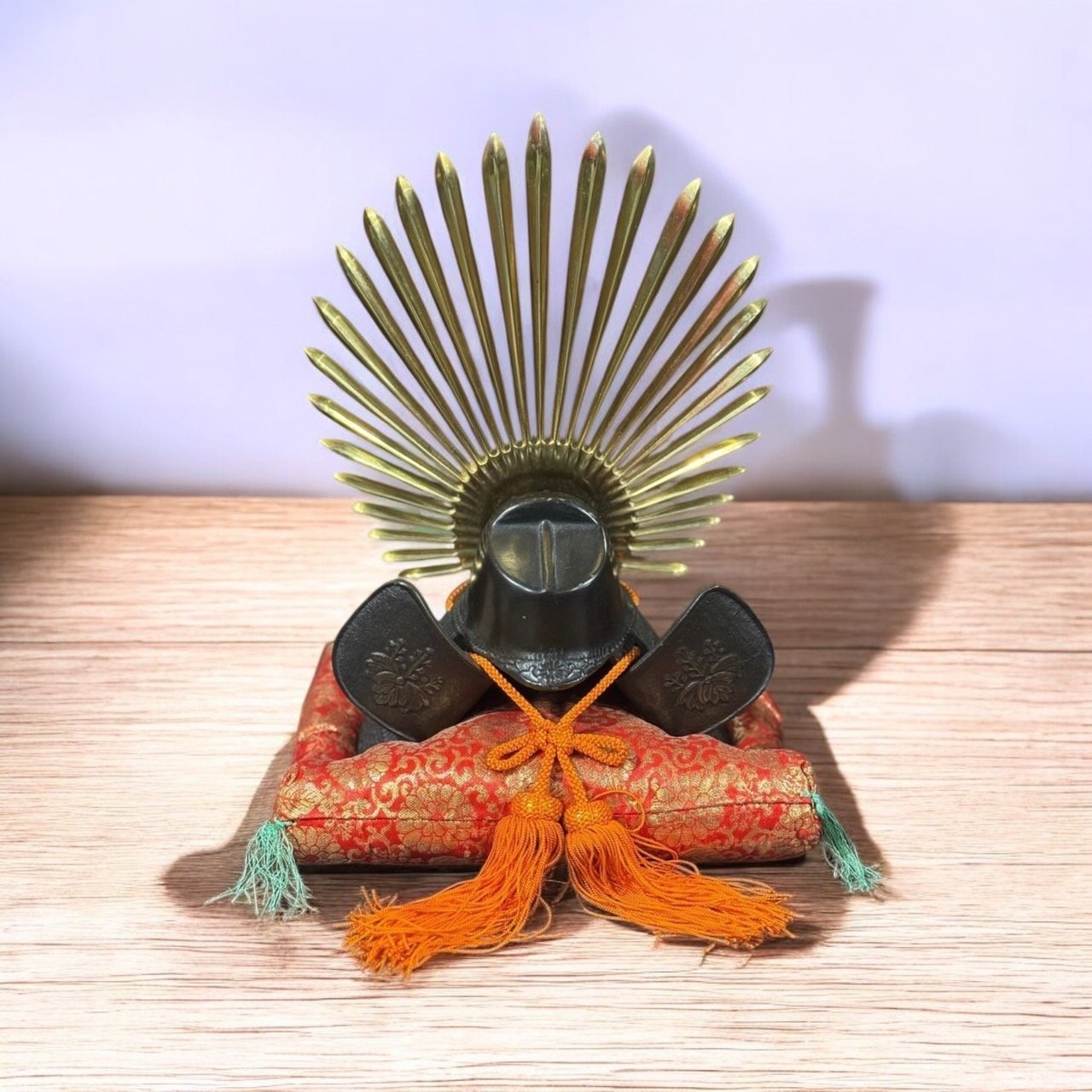
Cast-Iron Kabuto Helmet Ornament, Japan

A Japanese cast-iron helmet ornament inspired by the samurai helmet (kabuto), combining traditional samurai culture with a craftsman's handwork. Made by iron casting, the helmet is sturdy and heavy, conveying the resolve and dignity of the samurai spirit of the Sengoku (Warring States) period. The radiating gilt-copper crest at the back (kuwagata) symbolises the brilliant rays of the sun; designs of this kind are often seen on the helmets of Sengoku-period daimyō, notably in the armour of warlords such as Tokugawa Ieyasu and Date Masamune. The overall form is imposing, and the gold tassels and embroidered cushion add splendour and nobility, enhancing its display and collecting value. Helmet ornaments of this kind are usually displayed for the Boys' Festival on the fifth day of the fifth month (Kodomo no Hi), as a prayer for children's healthy growth and in the spirit of the samurai. They are also widely used in collections of traditional Japanese culture, in tea ceremony displays and as gifts.

Price NT$ 2,200≈ US$ 67

Flower Vase by Tetsuzan, Japan

This flower vase by Tetsuzan shows the refined craftsmanship of traditional Japanese ceramics, with a slender, elegant form and a smooth, mellow glaze. The body has an ivory-white ground, decorated above with hand-painted flowers, plants and butterflies, while a flowing wave design adds movement, giving the whole a natural, harmonious beauty. The work of the well-known Japanese potter Tetsuzan, it carries on the traditional aesthetics and delicate brushwork of Japanese ceramics, with fluent painting and soft yet layered colours. It is especially well suited to home display, a tea room setting or a collection.

Price NT$ 2,500≈ US$ 76

Old Kutani Iron-Glazed Chawan (Tea Bowl), Japan

A handmade iron-glazed chawan in the 'Ko-Kutani' (Old Kutani) style, with the form and motifs characteristic of early Kutani ware; its firing retains a traditional texture and a sense of history. The coarse stoneware body is covered with a pale off-white ground glaze, and the bowl is painted in vivid vermilion iron pigment with figures, accented with dots of yellow, blue and green enamels, giving a lively, unrestrained composition with strong visual impact. The base shows clear marks of hand throwing and kiln transformation; the body is slightly sandy, and the surface displays natural glaze crackle, typical of an old hand-fired piece. At the centre of the base is an appraisal label of the kind commonly seen in the Japanese resale market; the unglazed foot ring reveals the clay body. The piece is accompanied by a certificate of identification written in ink and its original wooden box, the lid inscribed with the title and signature. With clear documentation, it is a collection-grade work of credible provenance. (Shows marks from the making process)

Price NT$ 1,200≈ US$ 37

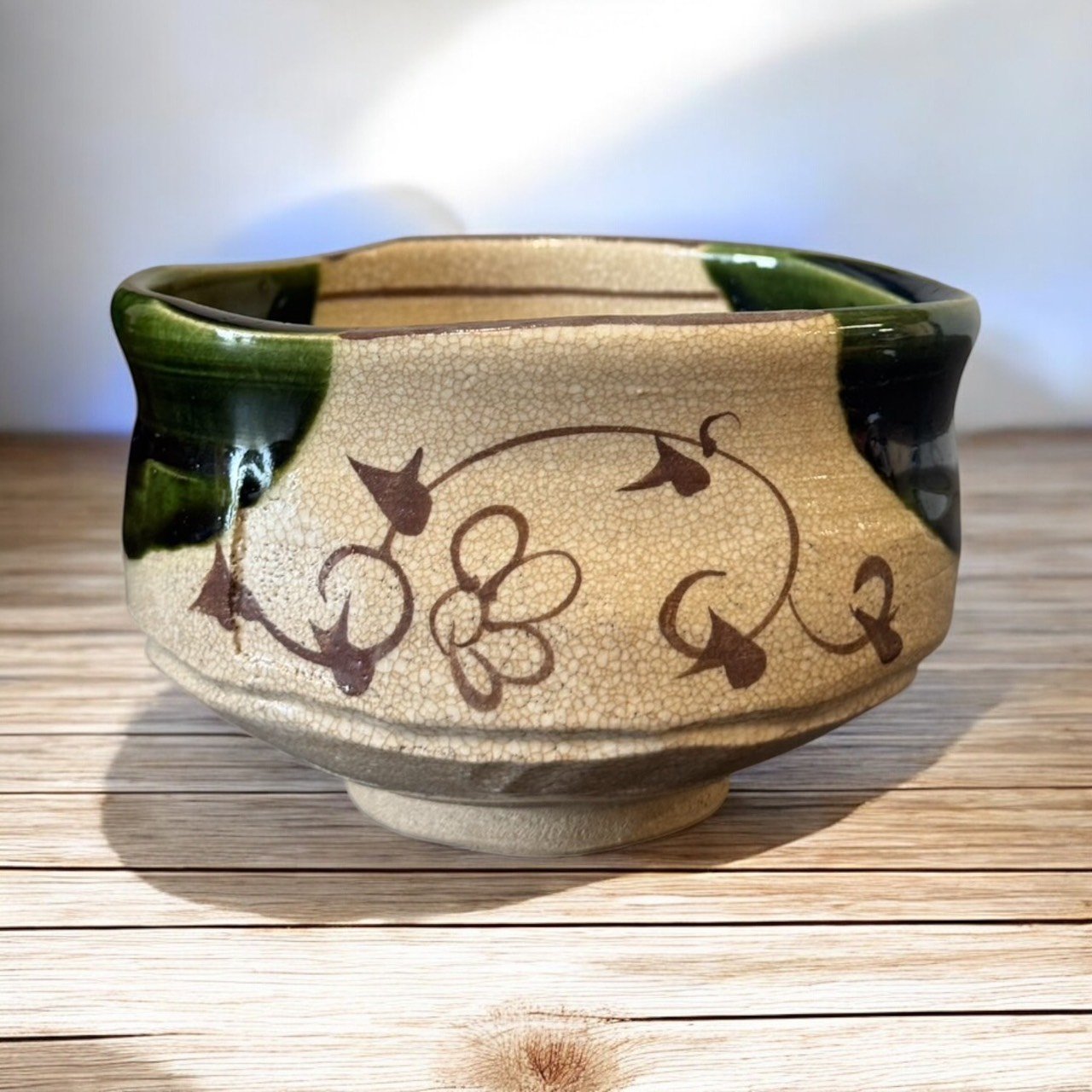
Oribe Ware Irregular Chawan (Tea Bowl), Japan (Without Tomobako)

An irregularly shaped matcha bowl in the style of Oribe ware (Oribe-yaki), Japan. The form leans toward free-form modelling, with a gently undulating rim, and carries a strong folk-craft, handmade character. The exterior is glazed over a light-coloured clay body, mainly in clear and green glazes, and the surface shows natural crackle (craquelure), a texture that forms naturally during high-temperature reduction firing. The bowl is decorated with a vine-and-flower motif painted in reddish brown, with fluid brushwork and a lively composition, expressing the 'beauty of asymmetry' and freely sketched naturalness characteristic of Oribe. The green glaze has a strong sheen that contrasts sharply with the texture of the unglazed body, giving the piece visual tension while keeping its rustic simplicity.

Price NT$ 1,000≈ US$ 31

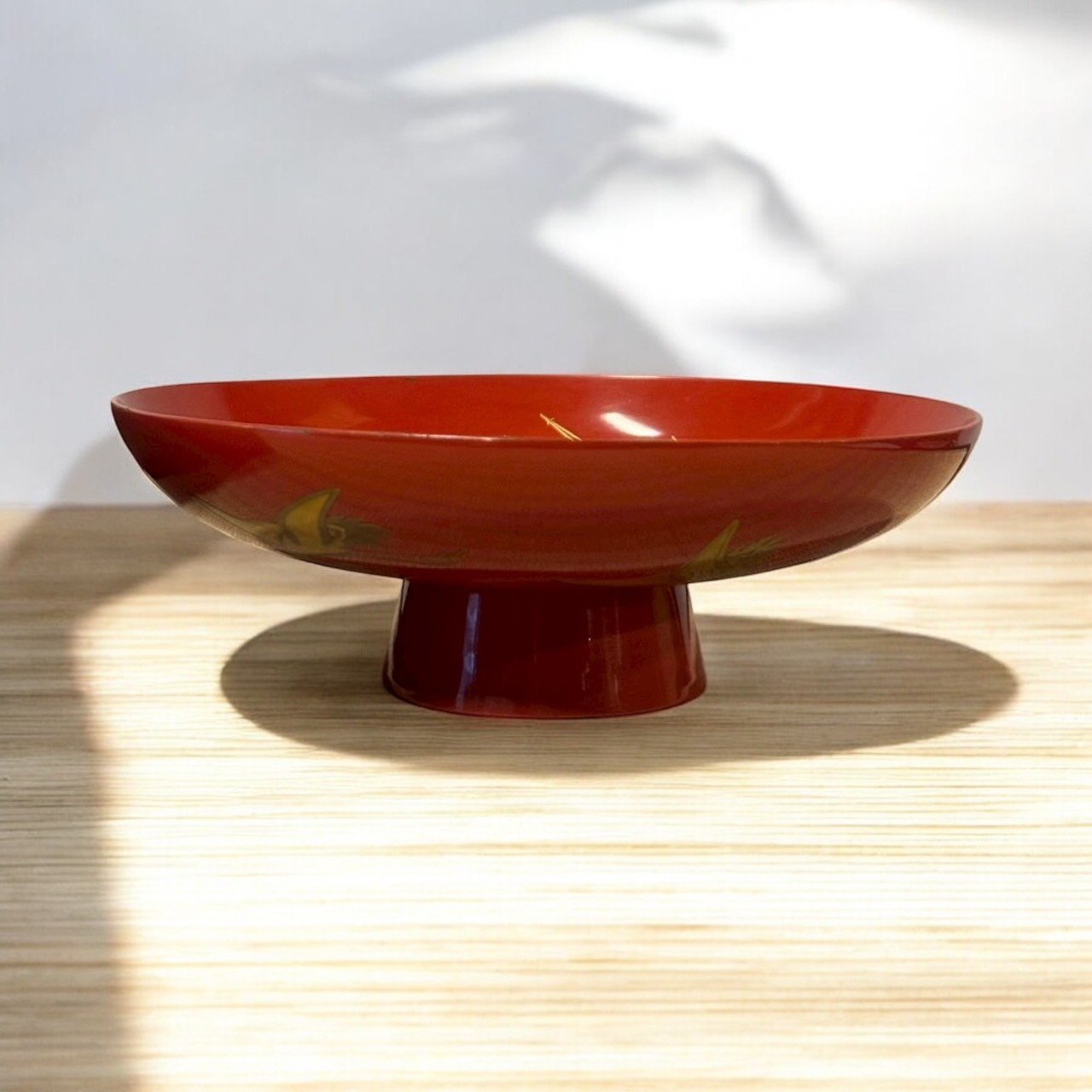
Traditional Japanese Lacquer Footed Stand (Takatsuki)

A Japanese footed lacquer vessel, or takatsuki, coated all over in vermilion lacquer, the top painted in fine gold brushwork with bamboo shoots and grapes, balanced in composition and delicate in execution. Bamboo shoots symbolize “endless renewal of life” and grapes “many children and much happiness”; the designs carry meanings of abundance and good fortune, and such vessels are often used for celebrations, offerings, weddings or congratulatory occasions. The takatsuki (たかつき) is one of Japan's traditional vessels for presenting food, with origins traceable to the Nara and Heian periods; it is often seen in offerings before the gods, among aristocratic utensils, in the tea ceremony and in festival rituals — a form of strong ceremonial and cultural significance.

Price NT$ 2,000≈ US$ 61

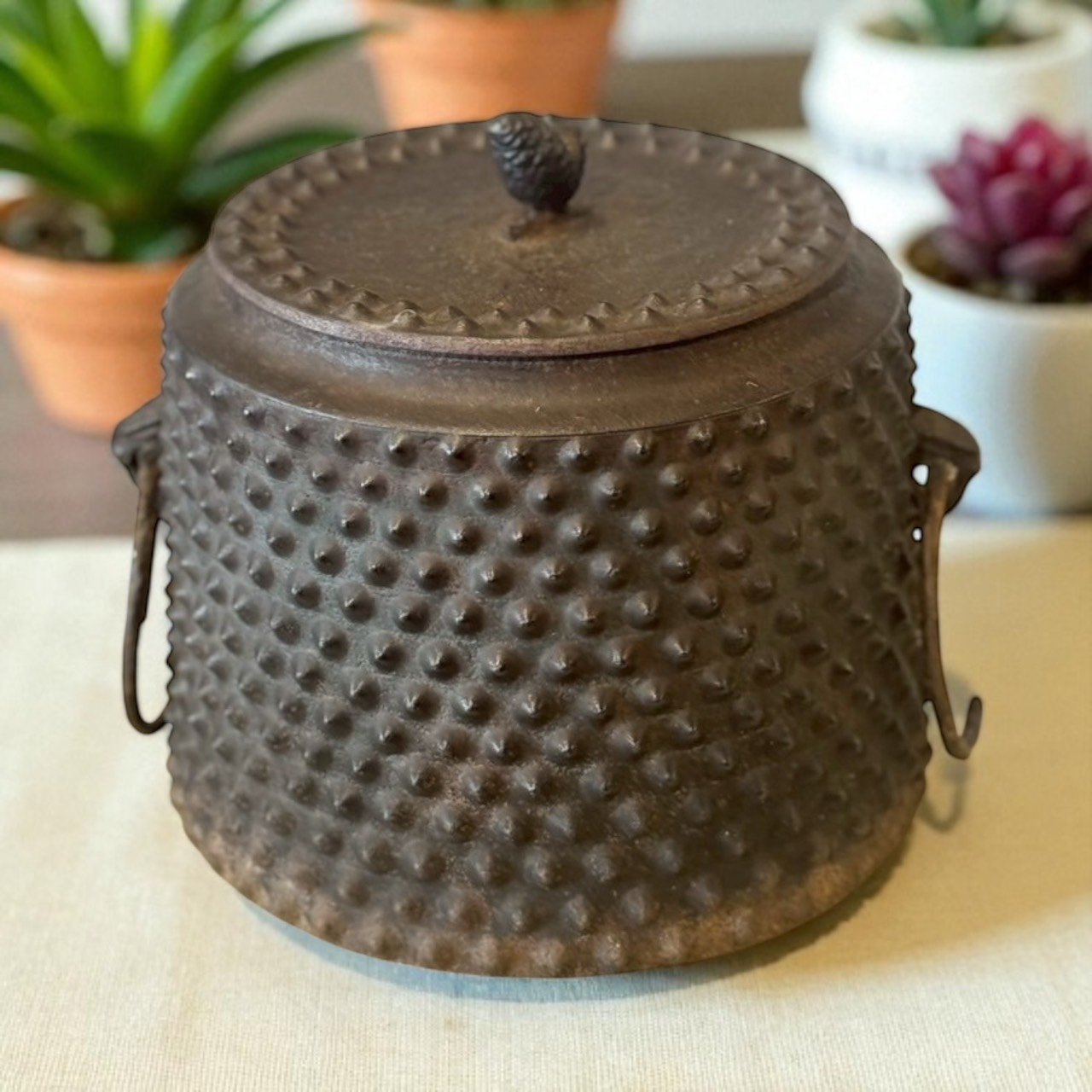
Cast-Iron Kama Kettle, Japan

A traditional Japanese iron kama (tetsubin), likely a Nanbu-style cast-iron tea ceremony utensil. The body is full and thick, covered all over with the arare (hailstone) pattern of raised hemispherical bosses — a classic decorative idiom of Nanbu ironware that also has the practical benefit of improving heating efficiency and heat retention. The lid knob is shaped as a pine cone, symbolizing evergreen longevity and the spirit of Zen, and the two lugs at the sides carry a bail handle, fully preserving the antique form and the craft tradition. It can be used for boiling water at a tea gathering or brewing tea, and also for a scholar's display, an antique collection or as an accent in a room. Owing to its age and use, the interior has some water stains, rust and scale — normal for an old piece.

Price NT$ 4,000≈ US$ 120

Handmade Japanese-Style Shifuku Pouch

A handmade Japanese-style shifuku pouch (しふく / cover pouch), made of a brown-and-beige woven fabric with a geometric family-crest pattern and closed with a fresh-green (wakakusa) cord. It is a small tea-ceremony size, able to protect a small tea caddy (natsume / small chaire) or serve as a pouch for jewelry and small personal items. The pouch is rounded with good volume, and when drawn closed it forms natural pleats, looking handsome both on display and in use.

Price NT$ 850≈ US$ 26

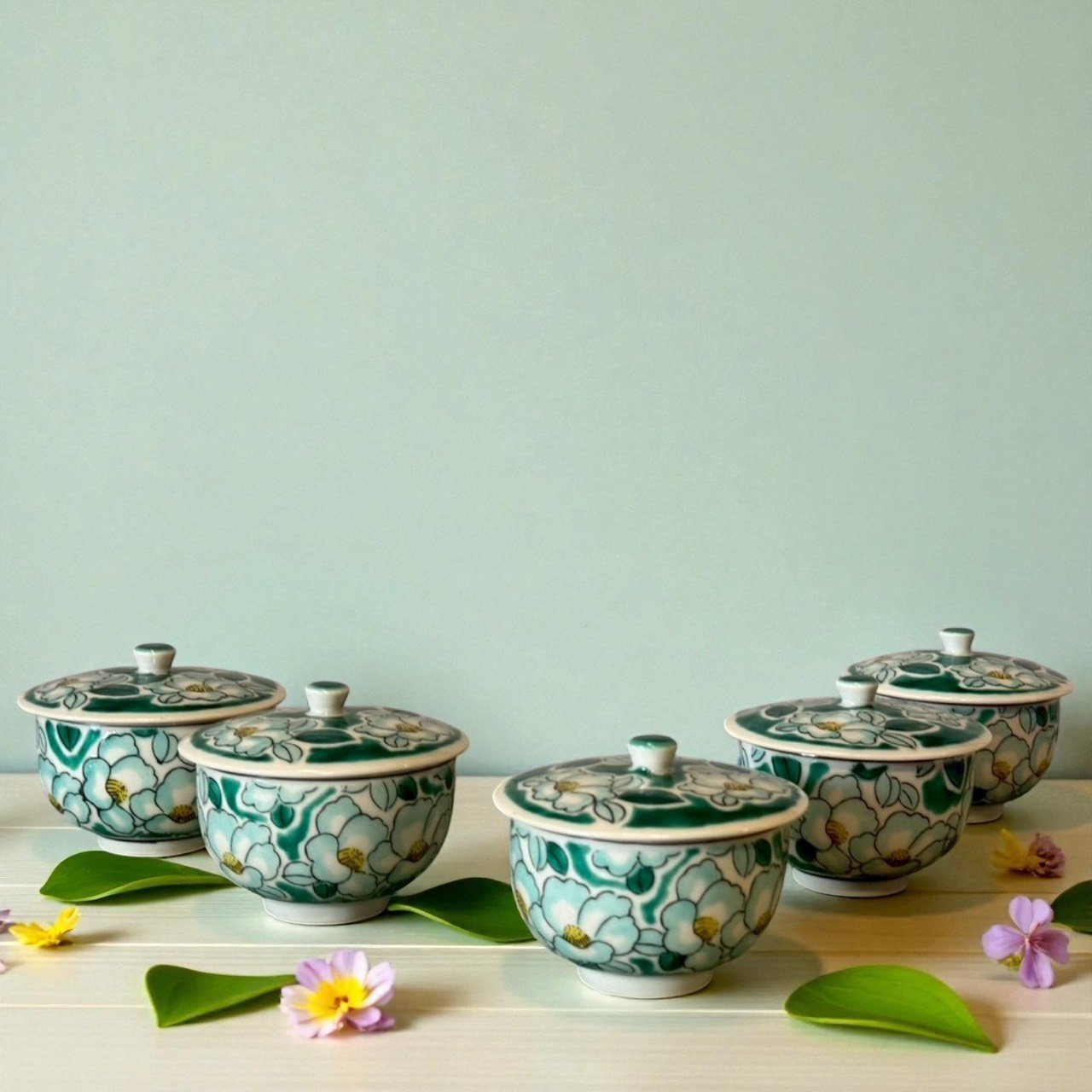
Set of Five Kutani Ware Lidded Cups, Japan

A set of five lidded cups from the renowned Japanese Kutani ware tradition; the bases are clearly marked “九谷 華” (Kutani Hana). The glaze colors are distinctly layered and the patterns delicate and elegant. The set is painted in Kutani's characteristic overglaze enamel technique on a white porcelain body: white flowers on an emerald-green ground, dotted with yellow centers, bright yet with an antique charm — a typical example of the domestic craft aesthetic of the Shōwa to early Heisei period. Kutani ware has developed from the Edo period to the present day and is known for rich colors, bold lines and hand-painted designs. These cups have a green-glaze ground painted with five-petaled white flowers, their centers dotted with golden-yellow glaze, the overall palette clearly layered. The cups are small with rounded lid knobs, and suit a tea setting, desserts or soup alike — everyday Japanese craft objects for both use and display.

Price NT$ 1,500≈ US$ 46
CURATOR'S SPECIAL SELECTION

This Season's Picks · The Beauty of Shōwa Silver and Metalwork

Go to Auctions
Shōwa Metalwork · Selected Silver

1952 Kobe Vintage STERLING SILVER Engraved Jewelry Cabinet

A small jewelry cabinet made in Kobe in 1952, crafted in STERLING SILVER. The double-door body is finely engraved with flowers and foliage, and the doors, hinges and clasps show layers of classical metalwork. Over the years the silver has naturally oxidized into varied tones and signs of use, making the delicate engraving stand out more vividly in light and shadow.

NT$ 88,000 Condition: visually very beautiful
View Details
DASING Japan Art Warehouse antique collection: metal seated figure in the style of Water-Moon Guanyin
BUDDHIST ART

Chinese Antique | Metal Seated Figure in the Water-Moon Guanyin Style

NT$ 30,000

Wearing an ornate jeweled crown, draped in celestial robes and necklaces, the figure sits in the "royal ease" posture, one leg raised and the other hanging naturally, capturing the graceful, relaxed pose of Water-Moon Guanyin. The face is lowered with a calm expression, and the bronze-toned finish is naturally deep and steady — well suited to a tea room, study or quiet space.

Selected Eastern Buddhist Art View Details
AUTHENTICITY & SAFE TRANSPORT

For DASING Collectors · Three Commitments for Peace of Mind

Every piece has weathered centuries. We bring an exacting, professional approach to antique art to every handover and delivery.

Sourced in Japan · Shipped to Kaohsiung

We keep searching all over Japan for antiques and vintage pieces with character — ceramics, tea ceremony utensils, vases, wood carvings, furniture and Shōwa-era goods — and bring them across the sea to DASING.

Real Photos · Shown as It Is

Items are photographed as they are, showing color, texture, detail and actual appearance as closely as possible, so buying online comes closer to seeing them in person.

Vintage Condition · Fully Described

Antiques often show wear, oxidation, kiln flaws, repairs or other signs of age. We show these as fully as we can in photos and item descriptions, so you can understand each piece before deciding to buy.