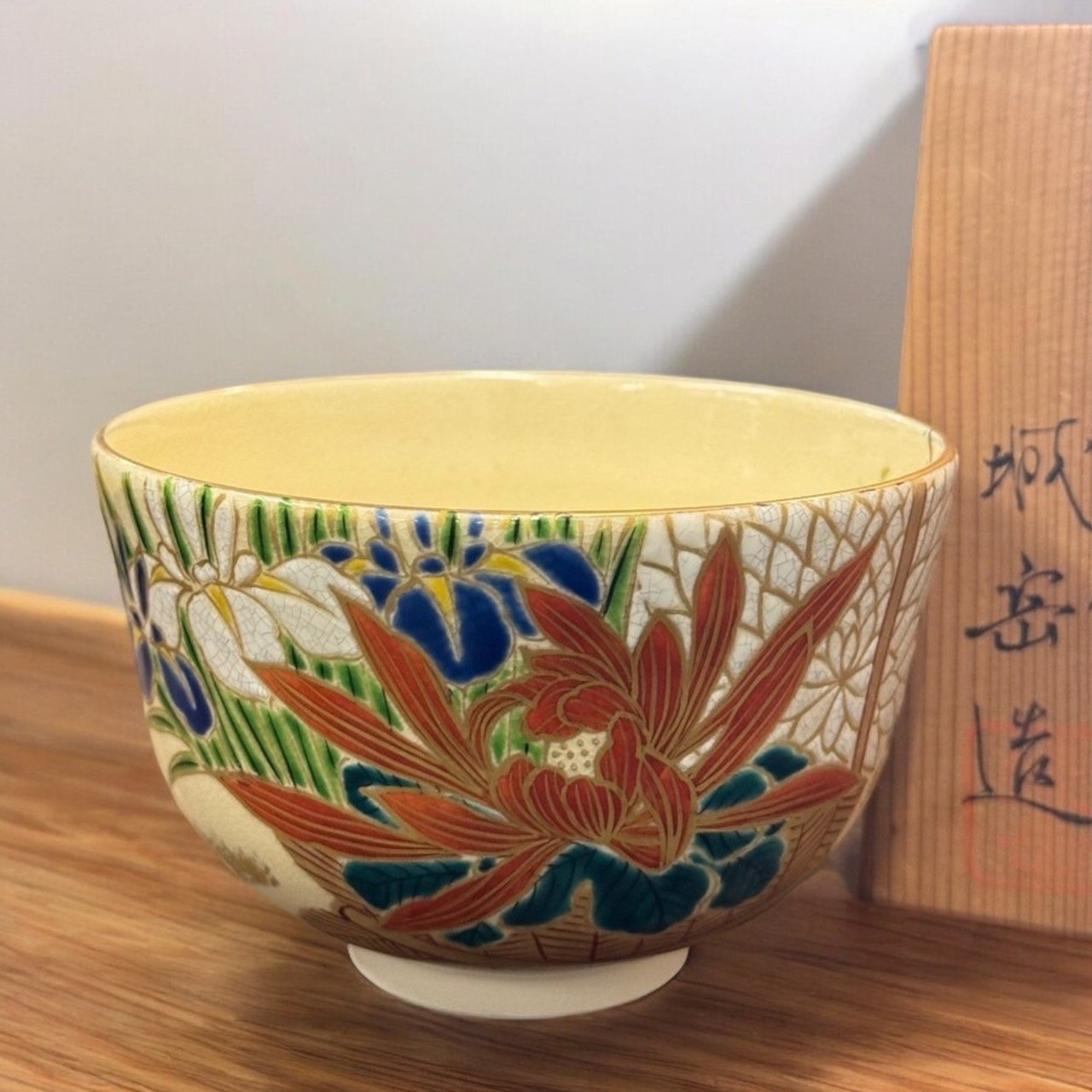
A three-tier porcelain jūbako from the renowned Japanese Hakuhō Kiln (白峯窯), a typical art-craft ceramic of the Shōwa to early Heisei period. The palette centers on vivid vermilion red, sapphire blue and green, with elaborately hand-painted auspicious flowers and gilt decoration, conveying a strong Japanese aesthetic and the atmosphere of traditional festivities. The main exterior motif is the peony (the flower of wealth and rank), symbolizing prosperity and joy, with details such as a seigaiha wave background (symbolizing unbroken good fortune), lattice-lozenge patterns and pine-needle patterns, showing the refined use of the traditional Japanese pattern vocabulary. The center of the lid also has a separately composed bird-and-flower design, adding visual depth. The three tiers can each hold candy, tea snacks, dried goods, jewelry and so on; it can also serve for decoration, storage or display on an offering table, both practical and beautiful. Jūbako of this kind are also indispensable seasonal vessels for the Japanese New Year and festivals, and were once often seen in Japanese homes and at tea gatherings, used for sharing good wishes and welcoming guests.