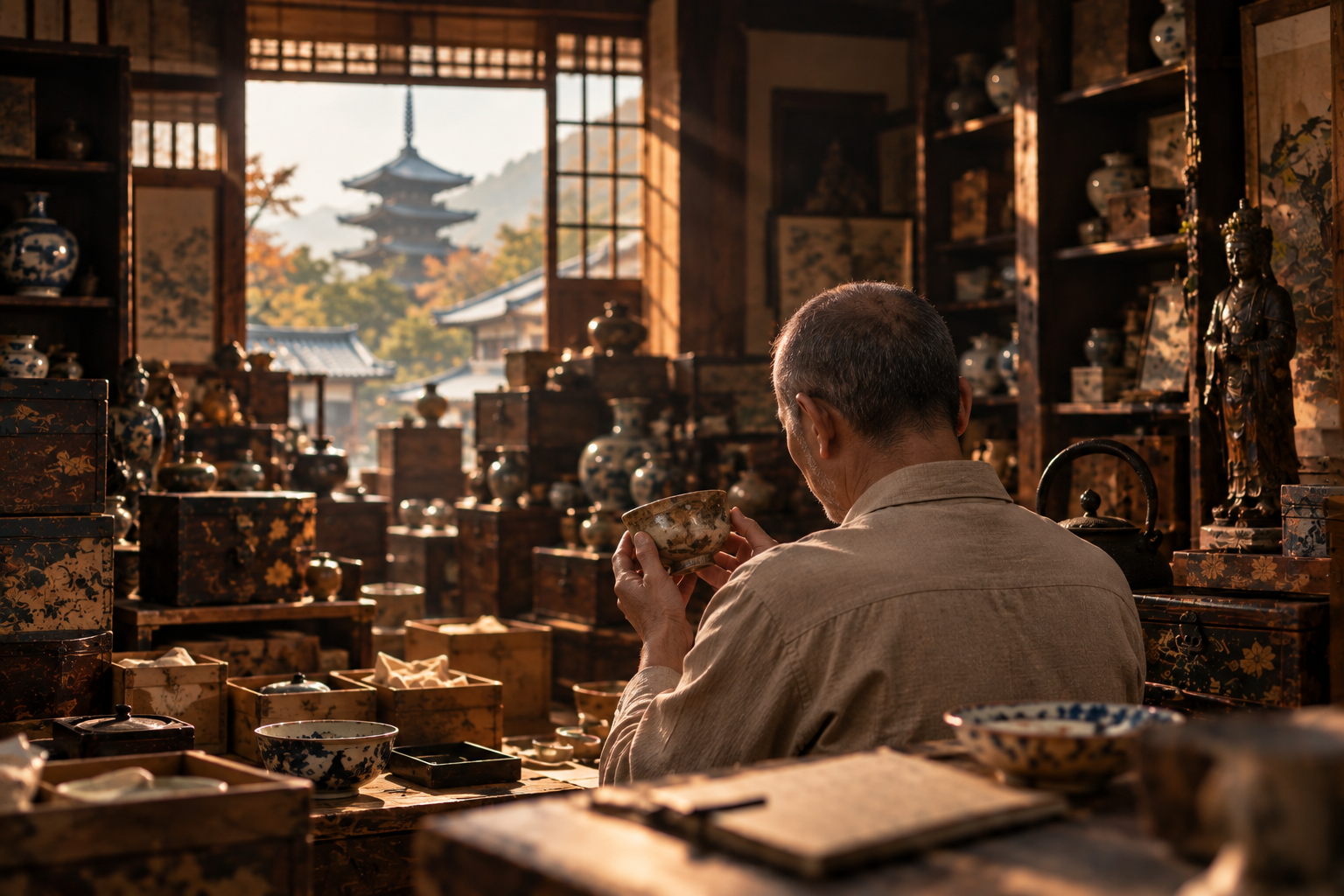
How Do Japanese Antiques Fit into the Modern Home? 5 Styling Ideas That Don't Look Dated
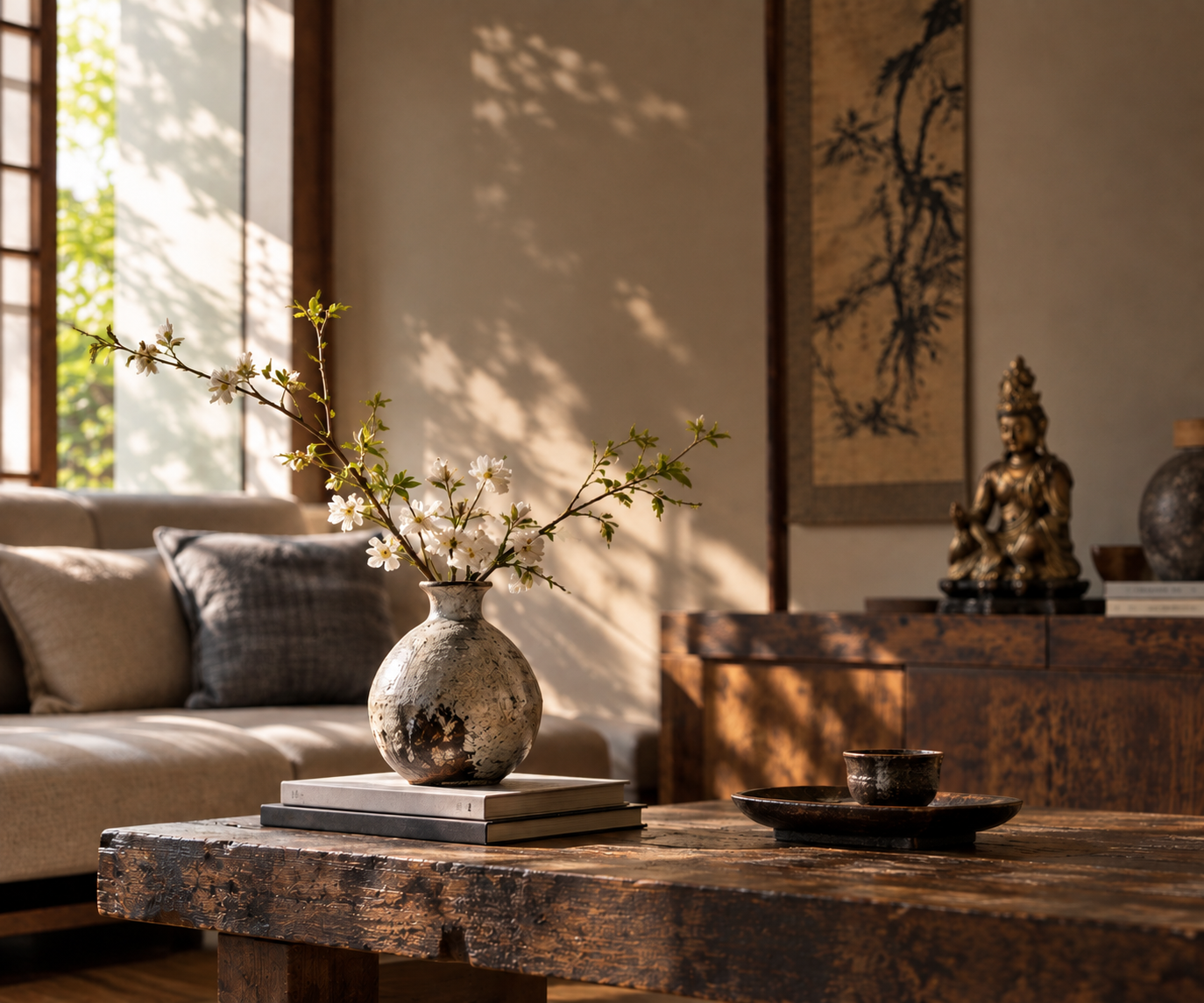
How Do Japanese Antiques Fit into the Modern Home? 5 Styling Ideas That Don't Look Dated
Do you love Japanese antiques, yet worry that in a modern home they will look dated and heavy, or even like bringing an antique shop indoors? In truth, what makes Japanese vintage pieces look good has never been putting out a lot of them, but knowing how to leave empty space and control proportion, so that the objects and modern life set each other off.
01 | Learn to leave space first: one Japanese antique is enough to lead a room
For many people meeting Japanese antiques for the first time, the trouble is not that the pieces look bad but that too many go out at once. A flower vase beside a wood carving, a painting hung behind them, a teapot and small objects on the table as well: every piece has real character, yet together they compete with one another.
The simplest way to bring Japanese vintage pieces into a modern home is to begin with"a single visual focus". In the entryway cabinet, place only one wood carving or one maneki-neko; on the living-room side cabinet, leave only a single old vase; on a study shelf, choose one piece of metalwork, ceramic or folk-craft object. Keep a reasonable amount of empty space around it, and the outline, texture and sense of age of the piece will naturally be seen.
Suitable pieces: wood carvings, Buddhist images, maneki-neko, incense burners, metalwork objects, distinctive ceramics | Suitable spaces: entryway, console cabinet, study, living-room side cabinet
02 | An old Japanese vase × a single stem: more Japanese in feeling than a full arrangement
Japanese antique flower vases are among the easiest vintage pieces to bring into a modern home. They ask for no change to your interior, and you do not need a traditional tatami room; a wooden table, one vase and a modest amount of greenery are enough to give a room a quiet, natural air.
Japanese vases with kiln transformation (yōhen), brushed slip, iron glaze, celadon, sometsuke (blue-and-white) or visible handmade marks already carry a great deal of expression. There is no need to fill them with flowers: a single branch with a good line, one or two seasonal blooms, or even dried branches leave more room to breathe.
If your home leans towards modern minimal, muji-style, wabi-sabi or natural wood, choose pieces with low colour saturation and a strong earthen quality first. Where the colours of the room itself are very clean, a Kutani ware, aka-e (red overglaze) or otherwise brightly coloured vase can instead become the visual highlight.
03 | Antique furniture × modern furniture: not making the whole room retro actually wears better
The most captivating thing about Japanese antique furniture is the colour the wood takes on after years of use, the oxidised metal fittings and the feel of it under the hand. But if an entire room is filled with dark antique furniture, in an ordinary modern home it can indeed become heavy.
An easier way to succeed is to use"one old piece among several new ones". For example, place one old Japanese wood cabinet beside a modern sofa; add an antique cupboard to a clean dining room; pair a simple bed frame in the bedroom with a small apothecary chest or chest of drawers. The new furniture keeps daily life working, while the old furniture supplies texture and story.
Nor do you need to insist that every wood tone match exactly. The cleanness of new timber set beside the varied depth of old timber in fact makes layers easier to build. What really needs controlling is number and scale: for a large tansu chest in particular, check circulation, daylight and the proportions of the wall first.
04 | Tea utensils are not only for collecting: letting Japanese vintage pieces return to daily life
Japanese tea utensils such as the chawan, chaire, mizusashi, tea saucer, tetsubin and incense container often strike newcomers as very specialist, as though one had to understand the whole tea ceremony before owning any. In fact, as long as the purpose and the safe condition of a piece are respected, many old tea wares can also be enjoyed in a more everyday way.
A single chawan can stand alone on a bookshelf or a tea table; a tetsubin can become the visual centre of a tea corner; small incense containers and chaire suit being gathered on a tray as a small scene. This kind of display does not set out to imitate a traditional tea room; it brings the proportion, the materials and the empty space of Japanese objects into your own life.
If a vintage piece is actually to come into contact with food or be heated, first confirm its material, its state of preservation, any repairs and the use intended for it. For pieces of unclear date or uncertain condition, keeping them purely for display and enjoyment is the safer course.
05 | Shōwa-period pieces × modern spaces: a little contrast gives a home character
Japanese antiques are not only tea utensils, ceramics and antique art. Signboards, toys, clocks, household utensils, shop fittings and all kinds of retro odds and ends left from the Shōwa period have an appeal that is entirely different.
These Shōwa-period Japanese pieces suit modern spaces particularly well, precisely because they carry strong imagery, colour and period design. An industrial-style room can take an old signboard, an old clock or metal objects; a clean modern home can create contrast with one amusing Shōwa toy, a maneki-neko or a small retro item.
Restraint is still the key. Rather than gathering all the retro pieces in one place, choose one or two you genuinely like and let them be a small surprise in the room. This kind of new and old side by side usually feels more natural than deliberately recreating a Shōwa-era room.
4 principles for bringing Japanese antiques into a modern home
If the methods above are boiled down, there are really four things to remember:Fewer pieces, more empty space, more natural materials, and choose what you genuinely like.Japanese vintage pieces do not have to belong to the same period as every other piece of furniture in your home, and there is no need to redecorate a whole room for the sake of one old vase.
A room that truly wears well is usually a modern, lived-in space with a small number of objects that carry a sense of time. It is new beside old, smooth beside weathered, the regular beside the imperfection of handwork, that gives a home an expression of its own.
The wear, colour variation, oxidation, changes in the glaze, small scratches or past repairs on a vintage piece need not all be counted as faults either. When buying Japanese antiques, what matters more is understanding the actual condition, deciding whether you accept it, and then choosing pieces that really suit your life and your space.
Japanese Antiques at Home: Frequently Asked Questions
1. Will Japanese antiques look dated in a modern home?
Not necessarily. What matters most is controlling the number of pieces and leaving empty space. Let modern furniture carry the main functions, then use one or two Japanese vintage pieces as the visual focus; this usually feels more natural than a full set of retro furniture.
2. What is the best thing to start with when buying Japanese antiques for the first time?
You can begin with smaller pieces that are easy to move and easy to combine: flower vases, tea wares, small wood carvings, incense burners or Shōwa-period objects. Notice first which materials and which sense of age you like, then build up a direction for your collection step by step.
3. Which Japanese vintage pieces suit a wabi-sabi space?
Vases with a clay-like quality, naturally glazed pottery, old woodwork, ironware and folk-craft pieces with natural wear all suit it well. Rather than chasing what is simply old, what matters more is natural material, low colour saturation and restraint in decoration.
4. Does a Japanese antique vase have to hold flowers?
No. The form, the glaze colour and the marks of the maker's hand are worth looking at in themselves, so the vase can be displayed on its own. If you do arrange flowers, a single branch or a small amount of seasonal material usually brings the vessel out better.
5. How do you place Japanese antique furniture without making a home too dark?
Avoid massing a lot of dark antique furniture in one place; pair it with white or grey walls, pale flooring, natural light and clean modern furniture, letting the antique pieces supply visual weight and a sense of time.
6. Can Japanese tea utensils be used day to day?
That has to be judged piece by piece, according to material and condition. Where food, holding liquid or direct heating is involved, first confirm the intended use, any repairs, cracks or damage, and safety. When in doubt, we suggest keeping the piece for display and enjoyment.
7. Is a vintage piece still worth buying if it has cracks, wear or oxidation?
It is necessary to distinguish the natural traces of age from damage that affects structure or function. Collecting vintage pieces does not mean you must accept every flaw; the point is whether the condition is clearly described, and whether you accept the current state of the piece.
8. Do Japanese antiques suit a small home as well?
Very much so. A small space is if anything better suited to few but good: one vase in the entryway, one wood carving on a shelf, or one ceramic on a low cabinet is enough to establish a clear atmosphere.
9. What interior styles suit Shōwa-period Japanese pieces?
Modern, industrial, retro and mixed interiors can all use them. Shōwa pieces often carry quite bold imagery and colour, so we suggest treating them as an accent rather than letting every object compete for attention at once.
10. When choosing Japanese antiques, is older always better?
Not necessarily. Date is only one piece of information. The craft, the form, the state of preservation, the information on provenance, the rarity, and whether you genuinely like the piece all matter just as much. Where reliable material on date or maker is lacking, it is also unwise to decide either from appearance alone.
Let one Japanese vintage piece become the most storied view in your home
From flower vases, tea utensils, ceramics, wood carvings and furniture to Shōwa-period pieces, DASING keeps bringing back all kinds of antiques from Japan. Look slowly, search slowly; perhaps the next old piece that suits your life is here.
Go to DASING to look for Japanese vintage pieces