Seek, Visit, Collect | How We Find Antiques Worth Bringing Home from Japan
On every sourcing trip, we never know what we will come across next — perhaps an old chawan (tea bowl), a folk-craft wood carving, or a vintage Japanese object that suits your living space just right. Welcome to DASING Japan Art Warehouse; come and see what we have recently brought back from Japan...
Seeking out the mellow traces left by time
Our days spent looking for antiques in Japan
Some things are not loved because they are perfect.
They are loved because, after all that time, they still keep a shape of their own.
For DASING Japan Art Warehouse, the search forJapanese Antiqueshas never meant taking a shopping list and buying up the goods we need one item at a time.
More often it is like a treasure hunt with no set answer.
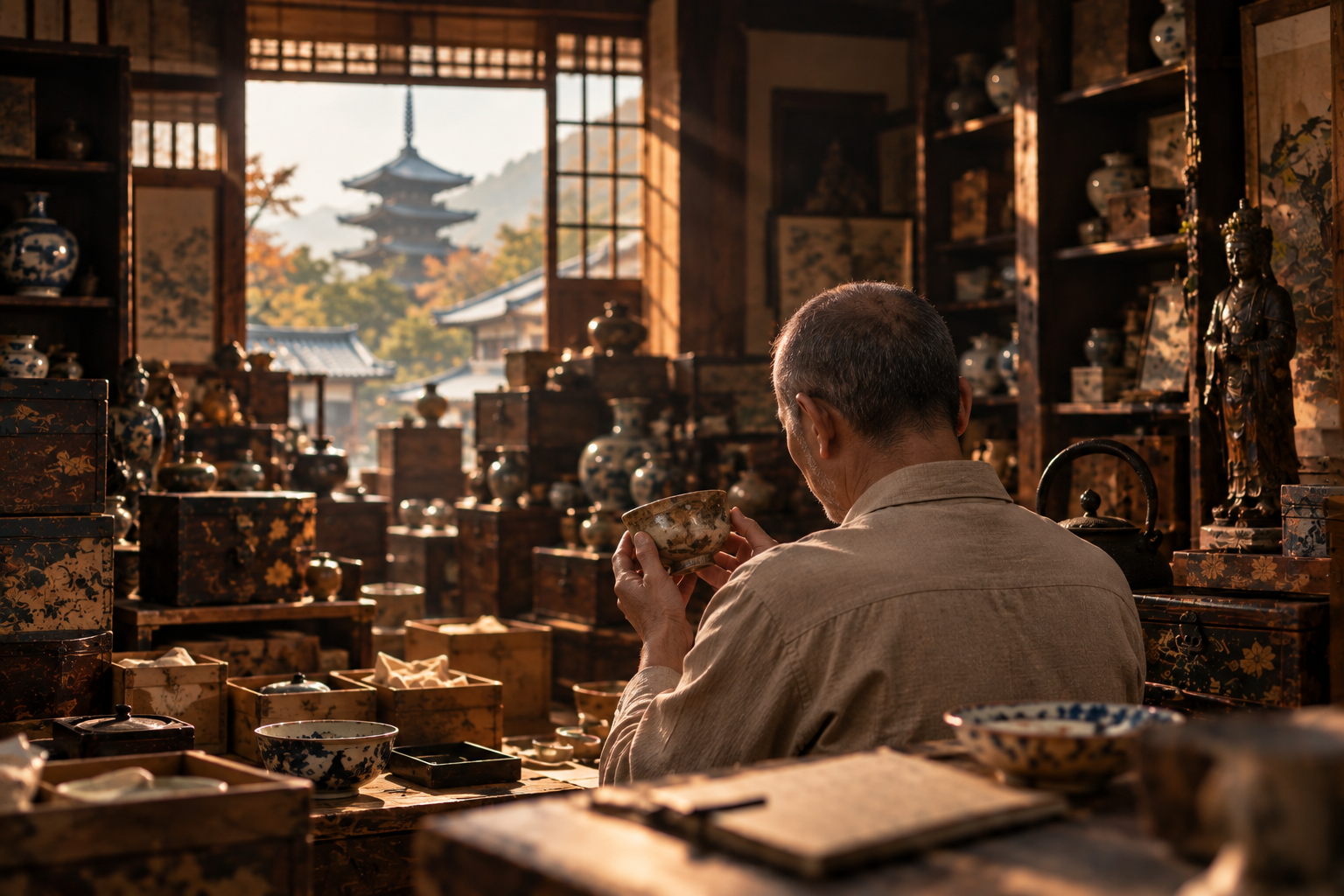
We travel to Kyōto, Nara, Ōsaka and elsewhere, moving through antique fairs, flea markets and all the places where old things gather. Sometimes we dig through a whole row of unremarkable boxes, sometimes we stop in a corner piled with objects; and sometimes it is simply an old tea bowl, a wood carving, or a vase left with a beautiful colour by the years, that makes us look twice.
What we want to bring back is exactly this kind of"worth stopping to look at"old thing.
"What is truly captivating about an antique is usually not how new it is,
but what time has left upon it."
The best part of looking for antiques is that you never know what you will meet next
That is probably also why we have always loved Japanese antiques.
New goods can be searched for by model, size and specification, butJapanese vintage piecescannot. Two pieces may both be tea bowls, yet the glaze colour, the kiln transformation and the traces of use differ in every one; two pieces may both be wood carvings, yet the colour of the wood, the marks of the blade and the expression left by time can never be exactly the same.
So on every hunt, we do not really know what we will bring back that day either.
We may set out looking for tea utensils and end up drawn to an old Shōwa signboard in a corner; or we may simply pass a pile of wooden boxes and, on opening one, find an old vase with real character inside. These meetings that nothing announces turn out to be the most captivating part of looking for antiques.
At an antique fair there are no answers laid out in neat rows
For anyone who likes old things, the antique fairs and flea markets around Japan are places where it is easy to lose track of time.
Ceramics, lacquerware, ironware, wood carvings, tea utensils, flower vases, Buddhist implements, antique furniture, Shōwa odds and ends: objects of different periods and different uses sit together, and it can even look a little disordered. But the genuinely interesting things are often hidden in those unremarkable corners.
So we are used to looking slowly and searching slowly. We look at form, at material, at the traces of use, and also at whether a piece, placed in life as it is lived today, still gives anyone a reason to keep it.
What we look for is not necessarily the most splendid piece
Many people who come for the first time tocollecting Japanese antiqueswill notice date, maker, kiln and even market price first. That information certainly matters, but when we are out searching we pay attention to one other thing as well — whether it has a flavour of its own.
Some pieces are not splendid at all; at first glance they can be very plain. A tea bowl with kiln transformation, an old wooden object worn smooth and mellow, a slightly oxidised tetsubin, or a piece of furniture left with fine traces by years of use: these are the ones that wear better the longer you look at them.
This is also what makes the JapaneseWabi-sabiaesthetic so captivating. Beauty does not have to come from being whole and flawless; sometimes it comes precisely from those changes of time that cannot be copied.
The traces left by the years are part of an old object to begin with
An antique is not a new product.
It may have wear, fine scratches, changes of colour, oxidation, kiln marks, shrinkage of the timber, and even traces of having been used and repaired.
For us these are not simply imperfections. They are also the proof that an old object has truly lived through time. DASING therefore hopes to keep as much as possible of a vintage piece's original character, and to show, through photographs of the actual item and the item description, what each piece really looks like now.
From searching in Japan to meeting again in Kaohsiung
What we bring back from Japan is a little different every time.
Sometimes there are more ceramics, sometimes wood carvings, ironware and furniture, and occasionally Shōwa household goods or folk-craft pieces that surprise even us.
Thesevintage Japanese objects (kodōgu)cross the sea to Kaohsiung and finally arrive at DASING Japan Art Warehouse. One by one they are cleaned up, photographed and recorded, and then they wait for the next person who will like them.
And because antiques are mostly one of a kind, the view inside the warehouse is a little different after every delivery.
Collecting does not have to mean putting antiques in a glass case
We have always felt that an old thing does not necessarily look its best inside a display cabinet.
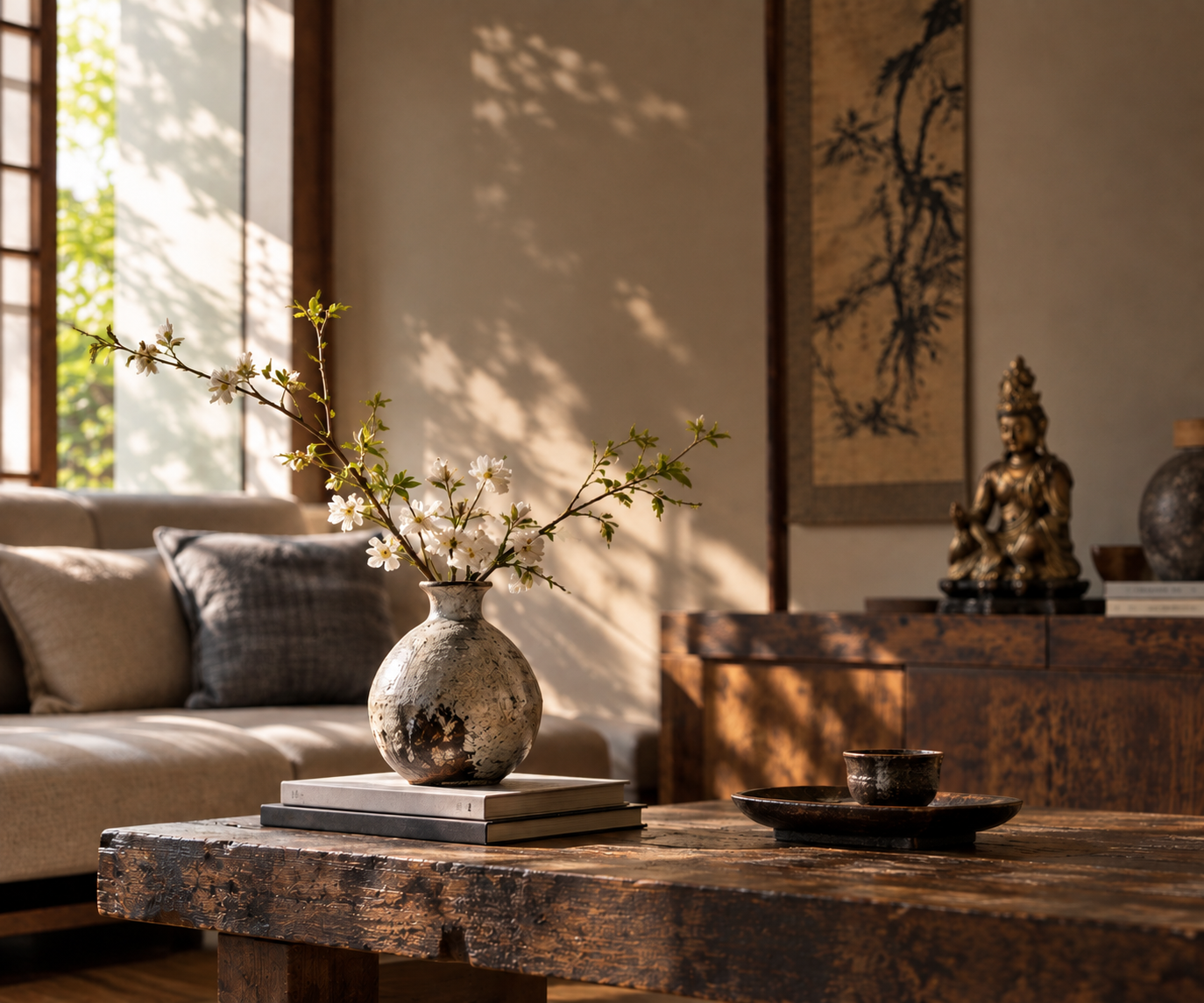
An old vase with a seasonal branch in it; an old wooden table set in a modern living room; a tea bowl taken up again to drink from; a tetsubin warm once more beside the tea table; wood carvings, Buddhist implements and folk-craft pieces can also become a very quiet corner of a modern space.
Antiques and modern life are not as far apart as one imagines. Sometimes one piece is all it takes to give a clean, spare room an added layer left behind by time.
We will keep on searching
After working with antiques for a long time, you slowly notice something rather interesting.
What stays with you is usually not the most expensive thing, but a day when, in some unremarkable corner, you suddenly came across an old object you really liked.
That feeling is hard to arrange in advance.
So we will go on walking, go on looking, go on searching. From antique fairs and flea markets in Japan to box after box of old things waiting to be opened again, we bring back the pieces that, after all that time, still seem to us worth attention.
DASING Japan Art Warehouse
What we look for is not only antiques.
It is the things that, after time has passed, are still worth keeping.
Find the Japanese vintage piece that is meant for you
On every hunt, there is no knowing what the next piece will be.
It may be an old tea bowl, a folk-craft wood carving, or a piece of kodōgu that happens to suit your living space.
You are welcome to look at the Japanese vintage pieces that have recently arrived at DASING.
Related topics: Japanese antiques, Japanese vintage pieces, vintage Japanese objects (kodōgu), collecting Japanese antiques, Japanese mingei folk craft, wabi-sabi aesthetics, tea ceremony utensils, Japanese ceramics, antique furniture, Shōwa-period pieces