2025 Feng Shui for a New Home: What to Place and What to Avoid
Modern home feng shui meets Japanese antiques. People today care more and more about quality of life, and feng shui has become an important consideration for many when creating a comfortable home. Because

Modern Home Feng Shui and Japanese Antiques: A Perfect Match
People today pay more and more attention to the quality of daily life, and feng shui has become an important consideration when creating a comfortable home. Interior arrangement is not only a matter of visual beauty; it also affects the mood and the fortune of those who live there. In feng shui, the circulation of energy through a space is believed to have a profound influence on family harmony and on personal fortune. So how should a home be arranged so that it is both beautiful and sound in feng shui terms? Among the approaches common today, combining a room with Japanese antiques stands out: these are works of art that carry history and fine craftsmanship, and through them we can bring a distinctive cultural character and a deeper energy into the home.
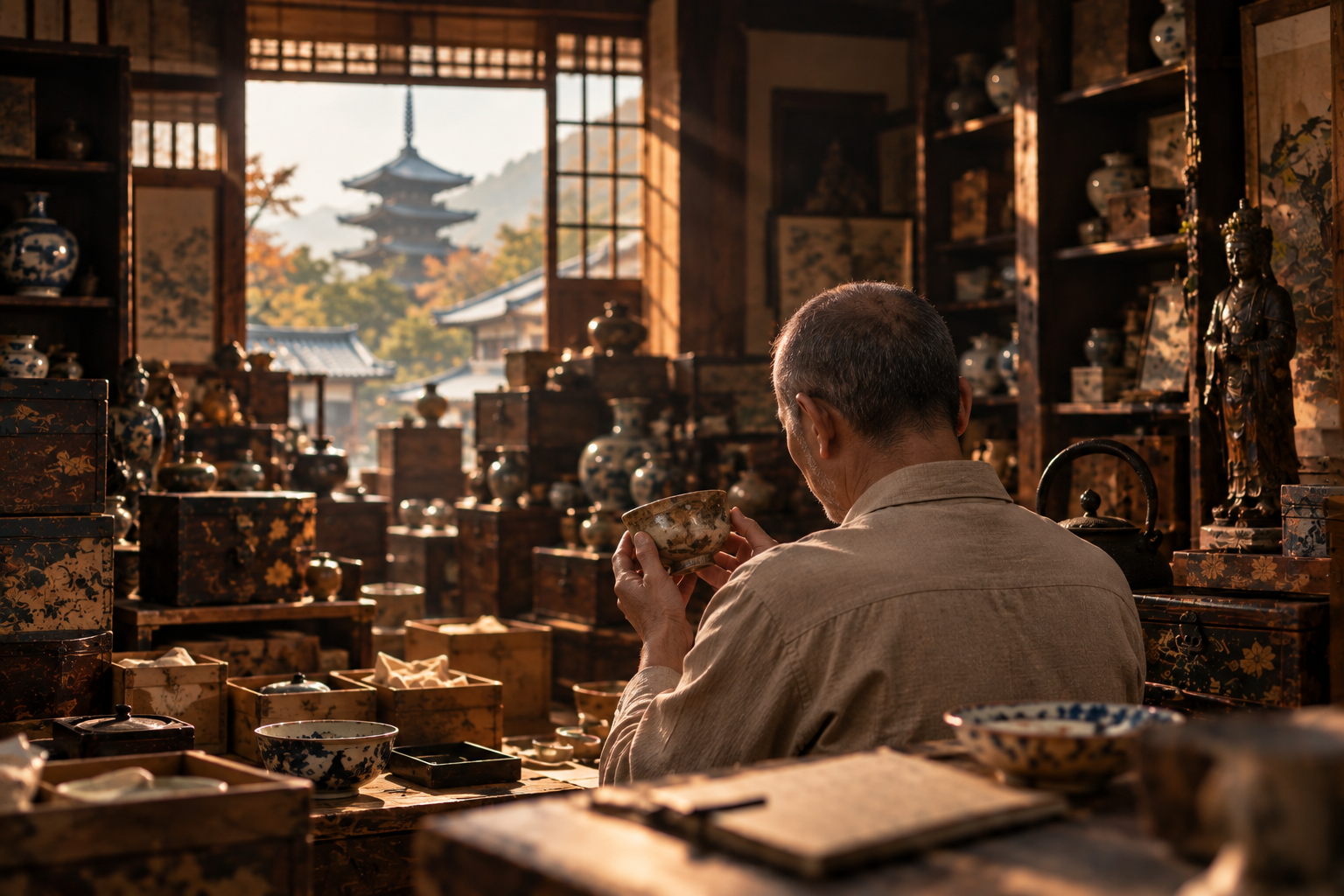
Japanese antiques carry a long history and a depth of culture: tea ceremony utensils, antique folding screens, ceramic flower vases and the like. Such objects are not merely decoration; they also bring calm to the mind and balance to a space. From the feng shui point of view, Japanese antiques have been weathered by time and hold the energy of a "qi field", and placed well they can lift the fortune of a home. Below is a brief explanation of how Japanese antiques are used in feng shui:
How Japanese Antiques Are Used in Feng Shui
- Tea ceremony utensils: calm for the mind. Feng shui effect: tea utensils stand for peace and concentration; placed in the living room or the study they create a quiet atmosphere that encourages family harmony and clearer thinking. Placement tips: set the teapot and cups on a wooden tray near a window or beside green plants, so that they take in natural light and positive energy. Note: avoid dark, damp places, where negative energy can build up.
- Antique folding screens: division and beauty. Feng shui effect: a screen divides a space and blocks harmful energy; used at the entrance or behind a sofa, it steadies the energy of the room. Placement tips: choose a screen with a flower-and-bird motif, which is auspicious, and set it near the entrance to screen out unwanted energy from outside. Note: avoid overly busy patterns, which can feel visually oppressive.
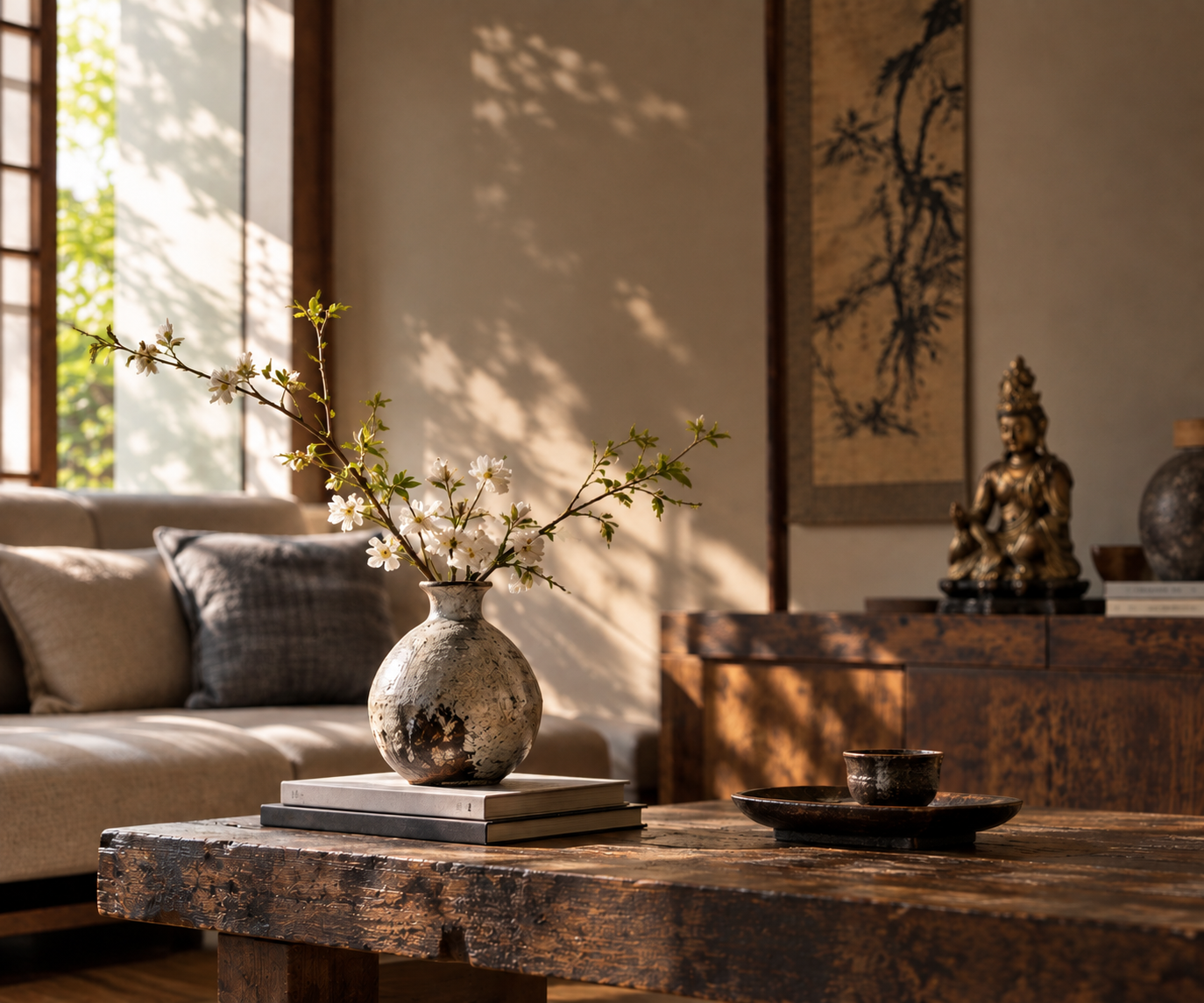
- Ceramic flower vases: full of vitality. Feng shui effect: a ceramic vase stands for vitality and life force; with fresh flowers or green plants it raises the sense of happiness in a home. Placement tips: suited to a dining table or a bookshelf, and a low vase makes the space feel more open. Note: change the flowers and greenery regularly, as withered plants disturb the flow of energy.
- Antique lamps: warmth and stability. Feng shui effect: antique lighting stands for light and steadiness; in the living room or the bedroom it disperses negative energy and brings warmth. Placement tips: place one beside the sofa or on a bedside table, and choose a soft tone of light. Note: do not leave a lamp damaged, and keep it clean and tidy.
Feng Shui Placement Points for Different Rooms
- Living room: harmony at the centre and an open flow of energy. The living room is where guests are received and the family gathers, so its energy should be open and flowing. Furniture should not block the movement of energy, especially along the path between the front door and the windows. In the centre of the room, or in another prominent place, set a Japanese ceramic piece or an ikebana vessel rich in history. Japanese ceramics are known for their simple, natural lines and convey a calm, accommodating atmosphere. Notes: For the ceramics, plain earth tones are recommended, since earth is the steady element among the five elements and helps the members of the household keep an even temper. Make sure the vase does not block a walkway or form a sharp angle, which would disrupt the flow of energy.
- Dining room: encouraging conversation and the energy of food. The dining room is where the family shares food and feelings, so its energy should be warm and comfortable. A round or oval table is considered ideal, as it avoids sharp corners. Set a lacquerware tray or a wooden tea set on the table to give the meal a stronger sense of ritual. The sheen of lacquerware is also said to lift the energy of the food, a symbol of an abundant life. Notes: Do not use damaged tableware, since in feng shui a broken object stands for a broken relationship or broken fortune. Lighting in the dining room should be soft, in keeping with the natural texture of antiques, for a warm rather than glaring atmosphere.
- Study: sharpening focus and creativity. A study should be arranged so as to aid concentration; clutter and overly showy decoration scatter the attention. The desk should have a wall behind it and, as far as possible, should not face a door or a window, so that you feel secure and settled. Hang an ink painting in the study, or place a small Zen object such as a miniature dry landscape garden. The flowing brushwork of ink painting can strengthen creativity, while the small dry garden stands for peace of mind. Notes: Keep the arrangement simple and orderly; too much decoration weakens the focus of the energy. Use soft lighting and avoid strong direct light, which suits the reserved character of antiques far better.
- Bedroom: creating a quiet, relaxing space. The bedroom is for rest and sleep, so avoid anything distracting, such as electronic devices or sharp-edged ornaments. The bed should not face a door or a window directly, as this leaves people uneasy. Choose a washi paper lantern as a bedside lamp: the soft light through the paper brings warmth and comfort to the room. A pair of wind chimes at the window is another idea, as the sound they make in a light breeze settles the mind. Notes: Place wind chimes carefully so that they are not too loud, or they may disturb sleep. Natural, soft colours are recommended for the bedroom, complementing the pared-back beauty of antiques.
- Entryway: the door through which good energy enters. The entryway is the first gate for positive energy coming into a home, so keep it clean and tidy and do not let shoes or clutter pile up. A mirror should not face the front door directly, or it will reflect wealth back out. A maneki-neko (beckoning cat) or an antique teapot at the entrance stands for welcoming blessings and good luck. The Japanese maneki-neko, with its endearing shape and auspicious meaning, brings cheer and prosperity into a home. Notes: The maneki-neko should face the front door, a sign of drawing in good fortune from outside. The entryway should be brightly lit and in keeping with the style of the antiques, so that anyone coming in feels at ease at once.
Frequently Asked Questions
How do I choose the Japanese antiques that suit me?
Choose according to your own taste and the overall style of your home, together with feng shui considerations. If your home is Japanese and minimalist, for example, ceramic vases or tea ceremony utensils fit well. For a modern interior, antique lamps or a folding screen are excellent choices.
Do Japanese antiques need special cleaning and care?
Yes. Care matters a great deal. Ceramics should be protected from hard knocks, screens from damp, and the wiring and bulbs of lamps should be checked from time to time. Proper care extends their life and preserves their energy field.
Which places in the home are not suitable for antiques?
In feng shui terms it is best not to place antiques in the bathroom or the kitchen, where damp is heavy and may affect the energy of a piece. Cluttered corners should also be avoided, as they disturb the flow of energy.