Live inventory from DASING's main warehouse | 235 pieces available
[ DASING Collection · Available Now ]

Available Now · Refined Antiques Where Time Stands Still

DASING Japan Art Warehouse currently has 186 pieces online, including tea ceremony utensils, Ko-Imari porcelain, maki-e lacquer and metalwork from the Edo to Shōwa periods. Each comes with its history and a record of its craftsmanship, awaiting the discerning collector.

100% direct from Japan More than vintage pieces — a slice of Japanese history worth collecting
Showing 91 - 99 (235 pieces in total)

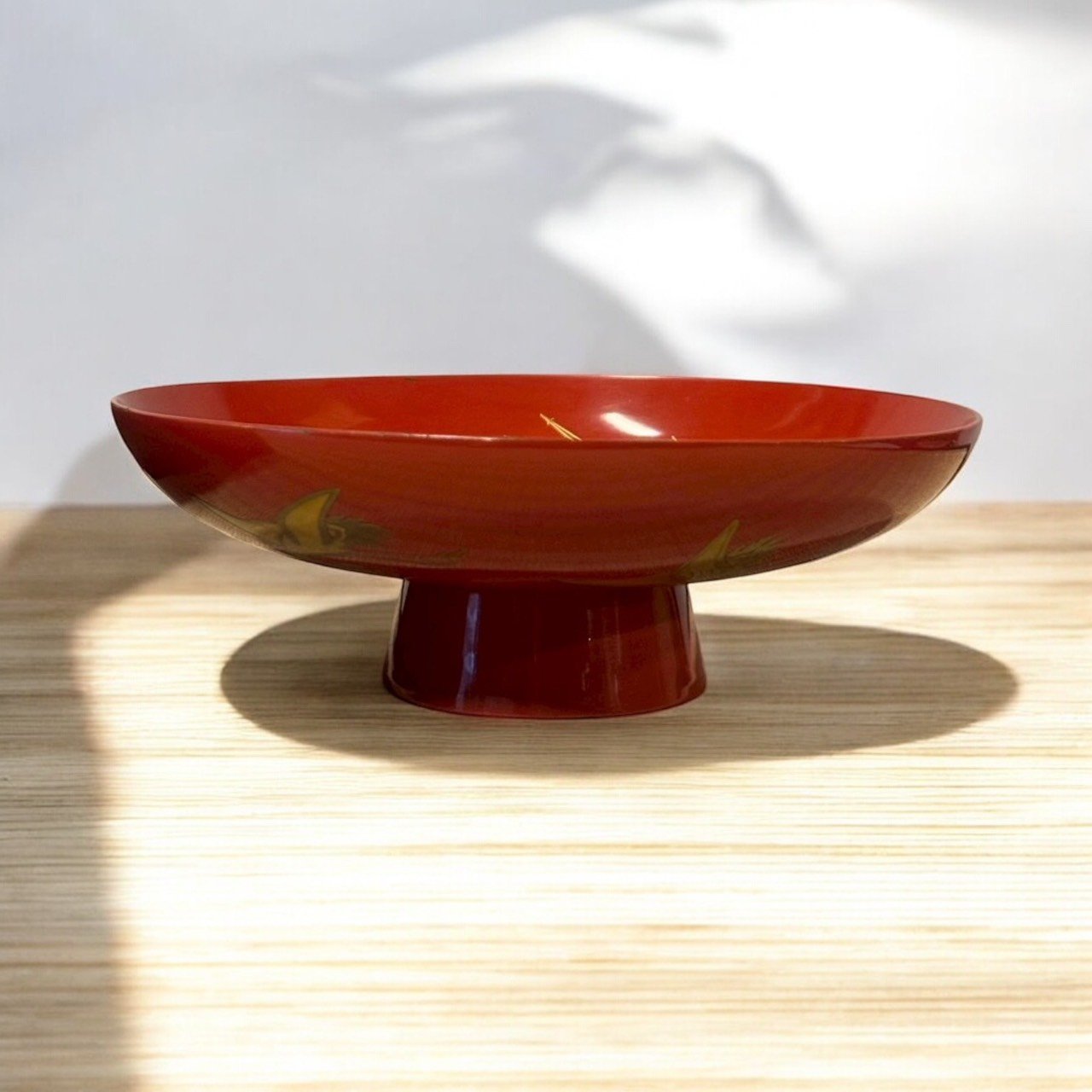
Traditional Japanese Lacquer Footed Stand (Takatsuki)

A Japanese footed lacquer vessel, or takatsuki, coated all over in vermilion lacquer, the top painted in fine gold brushwork with bamboo shoots and grapes, balanced in composition and delicate in execution. Bamboo shoots symbolize “endless renewal of life” and grapes “many children and much happiness”; the designs carry meanings of abundance and good fortune, and such vessels are often used for celebrations, offerings, weddings or congratulatory occasions. The takatsuki (たかつき) is one of Japan's traditional vessels for presenting food, with origins traceable to the Nara and Heian periods; it is often seen in offerings before the gods, among aristocratic utensils, in the tea ceremony and in festival rituals — a form of strong ceremonial and cultural significance.

Price NT$ 2,000≈ US$ 63

Tachikichi Aka-e Two-Tier Confectionery Box, Japan

A two-tier porcelain confectionery box from the well-known Japanese maker Tachikichi kiln (Tachikichi-sei), decorated in the traditional Japanese aka-e technique, with vivid red and green enamels hand-painting auspicious motifs such as plum blossoms, phoenixes and scrolling branches. The designs are evenly distributed over the upper and lower boxes, both beautiful and practical — a representative piece of Shōwa-period vessels for daily life and festivities. The base bears a seal-script “橘吉” (Tachikichi) mark. Tachikichi is one of Japan's modern brands of mass-produced fine porcelain, long supplying department-store channels with high-quality tableware and ceramic utensils, and was widely loved by households and tea gatherings in the Shōwa and early Heisei periods.

Price NT$ 1,500≈ US$ 47

Hakuhō Kiln Gilt Hand-Painted Three-Tier Confectionery Box, Japan

A three-tier porcelain jūbako from the renowned Japanese Hakuhō Kiln (白峯窯), a typical art-craft ceramic of the Shōwa to early Heisei period. The palette centers on vivid vermilion red, sapphire blue and green, with elaborately hand-painted auspicious flowers and gilt decoration, conveying a strong Japanese aesthetic and the atmosphere of traditional festivities. The main exterior motif is the peony (the flower of wealth and rank), symbolizing prosperity and joy, with details such as a seigaiha wave background (symbolizing unbroken good fortune), lattice-lozenge patterns and pine-needle patterns, showing the refined use of the traditional Japanese pattern vocabulary. The center of the lid also has a separately composed bird-and-flower design, adding visual depth. The three tiers can each hold candy, tea snacks, dried goods, jewelry and so on; it can also serve for decoration, storage or display on an offering table, both practical and beautiful. Jūbako of this kind are also indispensable seasonal vessels for the Japanese New Year and festivals, and were once often seen in Japanese homes and at tea gatherings, used for sharing good wishes and welcoming guests.

Price NT$ 2,500≈ US$ 79

Antique Carved Wooden Fish Figure with Wooden Box, Japan

This piece is a fine example of old Japanese woodcarving, carved from solid, heavy old wood, the fish lively in its proportions and natural in spirit. It is estimated to date from around the early Shōwa period or earlier; through long years of veneration and storage, the surface has developed a natural patina and mottled marks of age, giving it particular antique charm and historical value. The fish is rendered realistically: the head full and rounded, the eyes slightly bulging, the fins and tail full of dancing movement — the curve of the tail especially natural, revealing the carver's skill and ingenuity in working curved wood. The overall bearing is generous, with a strong visual presence and a quiet, solemn artistic air.

Price NT$ 8,800≈ US$ 275

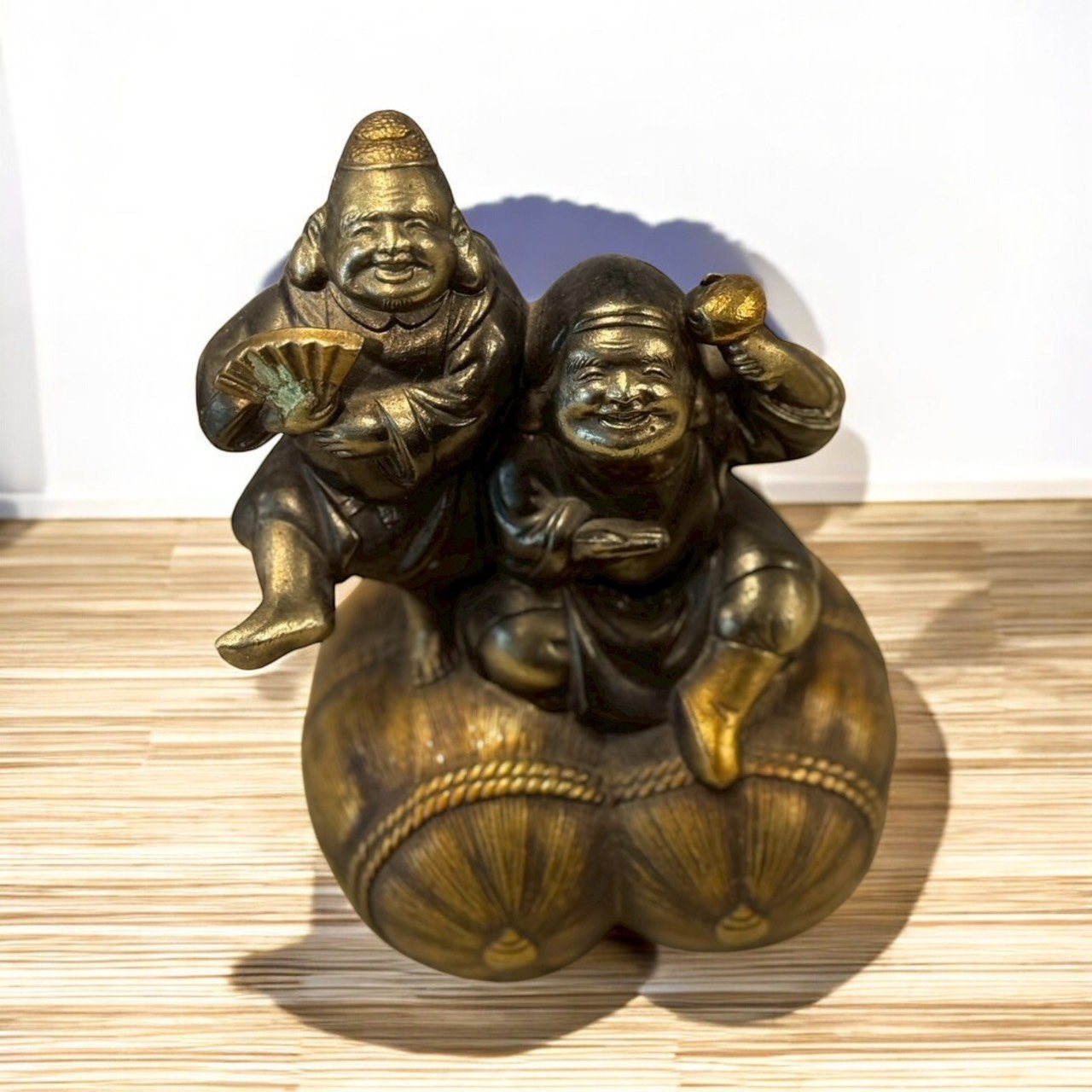
Copper Figure of the Twin Lucky Gods Daikokuten and Ebisu, Japan

An ornament of the twin lucky gods Daikokuten and Ebisu, made with traditional Japanese copper-casting craftsmanship. Cast in thick copper, it shows the appeal of fine artisanship combined with religious culture. Daikokuten, in ancient dress, holds a mallet that strikes out coins and smiles kindly; Ebisu holds a golden sea bream, symbolizing a bountiful catch and a steady flow of wealth. The two deities sit together on sacks of grain symbolizing treasure, signifying “abundant harvests, all things as wished, and overflowing wealth.” The style is heavy and plain, retaining the natural weathering and copper oxidation of age, which give the piece a deeper sense of history and artistic atmosphere. It is not only a good-luck ornament with feng shui meaning but also a cultural object that brings together folk belief, fine art and craft.

Price NT$ 3,800≈ US$ 120

Papier-Mâché (Hariko) Daruma Tumbler Doll, Japan

A classic Japanese Daruma tumbler doll (だるま), made entirely by hand in the traditional hariko (張り子, papier-mâché) technique, with a strong folk-art character. It is mainly bright red, symbolizing good luck, protection from evil and blessings. The facial features are deeply expressive, with bold brows and beard, showing firm will and an indomitable spirit. The character “福” (fortune) is written in gold lacquer on the front, and the eyes have not yet been filled in, so that, following tradition, one eye can be painted in when making a wish and the second when the wish comes true — adding a sense of interaction and a ritual of blessing.

Price NT$ 2,500≈ US$ 79

Ceramic Daruma Sake Vessel, Japan

A rare, large Japanese ceramic Daruma sake vessel, made in the form of a Daruma tumbler doll and combining practical and artistic qualities. It is made of high-fired glazed ceramic with full, bright colors, a round, plump form and a stern, resolute face — a strong presence. The spout at the bottom reflects its original use as a sake vessel; in earlier years it may have been used at festivals, for business hospitality, in ritual ceremonies or for shop display. Although the lid is now missing, it retains its historical character and craft value, and will appeal to collectors who love Japanese culture and Daruma themes. (Lid missing.)

Price NT$ 8,000≈ US$ 250

Kumano Shrine Wooden Sign, Japan

An old wooden sign from a Kumano Shrine in Japan — a genuine old piece that has weathered the years. The board is made of solid wood, with a calm weight and stable structure. The surface is carved with text relating to “熊野神社” (Kumano Shrine), and it was probably one of the exterior-wall or gatepost signs used by a shrine in the Shōwa period or earlier. The characters are hand-carved, the strokes vigorous and powerful with clear variations in depth, showing the carver's skill and a simple, archaic aesthetic. The board has natural cracks, erosion and traces of history, which are not flaws but marks of the piece's age and part of its value.

Price NT$ 6,000≈ US$ 190

Double-Sided Old Wooden Japanese Pharmacy Sign, “家秘一元丹” (Kahi Ichigentan)

A double-sided old wooden sign from Japan, dating from before the Shōwa era. The front is carved with the words “家秘一元丹” (Kahi Ichigentan), one of the phrases used on signs by folk pharmacies of the time selling secret-formula medicines. “Ichigentan” refers to an affordable household remedy with wide-ranging effects, carrying the idea that “one dose cures a hundred ills”; “kahi” (family secret) stresses that the formula was handed down within the shop's family, making it distinctive and highly trusted. The back is carved “呉服大賣物類”, meaning the sale of fabrics, kimono and related goods. This vividly reflects the character of Japanese popular commercial culture from the late Edo period through the Taishō and early Shōwa periods, when a single shop often combined several trades, selling both medicines and textiles and sundries to meet the everyday needs of ordinary people and adapt to economic change. This multi-trade model not only shows the flexibility of local merchants but also created streetscapes rich in cultural memory. (With an iron hanging hook; can be wall-mounted or hung for display as is.)

Price NT$ 8,800≈ US$ 275
CURATOR'S SPECIAL SELECTION

This Season's Picks · The Beauty of Shōwa Silver and Metalwork

Go to Auctions
Shōwa Metalwork · Selected Silver

1952 Kobe Vintage STERLING SILVER Engraved Jewelry Cabinet

A small jewelry cabinet made in Kobe in 1952, crafted in STERLING SILVER. The double-door body is finely engraved with flowers and foliage, and the doors, hinges and clasps show layers of classical metalwork. Over the years the silver has naturally oxidized into varied tones and signs of use, making the delicate engraving stand out more vividly in light and shadow.

NT$ 88,000 Condition: visually very beautiful
View Details
DASING Japan Art Warehouse antique collection: metal seated figure in the style of Water-Moon Guanyin
BUDDHIST ART

Chinese Antique | Metal Seated Figure in the Water-Moon Guanyin Style

NT$ 30,000

Wearing an ornate jeweled crown, draped in celestial robes and necklaces, the figure sits in the "royal ease" posture, one leg raised and the other hanging naturally, capturing the graceful, relaxed pose of Water-Moon Guanyin. The face is lowered with a calm expression, and the bronze-toned finish is naturally deep and steady — well suited to a tea room, study or quiet space.

Selected Eastern Buddhist Art View Details
AUTHENTICITY & SAFE TRANSPORT

For DASING Collectors · Three Commitments for Peace of Mind

Every piece has weathered centuries. We bring an exacting, professional approach to antique art to every handover and delivery.

Sourced in Japan · Shipped to Kaohsiung

We keep searching all over Japan for antiques and vintage pieces with character — ceramics, tea ceremony utensils, vases, wood carvings, furniture and Shōwa-era goods — and bring them across the sea to DASING.

Real Photos · Shown as It Is

Items are photographed as they are, showing color, texture, detail and actual appearance as closely as possible, so buying online comes closer to seeing them in person.

Vintage Condition · Fully Described

Antiques often show wear, oxidation, kiln flaws, repairs or other signs of age. We show these as fully as we can in photos and item descriptions, so you can understand each piece before deciding to buy.