Market Trends in Japanese Antique Collecting
An Era Where Globalization Meets Cultural Revival. In recent years, the Japanese antique collecting market has shown many new trends, and both domestic and international markets are showing signs of thriving

An Age of Globalisation and Cultural Revival
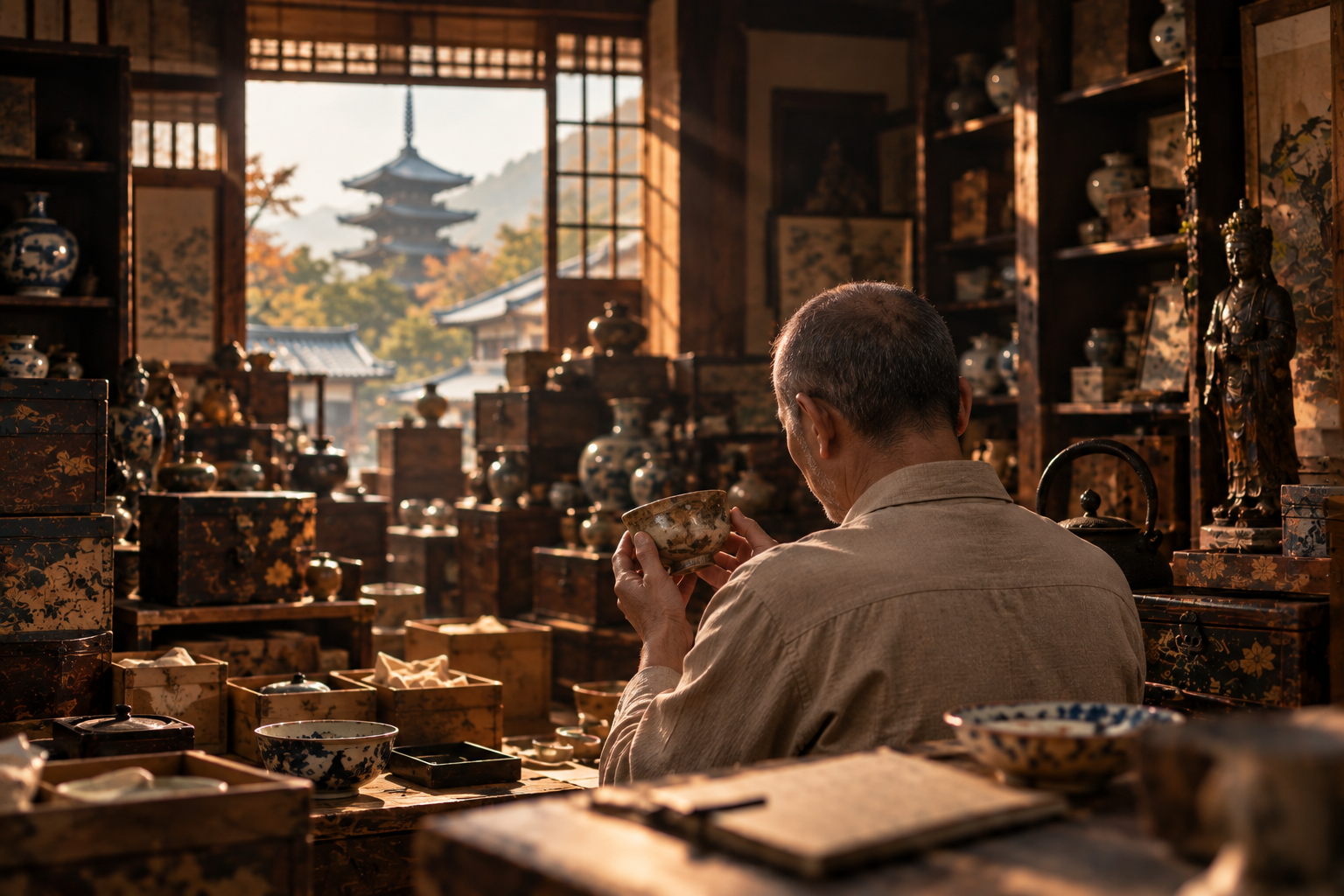
In recent years the market for collecting Japanese antiques has shown a number of new trends, and both at home and abroad the picture is a flourishing one. From the rapid growth in international demand to the enthusiasm of a younger generation for traditional culture, Japanese antiques are no longer only symbols of history; they are becoming assets with cultural value and investment potential. This article looks at the latest developments in the market for Japanese antiques and offers some advice on collecting.
1. International demand and market expansion
As the global economy recovers, international demand for Japanese antiques has risen quickly. Collectors and investors in the United States, China and Europe are showing great interest in Japanese antique ceramics, samurai swords, Buddhist objects and lacquerware. These pieces have artistic value, and they are also prized for their deep historical background and cultural content.
In Asia, the economic rise of China and South Korea has pushed demand for Japanese antiques further. As wealthy buyers come to know cultural heritage better, Asia has become a market for Japanese antiques that cannot be overlooked.
2. Scarcity and rising value
As the collecting market grows, high-quality Japanese antiques are becoming scarce, and pieces in good condition, Edo-period ukiyo-e prints and tea ceremony utensils in particular, are steadily rising in value. For collectors these rare pieces are not only works of art but hold considerable investment value, and prices at auction often climb sharply.
Pieces with a particular historical background, for example objects that once belonged to an important historical figure or family, also tend to attract more collectors because of the story behind them, which raises their market value further.
3. Online auctions and digital transformation
As digital technology becomes widespread, more and more auction houses offer online sales. This makes it easier for international collectors to take part in auctions of Japanese antiques, and it has greatly widened the market. Well-known auction houses such as Sotheby's and Christie's, for example, have pushed hard into digital platforms and drawn in more young collectors.
Alongside online auctions, digital certificates and blockchain technology are also coming into wider use. Confirming the authenticity and provenance of a piece by digital means gives collectors greater assurance, and at the same time raises the investment potential of antiques.
4. Cultural revival and continuity
As traditional culture attracts more attention worldwide, collectors place more and more weight on the cultural meaning of Japanese antiques. Tea ceremony utensils, Buddhist objects, samurai swords and other pieces bound up with traditional Japanese culture have become first choices for many collectors. They show Japan's history and cultural inheritance, and they carry a deep aesthetic value as well.
A younger generation of collectors is also coming to the fore. They look not only at the market value of a piece but at the culture and history behind it. Collecting Japanese antiques is therefore not only an investment but an act of recognising and carrying on a tradition.
5. The stability of the market within Japan
Although international demand is growing quickly, the antiques market within Japan remains steady. Many Japanese temples, museums and private collectors have a strong sense of stewardship, and pieces with the status of important cultural property do not usually leave the country easily. The Japanese government and cultural institutions also support the protection and exhibition of antiques in various ways, which further strengthens the stability of the domestic market.
6. Environmentally aware and sustainable collecting
As environmental awareness grows, more collectors are turning their attention to the idea of sustainable collecting. They see buying and preserving antiques as an environmentally friendly choice, because it reduces the demand for new materials and encourages a sustainable way of keeping historical heritage.
7. Advances in restoration and conservation
Advances in modern restoration mean that many antiques can be brought back to their former splendour and even have their life extended. Professional restoration protects the integrity of a piece and raises its market value. At the same time, as collectors pay more attention to conservation, demand for antique care services is growing.
In this age of globalisation and cultural revival, the market for collecting Japanese antiques is full of opportunity. Whether you are an experienced collector or have only just entered the field, DASING Japan Art Warehouse can be your best partner, helping you find your own cultural treasure in a market with so much potential.
FAQ
Q1: Why is now a good time to invest in Japanese antiques?
International demand for Japanese antiques keeps growing, while the scarcity of high-quality pieces is pushing values up. Now is the best moment to enter the market and look for fine pieces.
Q2: How should I care for my antique collection?
Caring for antiques calls for expert knowledge, especially in controlling the environment. We offer professional advice on care and can help you set up storage conditions suited to antiques, so that they are preserved for the long term.
Q3: Are Japanese antiques suitable for young collectors?
Certainly. More and more young people are coming to see the cultural and investment value of Japanese antiques. We offer entry-level advice on collecting, to help young collectors find the pieces that suit them.
Q4: How do I take part in an online auction?
Our website offers a straightforward online auction platform that buyers anywhere in the world can join. Our team will guide you through the process so that your transaction goes smoothly.