Live inventory from DASING's main warehouse | 261 pieces available
[ DASING Collection · Available Now ]

Available Now · Refined Antiques Where Time Stands Still

DASING Japan Art Warehouse currently has 186 pieces online, including tea ceremony utensils, Ko-Imari porcelain, maki-e lacquer and metalwork from the Edo to Shōwa periods. Each comes with its history and a record of its craftsmanship, awaiting the discerning collector.

100% direct from Japan More than vintage pieces — a slice of Japanese history worth collecting
Showing 19 - 27 (35 pieces in total)

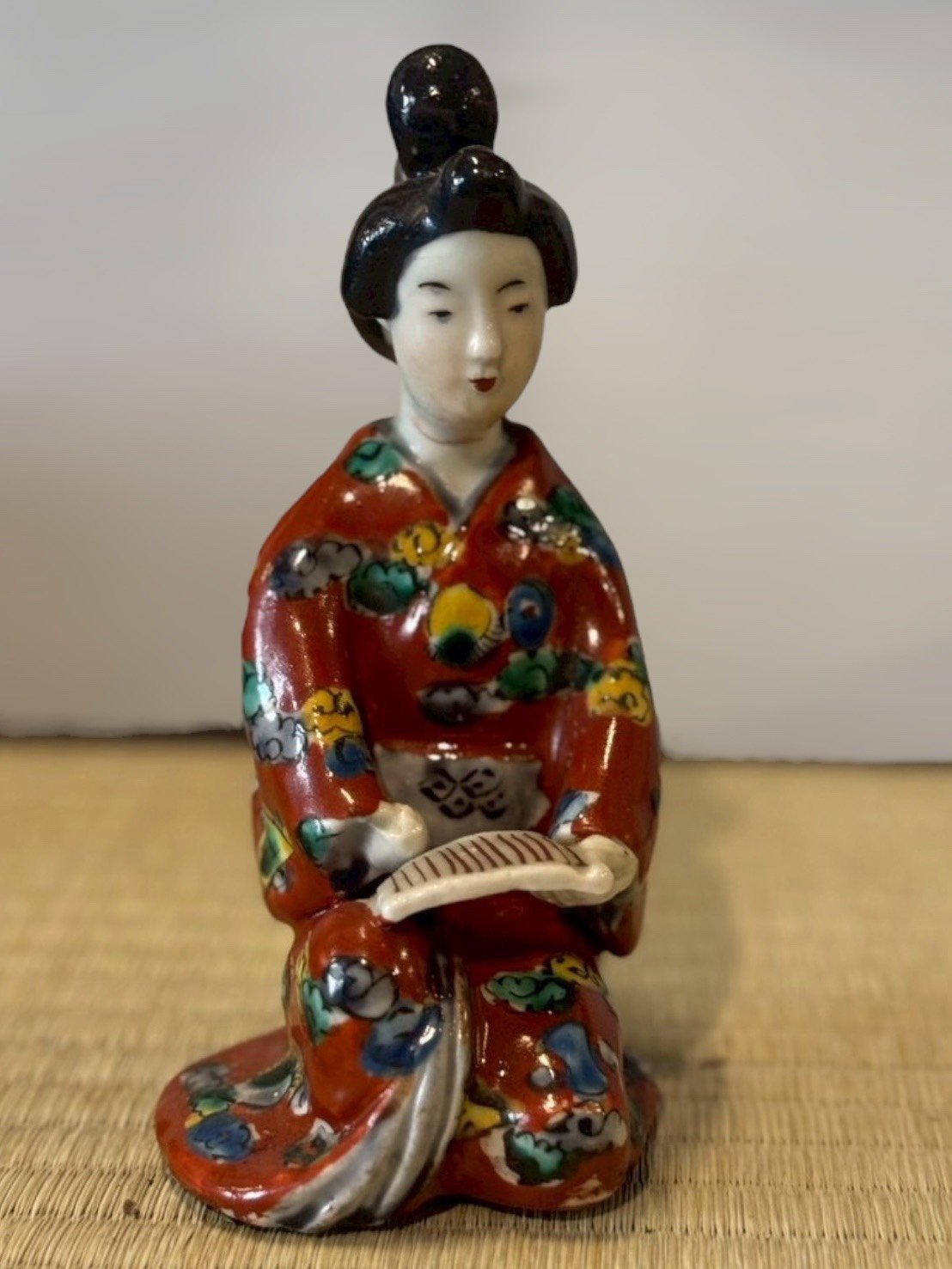
Painted Ceramic Female Figure, Japan

A painted ceramic ningyō from the Shōwa period or earlier, depicting a woman in a red-ground kimono at her toilette, holding a comb in both hands in a calm, composed pose. It is formed of clay fired as biscuit, with the robe patterns and facial features painted in mineral-colored glazes; the colors are bright and saturated, and the woman's expression is reserved yet lively, showing the gentle grace of traditional Japanese womanhood. Figures of this kind were often used as ornaments, festival objects (such as variants of hina dolls) or scholars' desk curios, and also carry cultural, artistic and folk symbolic meaning.

Price NT$ 3,800≈ US$ 115

Old Japanese Ceramics | Bizen Ware Rabbit Figure

Hand-modeled from Bizen's local coarse, gritty clay, this piece was fired in the traditional unglazed, high-temperature yakishime manner. During firing, wood ash settled naturally while reduction and oxidation alternated, leaving multiple bands of kiln-transformation color and natural ash-glaze marks on the surface — mottled reddish brown, blackish brown and grayish white — showing the dry, mineral feel and calm texture particular to Bizen ware. The rabbit crouches low, its ears laid along its back and its gaze inward; the modeling is rustic yet lively, and the proportions heavy and solid, with a strong wabi-sabi aesthetic.

Price NT$ 5,000≈ US$ 150

Ceramic Tanuki Ashtray, Japan

A Japanese-made ceramic tanuki ashtray / catch-all. It combines a round-bellied, deep-welled form with an anthropomorphic tanuki head; along the rim, turquoise and brown crystalline glazes run naturally, forming a cascading glaze effect of varying thickness. The clay has a coarse, gritty feel, bringing out a rustic, slightly humorous Shōwa folk-craft character. It can be used as an ashtray, incense-ash holder, coin tray, key dish or multipurpose container, and also works well displayed on its own as a focal point.

Price NT$ 2,500≈ US$ 76

Taishō-period Kutani Ware Large Plate, Japan

A large piece measuring 40 cm across, a typical Taishō-period kinrande overglaze work of the Kutani kiln line. The center features a genre scene of warrior figures, the faces finely drawn and the robes outlined in gold paint, rich in layers. Around the inner rim, kinrande brocade grounds alternate with karakusa scrolls and flowering sprays to form a ring; at the top is an emblem of an auspicious bird (phoenix-like), flanked by flowers and geometric roundel patterns, together forming the classic Kutani visual vocabulary of a realistic main scene framed by a brocade border. The reverse is painted with scattered auspicious objects and bears the “Kutani zō” (made in Kutani) mark, giving a clear indication of origin that aids collecting and scholarly reference.

Price NT$ 6,800≈ US$ 205

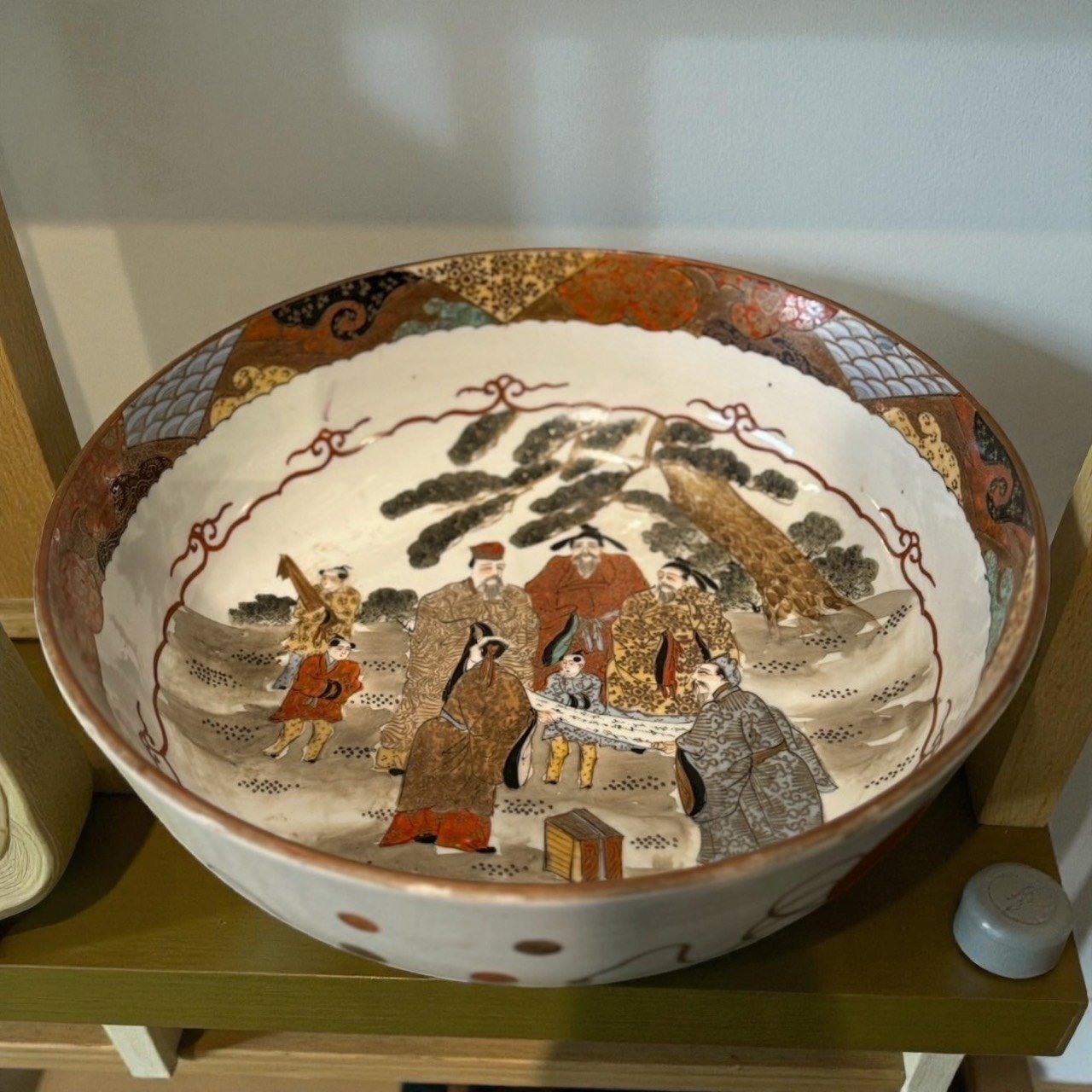
Kutani Ware Kinrande Large Bowl with Figures

A late Meiji to early Taishō Kutani ware kinrande large bowl with a wide mouth and gentle curve, giving a steady, generous presence. The body is thick but not clumsy, with a reassuring weight in the hand — the kind of large vessel that immediately brings to mind banquets in old Japanese rooms and parlor displays. The center shows a finely painted genre scene of figures: beneath a pine tree, several elders and attendants in splendid kimono and court robes sit in conversation, their robes painted in layers of gold, aka-e and black line, with patterns including small flowers, geometric designs and small gauze grounds, rich in detail yet not cluttered. The faces are drawn with extremely fine strokes, the beards, eyes and expressions all full of life, as if an important literary gathering or conversation were under way. The interior wall and rim are painted in the typical kinrande Kutani style: irregularly divided color panels are filled with gold grounds, flowers and plants, lozenges, seigaiha waves and other patterns, with red, green and blue enamels in places and gold outlines, creating a sumptuous yet refined antique effect.

Price NT$ 3,800≈ US$ 115

Taishō to Early Shōwa Period Kutani Large Bowl with Hand-Painted Gilt Warrior Design, Kukuryūdō

This large bowl comes from Kukuryūdō, a well-known Kutani-line workshop, and dates to around the Taishō to early Shōwa period. It has a wide mouth and moderate depth, with tall, generous proportions — a display-plate size that can serve as the main piece in a display. The center of the bowl features a warrior with long, flowing hair: he wears Japanese armor and a kariginu robe drawn with a fine brush, the drapery painted in layers of brown, ink black, green and fine gold, and the painter deliberately strengthened the fold lines so that one seems to feel the wind blowing head-on. With his hand on the hilt of the sword at his waist, half kneeling and half rising, he seems to be holding his ground against the wind, his expression focused and resolute, full of dramatic tension. The background sets him off with pale-ink mountains and trees, and the light and shade of foreground and distance are handled delicately to create depth and space. The base bears a handwritten “Kukuryūdō” mark in red, upright and clear in its calligraphy, giving a firm basis for its origin and date and adding to its value for collecting and study. (There is one fine hairline crack on the interior.)

Price NT$ 2,800≈ US$ 85

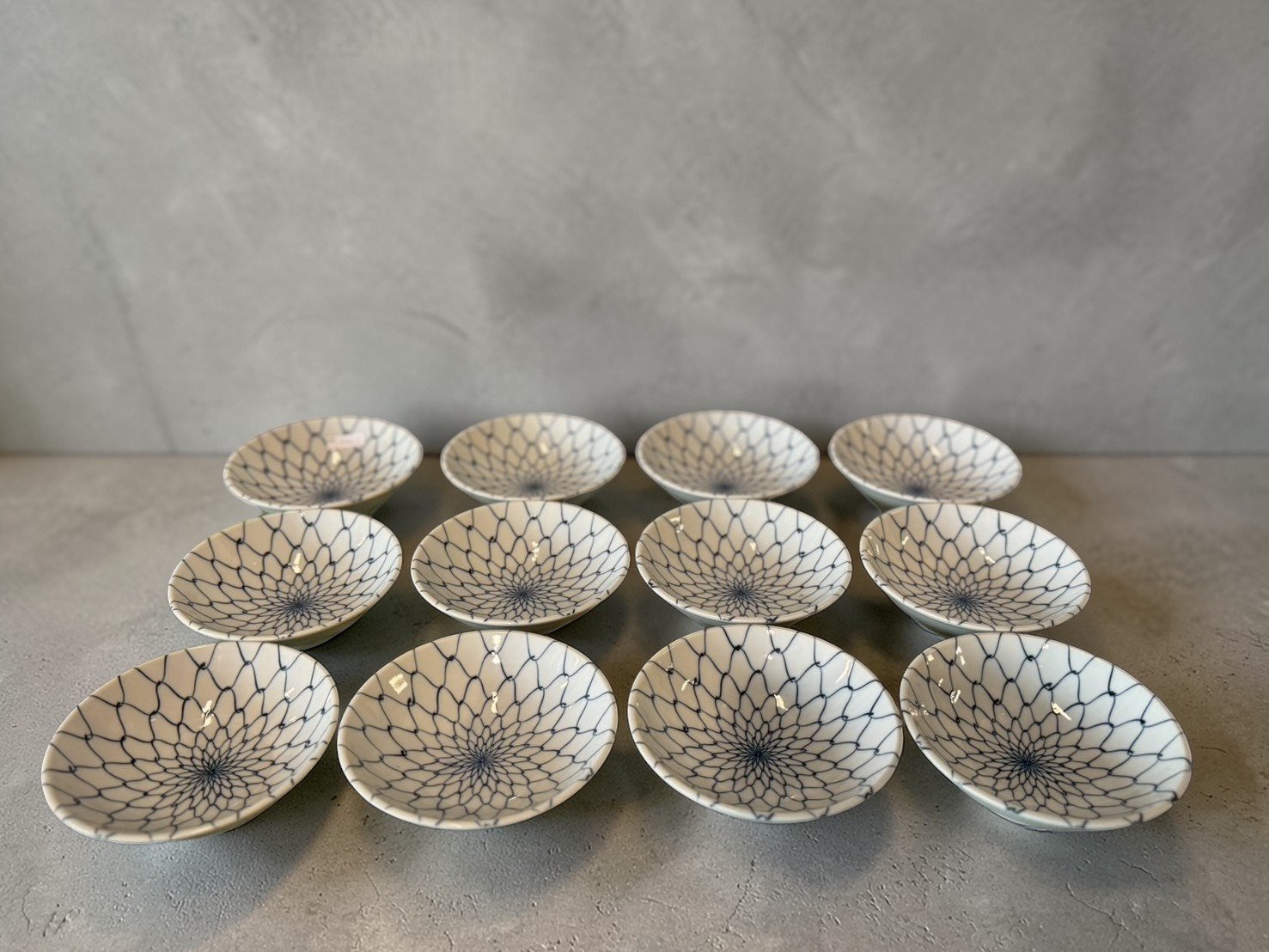
Sometsuke Small Dishes with Net Pattern, Japan

This set of Japanese sometsuke small dishes with net pattern is a classic among the most representative works of Japanese ceramic aesthetics. The amime (net) pattern has not only been favoured by literati since the Edo period; because its lines connect without end, in Japanese culture it symbolizes “longevity” and “lasting good fortune.” Combined with mellow blue-and-white sometsuke craft, it displays a fresh, refined aesthetic of everyday ware that never tires the eye.

Price NT$ 120≈ US$ 4

Kyōto Manjudō “Eto Tora” (Zodiac Tiger) Ceramic Tiger Ornament

This ceramic “Eto Tora” (zodiac tiger) ornament made by Manjudō of Kyōto is a fine craft piece from a well-known long-established Kyōto shop. In Japanese culture the tiger symbolizes powerful vitality, courage and protection from evil. The piece not only captures the tiger's majesty perfectly but also blends in the refinement and elegance characteristic of Kyōto craftsmanship, making it a good-luck ornament of high cultural value and artistic beauty.

Price NT$ 1,500≈ US$ 46

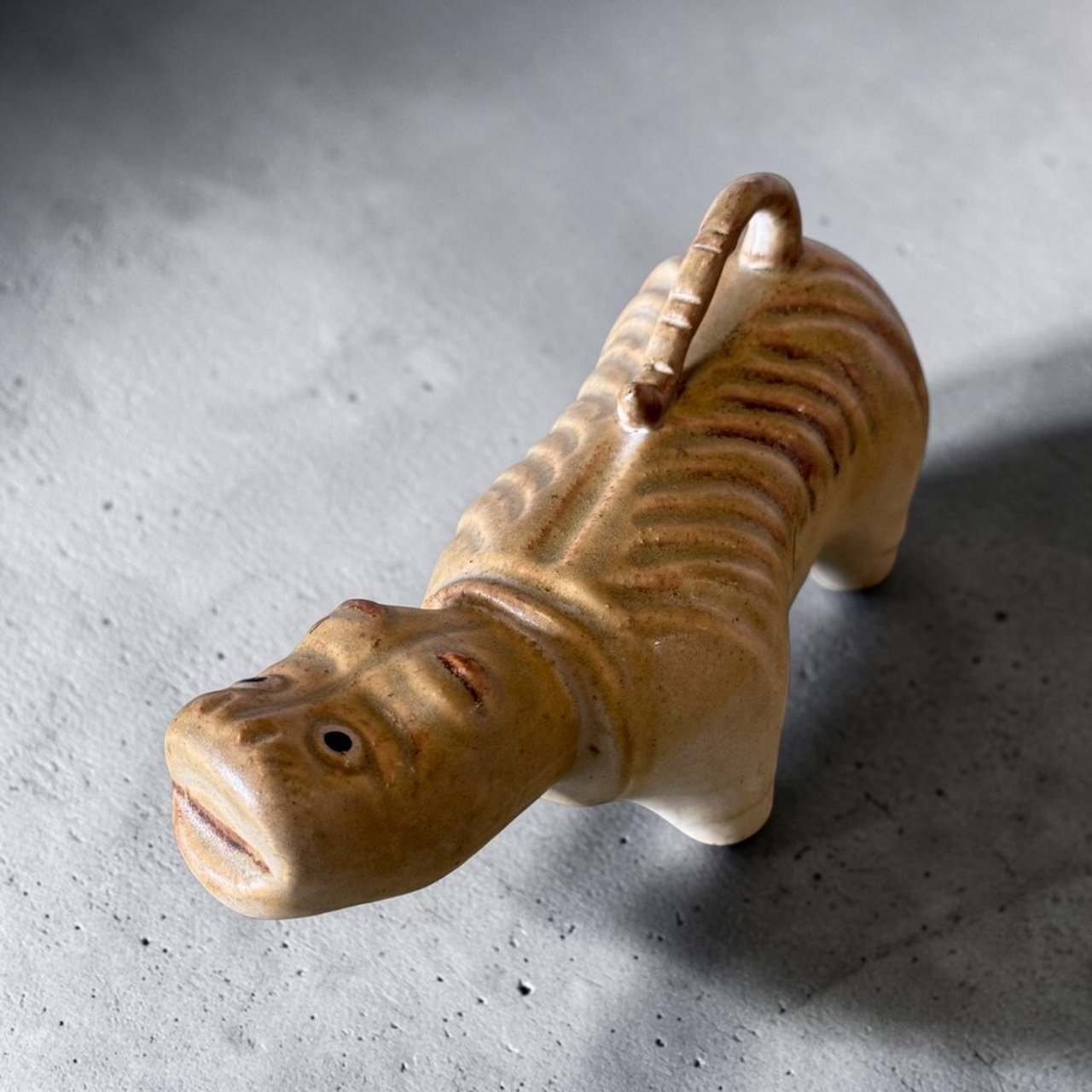
Kyōto Manjudō Ceramic Tiger Ornament, Japan

A ceramic tiger ornament made by Manjudō of Kyōto, a fine craft piece from a well-known long-established Kyōto shop. In Japanese culture the tiger symbolizes powerful vitality, courage and protection from evil. This piece captures the tiger's dignified yet somewhat rustic spirit, blended with the delicacy characteristic of Kyōto craftsmanship; it is a good-luck ornament with both collecting value and artistic beauty. (With original wooden tomobako)

Price NT$ 1,500≈ US$ 46
CURATOR'S SPECIAL SELECTION

This Season's Picks · The Beauty of Shōwa Silver and Metalwork

Go to Auctions
Shōwa Metalwork · Selected Silver

1952 Kobe Vintage STERLING SILVER Engraved Jewelry Cabinet

A small jewelry cabinet made in Kobe in 1952, crafted in STERLING SILVER. The double-door body is finely engraved with flowers and foliage, and the doors, hinges and clasps show layers of classical metalwork. Over the years the silver has naturally oxidized into varied tones and signs of use, making the delicate engraving stand out more vividly in light and shadow.

NT$ 88,000 Condition: visually very beautiful
View Details
DASING Japan Art Warehouse antique collection: metal seated figure in the style of Water-Moon Guanyin
BUDDHIST ART

Chinese Antique | Metal Seated Figure in the Water-Moon Guanyin Style

NT$ 30,000

Wearing an ornate jeweled crown, draped in celestial robes and necklaces, the figure sits in the "royal ease" posture, one leg raised and the other hanging naturally, capturing the graceful, relaxed pose of Water-Moon Guanyin. The face is lowered with a calm expression, and the bronze-toned finish is naturally deep and steady — well suited to a tea room, study or quiet space.

Selected Eastern Buddhist Art View Details
AUTHENTICITY & SAFE TRANSPORT

For DASING Collectors · Three Commitments for Peace of Mind

Every piece has weathered centuries. We bring an exacting, professional approach to antique art to every handover and delivery.

Sourced in Japan · Shipped to Kaohsiung

We keep searching all over Japan for antiques and vintage pieces with character — ceramics, tea ceremony utensils, vases, wood carvings, furniture and Shōwa-era goods — and bring them across the sea to DASING.

Real Photos · Shown as It Is

Items are photographed as they are, showing color, texture, detail and actual appearance as closely as possible, so buying online comes closer to seeing them in person.

Vintage Condition · Fully Described

Antiques often show wear, oxidation, kiln flaws, repairs or other signs of age. We show these as fully as we can in photos and item descriptions, so you can understand each piece before deciding to buy.